Improving math skills Adding up to 100 Worksheets for Ages 6-8
5 filtered results
-
From - To
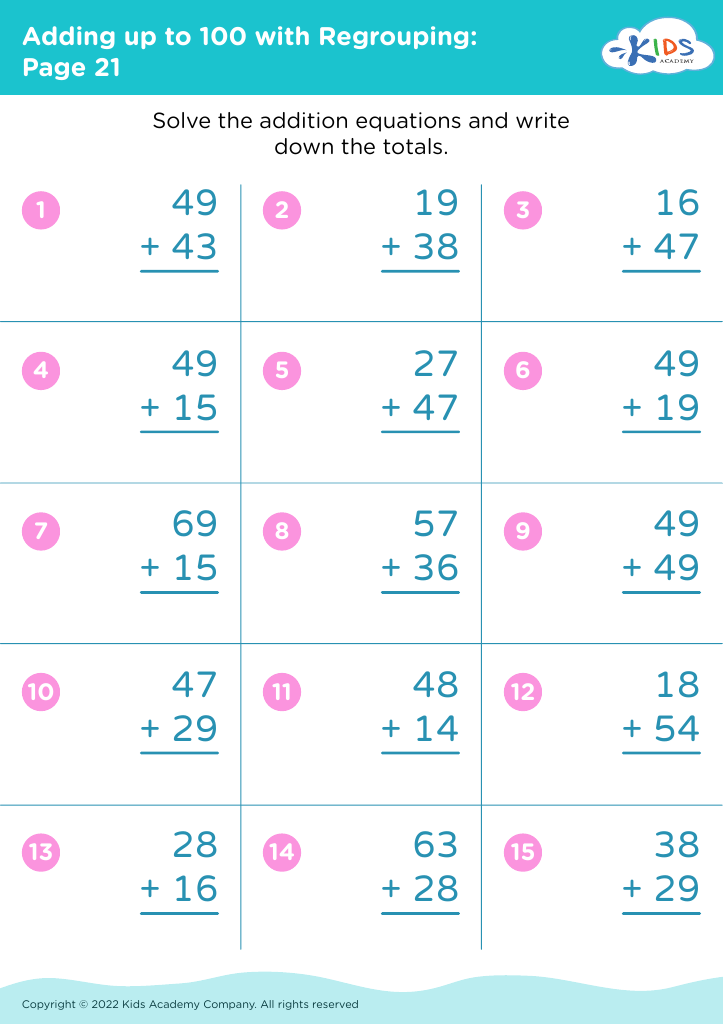
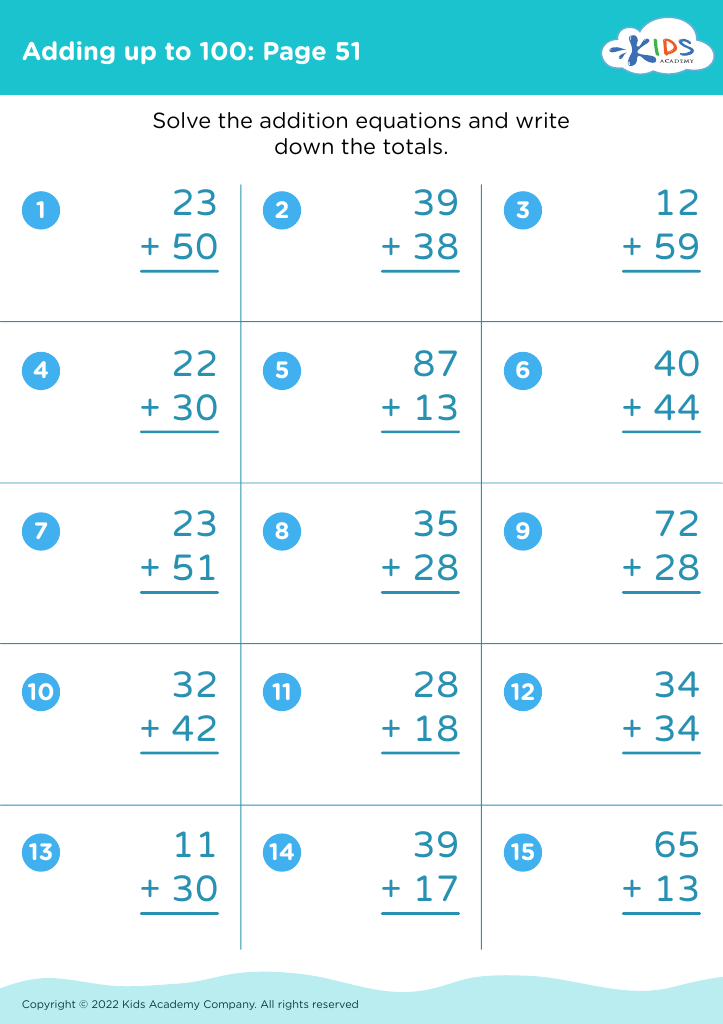
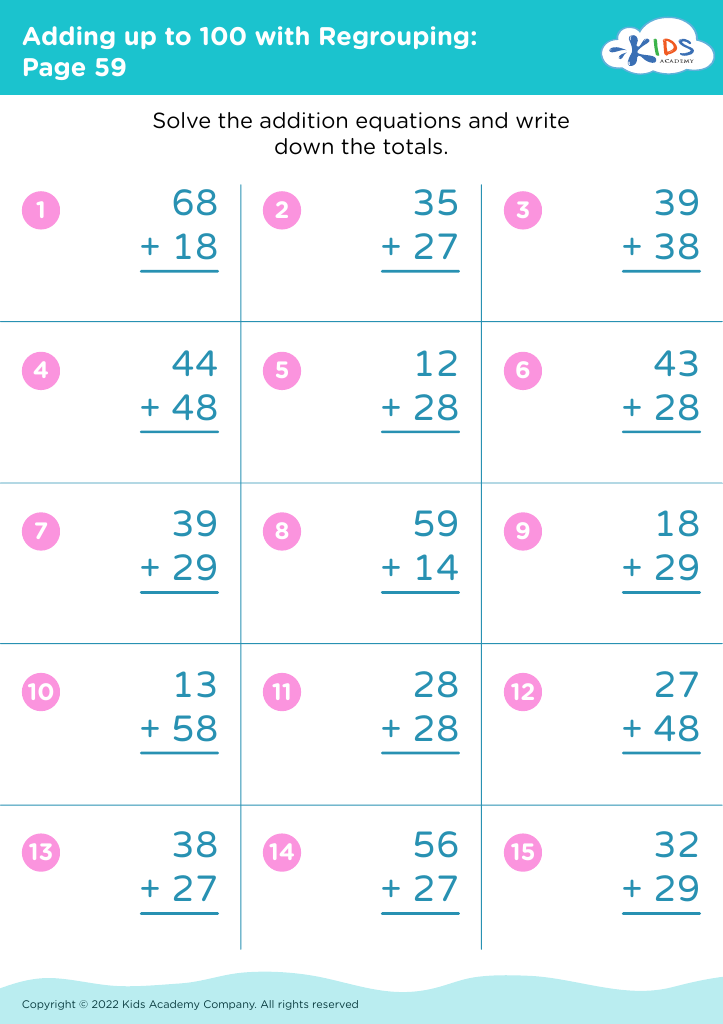
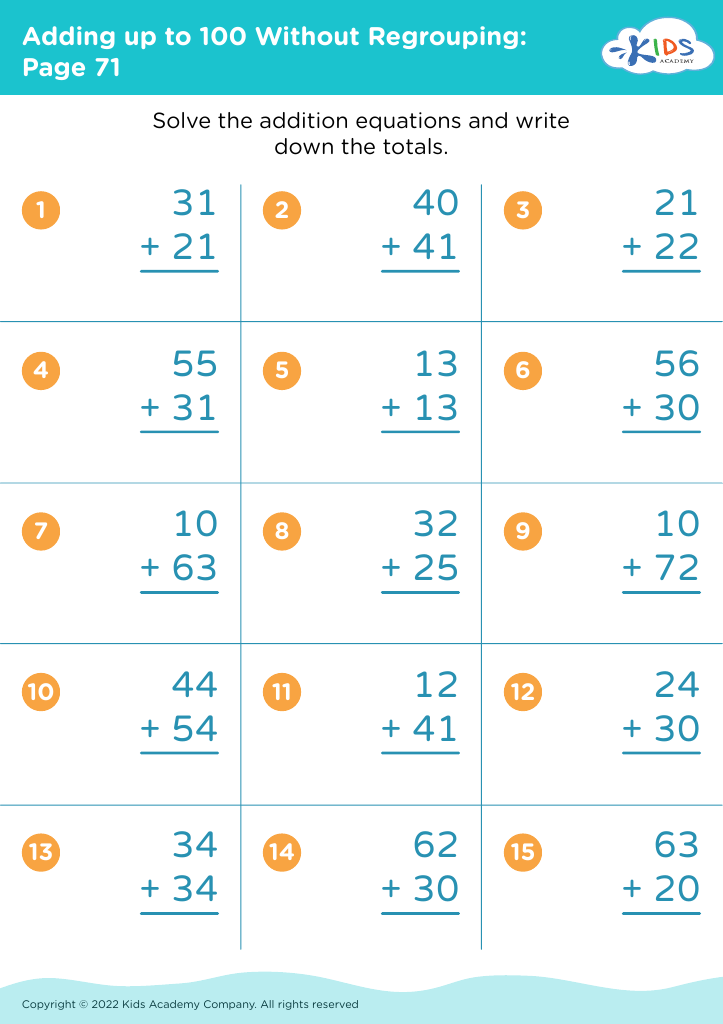
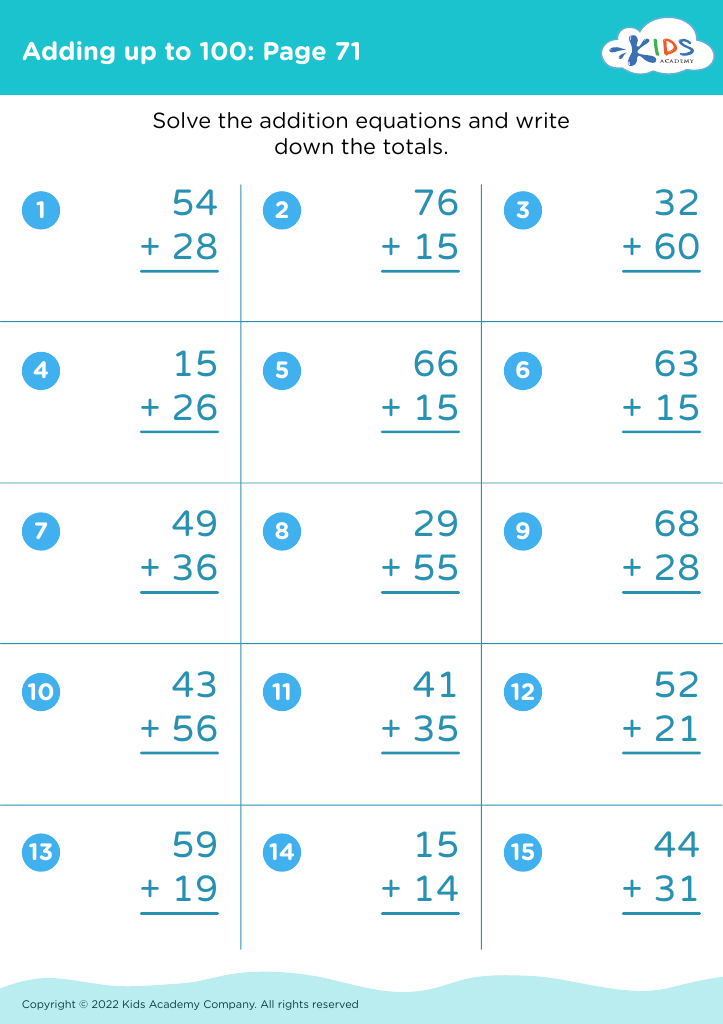
Enhance your child's math abilities with our "Improving Math Skills: Adding Up to 100" worksheets, designed specifically for ages 6-8. These engaging resources provide a fun way for children to grasp fundamental addition concepts, building their confidence and proficiency in math. Each worksheet features a variety of exercises that encourage students to practice counting, adding numbers up to 100, and developing mental math strategies. Perfect for home or classroom use, these worksheets foster critical thinking and problem-solving skills. Help your young learners excel in math with these enjoyable and educational activities that make learning addition exciting!






%20(1).jpg)
Improving math skills, specifically the ability to add up to 100, is crucial for children aged 6-8 for several reasons. First, mastering this fundamental skill enhances a child's confidence and fosters a positive attitude toward mathematics. As they successfully tackle addition problems involving larger numbers, they build a strong foundation for more advanced arithmetic operations, such as subtraction, multiplication, and division.
Secondly, these basic math skills are essential for everyday life. Children will encounter opportunities to use their addition skills in shopping, budgeting, and time management, laying the groundwork for practical life skills. By reinforcing these concepts early on, parents and teachers equip children with tools that cultivate independence and critical thinking.
Moreover, practicing addition engages cognitive development, encouraging problem-solving and logical reasoning abilities. This development is vital, as strong mathematical skills are linked to enhanced performance in other academic areas, supporting overall learning.
Finally, a focus on achieving fluency in addition not only sets the stage for success in future math learning but also contributes to a child's self-esteem and resilience in facing challenges. Ultimately, nurturing math skills that lead up to 100 fosters a love for learning and encourages future academic exploration.








