Number Recognition Adding up to 100 Worksheets for Ages 6-8 - Page 2
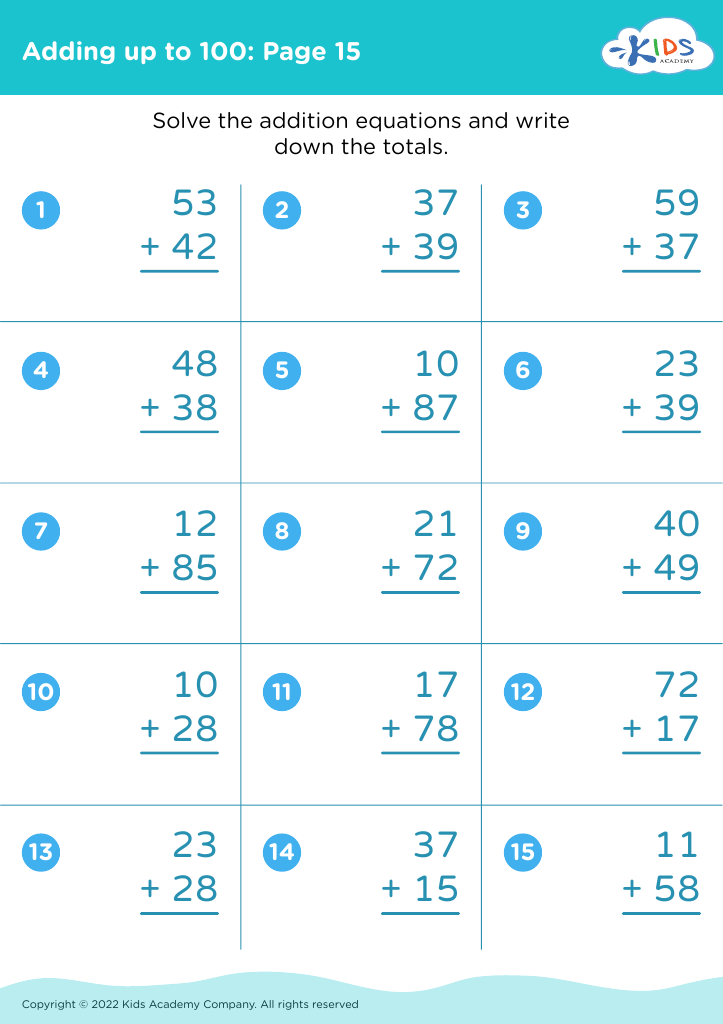
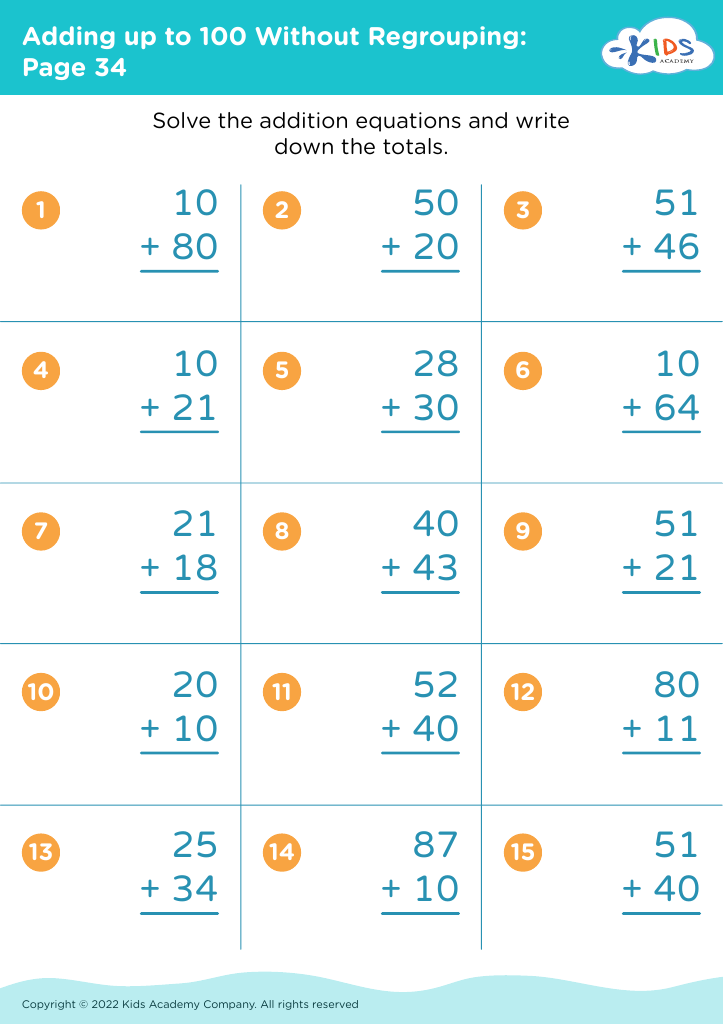
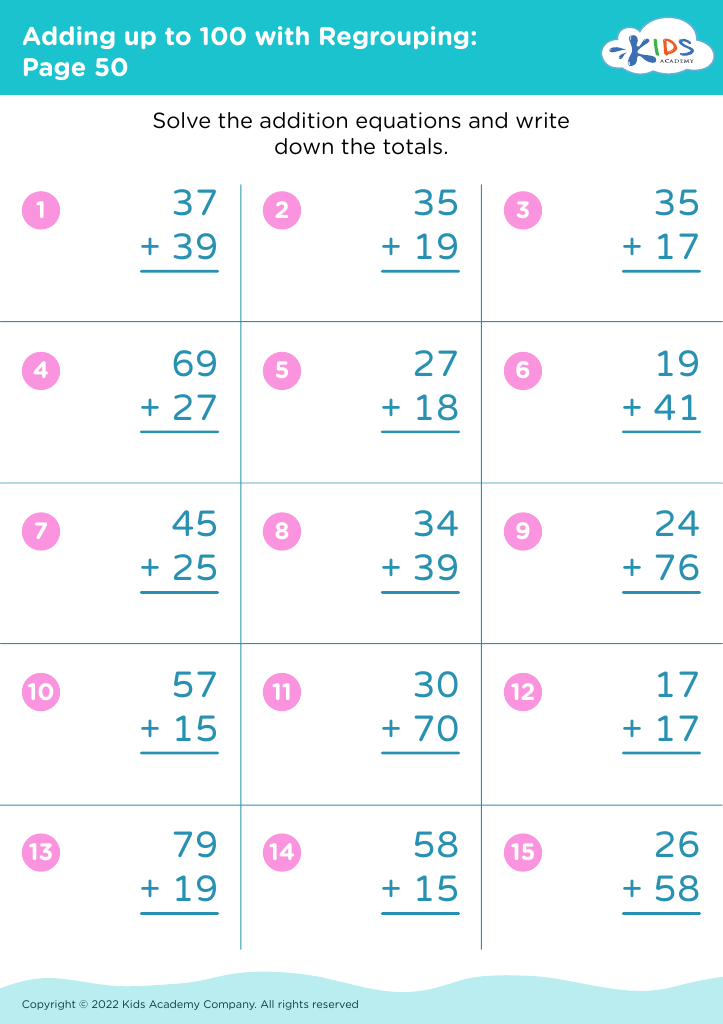
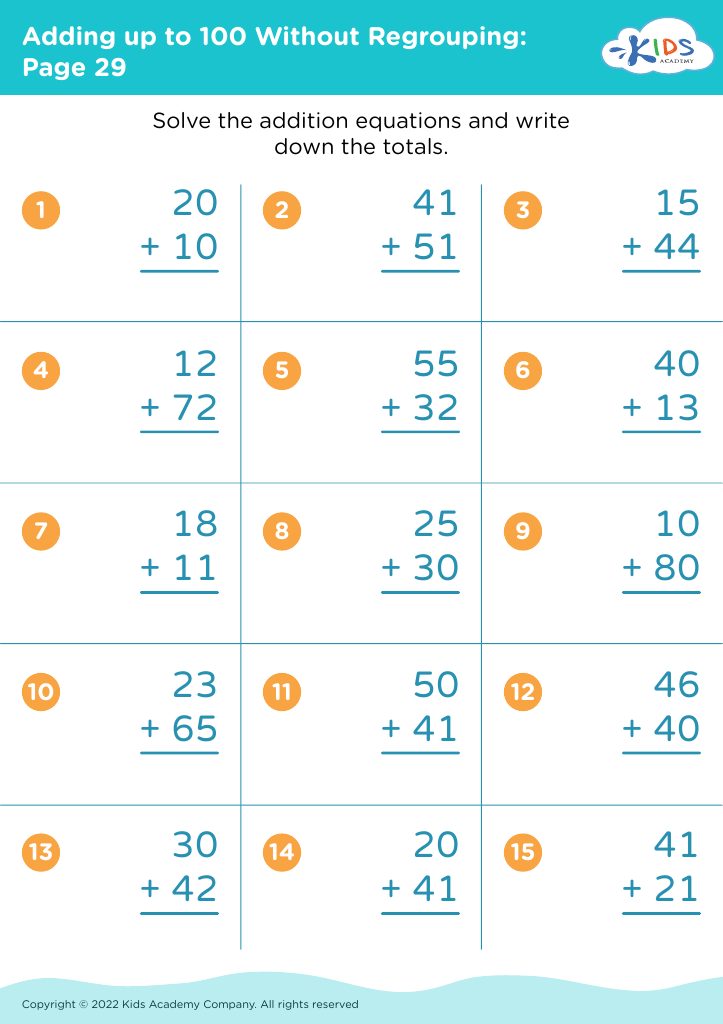


%20(1).jpg)





Number recognition is a fundamental skill for children aged 6-8, and understanding the concept of numbers up to 100 is particularly vital. This foundational ability sets the stage for more advanced mathematical functions such as addition, subtraction, and even basic problem-solving. When children can recognize numbers, they can more easily understand the relationships between them, making math less intimidating and more approachable.
For parents and teachers, nurturing this skill helps enhance children's confidence and encourages a positive attitude towards learning. Early mastery of number recognition fosters independence and allows children to engage more effectively in classroom activities and everyday situations, such as telling time, counting money, or managing simple tasks at home.
Additionally, recognizing numbers up to 100 broadens children’s cognitive abilities. Engaging with numbers fosters critical thinking as children learn to compare quantities and understand the concept of order and magnitude. Moreover, this foundational skill is essential for transitioning to more complex mathematical concepts in subsequent grades.
When parents and teachers actively engage in developing number recognition, they not only contribute to a child's mathematical acumen but also promote perseverance and resilience—qualities that are beneficial across all areas of learning and life.








