Numeracy skills Adding up to 100 Worksheets for Ages 6-8
4 filtered results
-
From - To
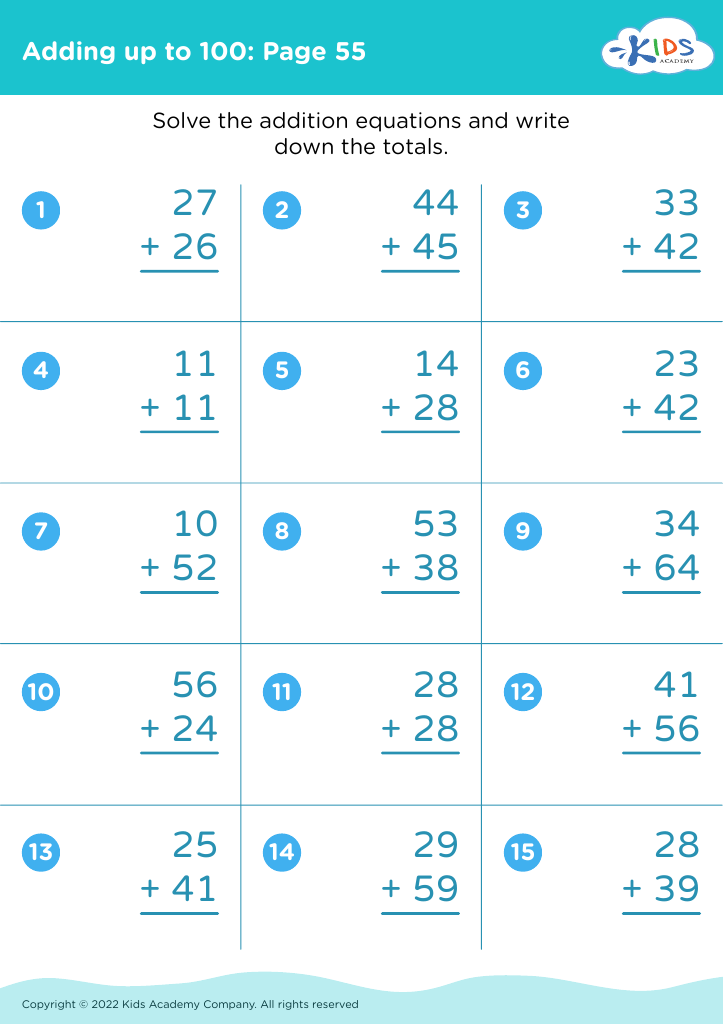
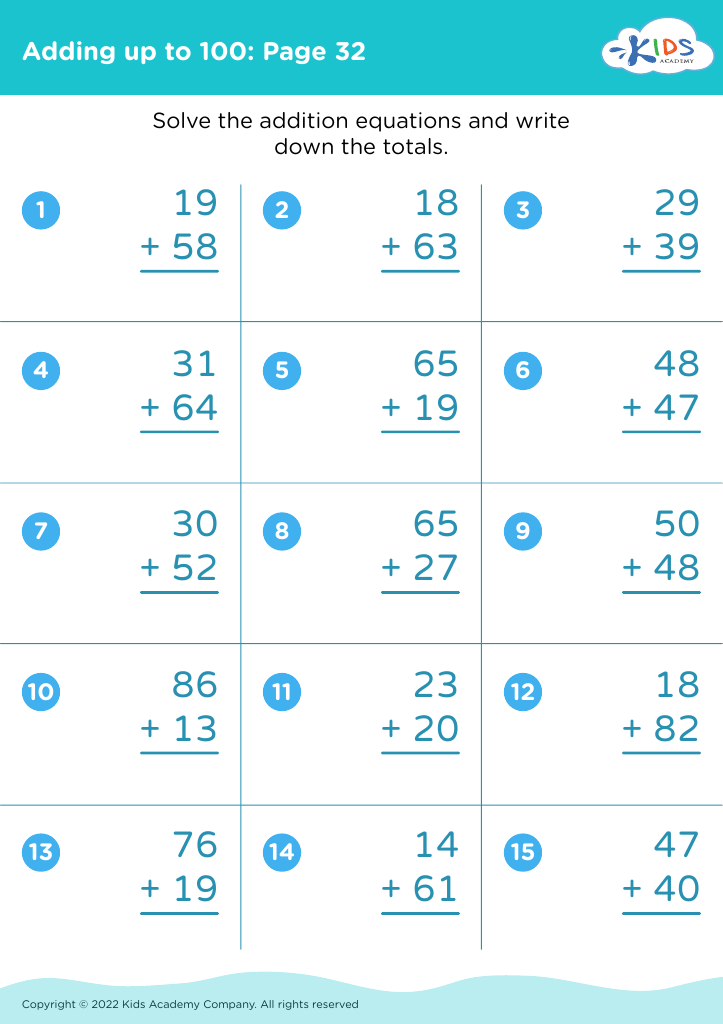
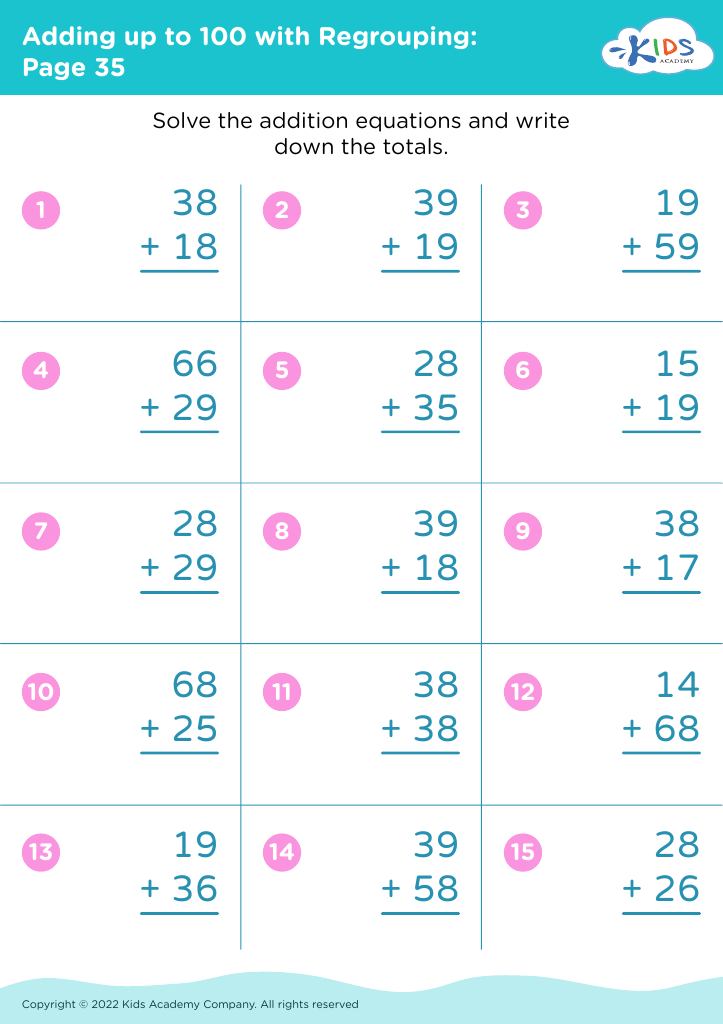
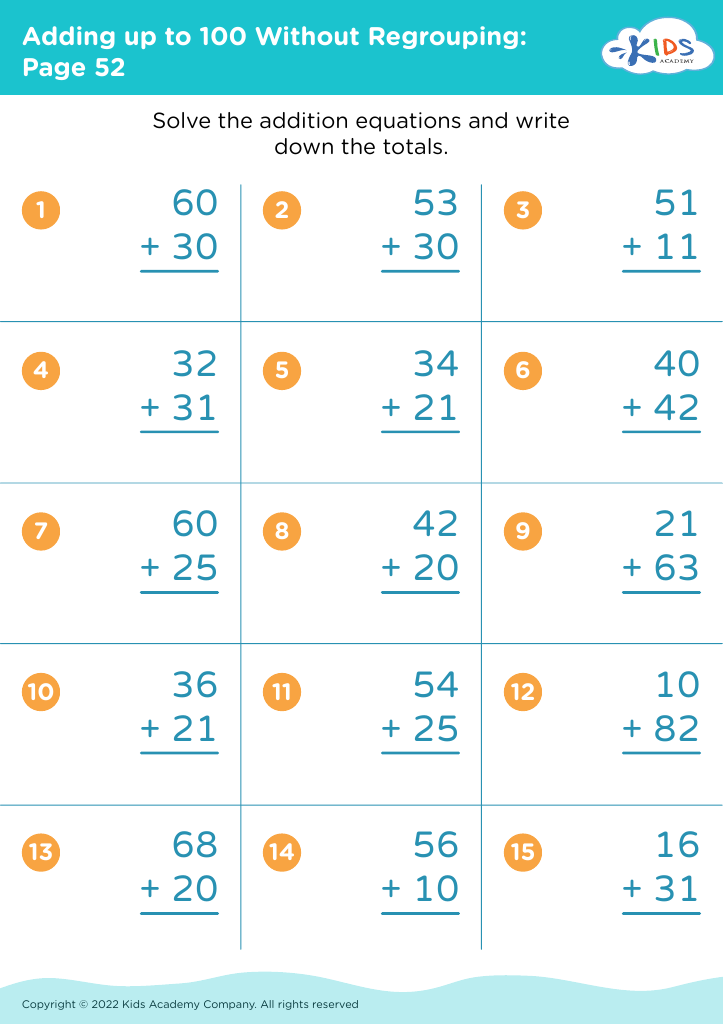
Boost your child's numeracy skills with our "Adding Up to 100 Worksheets" designed specifically for ages 6-8! These engaging worksheets help young learners practice essential addition skills while making the learning process fun and interactive. With a range of activities, including colorful visuals and progressively challenging problems, your child will enhance their mathematical confidence and competence. These worksheets are perfect for at-home practice or classroom use, encouraging not just independent learning but also a strong foundation in math necessary for future academic success. Explore our collection today and watch your child’s addition skills soar as they master the concept of reaching 100!




%20(1).jpg)


Numeracy skills, specifically adding up to 100, are crucial for children aged 6-8 as they form the foundation for more complex mathematical concepts. Mastering basic addition promotes confidence and encourages a positive attitude toward math, reducing the anxiety often associated with this subject. These foundational skills not only help children in their academic journey but also enhance their problem-solving abilities in everyday life.
When children learn to add up to 100, they enhance their understanding of numbers and operations, paving the way for skills like subtraction, multiplication, and division. Such competence in early math is linked to better performance in later grades, providing children with opportunities for academic success.
For parents and teachers, focusing on numeracy skills nurtures critical thinking and logical reasoning in young learners. Additionally, strong numeracy skills have practical applications, from managing allowances and budgeting to understanding time and measurements in real-world situations. Fostering a solid mathematical foundation early on helps shape responsible and confident individuals who can independently navigate financial decisions, analyze information, and understand statistical data. Thus, prioritizing numeracy skills is essential for fostering both academic and life skills in children.








