Practice problem-solving Adding up to 100 Worksheets for Ages 6-8
3 filtered results
-
From - To
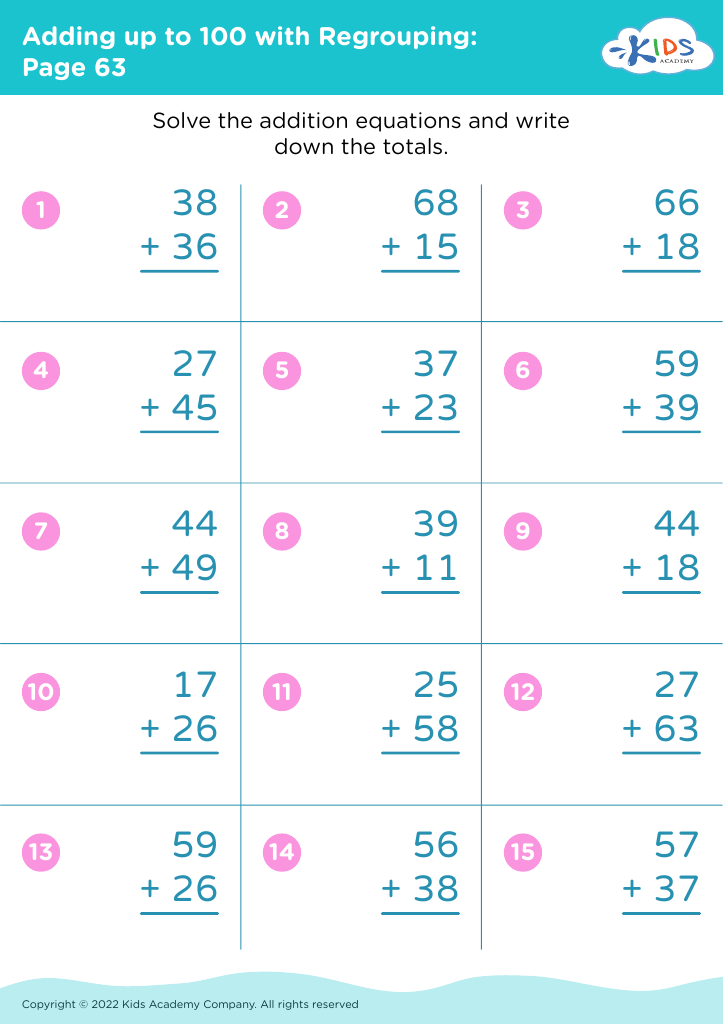
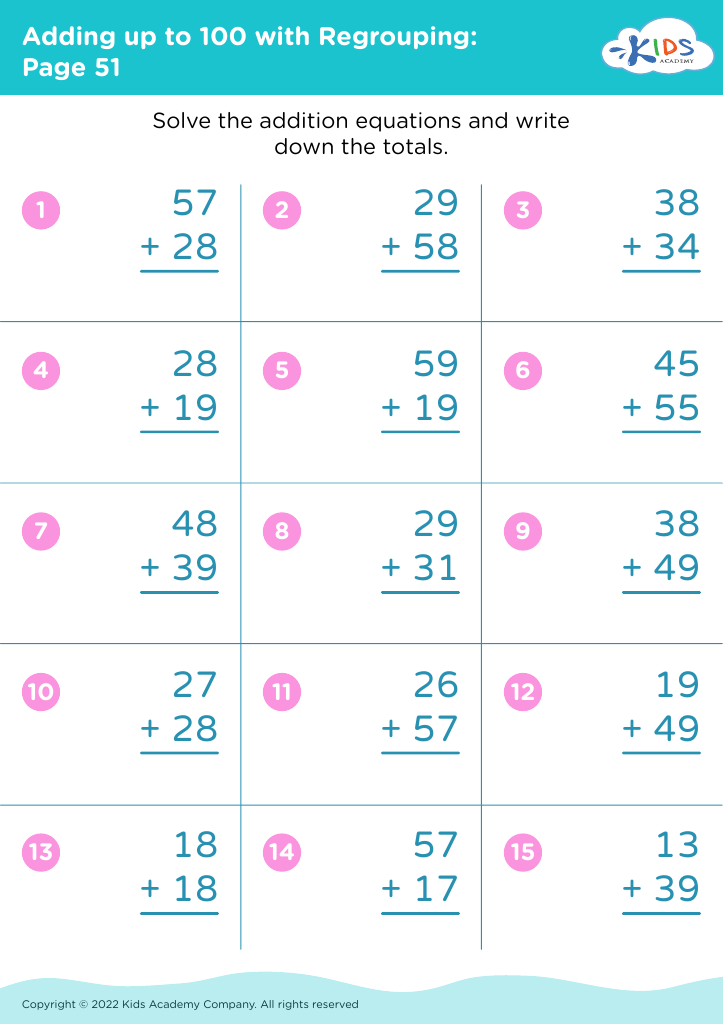
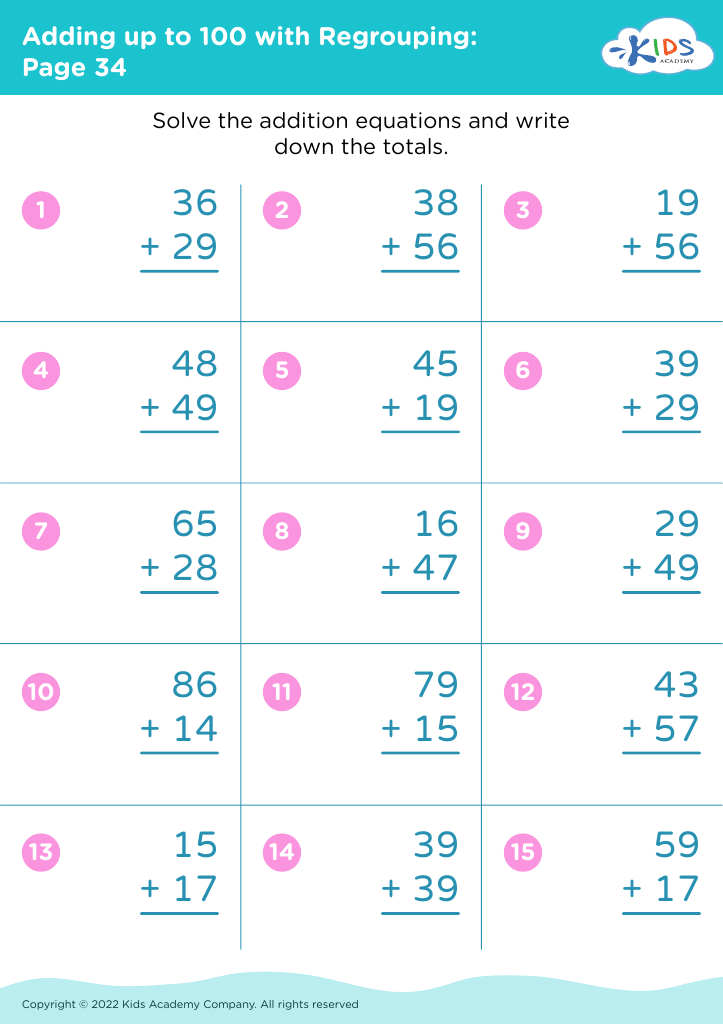
Enhance your child's math skills with our "Practice Problem-Solving: Adding Up to 100" worksheets, specially designed for ages 6 to 8. These engaging, printable worksheets help young learners develop essential problem-solving abilities while mastering addition concepts within the 100 range. Each worksheet features fun exercises that encourage critical thinking, logical reasoning, and age-appropriate challenges, making learning enjoyable and effective. Perfect for reinforcing classroom lessons or for home practice, these dynamic resources ensure that kids not only learn to add but also apply their knowledge creatively. Download now and support your child's mathematical journey in a fun and interactive way!



%20(1).jpg)



Practice problem-solving, specifically adding up to 100, is crucial for children aged 6-8 because it lays the foundation for their mathematical understanding and equips them with essential life skills. At this age, children are developing arithmetic skills and learning how to tackle problems methodically. Mastering addition concepts reinforces number sense, promotes cognitive development, and encourages critical thinking.
Incorporating problem-solving exercises around reaching the sum of 100 gives children clear, tangible goals they can visualize and work towards. It fosters perseverance, enabling students to face challenges and find solutions, which is a valuable skill both inside and outside the classroom. Moreover, engaging in these types of problem-solving tasks promotes a growth mindset, teaching children that mistakes are part of the learning process.
For parents and teachers, nurturing these skills is vital because they contribute not only to academic success but also to building confidence and independence in young learners. Problem-solving also fosters collaboration, as children often work together to solve challenges, enhancing their social skills. By prioritizing these practices, adults can support their children's overall development, preparing them for more complex mathematical concepts in the future and encouraging a lifelong love of learning.








