Practicing multiplication Adding up to 100 Worksheets for Ages 6-8
4 filtered results
-
From - To
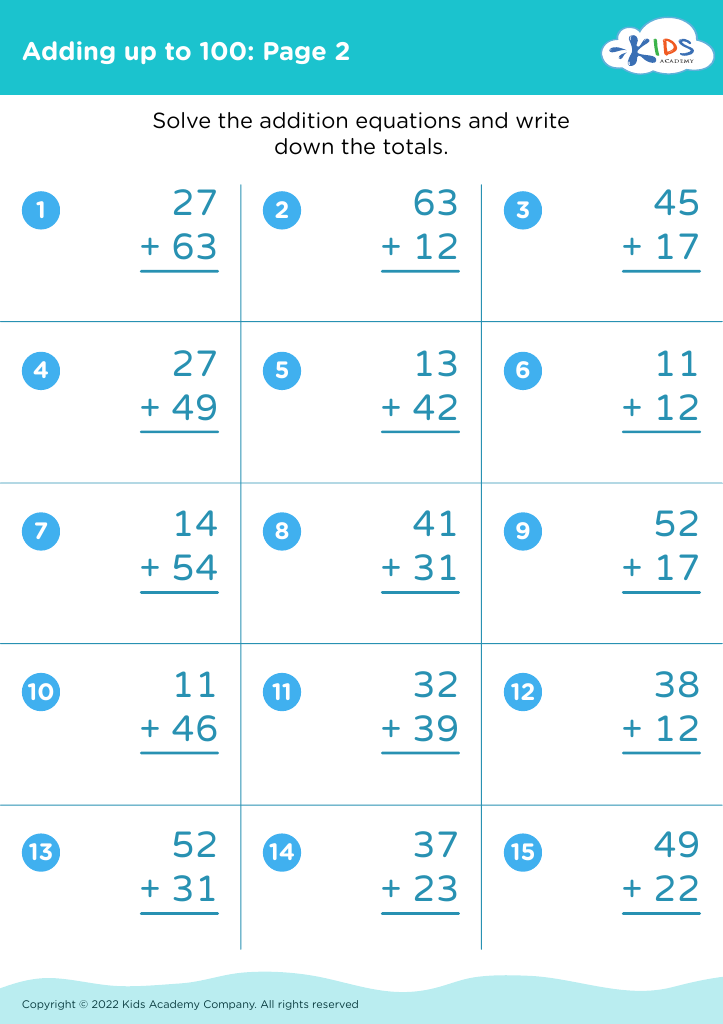
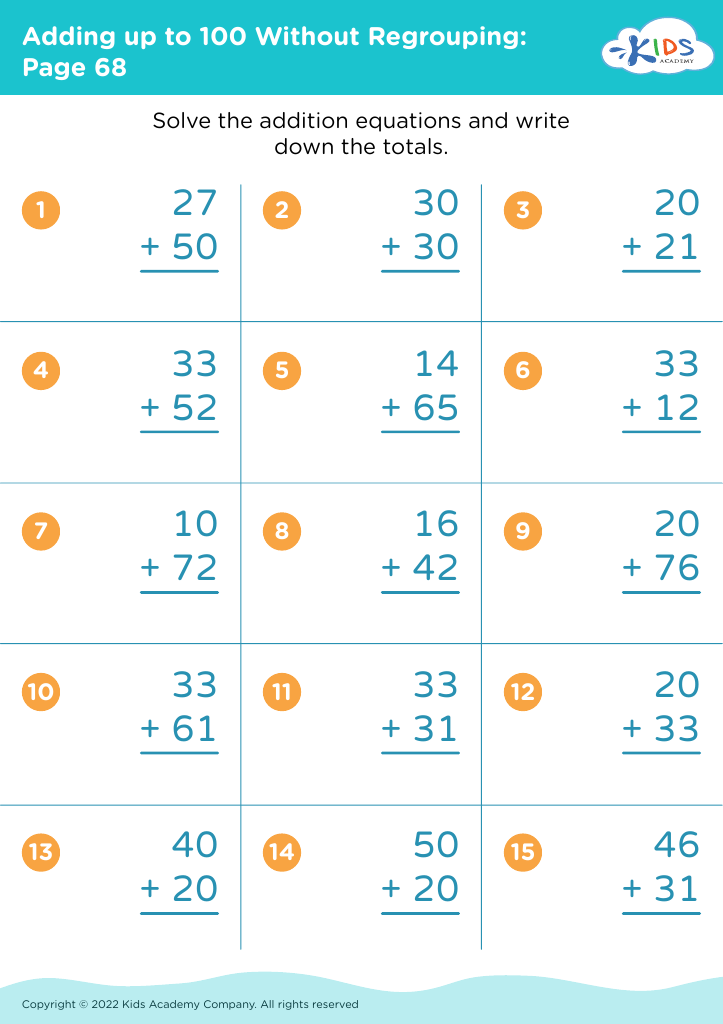
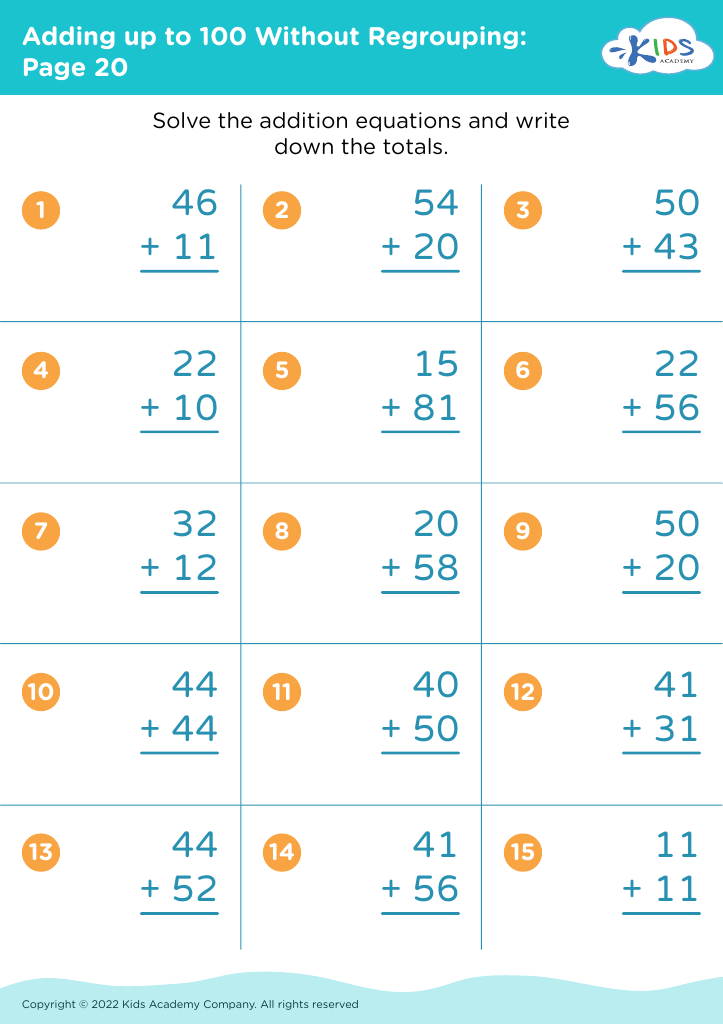
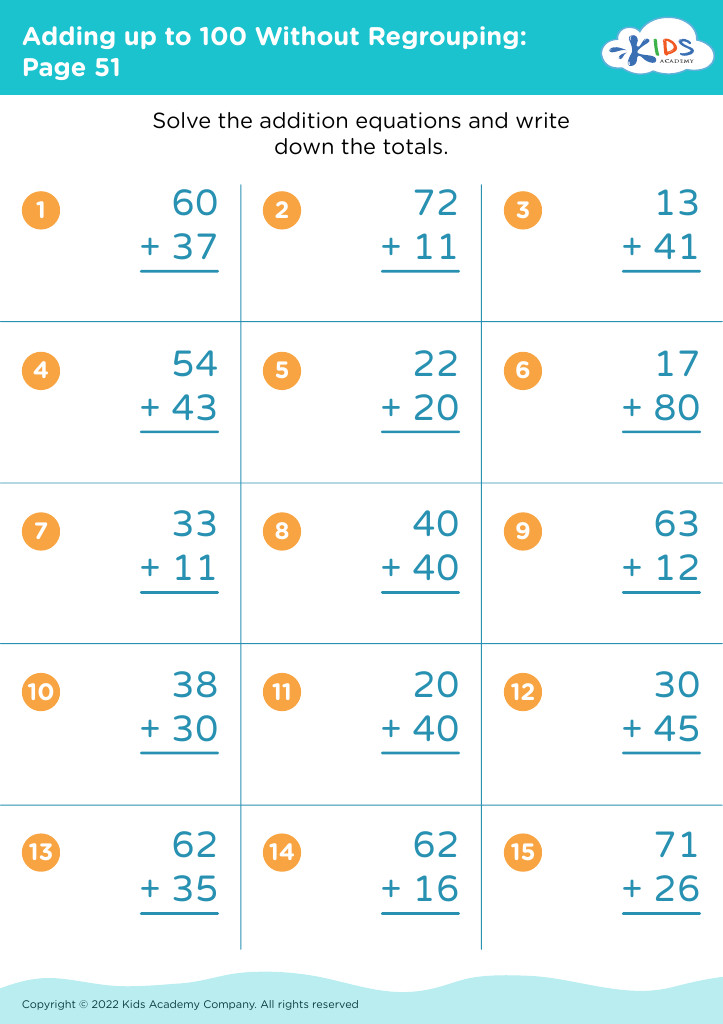
Enhance your child's math skills with our "Practicing Multiplication Adding Up to 100" worksheets, designed for ages 6-8. These worksheets help young learners master basic multiplication while reinforcing addition concepts within a 100 range. Ideal for both classroom and home practice, the engaging activities make learning fun and effective. The bright, colorful pages support visual learning and encourage independent problem-solving. Each worksheet progressively builds skills, ensuring a solid foundation in math fundamentals. Perfect for parents and teachers seeking to boost their child’s confidence and proficiency in multiplication and addition. Start your child’s math adventure today!



%20(1).jpg)



Parents and teachers should prioritize practicing multiplication and addition up to 100 for children aged 6-8 because it sets a critical foundation for future math skills. At this stage, kids are developing their cognitive abilities, and mastering basic arithmetic helps strengthen neural connections in their brains, promoting logical thinking and problem-solving skills.
Multiplication and addition are cornerstones of math that go beyond just numbers; they teach children about patterns, relationships, and how numbers interact. Knowing how to add and multiply fluently allows kids to tackle more complex math topics with confidence in later years.
Beyond academics, these skills have practical implications. Whether it's figuring out how much money they need to buy a toy or how many days left until an event, having a firm grasp of basic arithmetic helps kids navigate everyday situations effectively.
Furthermore, early competence in these areas can boost children's self-esteem and enjoyment of math. Engaging in fun and varied practice can make learning these concepts feel less like a chore and more like a rewarding challenge. Overall, focusing on practicing multiplication and addition lays a strong math foundation, stimulates cognitive development, fosters practical life skills, and cultivates positive attitudes towards learning.








