Problem-solving practice Adding up to 100 Worksheets for Ages 6-8
5 filtered results
-
From - To
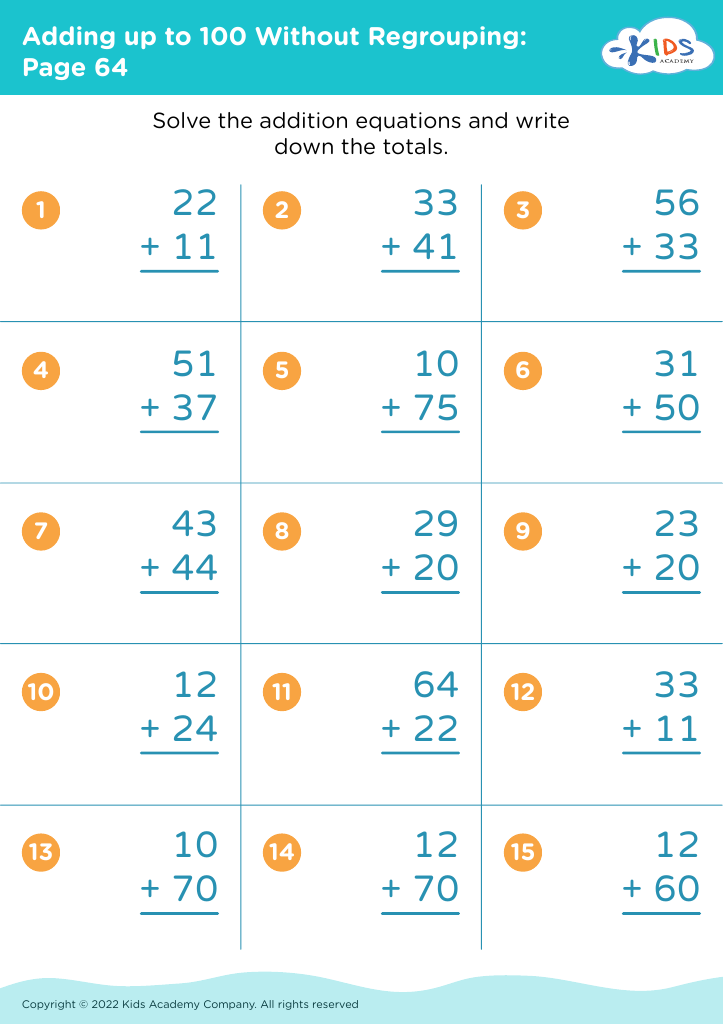
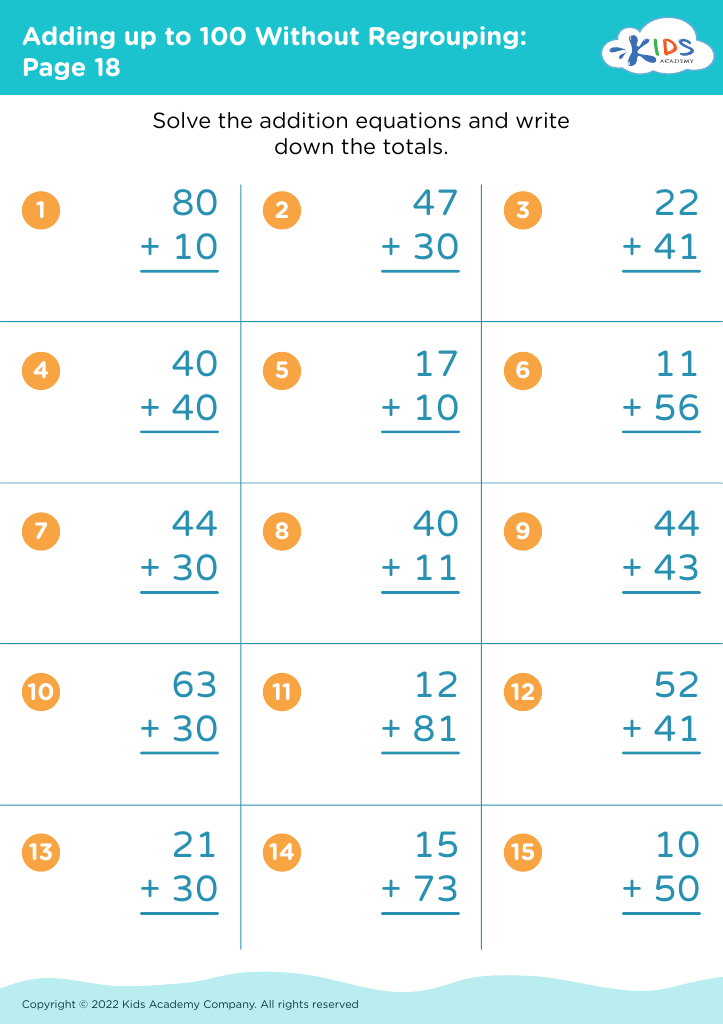
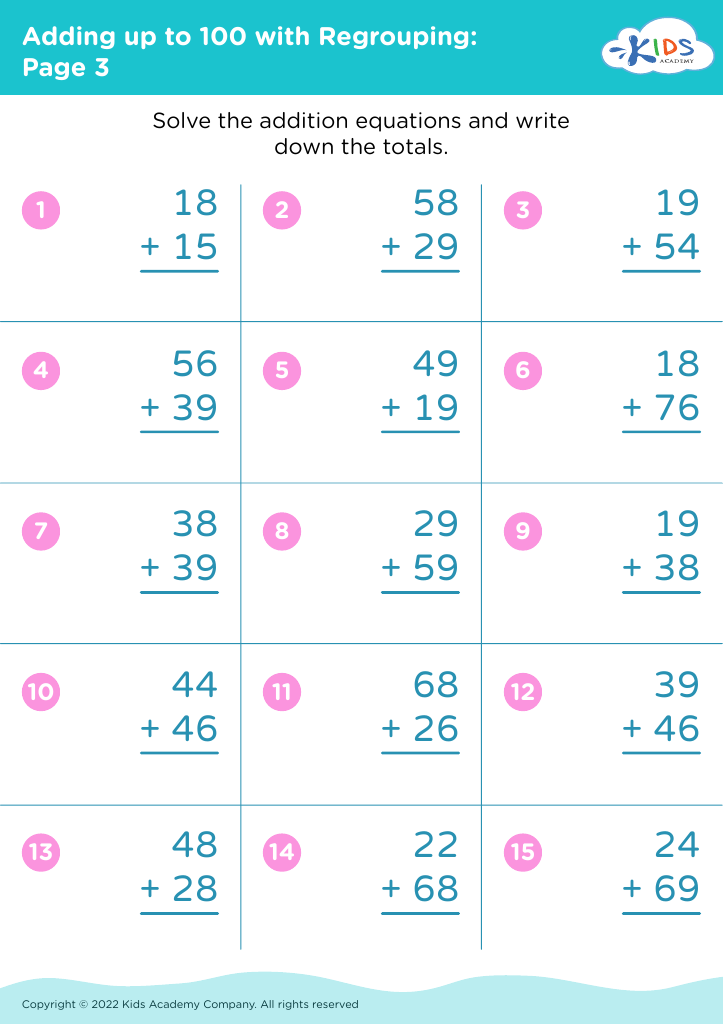
Explore our engaging "Problem-Solving Practice: Adding Up to 100 Worksheets" designed specifically for ages 6-8. These printable resources aim to enhance kids' mathematical skills through fun and interactive problem-solving activities. Each worksheet challenges young learners to apply their addition knowledge as they navigate real-world scenarios, fostering critical thinking alongside foundational math concepts. Ideal for classroom use or home learning, these worksheets encourage children to confidently tackle math problems while building a strong understanding of numbers up to 100. Empower your child's math journey and make learning an enjoyable experience with our thoughtfully crafted problem-solving worksheets!




%20(1).jpg)




Problem-solving practice, particularly focusing on addition up to 100 for children aged 6-8, is crucial for several reasons. Firstly, mastering basic addition lays the groundwork for future mathematical learning. At this age, children are becoming more aware of numbers and their relationships; engaging them in problem-solving helps build their numerical fluency and confidence.
Secondly, problem-solving cultivates critical thinking skills. Children learn to analyze problems, develop strategies, and arrive at solutions independently, all of which are vital skills that extend beyond mathematics. These skills promote resilience and perseverance, teaching children that challenges can be overcome through careful thought and examination.
Moreover, engaging in problem-solving activities often involves real-world scenarios, making mathematics relatable and relevant. For instance, when presented with a problem involving adding items at a grocery store, children can see practical applications of their and math skills in everyday lives.
Lastly, as parents and teachers foster a love for problem-solving, they create an environment that encourages curiosity and a growth mindset. This approach nurtures lifelong learners who are eager to tackle new challenges, setting a positive tone for their academic journey ahead. Thus, prioritizing problem-solving practice is essential for the holistic development of children.








