Recognizing Patterns Adding up to 100 Worksheets for Ages 6-8
5 filtered results
-
From - To
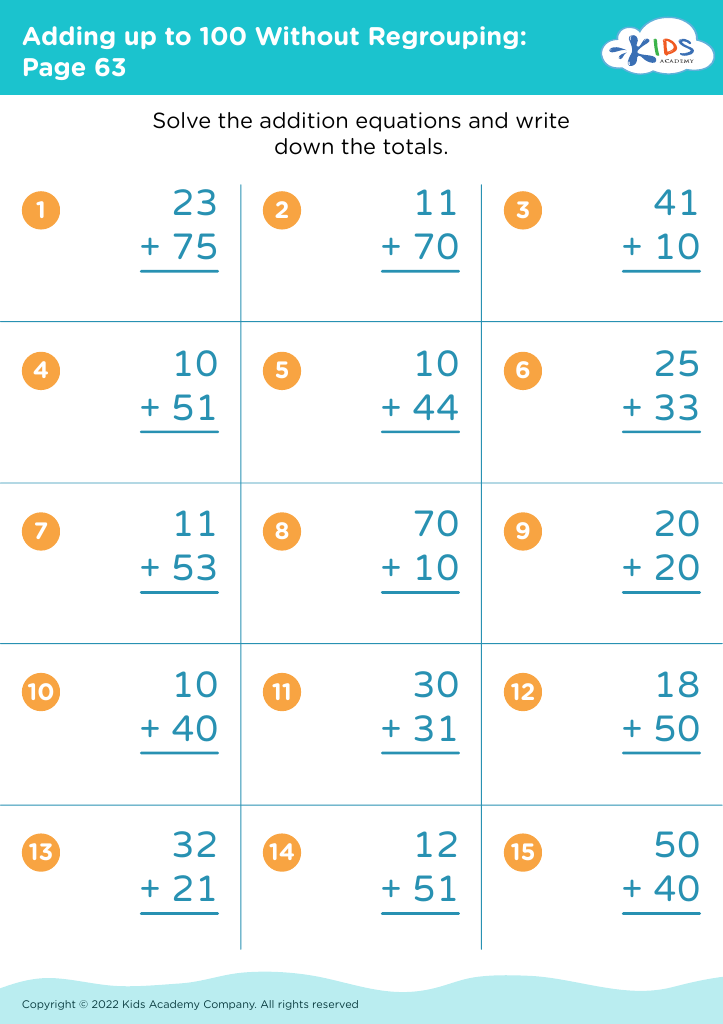
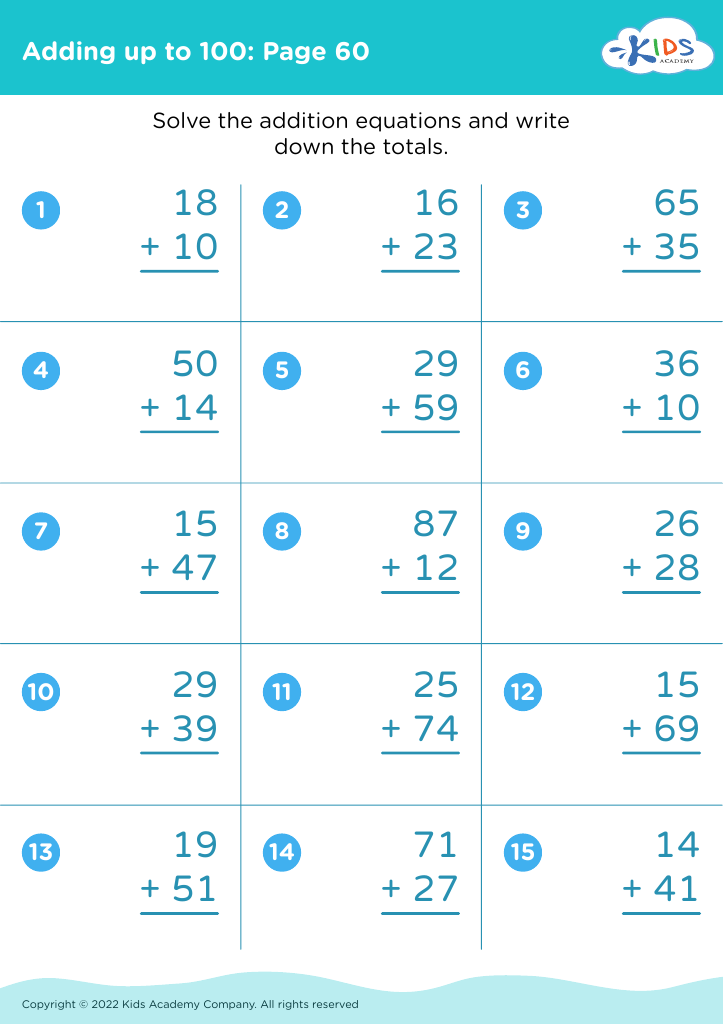
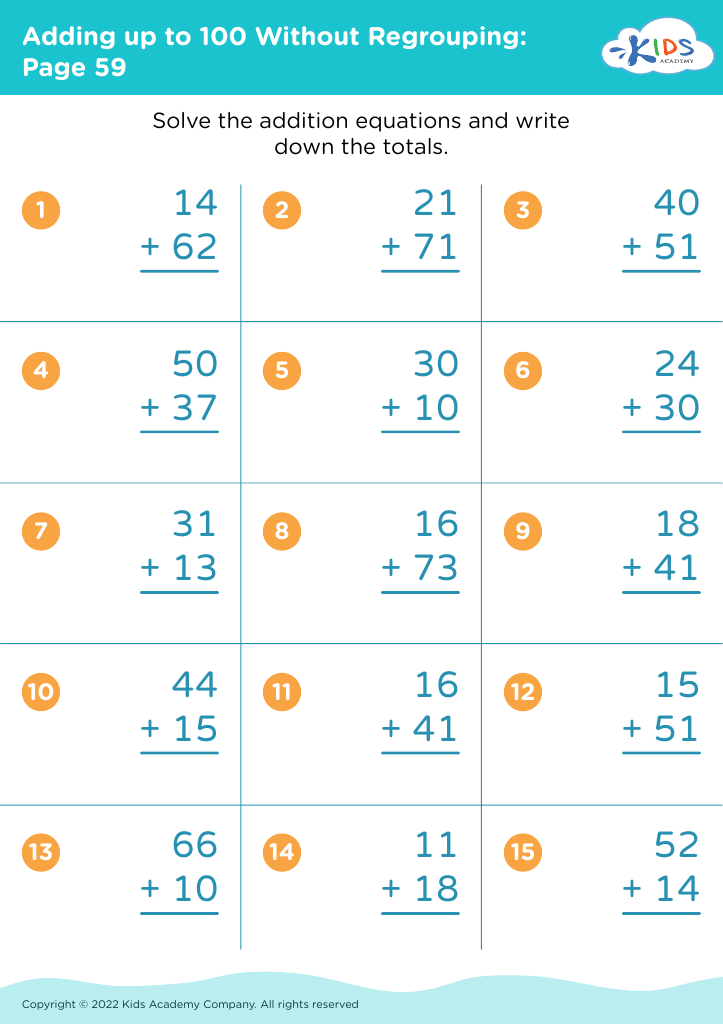
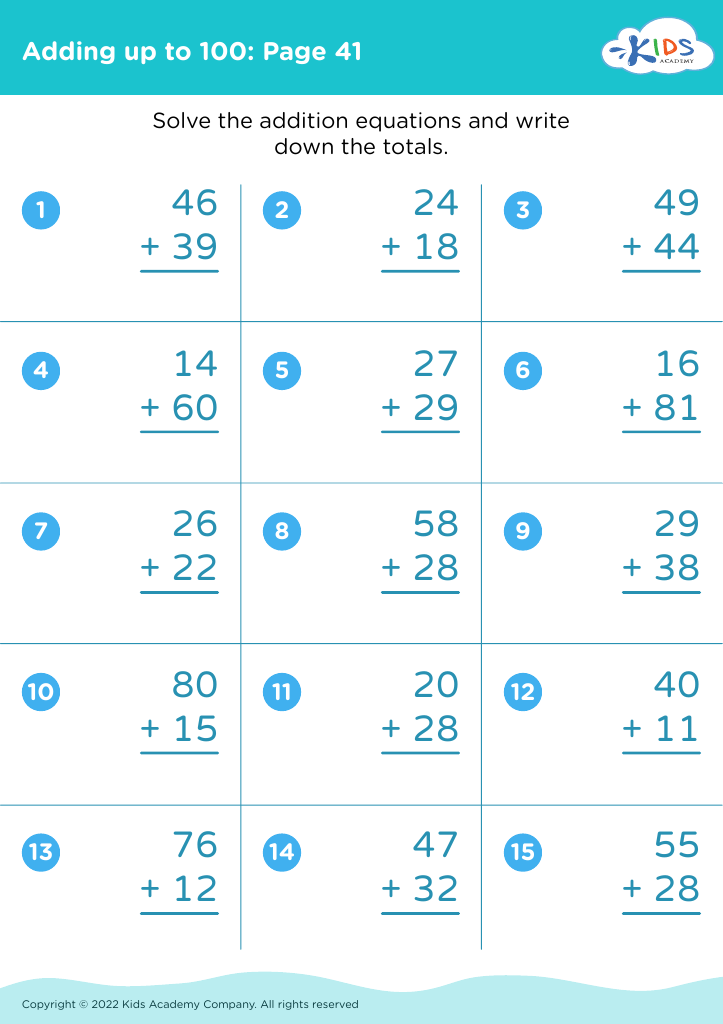
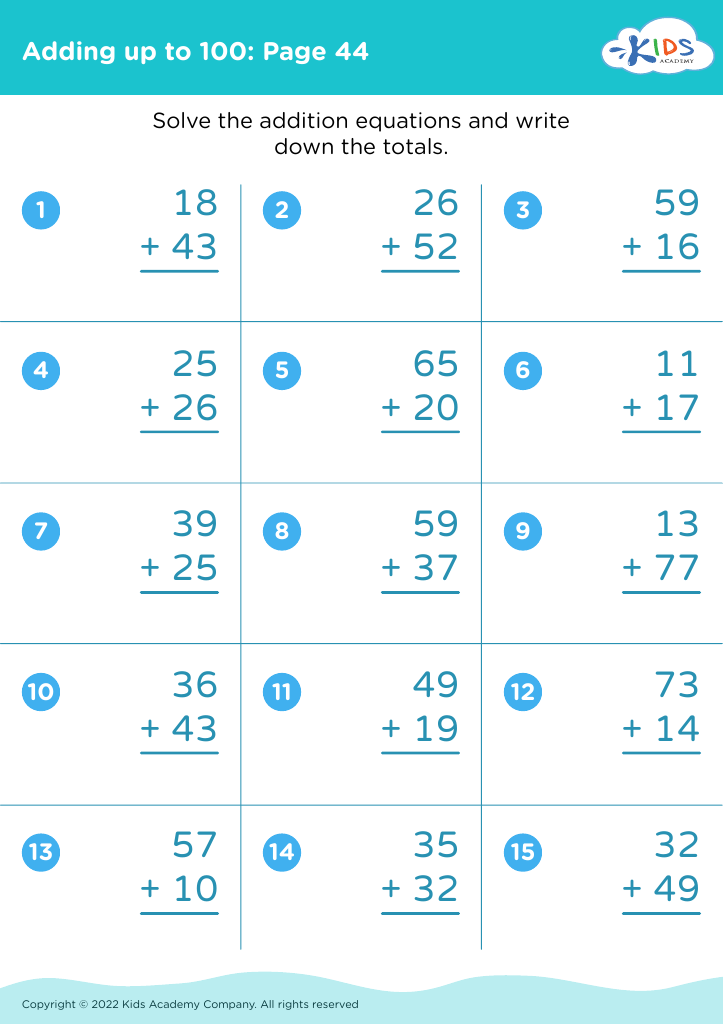
Discover our engaging "Recognizing Patterns Adding up to 100 Worksheets" designed specifically for children aged 6-8. These printable worksheets provide a fun and interactive way for young learners to identify and comprehend numerical patterns while mastering addition skills that total up to 100. Tailored to reinforce critical thinking and enhance problem-solving abilities, these resources will help students recognize sequences and relationships in numbers. Each worksheet offers a variety of exercises to cater to different learning styles, making mathematics enjoyable and accessible. Support your child's mathematical journey today with our expertly crafted worksheets that promote essential foundational skills!




%20(1).jpg)


Recognizing patterns and mastering addition up to 100 are fundamental skills for children aged 6 to 8 years. At this developmental stage, children are building their mathematical foundations, and understanding patterns can enhance their problem-solving abilities. When parents and teachers emphasize the importance of recognizing patterns, they help students make connections between numbers, facilitating easier and more intuitive calculations.
For instance, recognizing that numbers can be grouped in tens (like 10 + 10 = 20) aids in mental math and allows children to add more complex numbers without counting each one individually. This not only boosts confidence but also prepares them for future math concepts, such as multiplication.
Additionally, fostering these skills encourages logical thinking and analytical reasoning, which are essential for academic success across various subjects. Parents and teachers also play a critical role in creating a positive learning environment that motivates children to engage with math.
Moreover, understanding patterns is not limited to arithmetic; it extends to recognizing sequences in daily life, which applies to critical thinking and decision-making. Ultimately, emphasizing pattern recognition and number fluency ensures that children are well-equipped for future mathematical challenges and lays the groundwork for lifelong learning.








