Shape Recognition Adding up to 100 Worksheets for Ages 6-8
8 filtered results
-
From - To
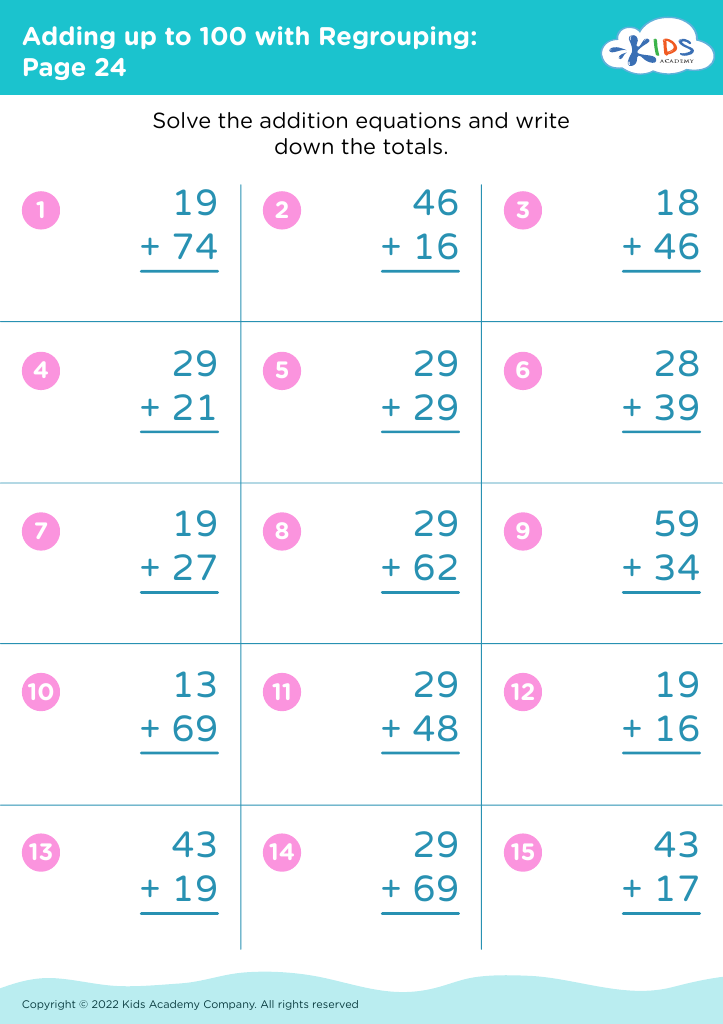
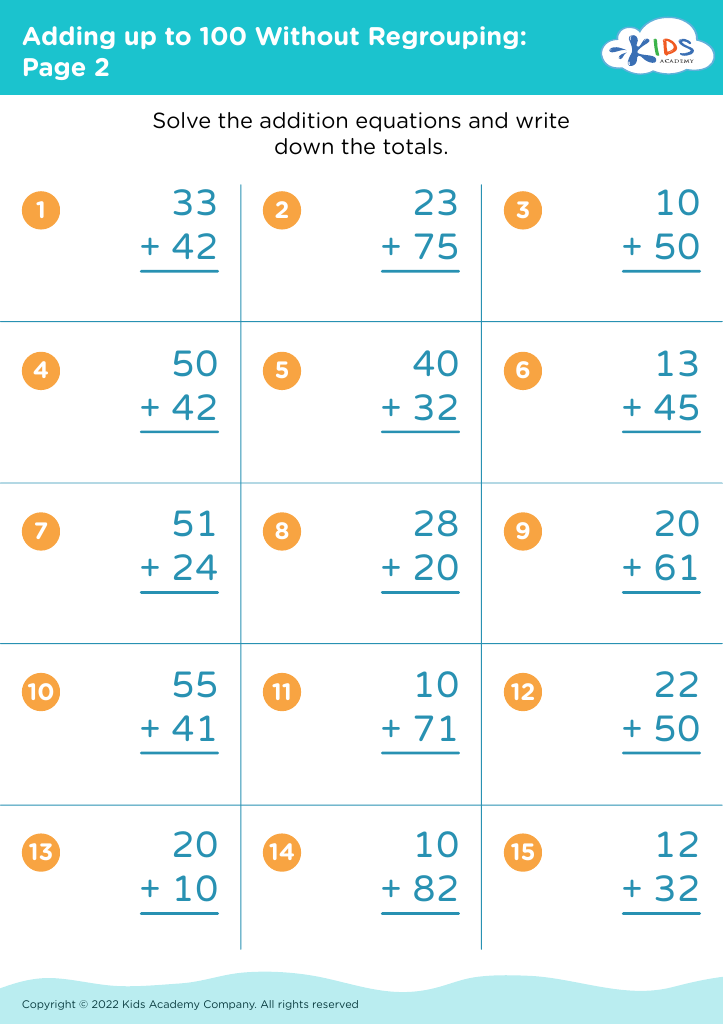
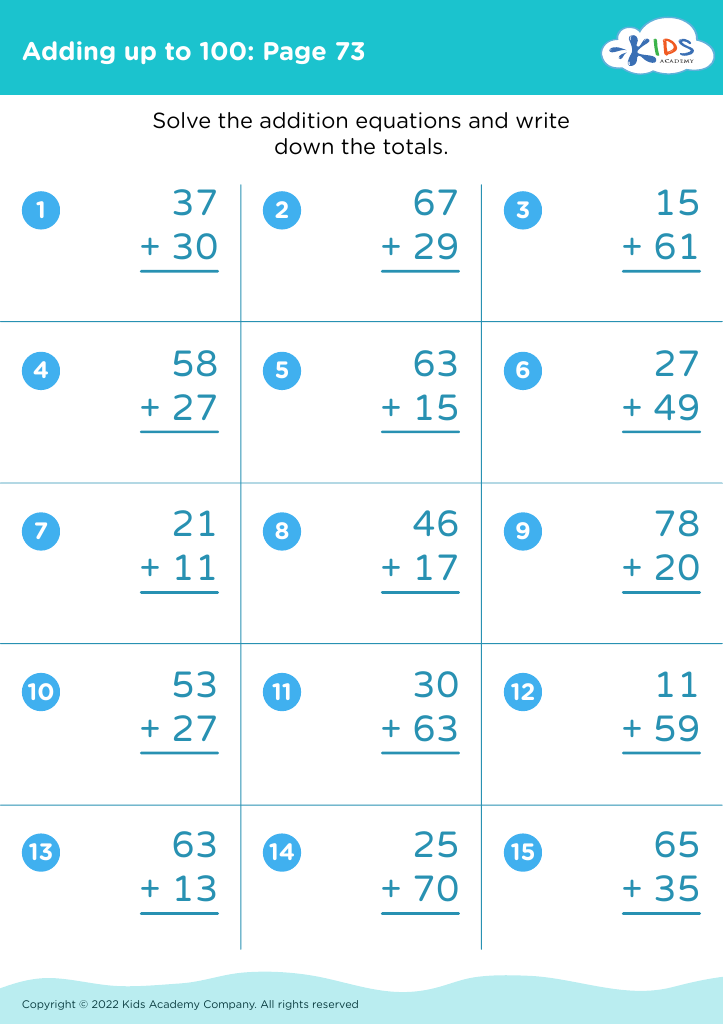
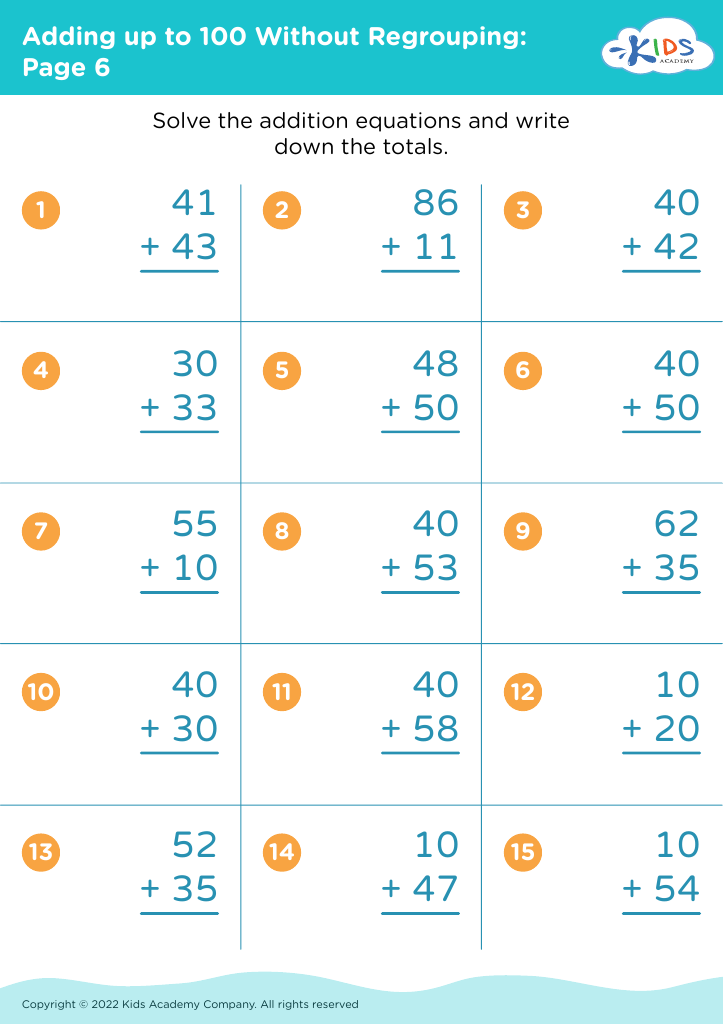
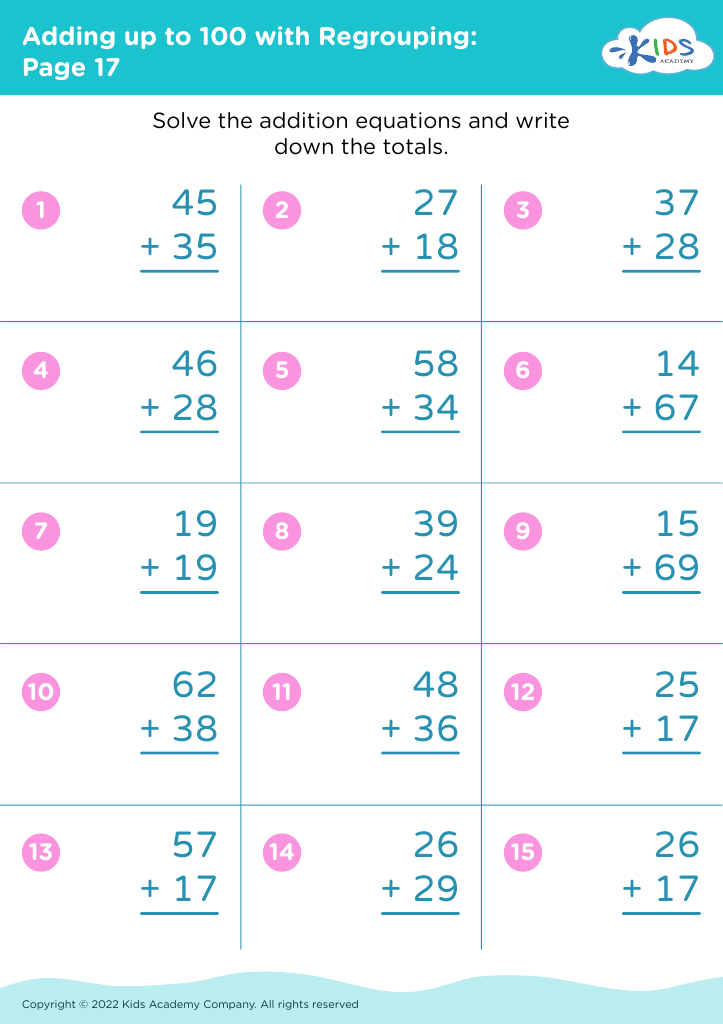
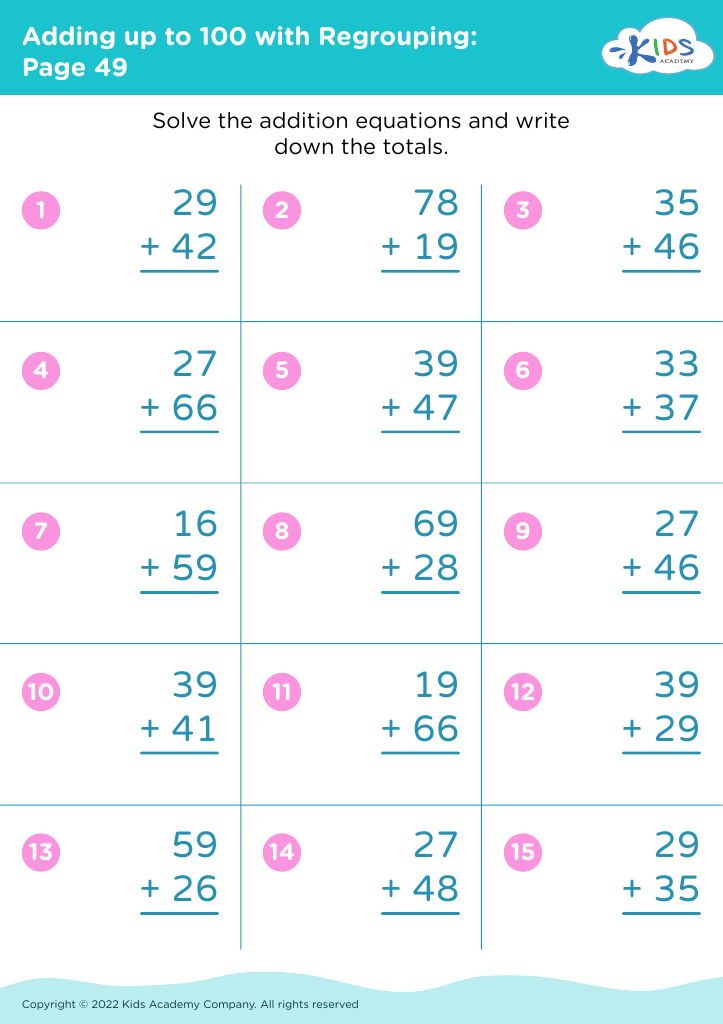
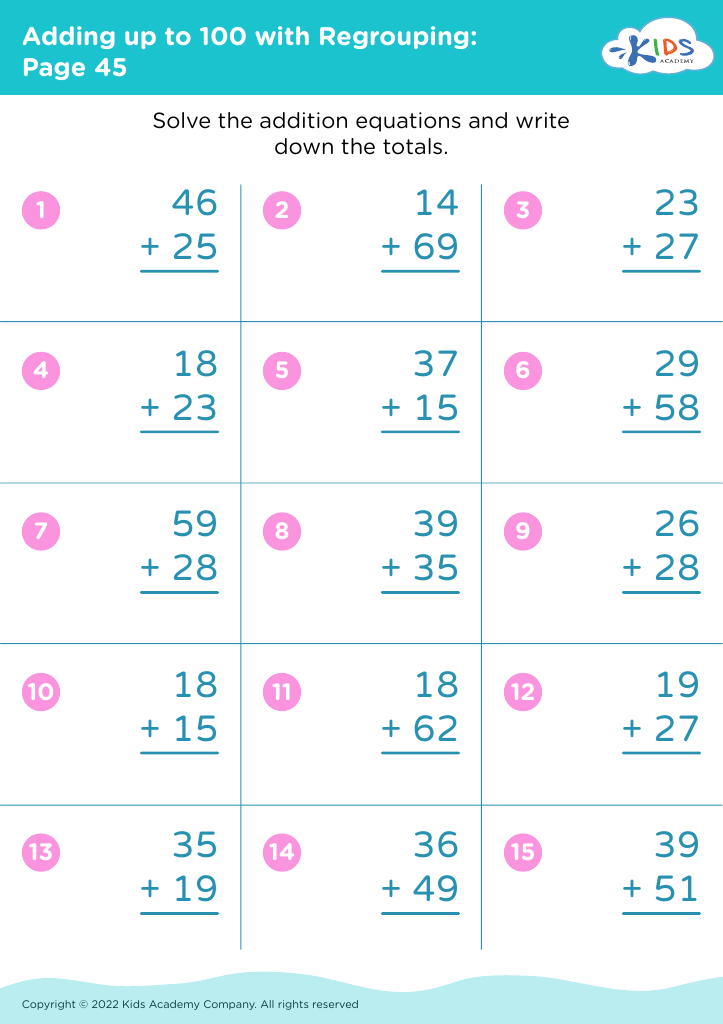
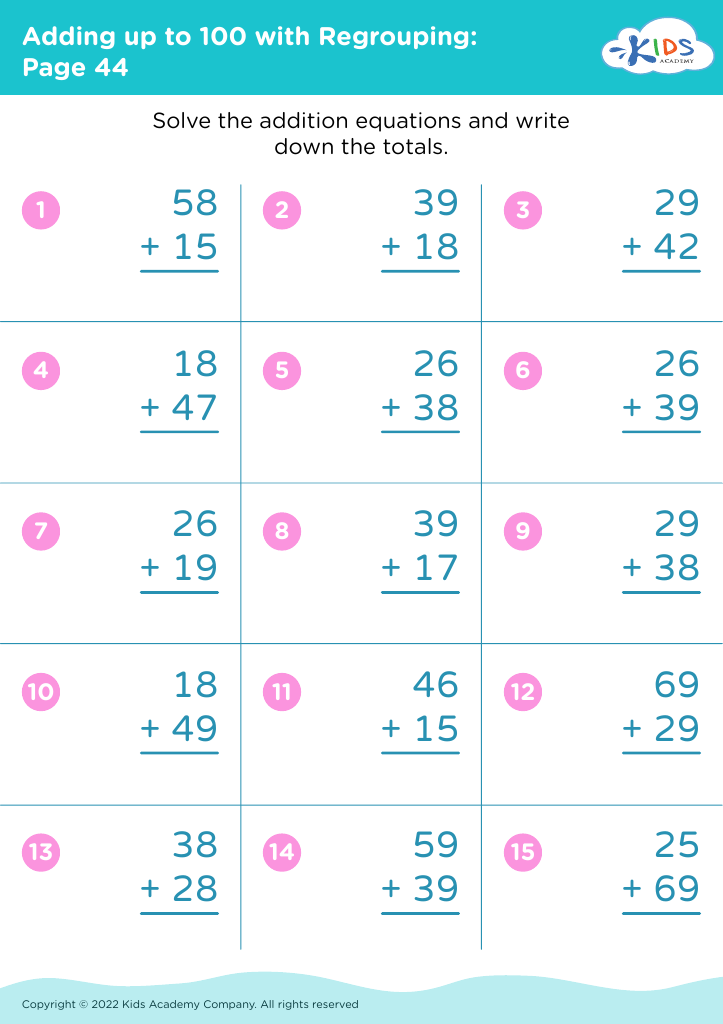
Explore our engaging "Shape Recognition Adding up to 100 Worksheets" designed for young learners aged 6-8! These interactive worksheets combine fundamental math skills with an exciting focus on shape recognition, helping children master addition while identifying various geometric figures. Each worksheet features colorful visuals and fun activities that make learning enjoyable and promote critical thinking. Perfect for classroom use or at-home practice, these resources are tailored to enhance your child's cognitive development and math proficiency. Encourage a love for learning and shape exploration with our thoughtfully crafted worksheets, transforming math practice into an exciting adventure. Download now and watch your child thrive!


%20(1).jpg)




Shape recognition and the ability to add up to 100 are foundational skills for children aged 6-8, playing a crucial role in their cognitive development and mathematical understanding. When children recognize shapes, they enhance their spatial awareness, which is essential for problem-solving and critical thinking. Recognizing a variety of shapes—triangles, circles, squares—enables children to classify objects, understand geometry, and connect with real-world applications.
Adding up to 100 is another important milestone; it introduces children to addition, a fundamental concept in mathematics. Mastering this skill supports mental math, promotes number sense, and prepares students for more complex arithmetic operations they will encounter in future grades. Moreover, the ability to process numbers in this way builds confidence in their mathematical abilities, setting a positive tone for their overall learning journey.
Parents and teachers who prioritize these skills help children develop a well-rounded educational foundation. When children can identify shapes and confidently manipulate numbers, they can engage more fully with their environment and solve real-world problems. By fostering these capabilities early, we ensure that children are not only prepared for mathematical challenges but also for the intricate relationships between math and their everyday lives. This early investment significantly impacts their academic success and personal growth.








