Understand fractions Adding up to 100 Worksheets for Ages 6-8
5 filtered results
-
From - To
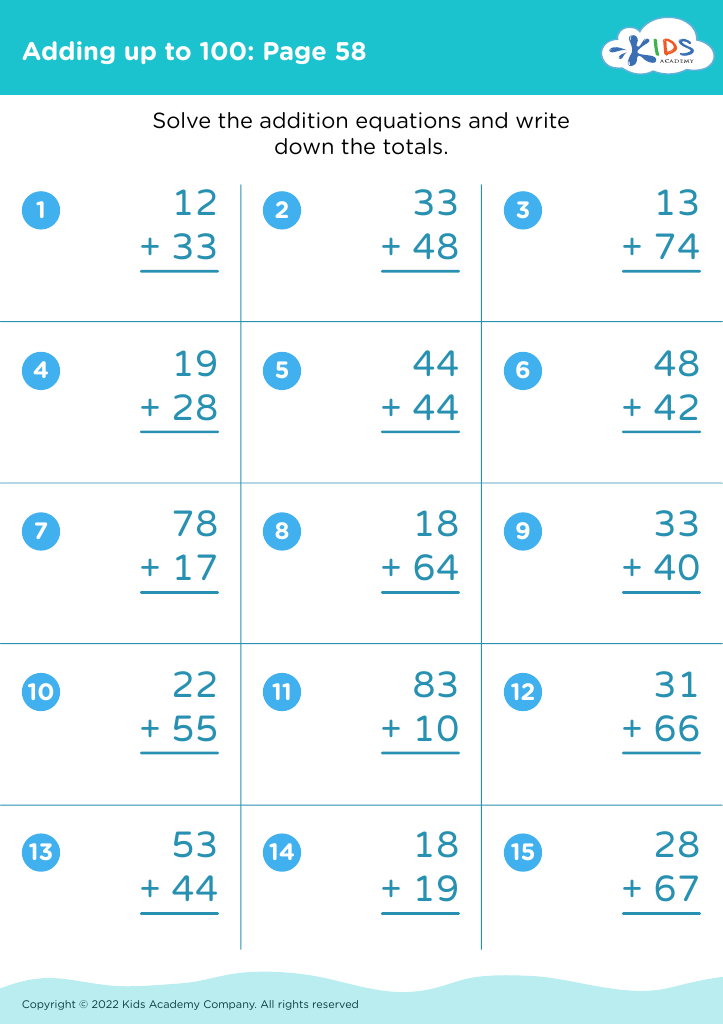
Help your child master fractions with our "Understand Fractions Adding up to 100" worksheets, designed for ages 6-8. These engaging and educational printable worksheets introduce youngsters to the fundamentals of fractions in a fun and interactive way. Children will visualize and practice splitting whole numbers and adding fractions up to 100, enhancing their understanding and confidence in math. Perfect for classroom and home, our worksheets align with common core standards, ensuring your child stays on track with their math skills. Turn learning fractions into an enjoyable adventure with Kids Academy's high-quality resources!
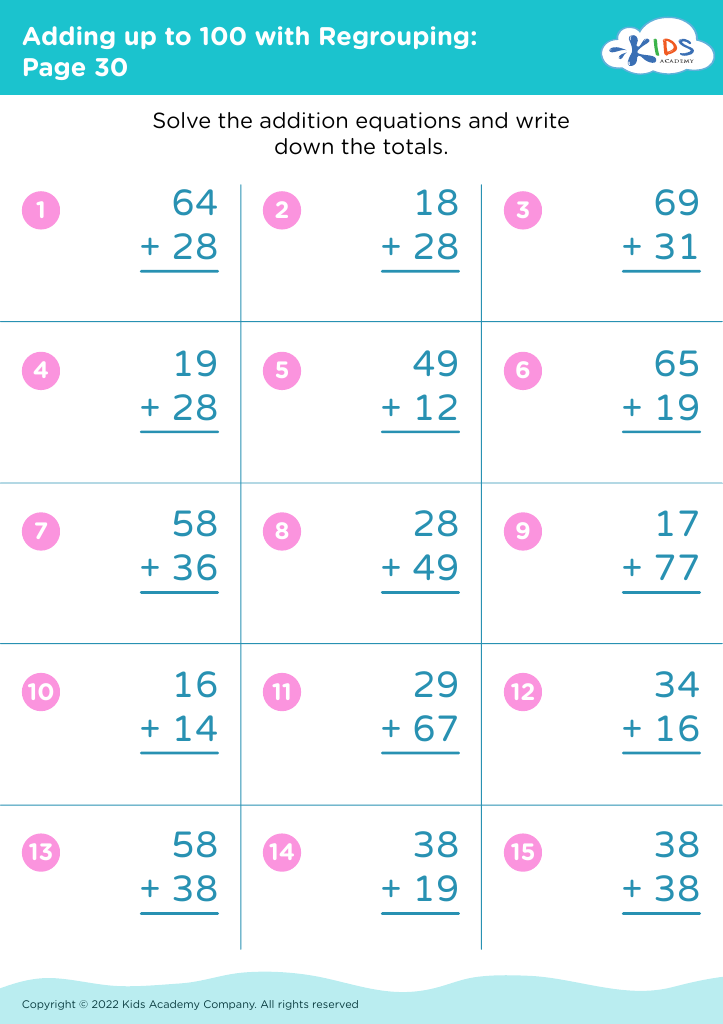
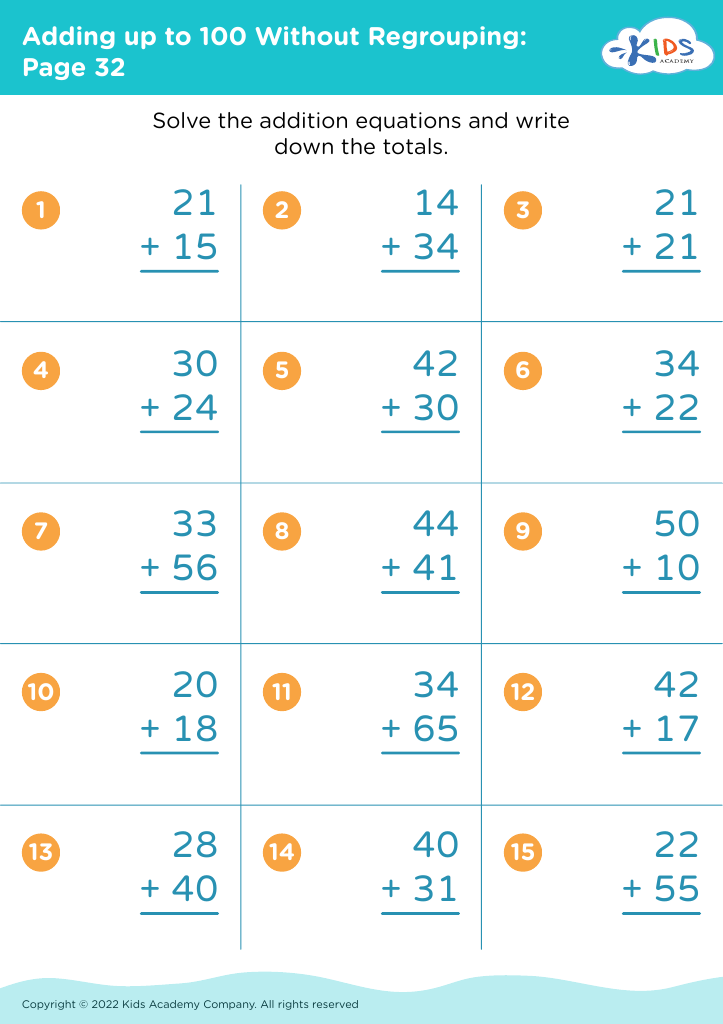
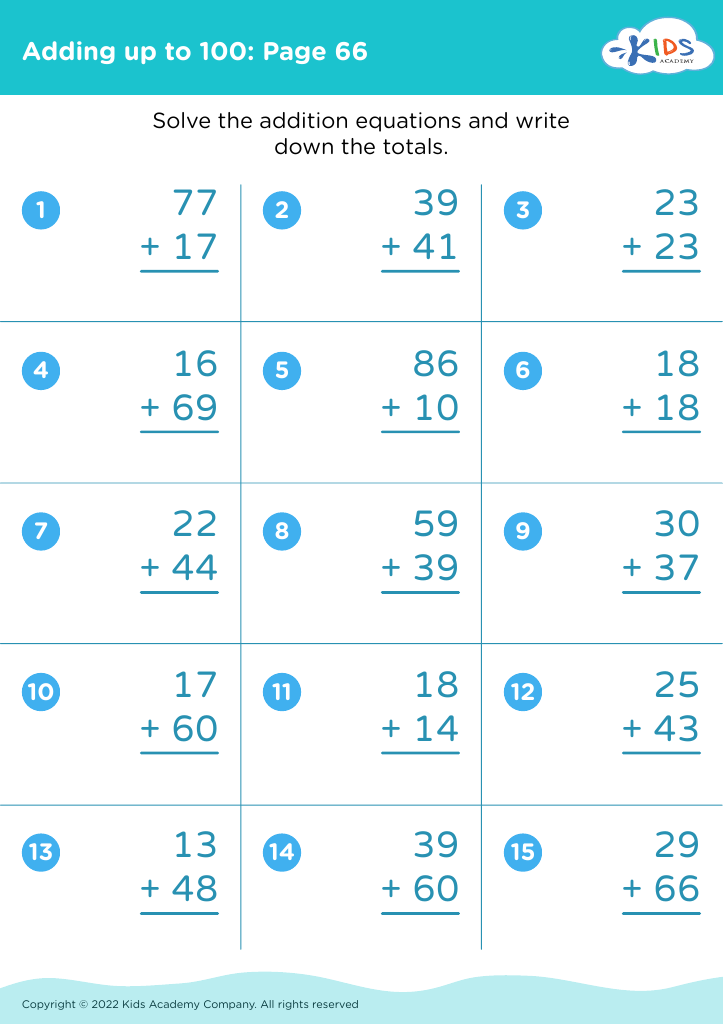
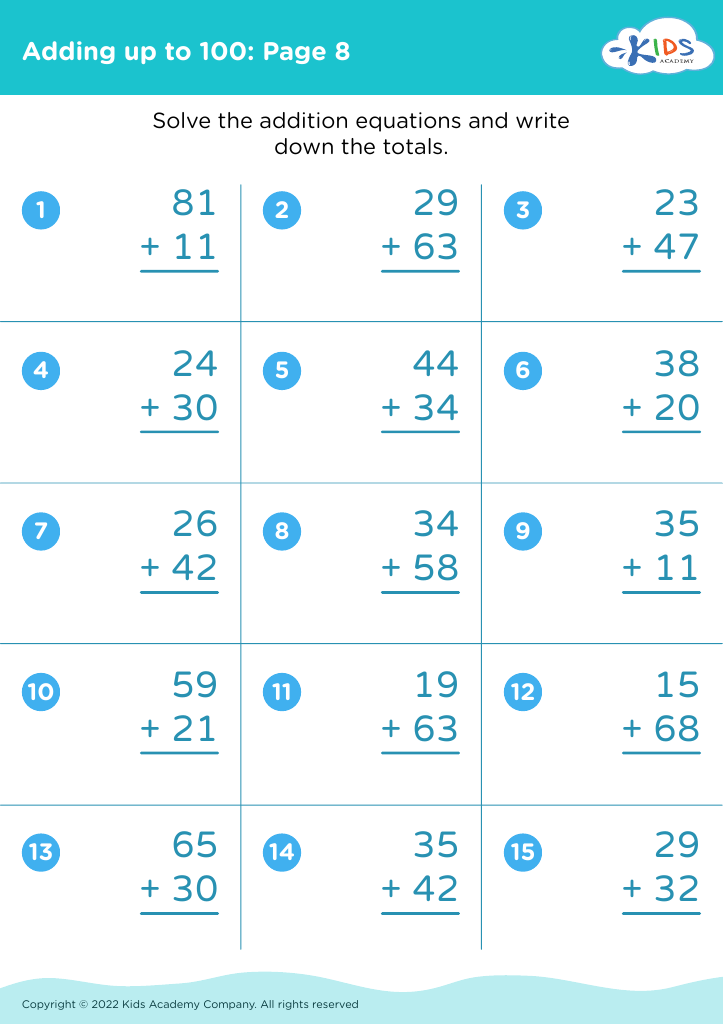



%20(1).jpg)



Understanding fractions and their ability to add up to 100 is essential for children ages 6-8 as it lays the groundwork for future mathematical concepts. At this age, children are developing their number sense, and fractional understanding helps them grasp the idea that numbers can be divided into parts. Learning about fractions also enhances their ability to work with decimal and percentage operations later on.
When children understand how fractions contribute to a whole, they perform better in everyday math skills, such as dealing with money, telling time, and measuring ingredients in recipes. For instance, recognizing that four quarters make up a whole dollar is practical knowledge that ties directly into their daily experiences.
Additionally, engaging children with fractions by adding up to 100 encourages mathematical reasoning and critical thinking. They learn to approach problems methodically and understand the properties and relationships between numbers. This skill is transferable to more complex problem-solving situations outside of the classroom.
For teachers and parents, fostering an early comprehension of fractions helps to build a solid mathematical foundation and promotes a positive attitude toward math. Practical activities that involve fractions, such as cooking together or simple crafts, can make learning interactive and fun, reinforcing the concepts in a meaningful way. This helps ensure a smoother transition as they advance to more intricate mathematical concepts.








