Understanding fractions Adding up to 100 Worksheets for Ages 6-8 - Page 3
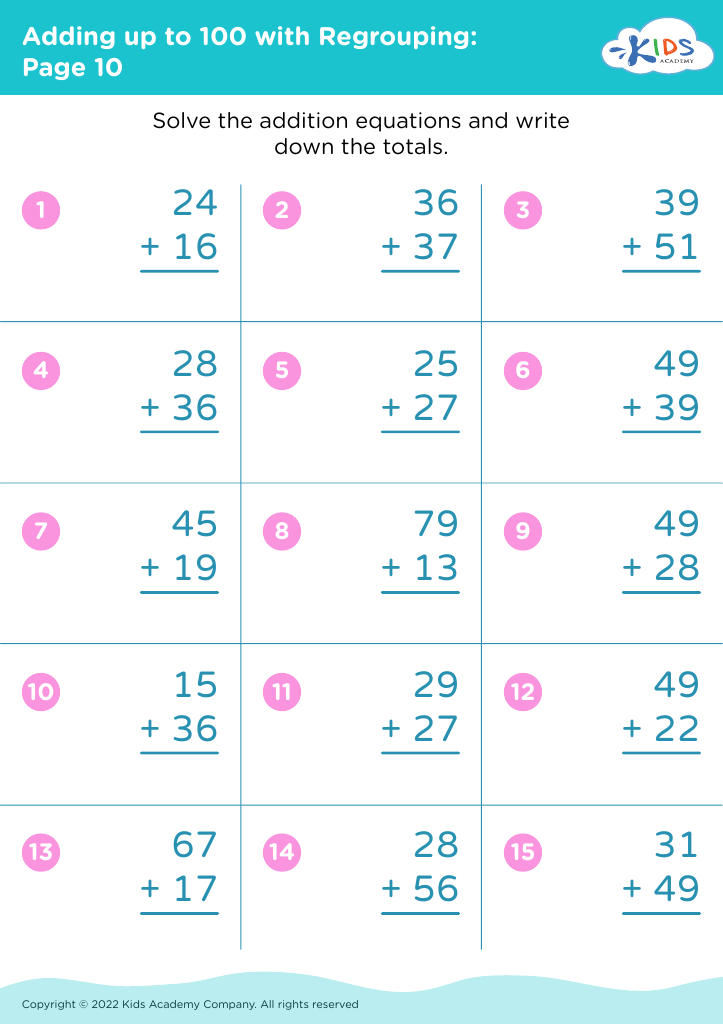
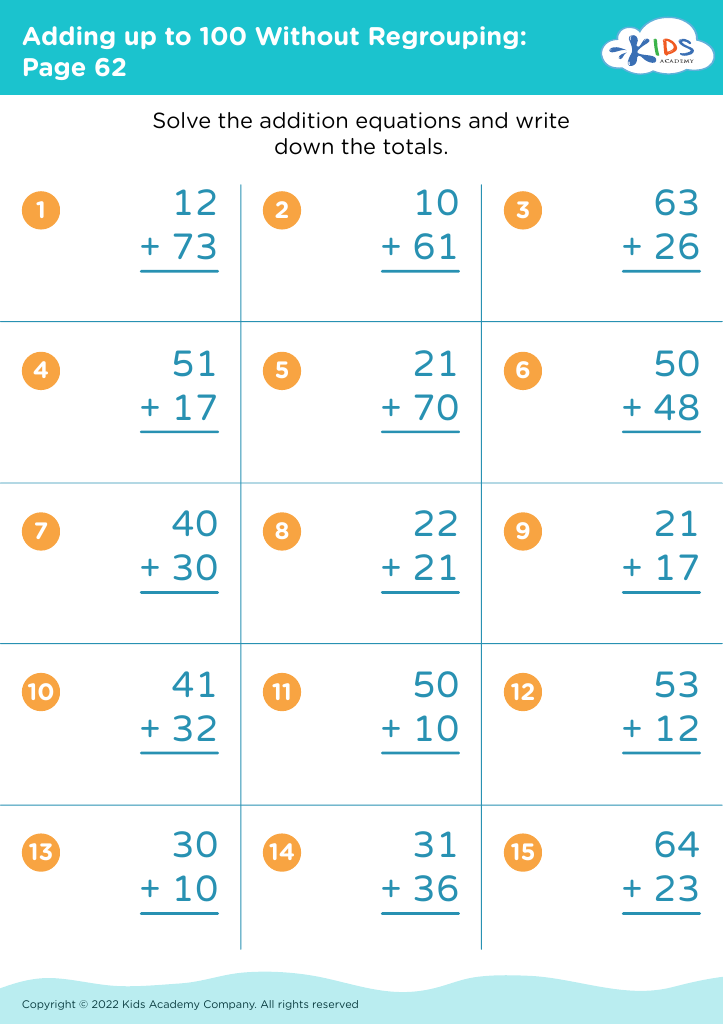
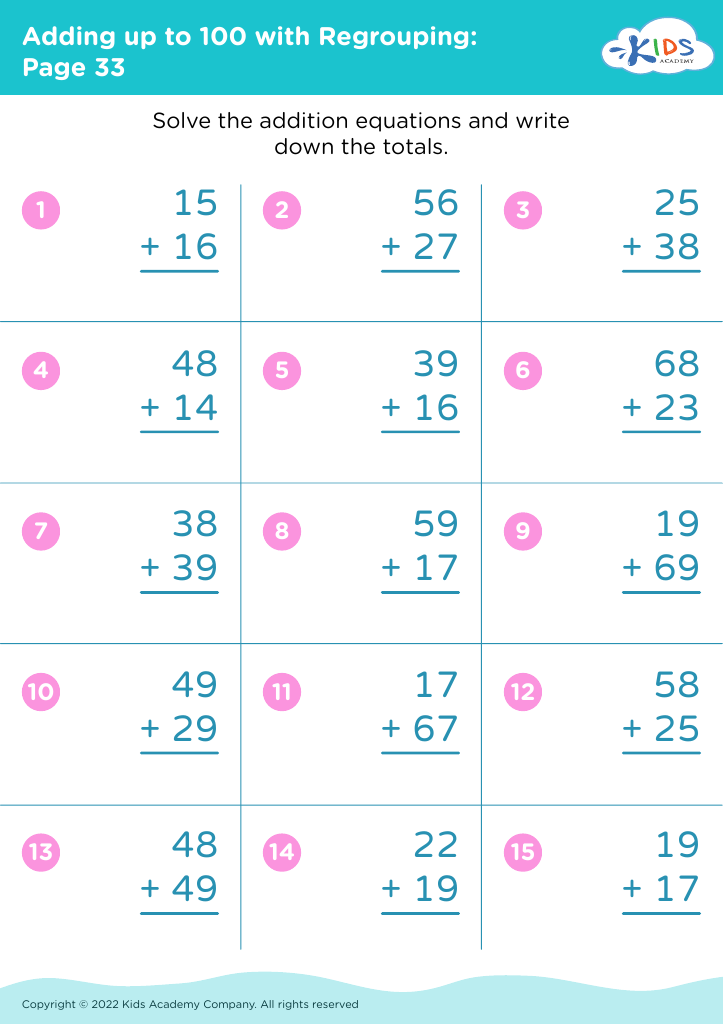








Understanding fractions, especially adding up to 100, is crucial for children aged 6-8 because it lays the foundation for their future math skills. At this developmental stage, children begin to grasp important mathematical concepts that foster logical thinking and problem-solving abilities. By learning about fractions, they develop a sense of parts versus wholes, which is vital for understanding more complex topics like percentages and ratios later on.
When students can add fractions that total 100, they start to comprehend the idea of equivalence and part-whole relationships, which are essential aspects of math literacy. This understanding enables them to apply math in real-life situations, such as cooking, budgeting, or time management. For parents and teachers, focusing on this concept helps identify students who may need additional support in their math journey, setting them up for success in future math endeavors.
Moreover, early mastery of these skills can boost a child's confidence and foster a positive relationship with math, reducing anxiety as they progress through school. Thus, emphasizing understanding fractions and the significance of adding up to 100 empowers young learners and equips them with critical skills they'll utilize for years to come.








