Understanding symmetry Adding up to 100 Worksheets for Ages 6-8
5 filtered results
-
From - To
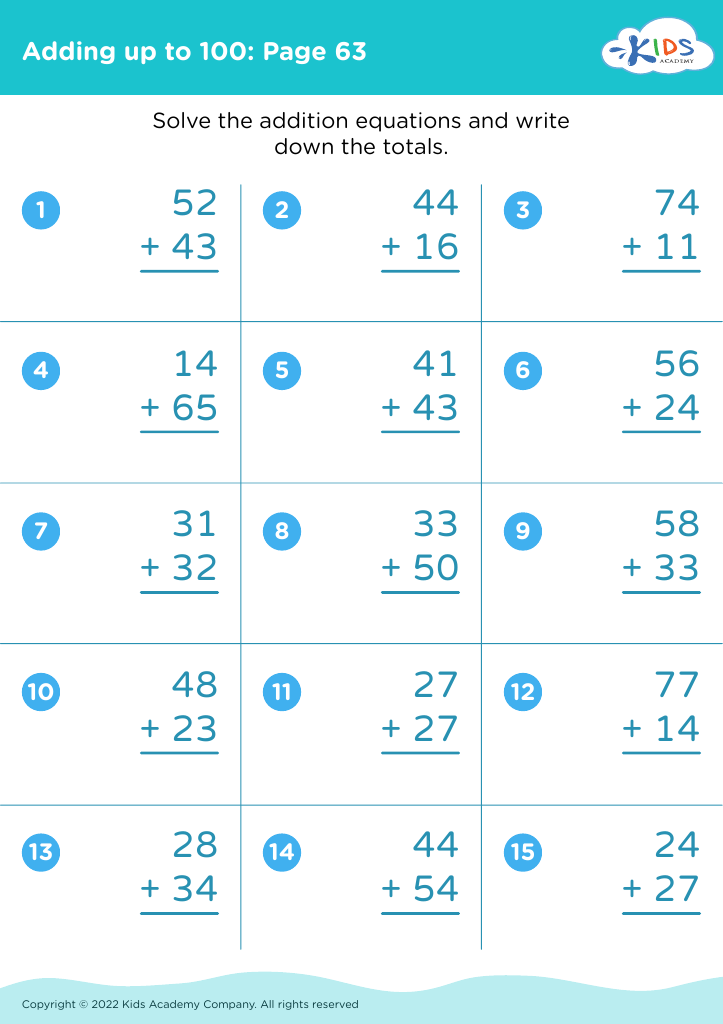
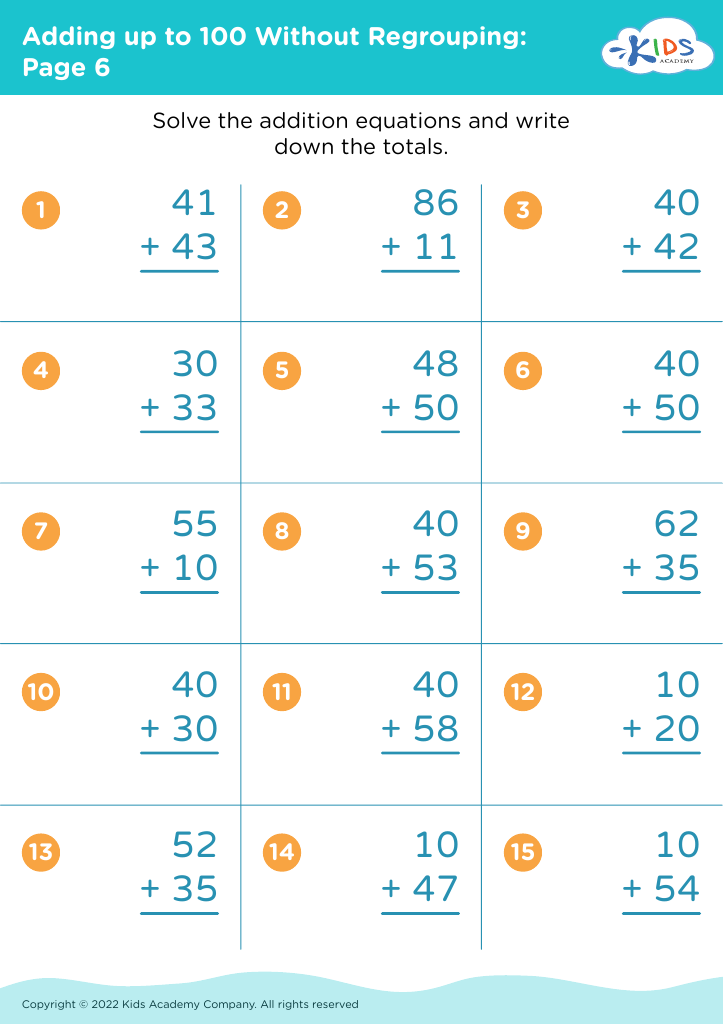
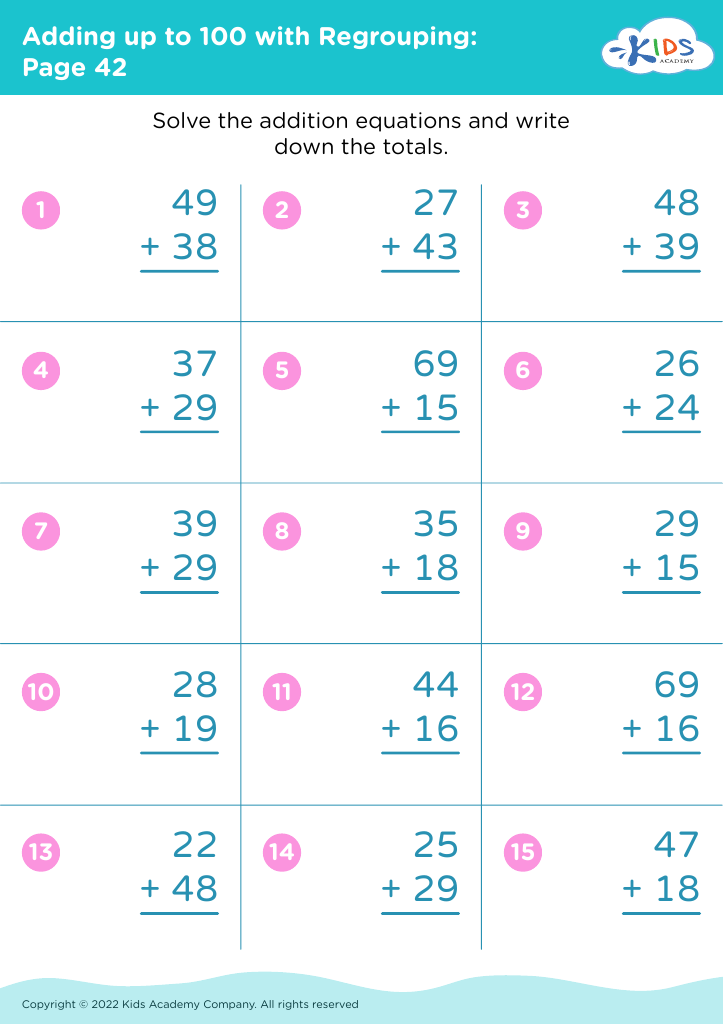
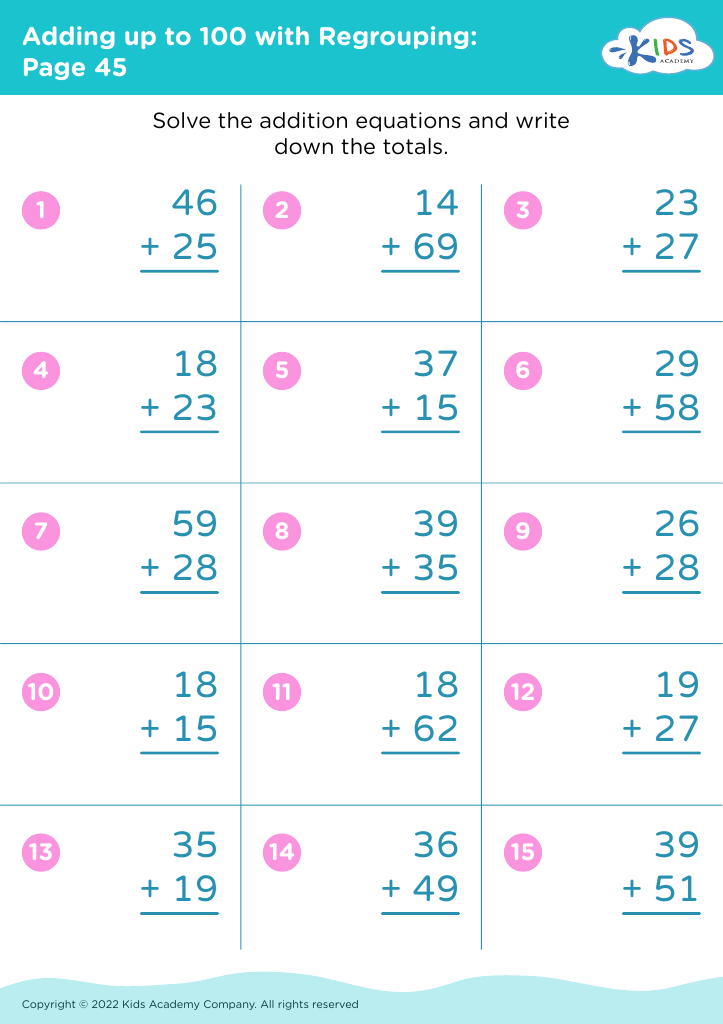
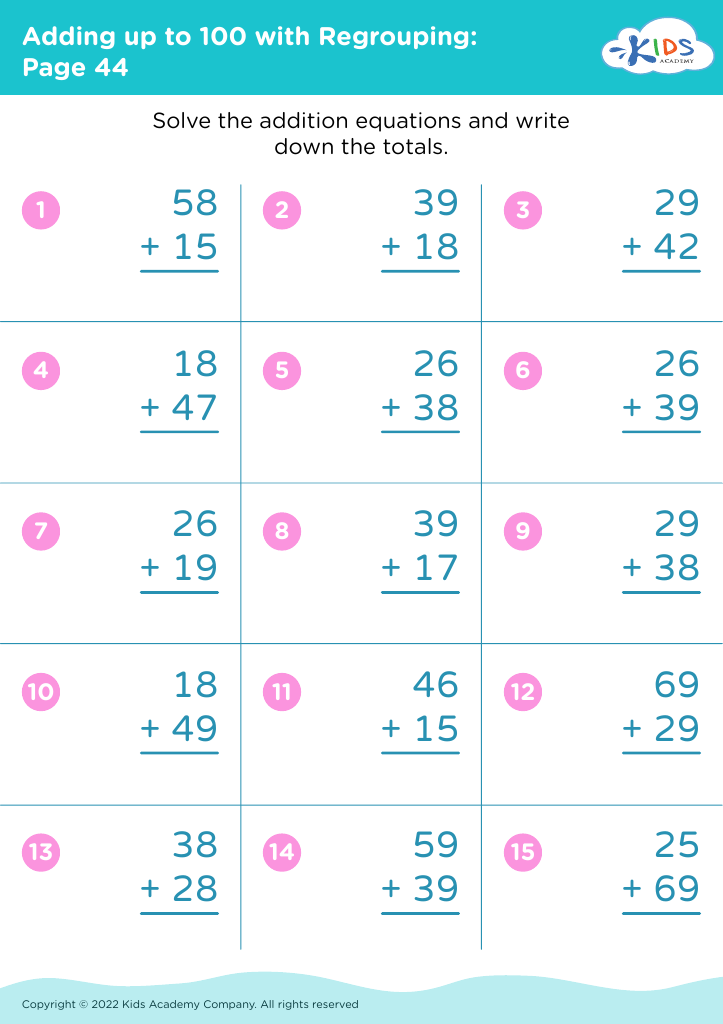
Explore the fascinating world of symmetry with our "Understanding Symmetry Adding Up to 100 Worksheets" designed for ages 6-8! These engaging worksheets help young learners develop critical math skills while enhancing their understanding of symmetry. Through fun exercises that combine addition up to 100 and recognition of symmetrical patterns, children will strengthen their numerical fluency and spatial awareness. Our age-appropriate activities promote visual learning and encourage creativity, making math enjoyable. Perfect for classroom or home use, these worksheets inspire curiosity and reinforce essential concepts. Dive into the wonders of symmetry and addition with our thoughtfully created resources today!





%20(1).jpg)

Understanding symmetry and addition concepts like "adding up to 100" is crucial for children aged 6-8, as these foundational skills contribute significantly to their overall mathematical development. Recognizing symmetry helps children understand shapes, patterns, and spatial relationships, enhancing their problem-solving abilities and critical thinking. This concept fosters creativity as they explore balanced forms in art, nature, and architecture, encouraging them to notice and appreciate patterns in their environment.
On the other hand, grasping the idea of adding up to 100 lays the groundwork for more complex arithmetic operations. Mastery in this area supports children in developing number sense, mental math skills, and strategies for addition and subtraction. It prepares them for larger numbers and teaches them practices like regrouping, which are essential as they progress in mathematics.
Moreover, engaging with these concepts can be fun and interactive, promoting a positive attitude toward learning math. Parents and teachers can use games, visual tools, and hands-on activities to reinforce these ideas, providing practical contexts where kids can see the relevance of what they learn. Investing time and effort in these areas can build confidence, mathematical fluency, and a love for learning, setting the stage for future academic success.








