Improve reading skills Adding up to 1000 Worksheets for Ages 6-8
13 filtered results
-
From - To
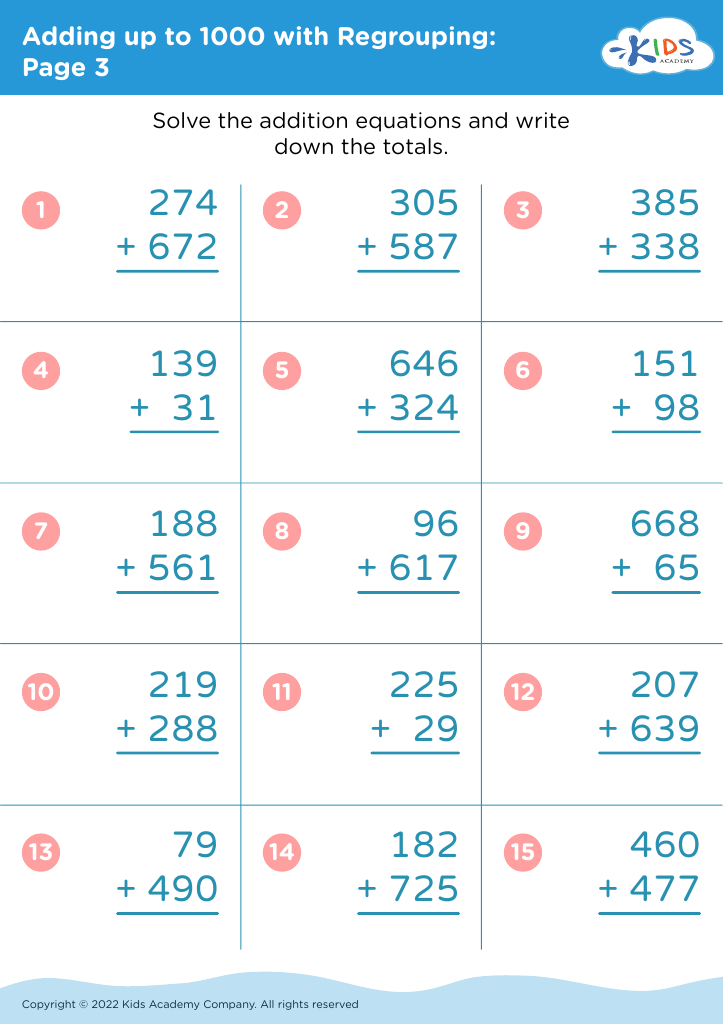
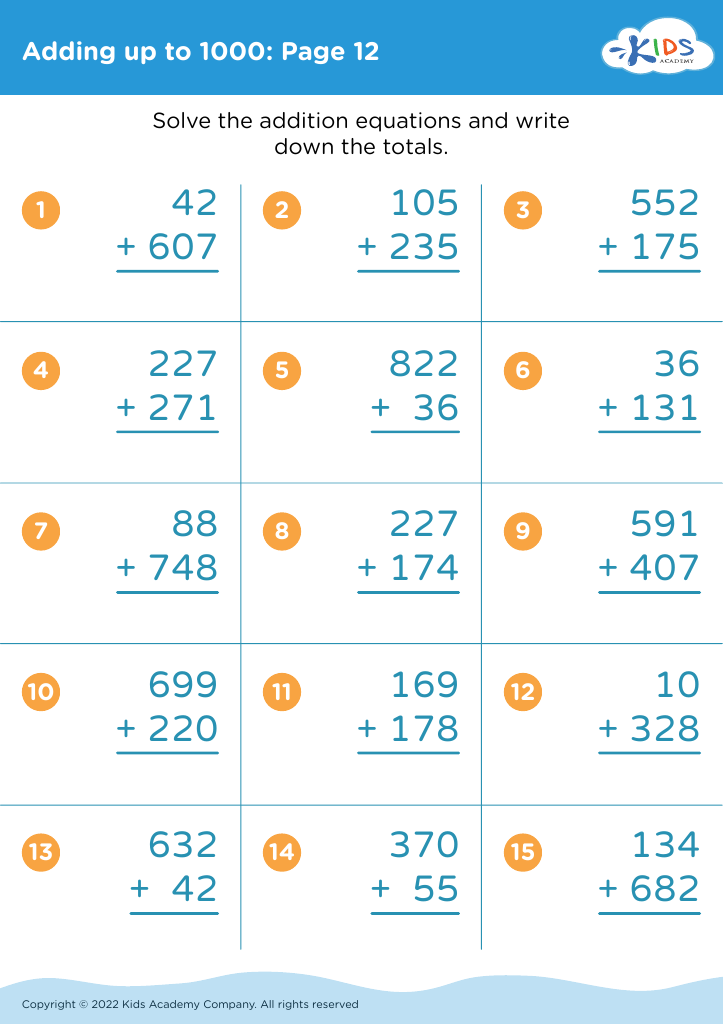
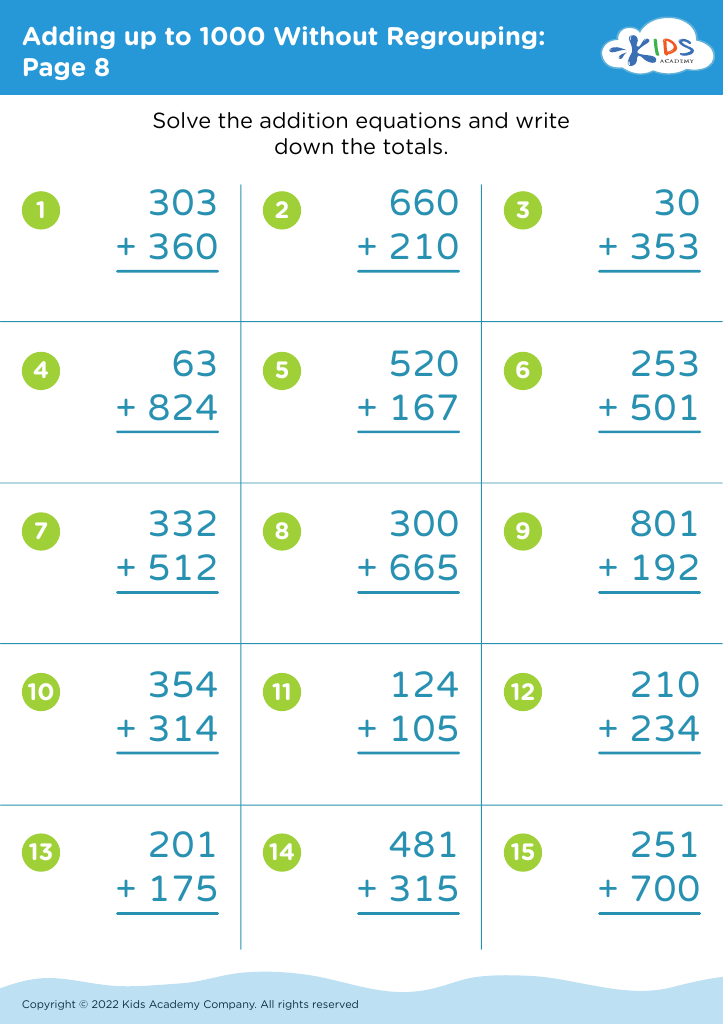
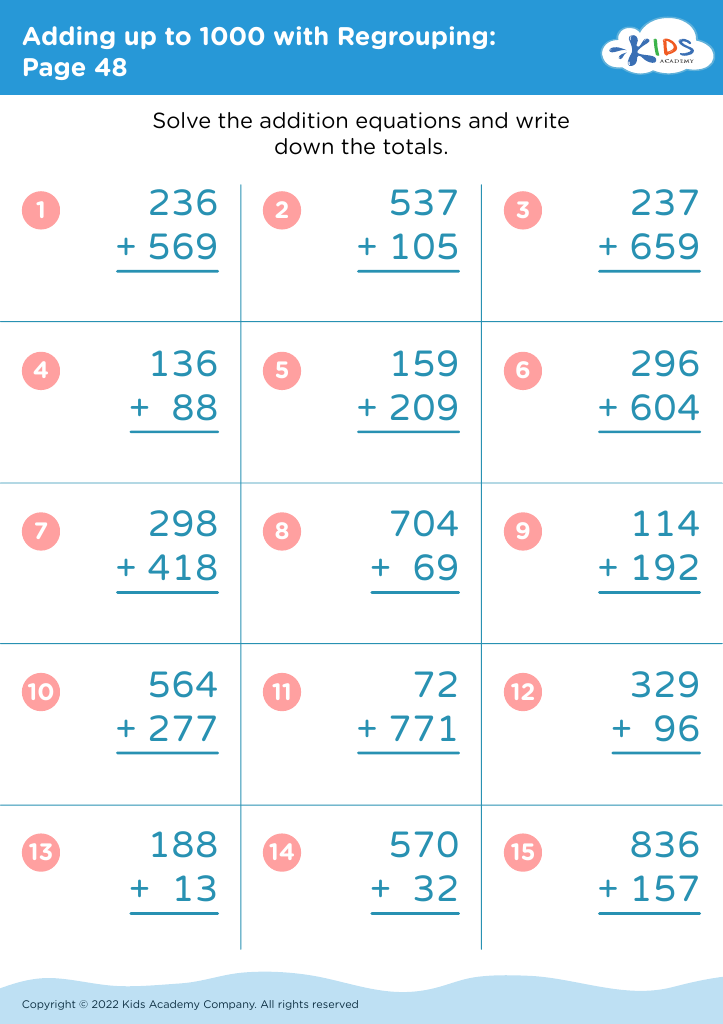
Enhance your child's reading and math abilities with our "Adding up to 1000 Worksheets for Ages 6-8" at Kids Academy! These printable worksheets uniquely integrate engaging math exercises with captivating reading passages designed for young learners. By solving addition problems up to 1000, children will not only sharpen their arithmetic skills but also enhance their reading comprehension and vocabulary. Perfect for students aged 6-8, these resources provide a well-rounded approach to learning that makes math fun and literacy-enhancing. Visit Kids Academy today to help your child excel in both reading and math with our thoughtfully crafted worksheets!
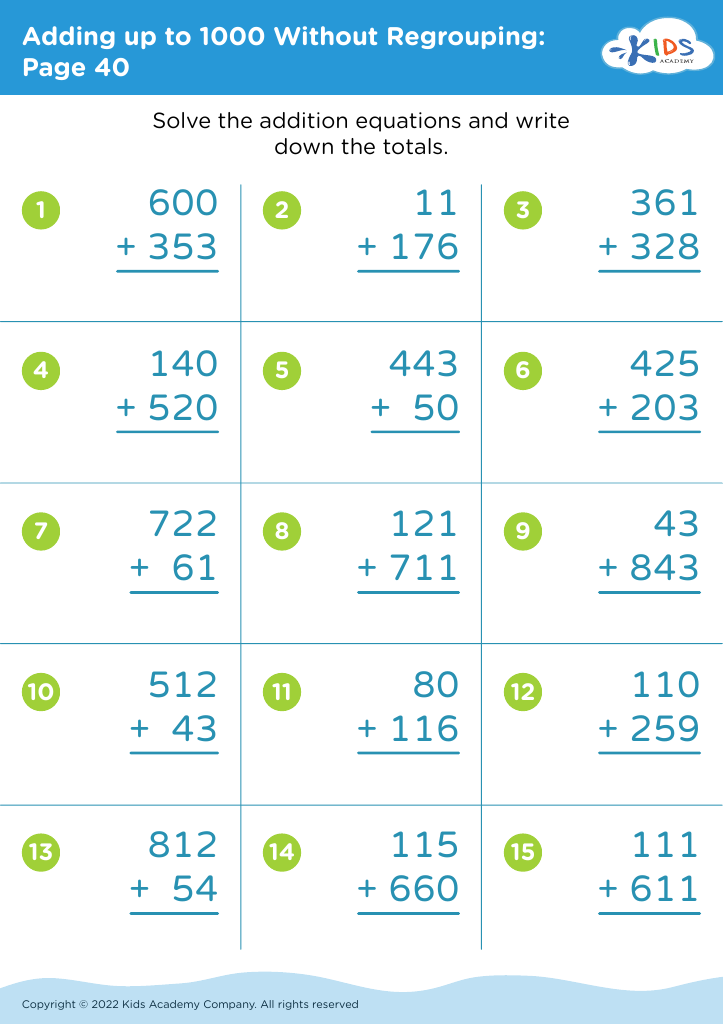
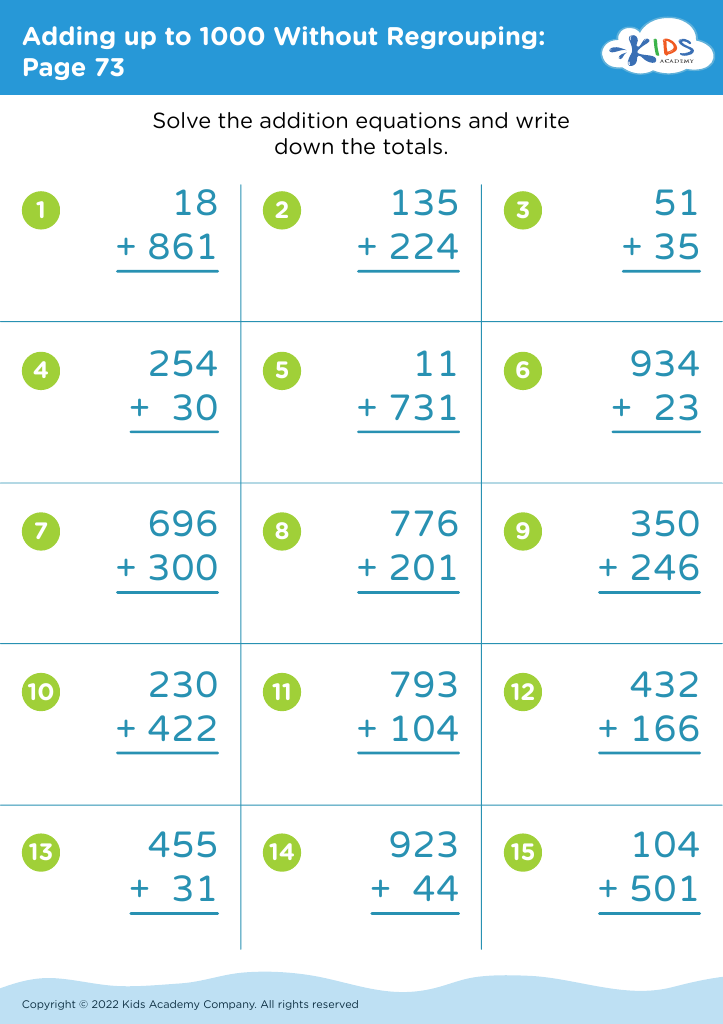
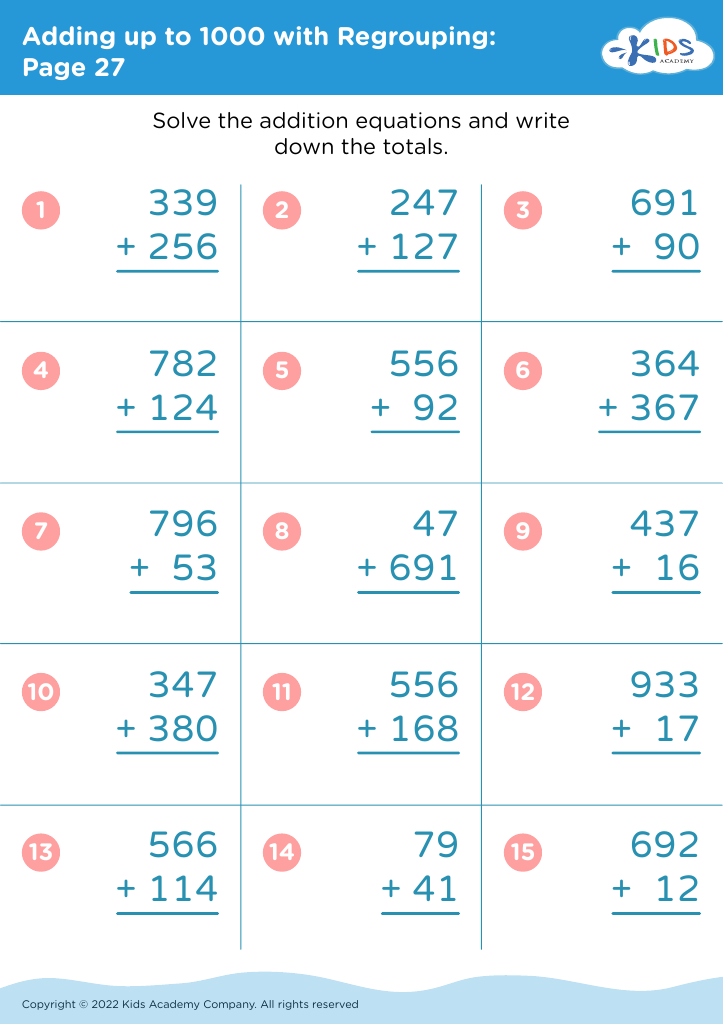
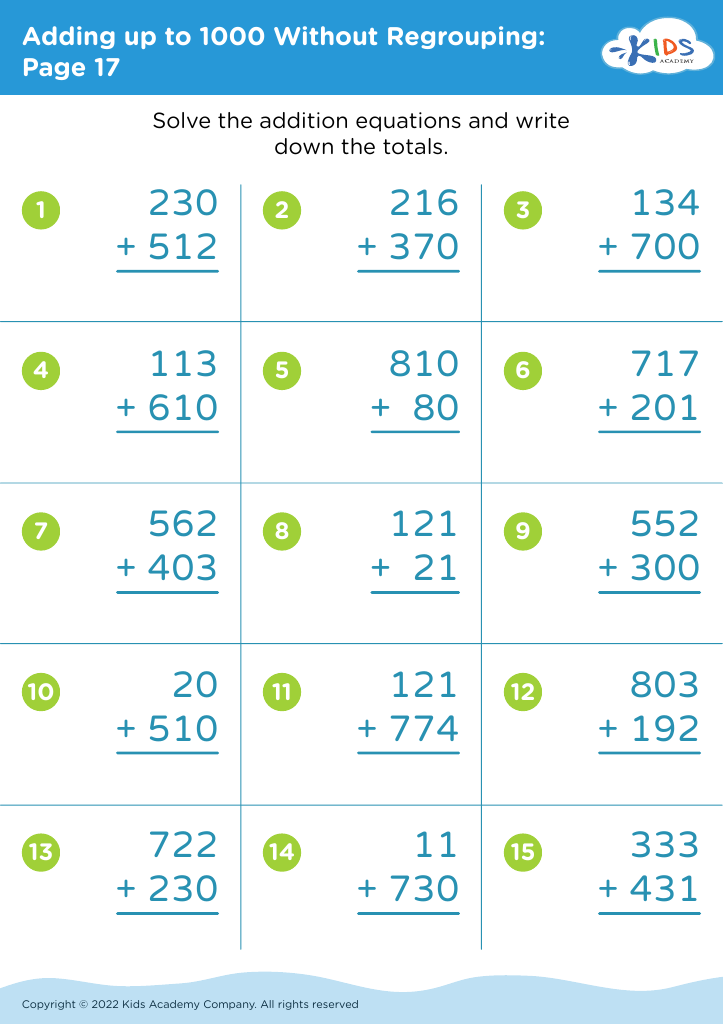
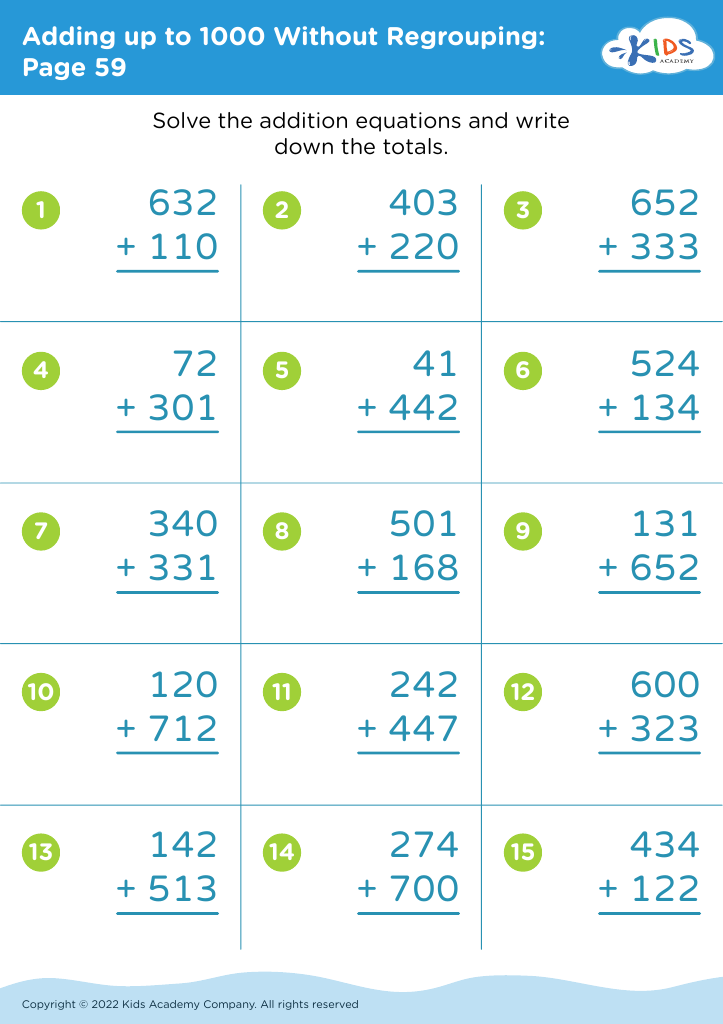
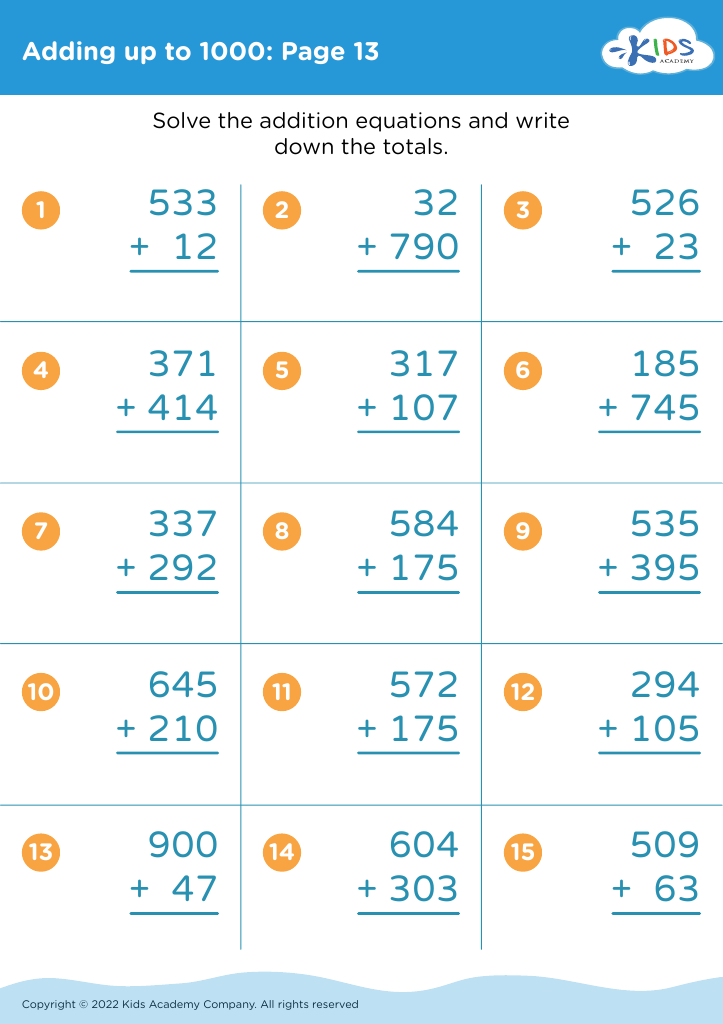
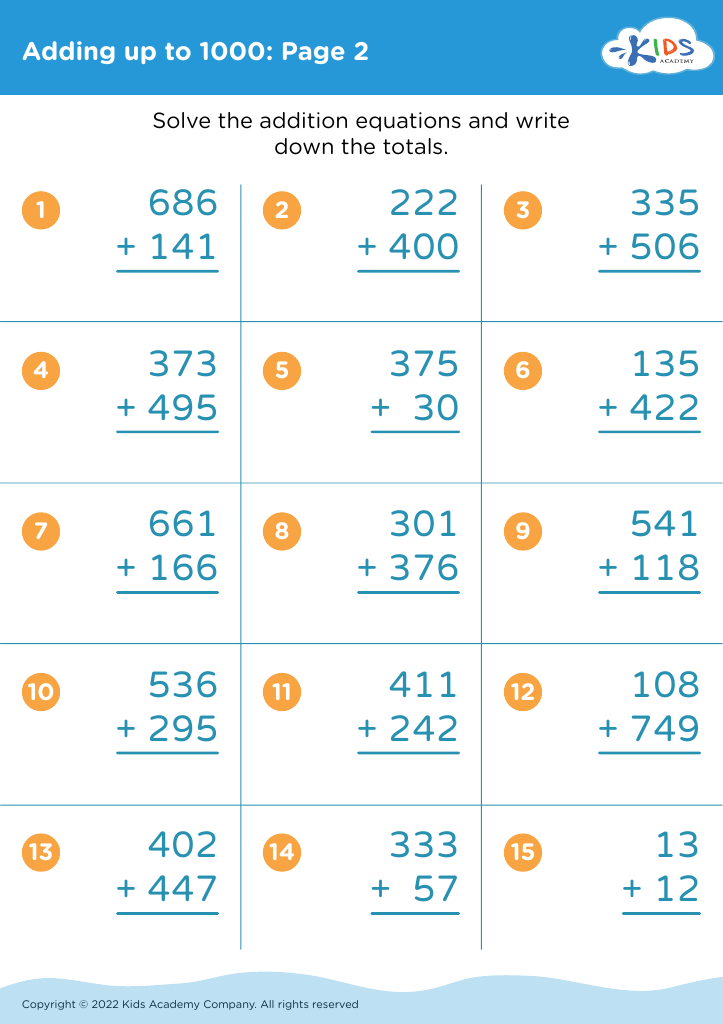
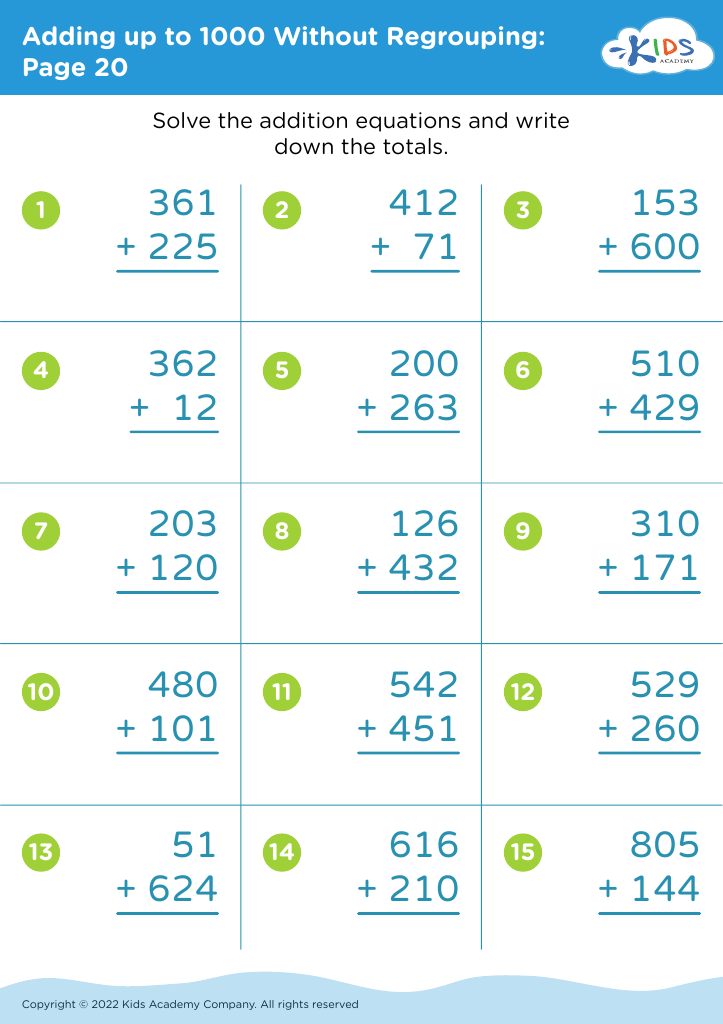
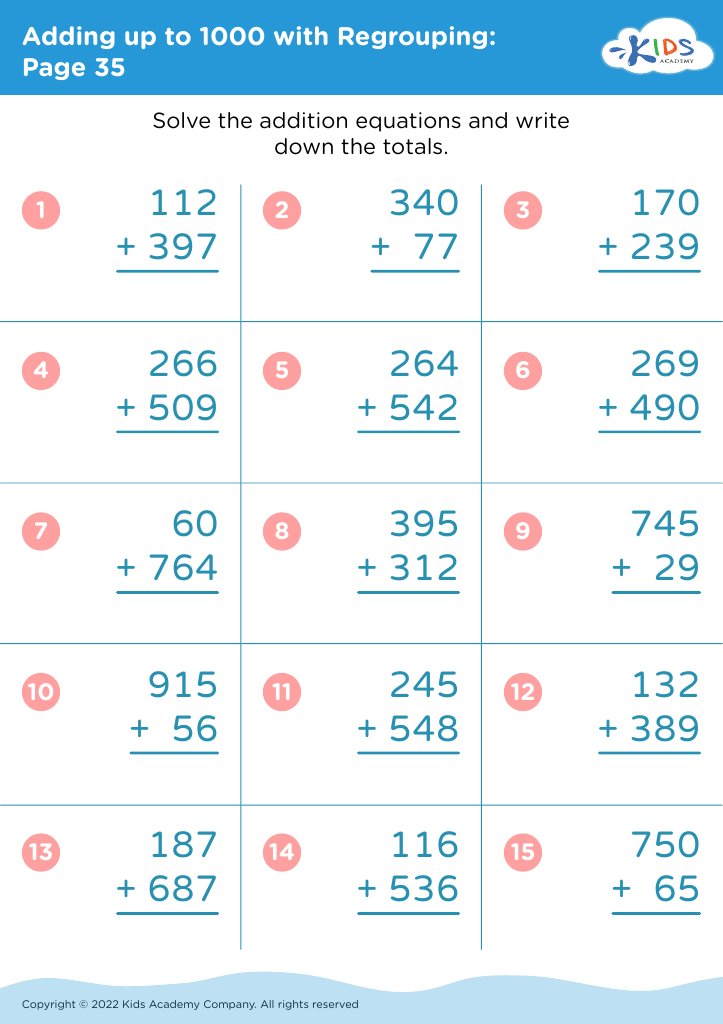



Improving reading skills and math abilities in young children, particularly adding up to 1000, is crucial for their overall academic development and future success. Ages 6-8 are formative years where foundational skills are established, impacting their long-term educational journey and cognitive development.
Strong reading skills are vital as they not only enhance comprehension and communication but also foster a love for learning. Children with robust reading abilities can more easily grasp a wide range of subjects and concepts, leading to greater academic achievement and self-confidence. This proficiency also encourages curiosity, critical thinking, and a broader understanding of the world, setting the stage for lifelong learning.
Similarly, basic arithmetic skills, such as adding up to 1000, are fundamental for higher-level math and practical daily activities. Learning to perform addition within this range helps children develop number sense, logical reasoning, and problem-solving skills. These abilities are essential not just for future math education but also for real-life scenarios like budgeting, time management, and other practical tasks.
By prioritizing reading and mathematical skills at an early age, parents and teachers enable children to build a solid academic foundation, empowering them to tackle more complex subjects with confidence, thus promoting a well-rounded and effective educational experience.








