Filters

30 filtered results

Clear all filters
Favorites
With answer key
Interactive

30 filtered results

Difficulty Level

Grade


Enhance your child's math skills with our engaging "Comparing Fractions Adding up to 50" worksheets designed for ages 6-8. These printable resources help young learners grasp the concept of fractions through interactive exercises that promote critical thinking and problem-solving abilities. Each worksheet encourages students to compare fractions with a sum of 50, reinforcing their understanding of numerators and denominators. Perfect for classrooms or home learning, these worksheets provide a fun and educational way for children to build confidence in math. Start fostering a strong foundation in fractions today—explore our collection and make learning enjoyable!
Check out this FREE Trial Lesson on Adding up to 50 for age 6-8!

P

Favorites
With answer key
Interactive
  • 6-8
  • Comparing Fractions
  • Adding up to 50
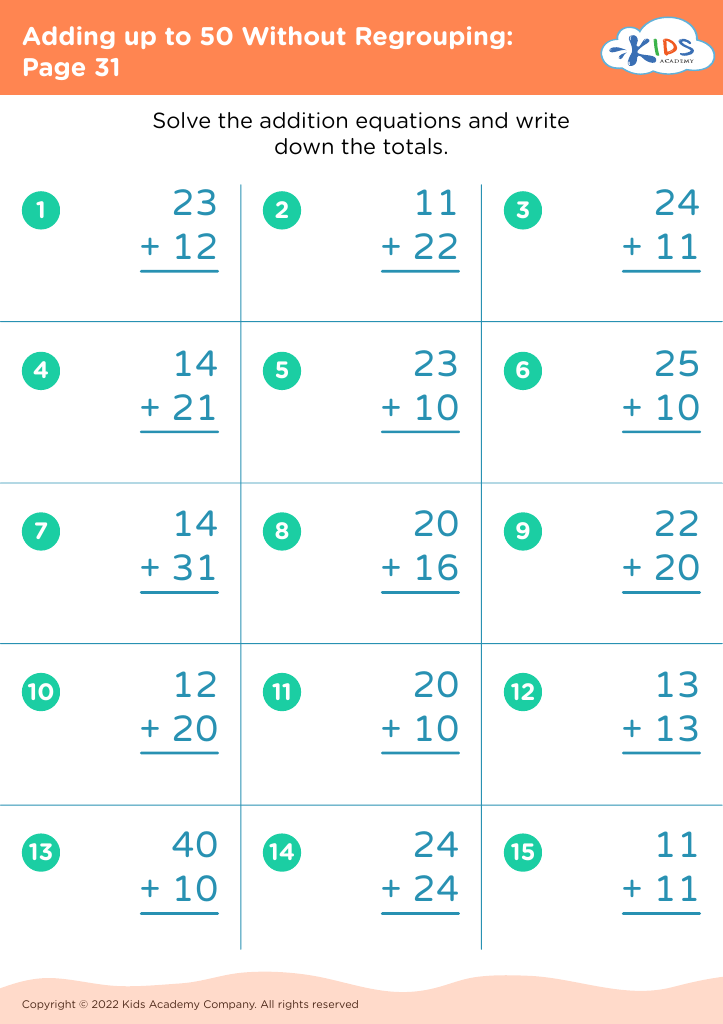
Adding up to 50 with Regrouping: Page 40
Worksheet
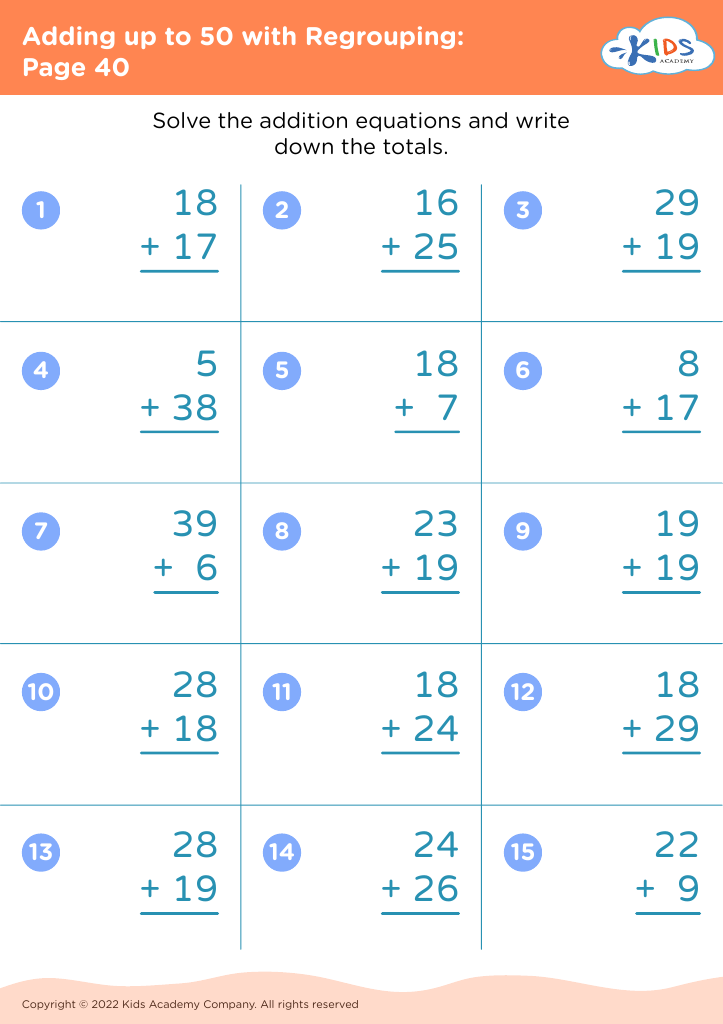
Adding up to 50 Without Regrouping: Page 27
Worksheet
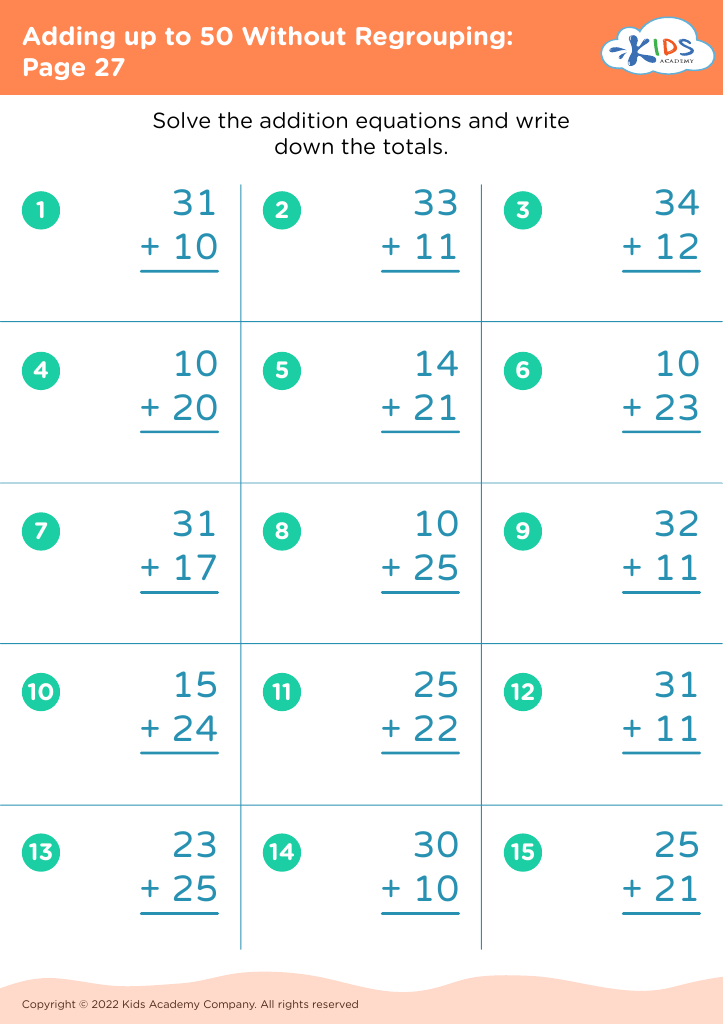
Adding up to 50 Without Regrouping: Page 40
Worksheet
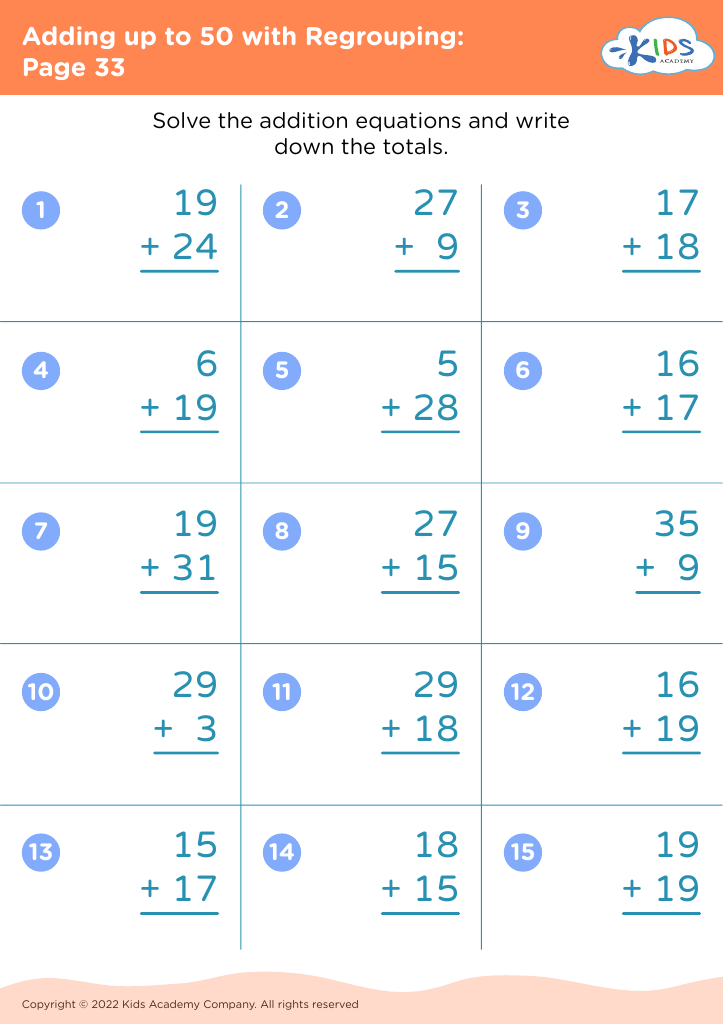
Adding up to 50 with Regrouping: Page 33
Worksheet
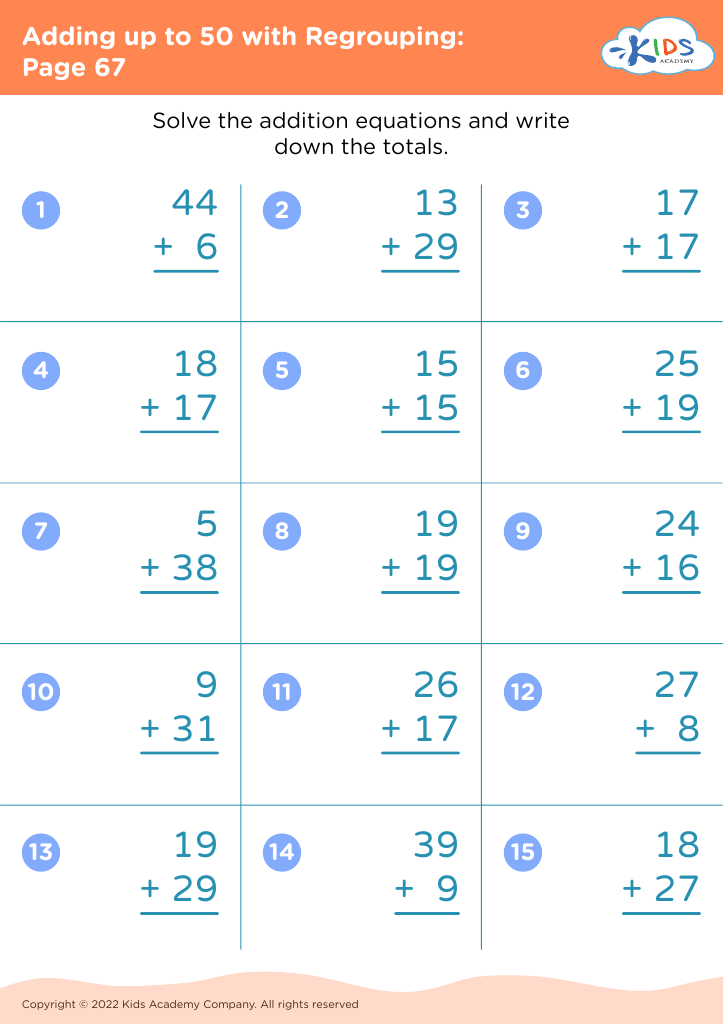
Adding up to 50 with Regrouping: Page 67
Worksheet
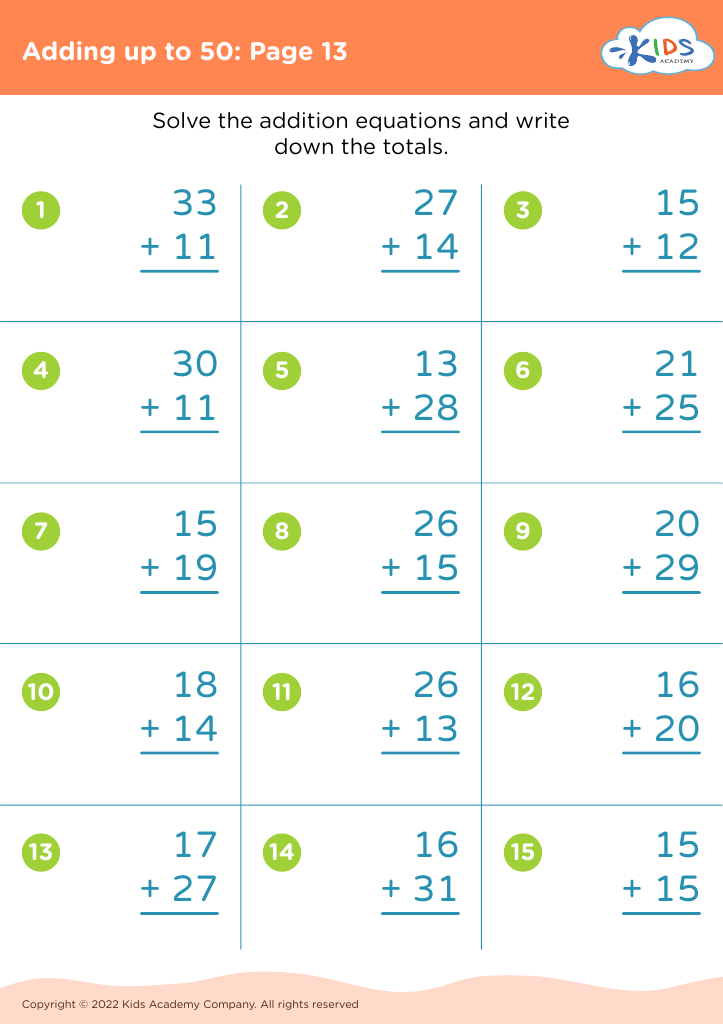
Adding up to 50: Page 13

Adding up to 50: Page 13

Adding up to 50: Page 13
Worksheet
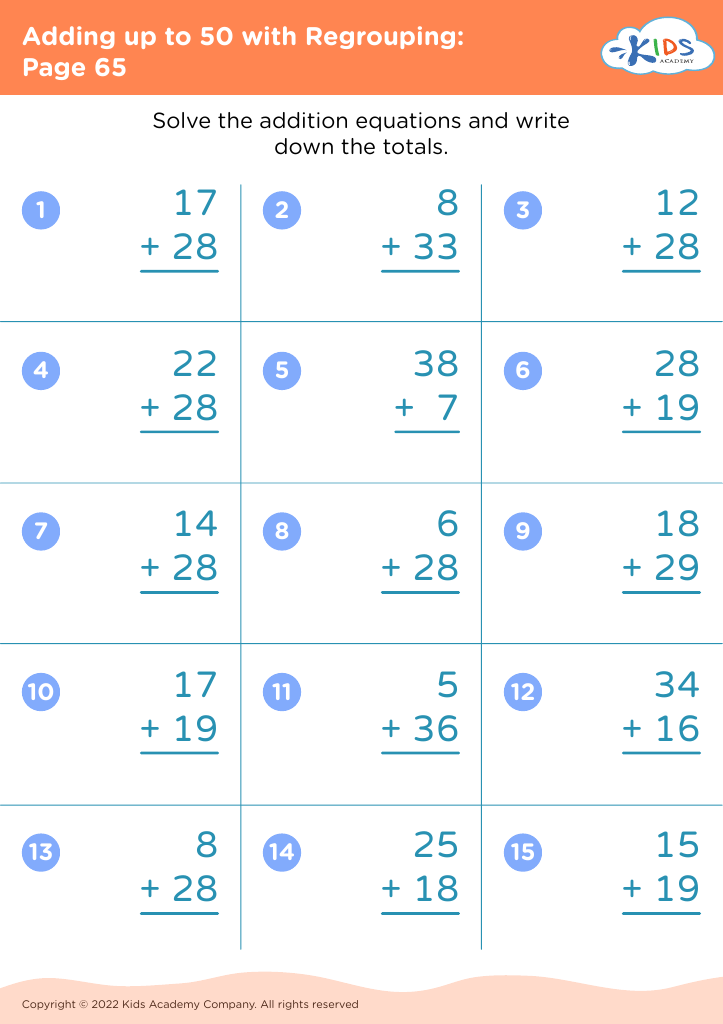
Adding up to 50 with Regrouping: Page 65
Worksheet
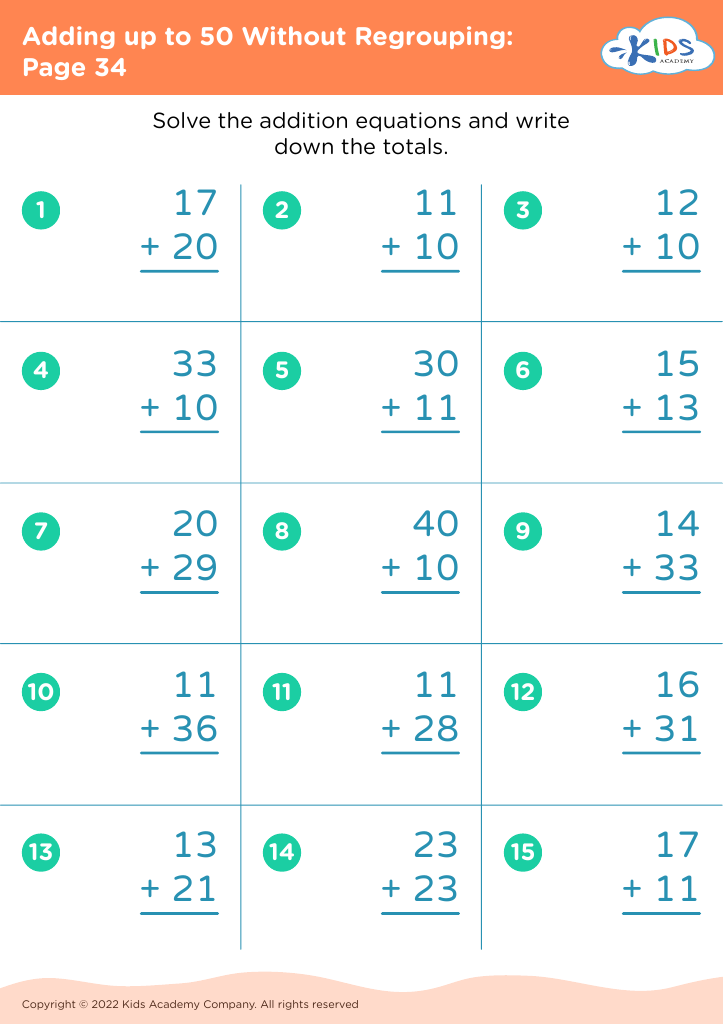
Adding up to 50 Without Regrouping: Page 34
Worksheet
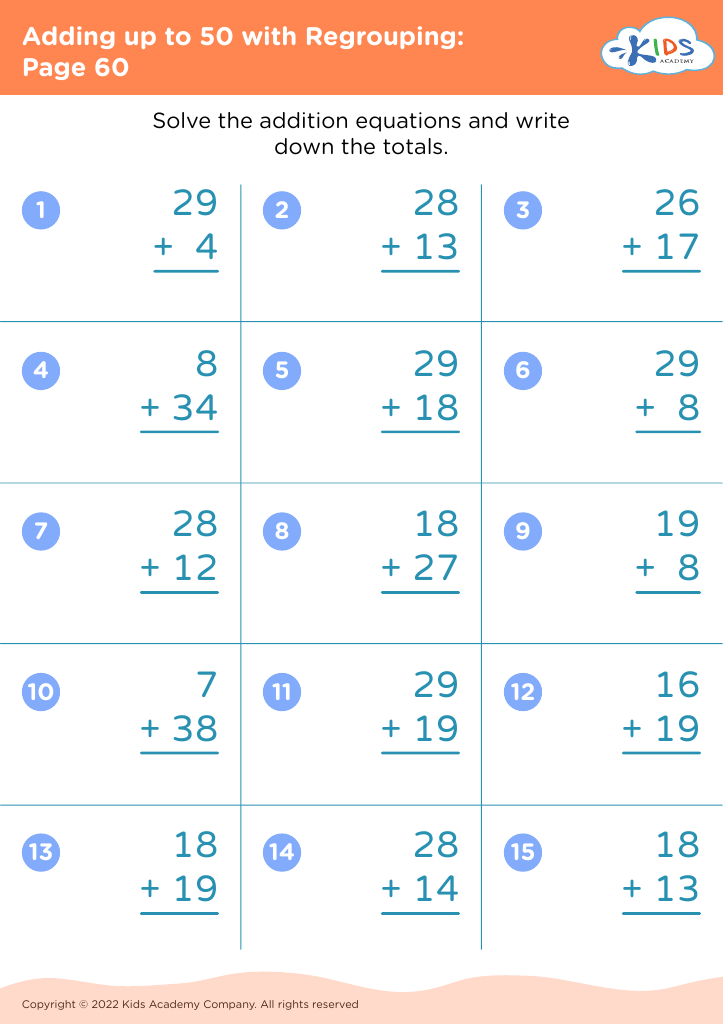
Adding up to 50 with Regrouping: Page 60
Worksheet
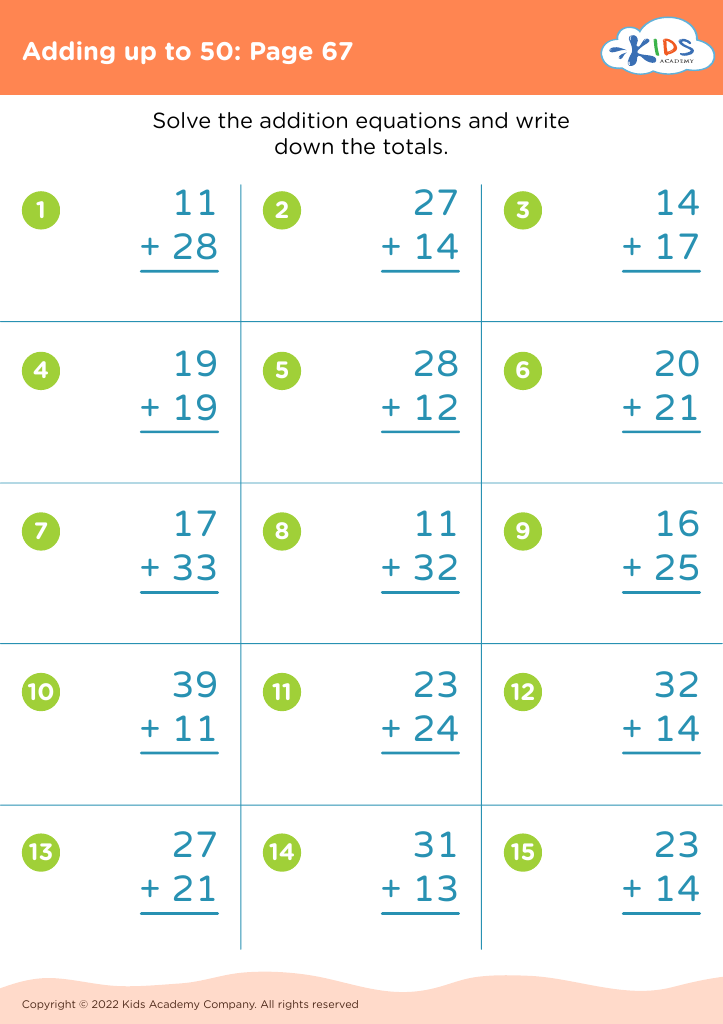
Adding up to 50: Page 67

Adding up to 50: Page 67

Adding up to 50: Page 67
Worksheet
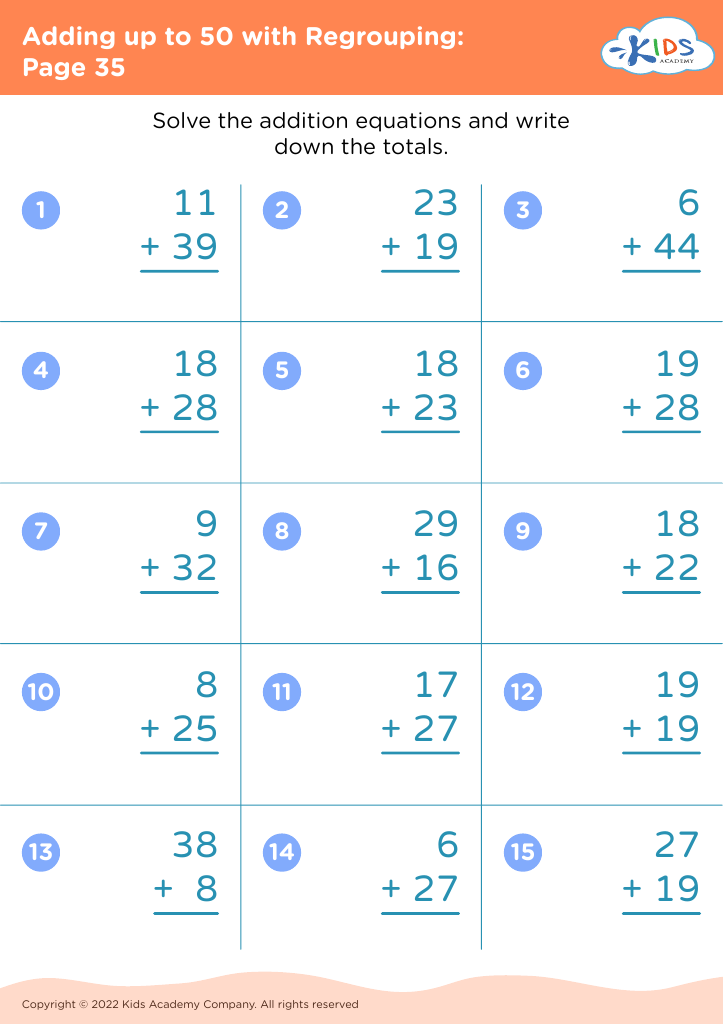
Adding up to 50 with Regrouping: Page 35
Worksheet
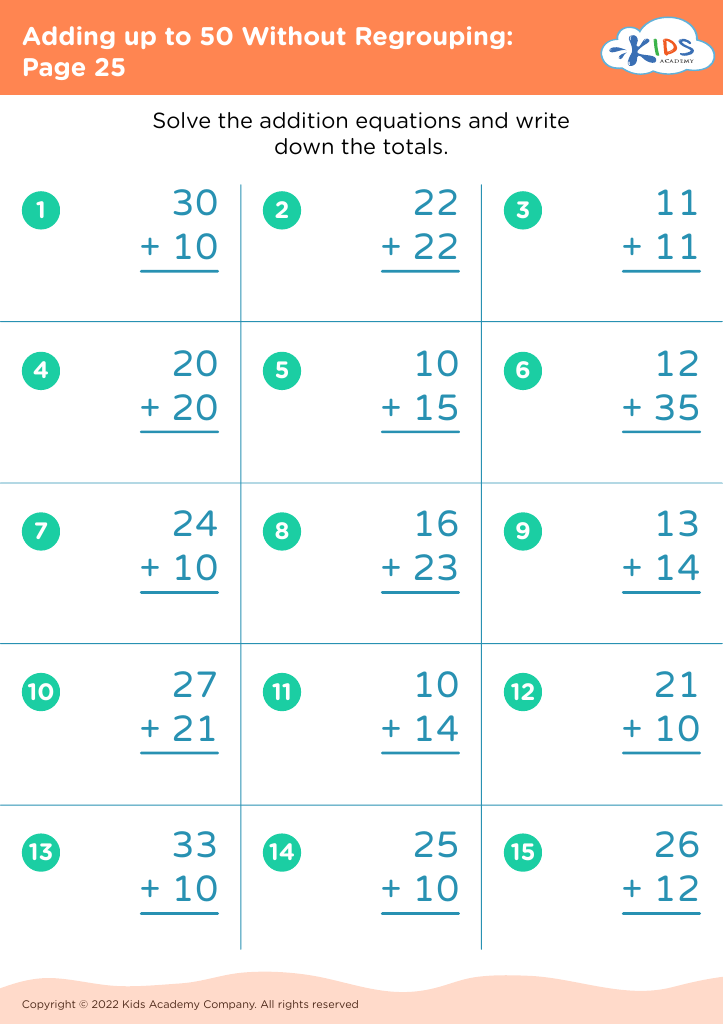
Adding up to 50 Without Regrouping: Page 25
Worksheet
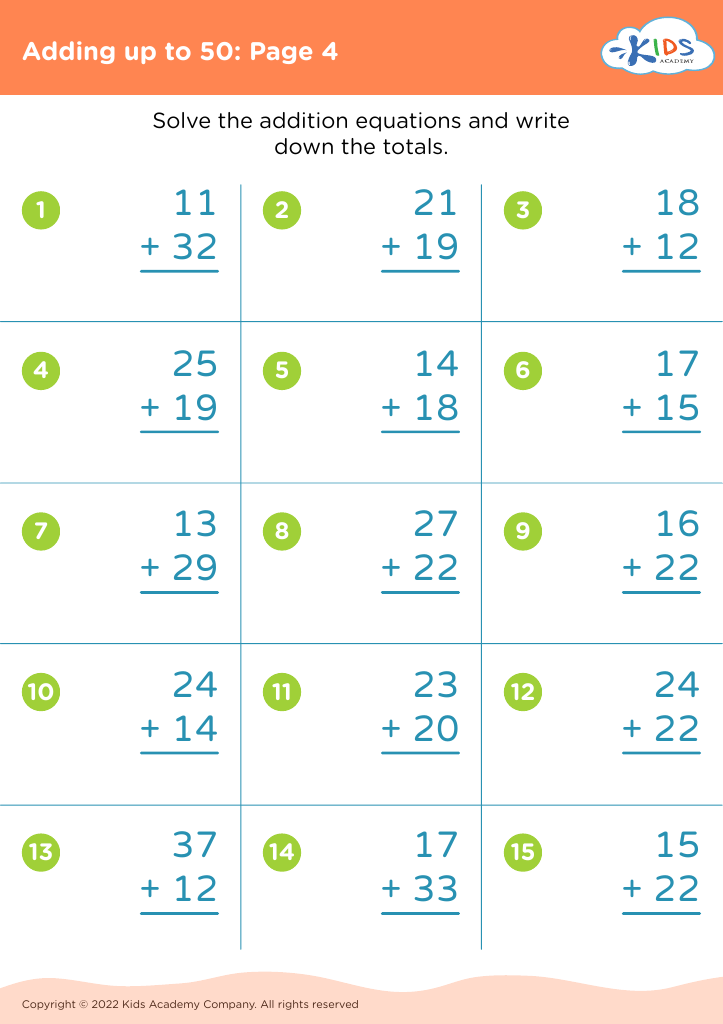
Adding up to 50: Page 4

Adding up to 50: Page 4

Adding up to 50: Page 4
Worksheet
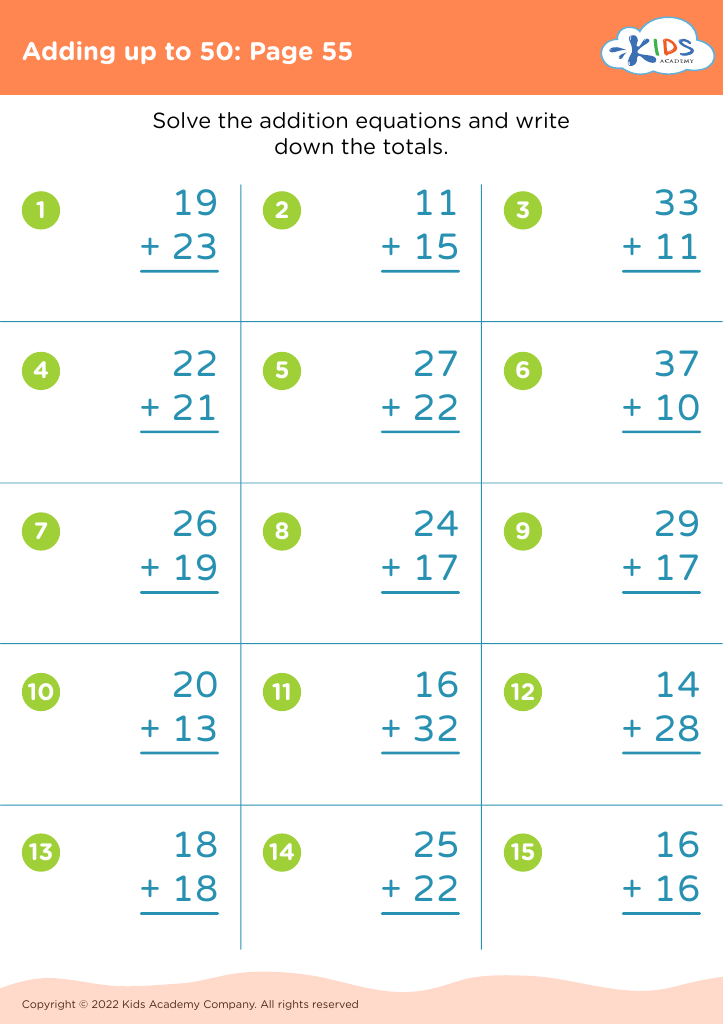
Adding up to 50: Page 55

Adding up to 50: Page 55

Adding up to 50: Page 55
Worksheet
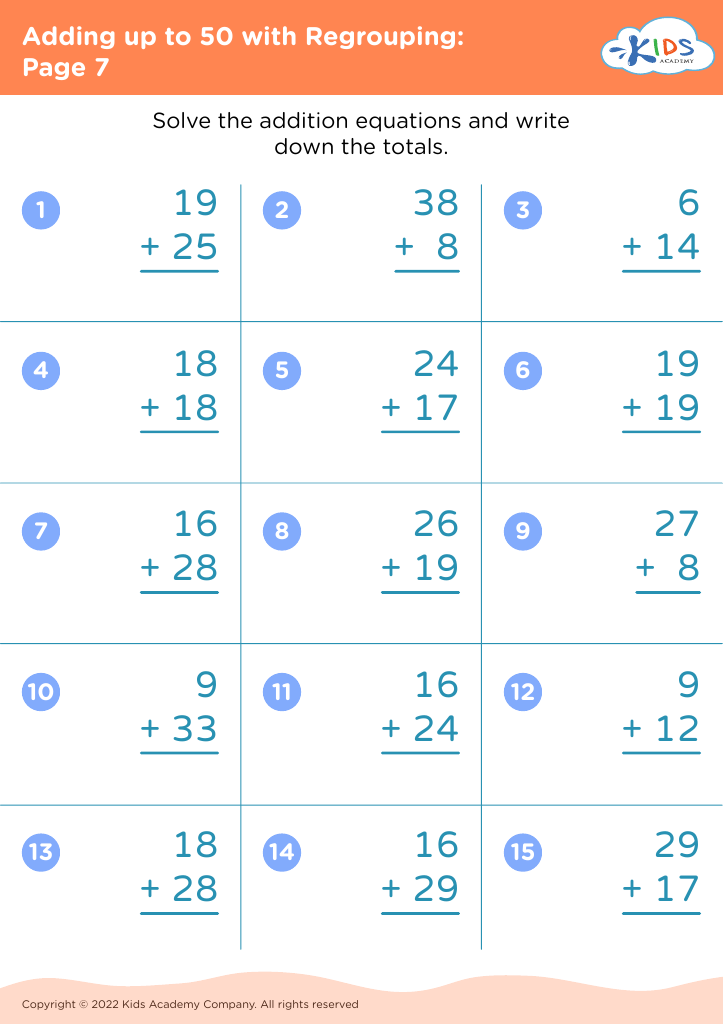
Adding up to 50 with Regrouping: Page 7
Worksheet
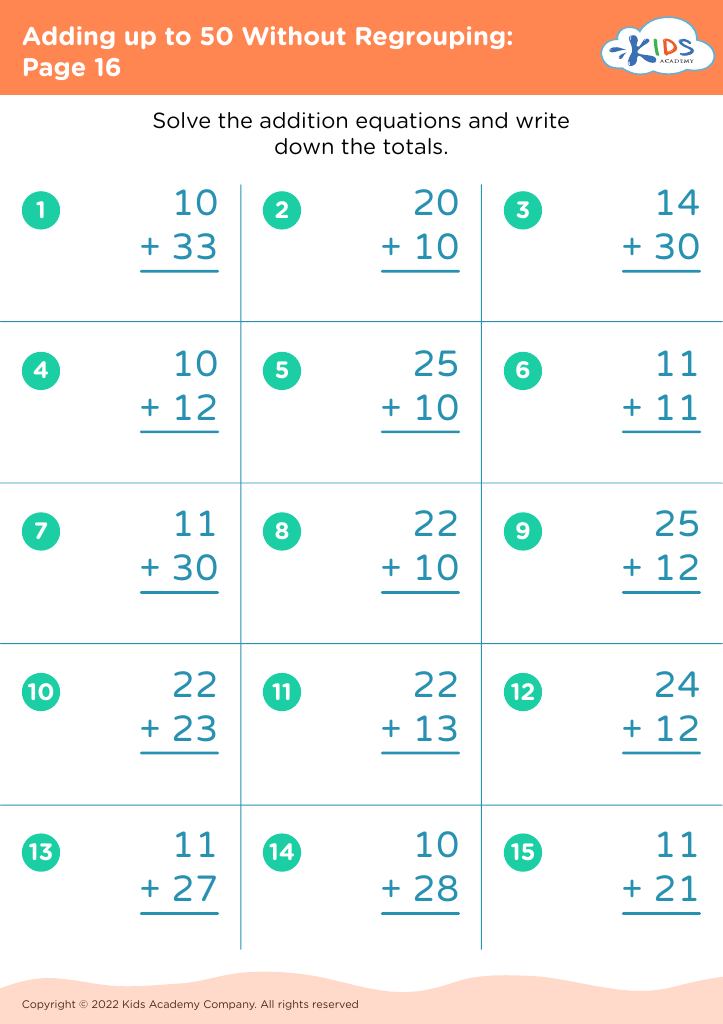
Adding up to 50 Without Regrouping: Page 16
Worksheet
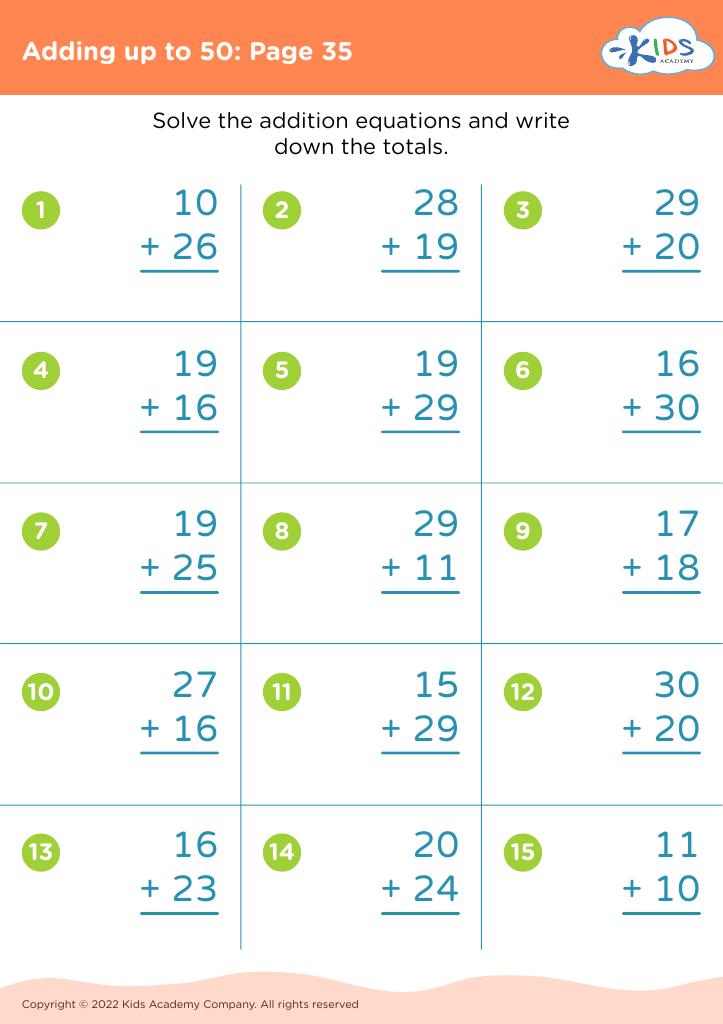
Adding up to 50: Page 35

Adding up to 50: Page 35

Adding up to 50: Page 35
Worksheet
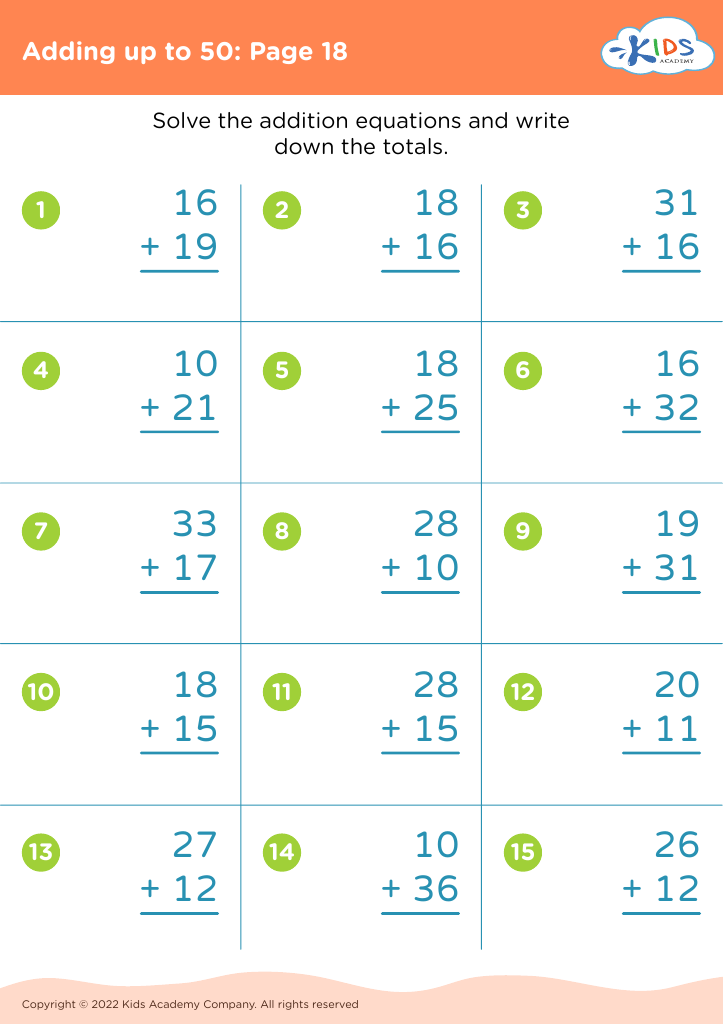
Adding up to 50: Page 18

Adding up to 50: Page 18

Adding up to 50: Page 18
Worksheet
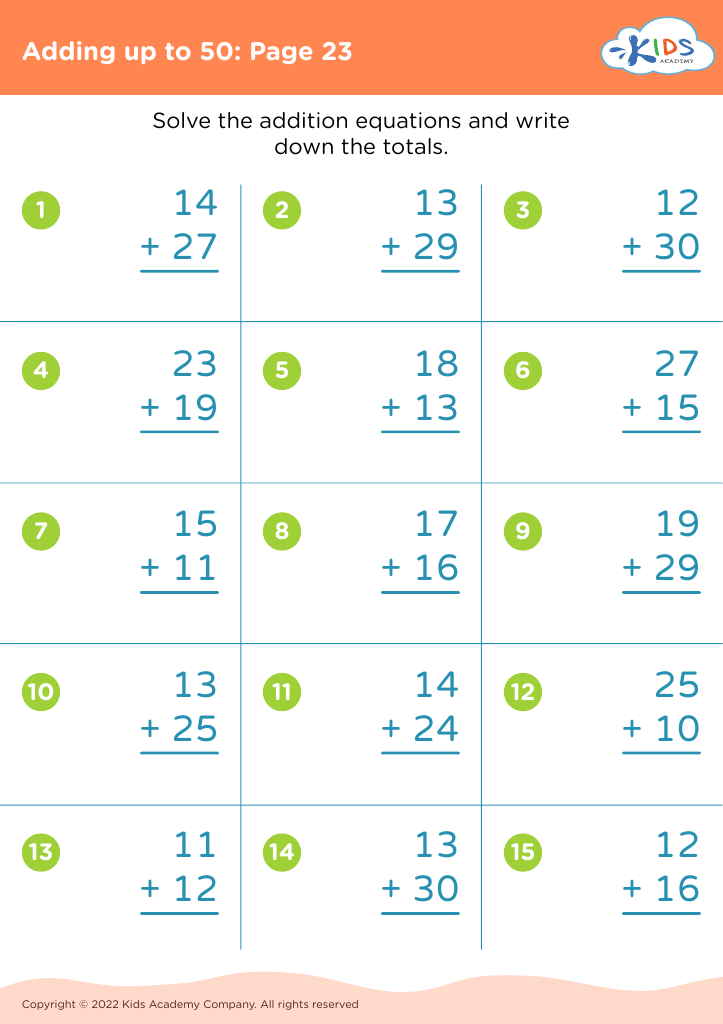
Adding up to 50: Page 23

Adding up to 50: Page 23

Adding up to 50: Page 23
Worksheet
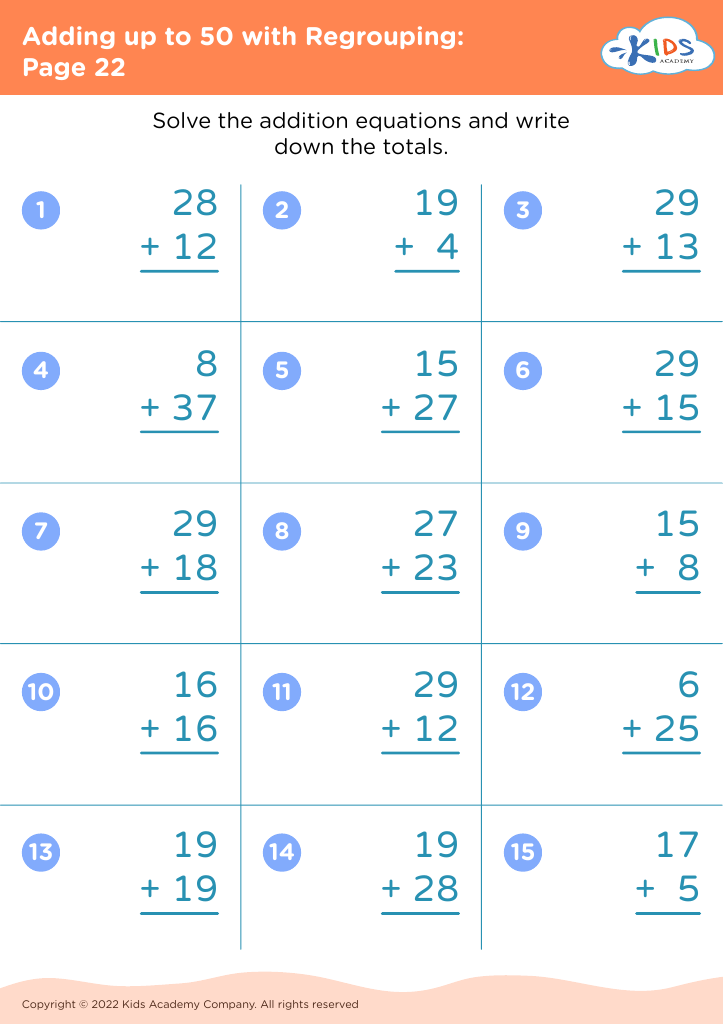
Adding up to 50 with Regrouping: Page 22
Worksheet
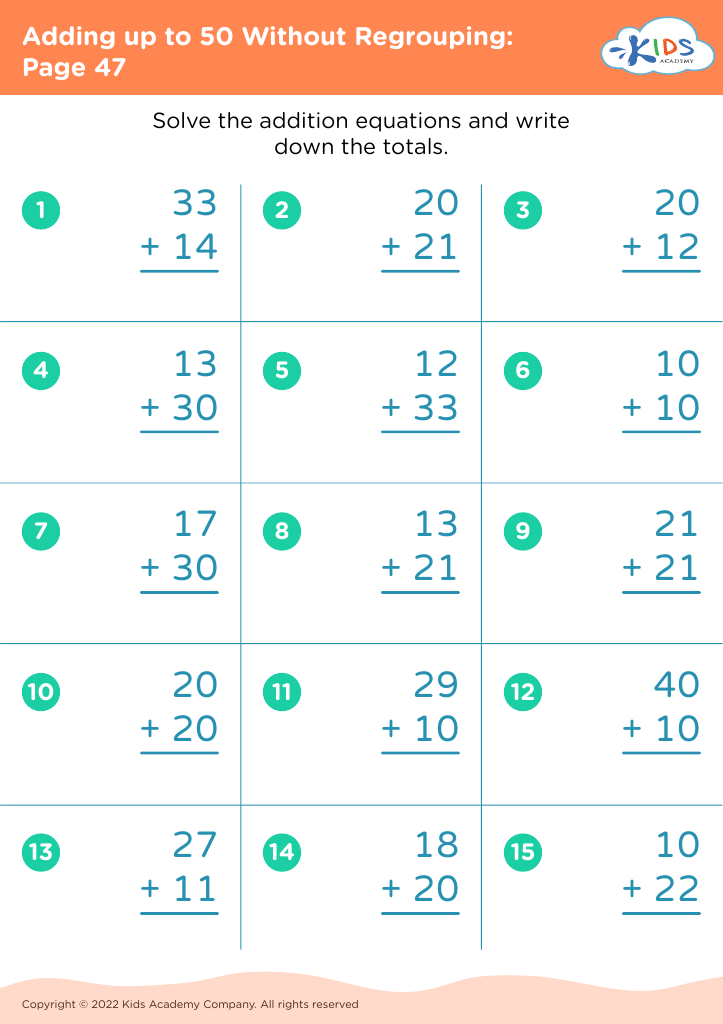
Adding up to 50 Without Regrouping: Page 47
Worksheet
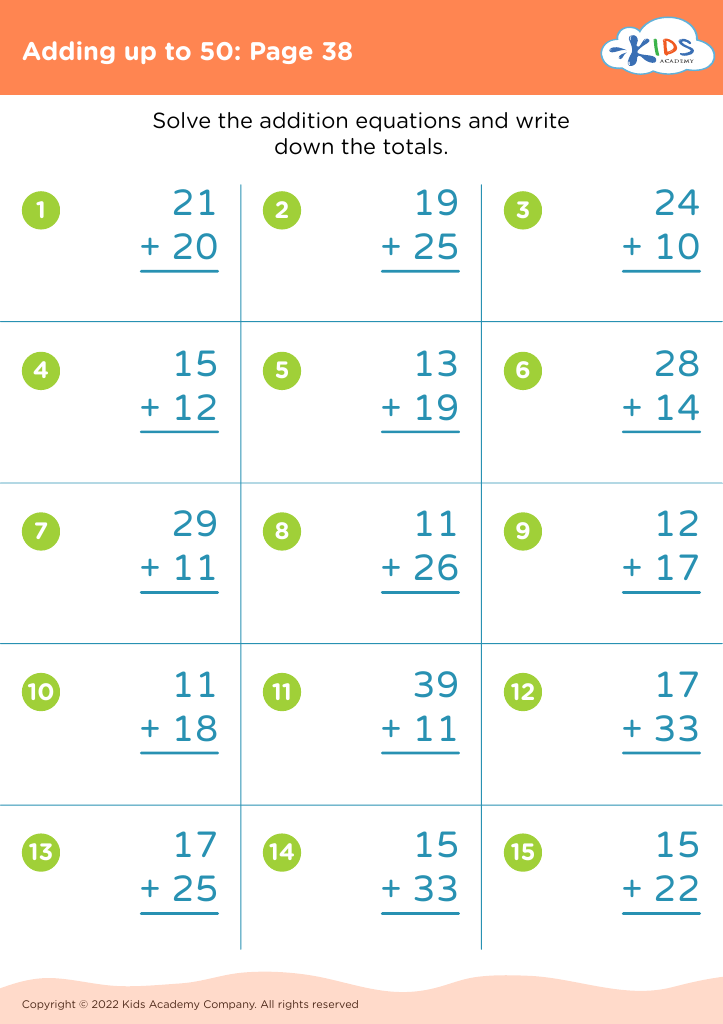
Adding up to 50: Page 38

Adding up to 50: Page 38

Adding up to 50: Page 38
Worksheet
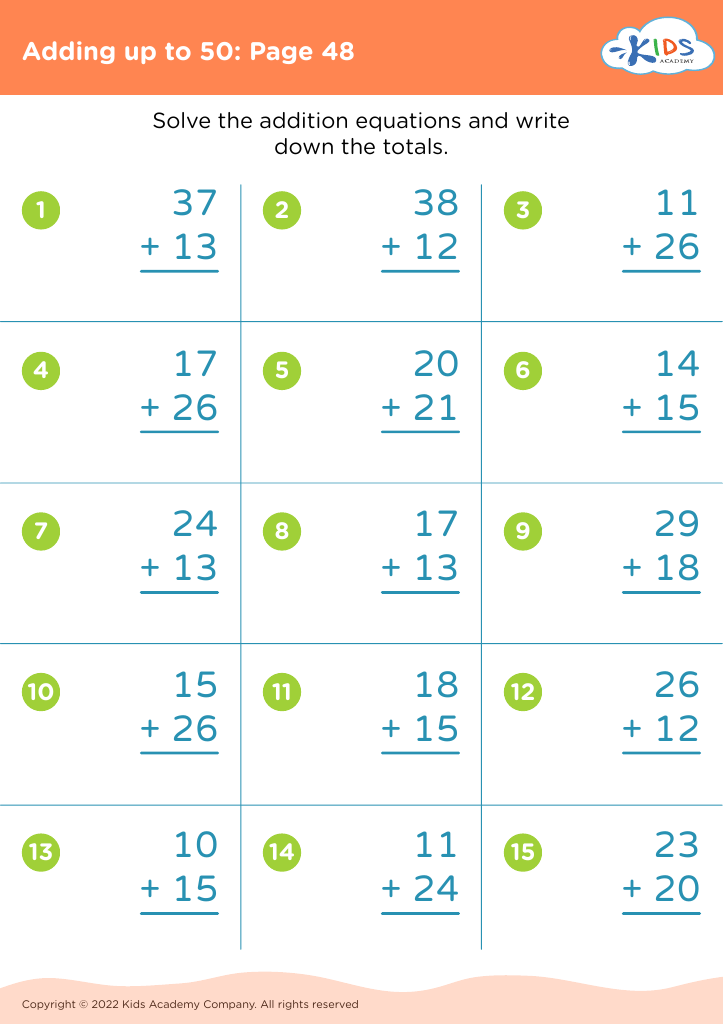
Adding up to 50: Page 48

Adding up to 50: Page 48

Adding up to 50: Page 48
Worksheet
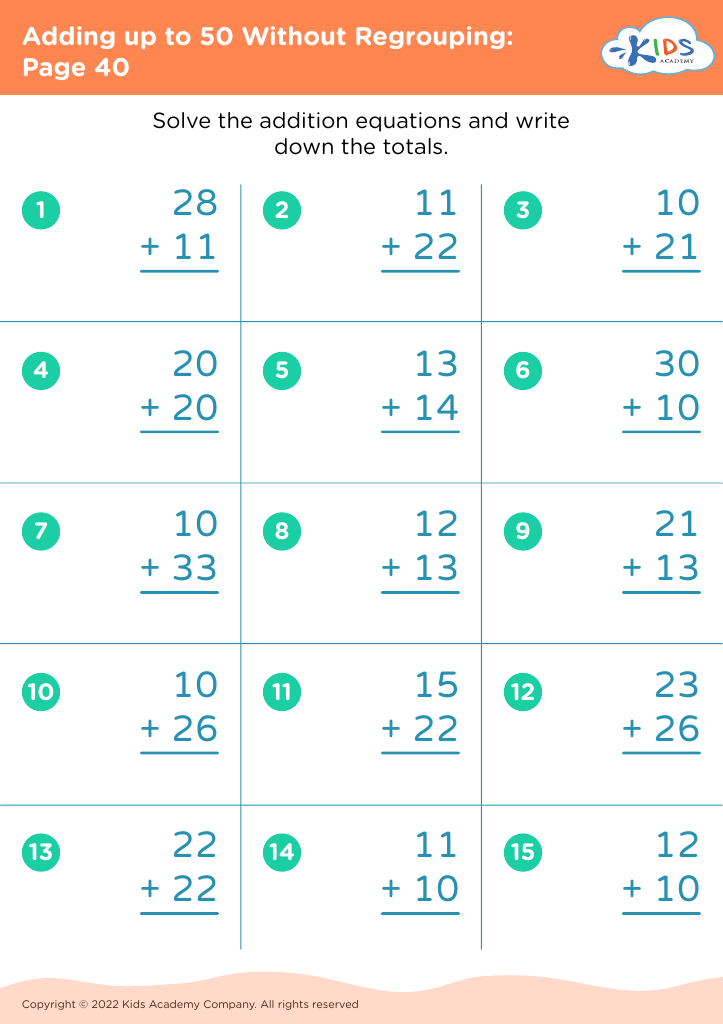
Adding up to 50 Without Regrouping: Page 31
Worksheet


Teaching children to compare fractions that add up to 50 is vital for their mathematical development, particularly for ages 6-8. At this stage, students are starting to build foundational skills that will become essential in higher levels of math. Understanding fractions helps them grasp concepts of part-whole relationships, which are crucial for real-world applications, such as cooking, budgeting, and measuring.

Comparing fractions enhances critical thinking and problem-solving skills. By learning to determine which fraction is larger or how different fractions relate to a whole, children develop their analytical abilities. This understanding fosters confidence in their math skills and prepares them for more complex operations involving fractions, decimals, and percentages in later grades.

Moreover, early mastery of fraction comparison encourages a positive attitude towards math. Parents and teachers can engage children in activities that make learning interactive and enjoyable, reinforcing concepts through games or practical examples. This support not only helps children to succeed academically but also instills a love for learning. By prioritizing these skills, parents and teachers help cultivate mathematical literacy that students will use throughout their lives, setting a strong groundwork for lifelong learning and personal fulfillment in numeracy.