Develop critical thinking Adding up to 50 Worksheets for Ages 6-8
3 filtered results
-
From - To
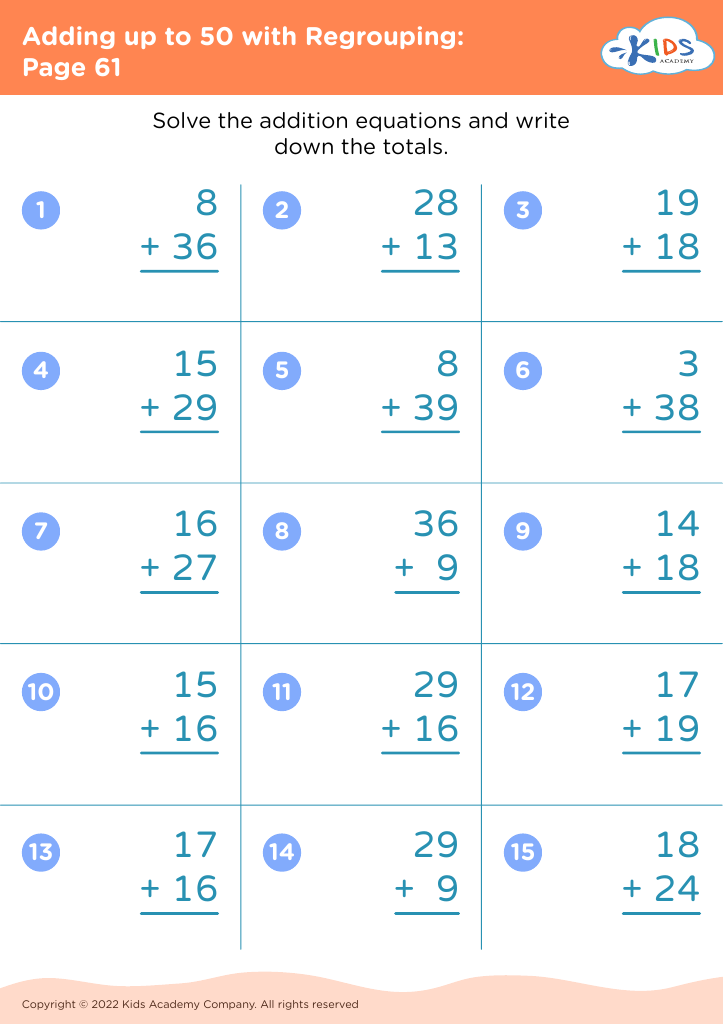
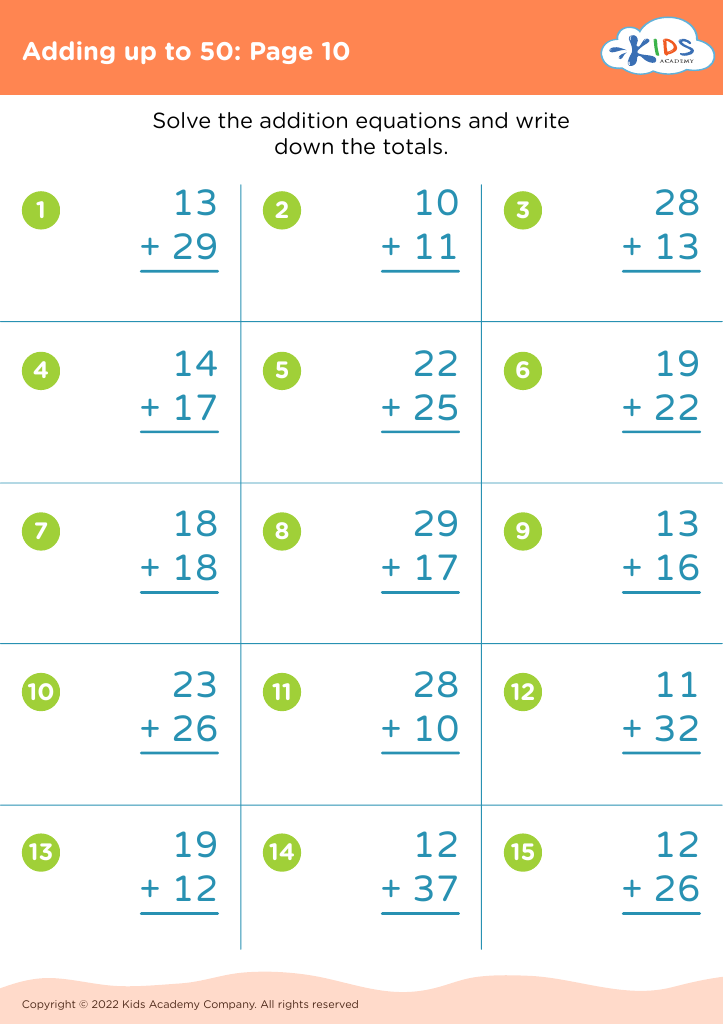
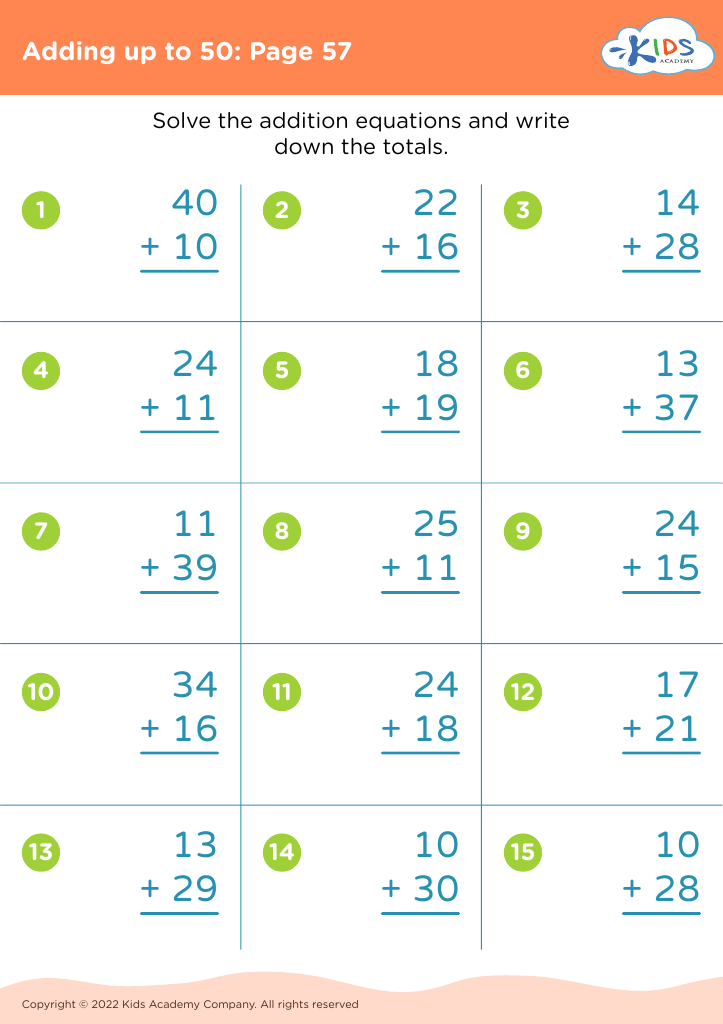
Enhance your child's critical thinking skills with our "Adding up to 50" worksheets designed specifically for ages 6-8. These engaging activities encourage young learners to develop problem-solving tactics, number sense, and logical reasoning through the fun of math. With 50 thoughtfully crafted worksheets, your child will tackle various addition challenges that promote critical analysis and comprehension. Ideal for home or school use, these resources are perfect for enriching curriculum and boosting confidence in mathematics. Empower your child to think critically and creatively while mastering their addition skills. Start their journey to mathematical success today!




Developing critical thinking skills in children ages 6-8 is crucial for their cognitive growth and lifelong learning. At this stage, children begin to understand complex concepts, observe their surroundings, and ask questions. Encouraging critical thinking helps them analyze situations, evaluate information, and make informed decisions.
Firstly, fostering critical thinking equips young learners with problem-solving skills. When faced with challenges, children who think critically can explore multiple solutions, rather than relying on trial and error. This ability promotes resilience and adaptability.
Additionally, critical thinking nurtures creativity. As they learn to view situations from various perspectives, children expand their imagination and develop innovative ideas. This creativity is essential not just for academic success but also for personal expression.
Moreover, critical thinking is foundational for effective communication. It encourages children to articulate their thoughts clearly and articulate their opinions through reasoned argumentation.
Ultimately, helping children develop critical thinking skills establishes a strong educational framework. As they progress in their academic journey, they will become more independent thinkers, better equipped to navigate complex social and academic environments. Teachers and parents play a vital role in guiding this development, ensuring children grow into thoughtful, engaged members of society.








