Enhance comprehension Adding up to 50 Worksheets for Ages 6-8
5 filtered results
-
From - To
Unlock your child's math potential with our "Enhance Comprehension: Adding up to 50" worksheets designed for ages 6-8. This collection features 100 engaging worksheets that reinforce addition skills while boosting overall comprehension. Through fun exercises and diverse problem-solving activities, children will develop a solid understanding of basic math concepts. The worksheets cater to various learning styles, promoting critical thinking and confidence in their abilities. Perfect for home or classroom use, these resources will make math enjoyable and accessible, setting your child on the path to academic success. Download now and watch their skills flourish!
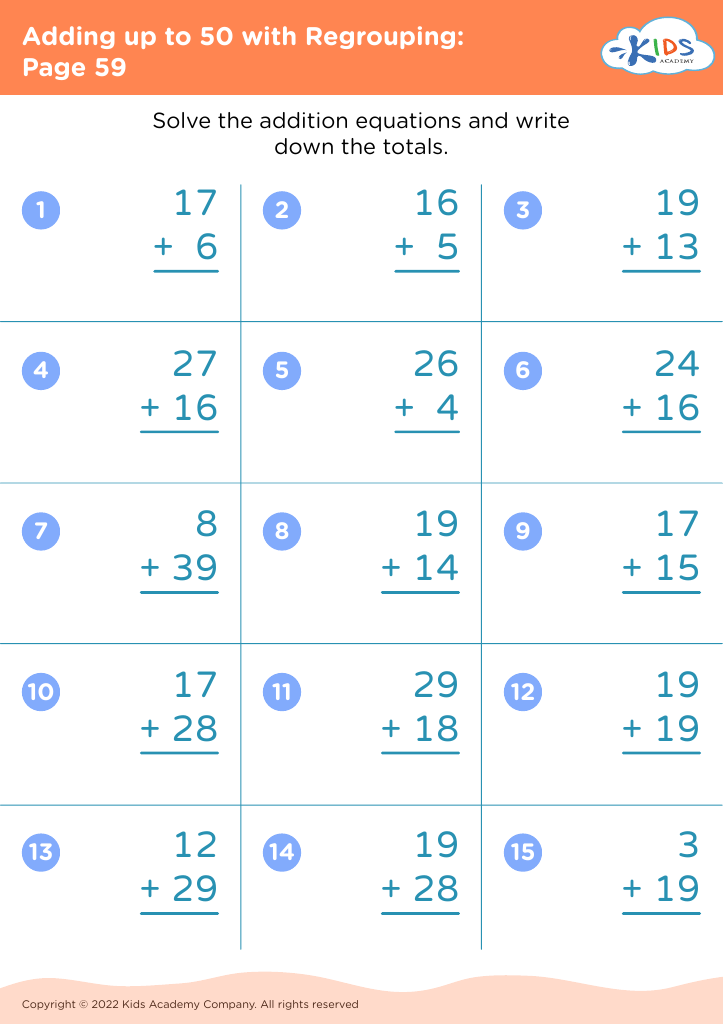
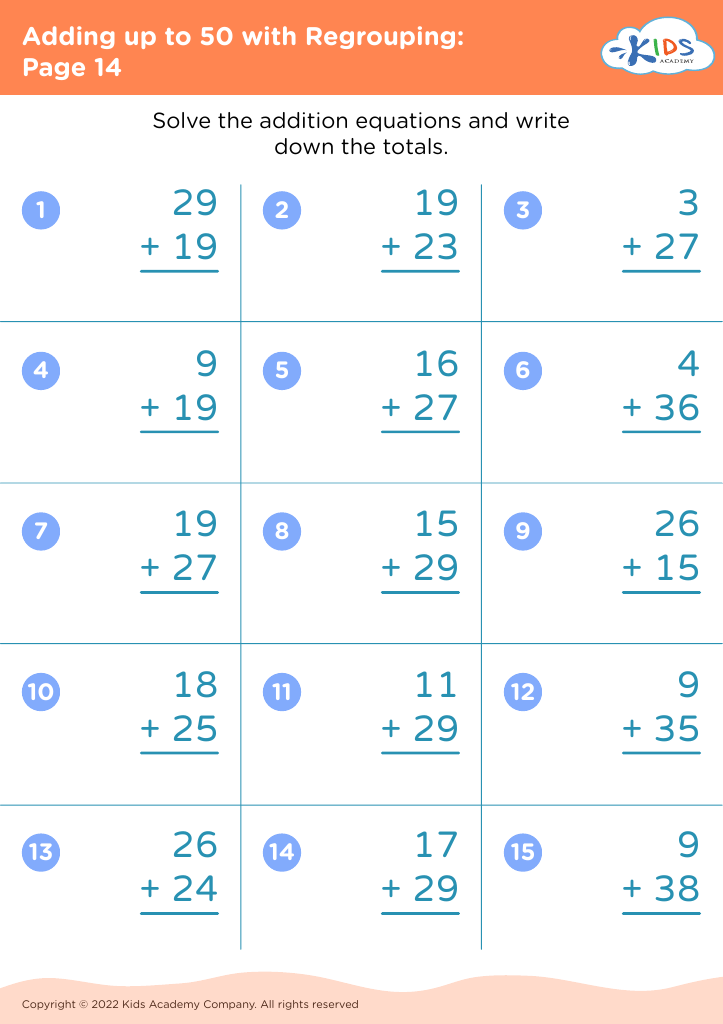
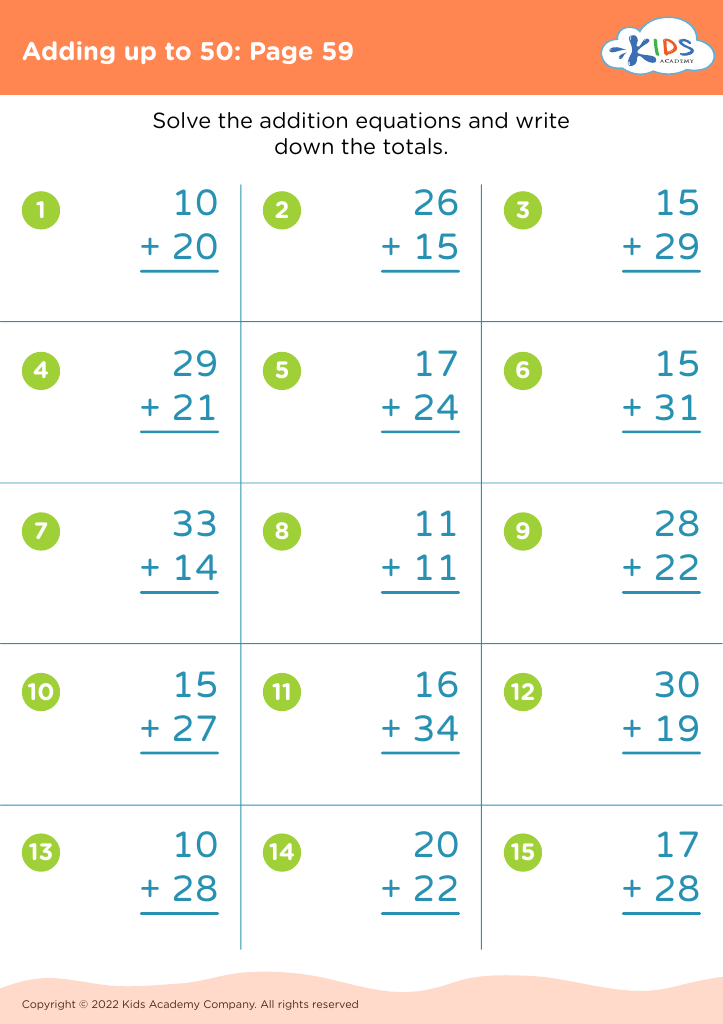
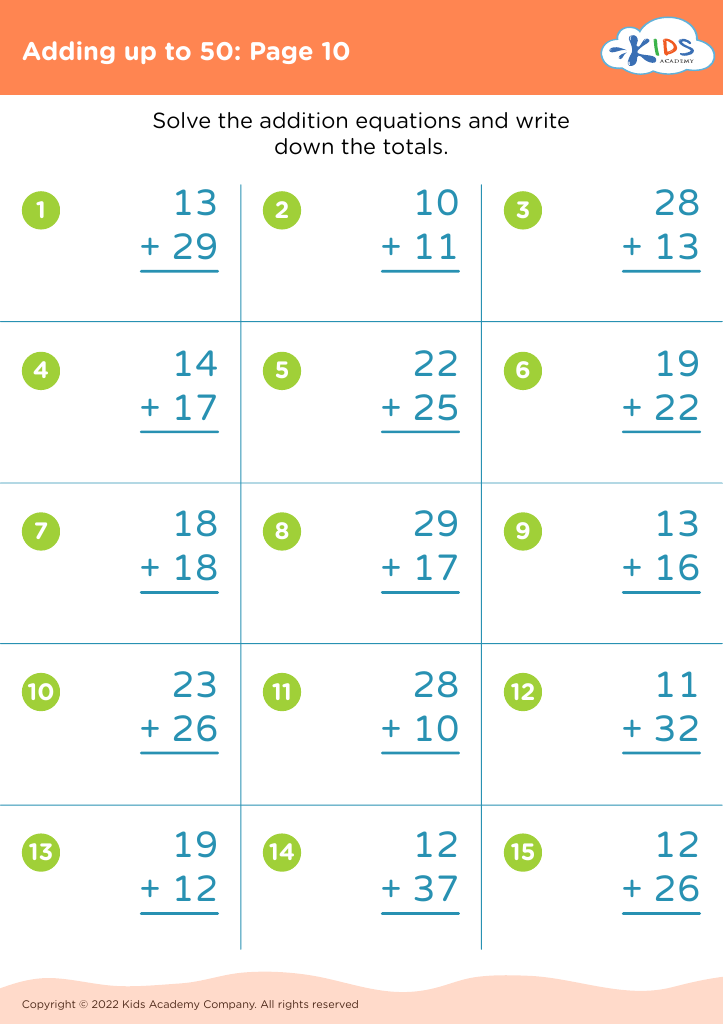
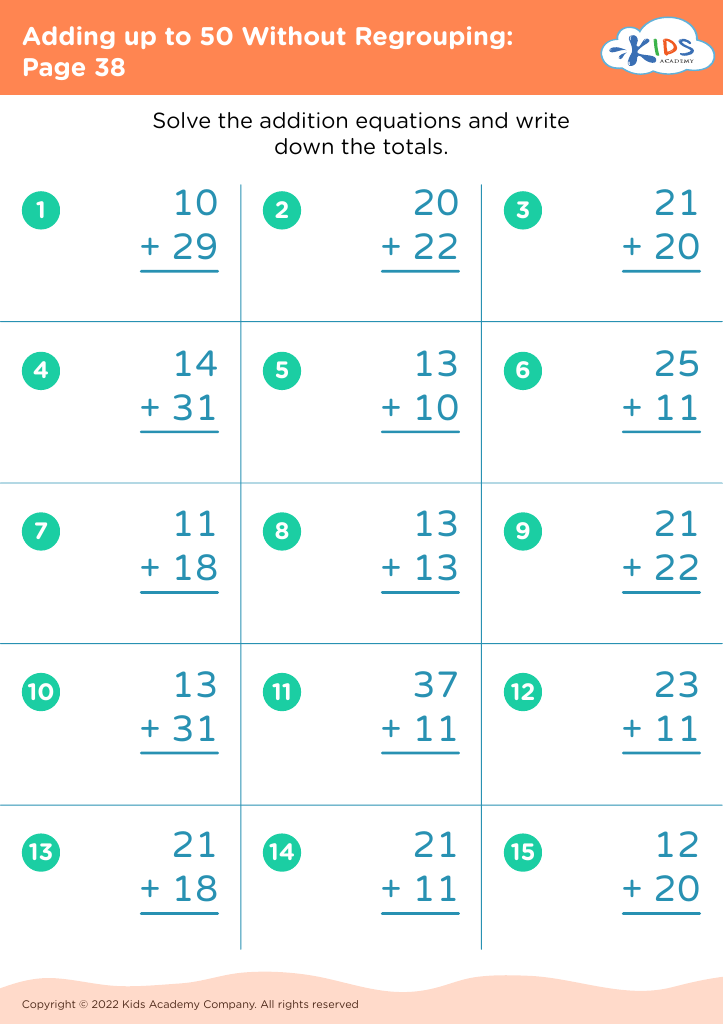




Enhancing comprehension skills in children aged 6-8, particularly with concepts like "adding up to 50," is crucial for several reasons. Firstly, this age group is critical for developing foundational math skills. Mastery of basic addition not only boosts mathematical understanding but also fosters confidence in students as they see their capabilities grow.
Secondly, comprehension goes beyond numerical skills; it encourages critical thinking and problem-solving. When children learn how to piece together numbers to reach a target sum, they also practice logical reasoning, which is applicable in various aspects of learning and everyday life.
Moreover, effective comprehension aids in classroom engagement. Children with strong quantitative skills are more likely to participate actively in discussions and collaborative activities, cultivating a healthy learning environment.
Additionally, enhancing comprehension in young learners supports their overall academic performance. These foundational skills pave the way for more advanced concepts as they progress in school, ensuring they are well-prepared for future challenges in math and beyond.
Ultimately, by focusing on enhancing comprehension within age-appropriate mathematics tasks, parents and teachers provide children with the tools necessary for lifelong learning and success.








