Improve reading skills Adding up to 50 Worksheets for Ages 6-8
7 filtered results
-
From - To
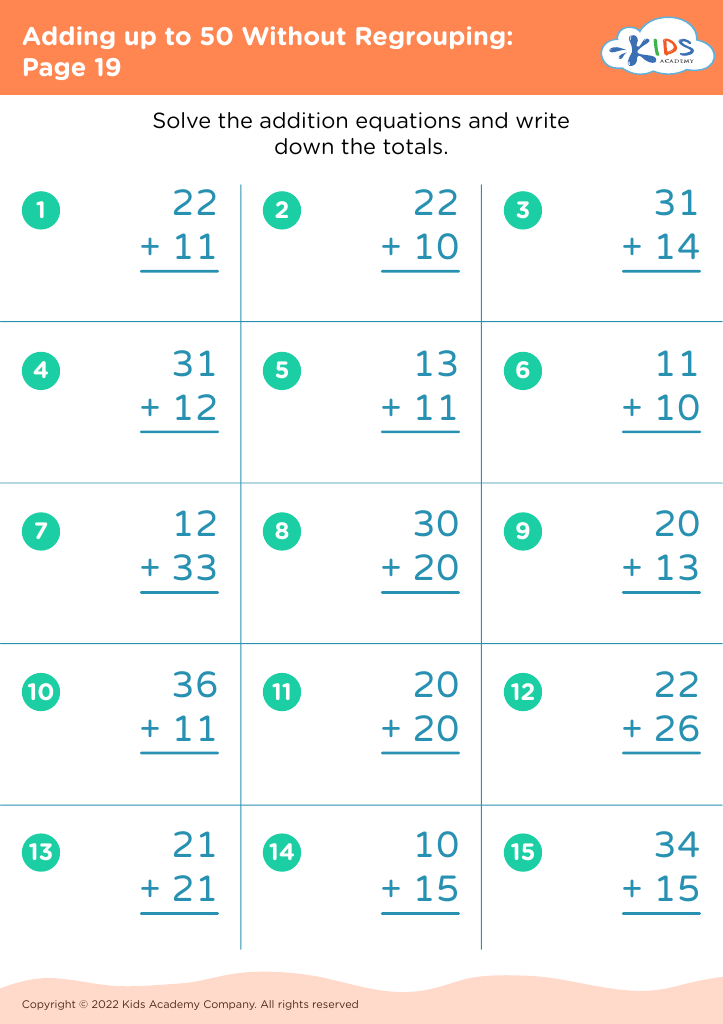
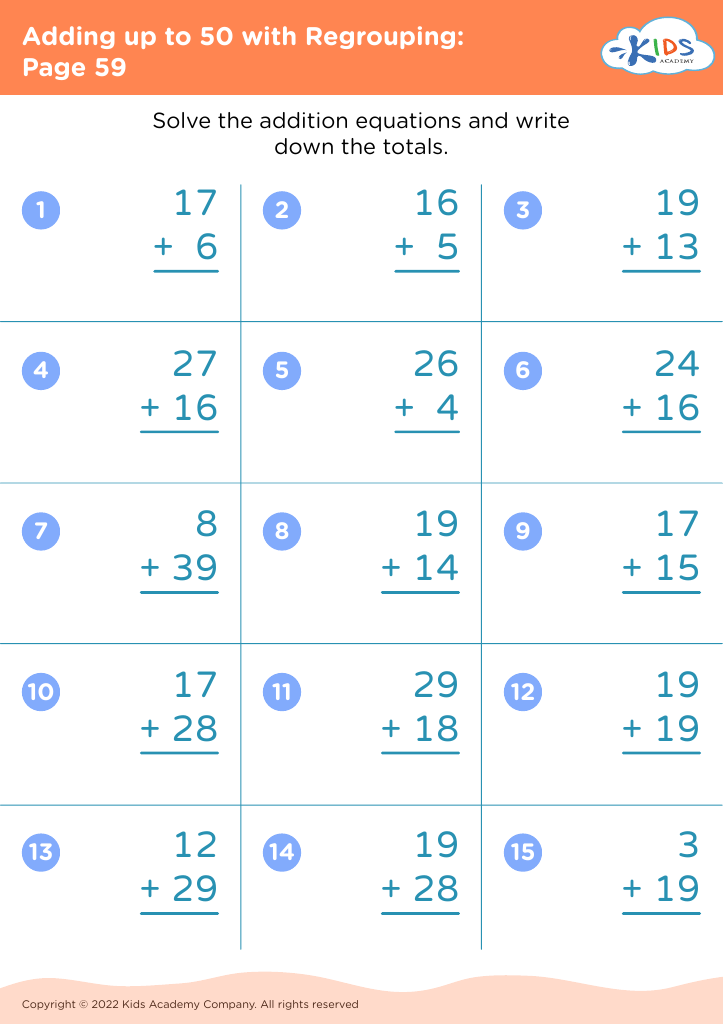
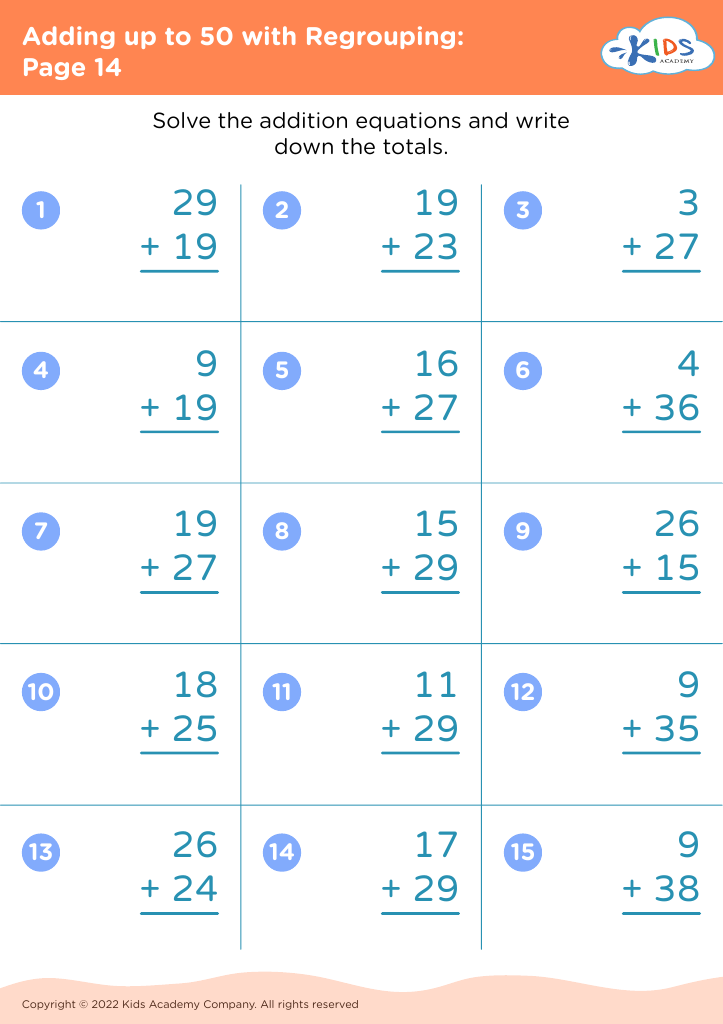
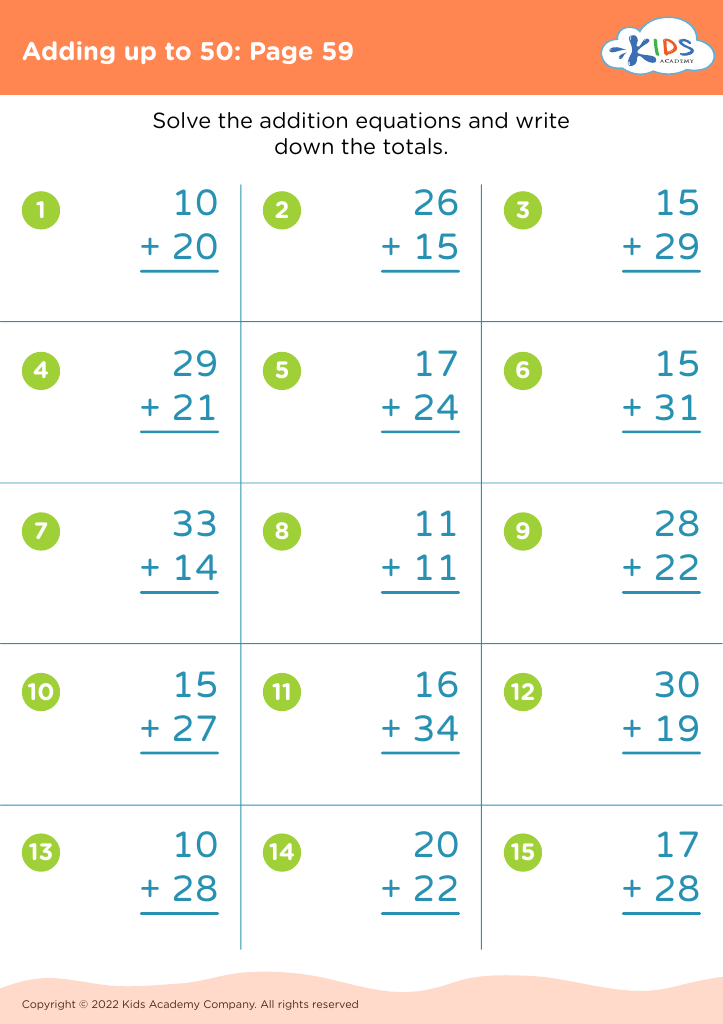
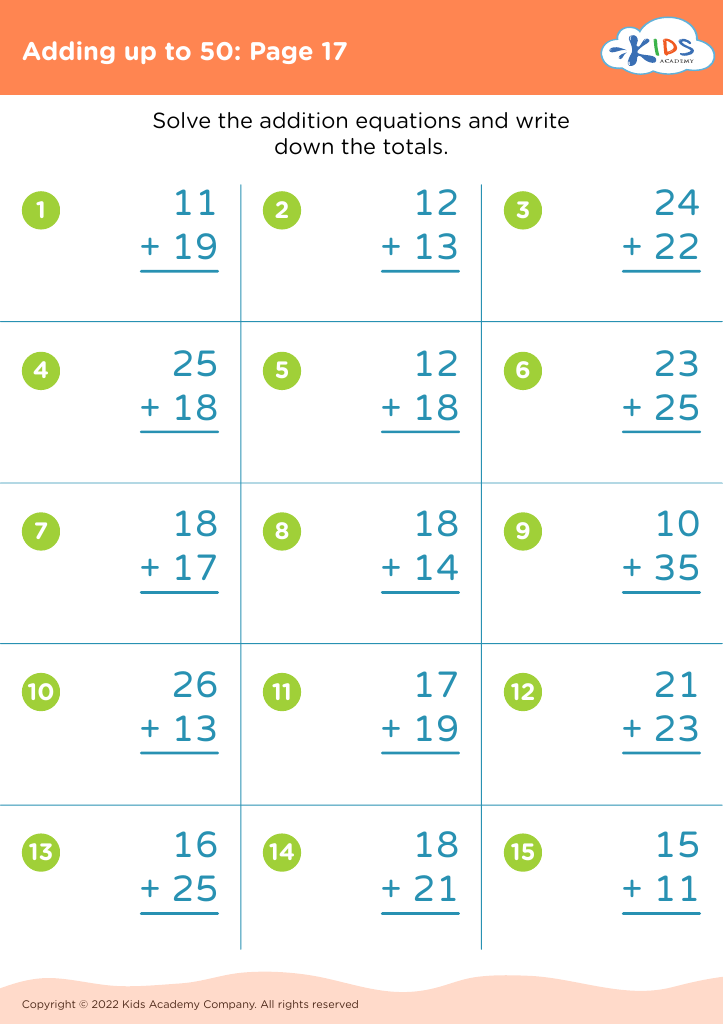
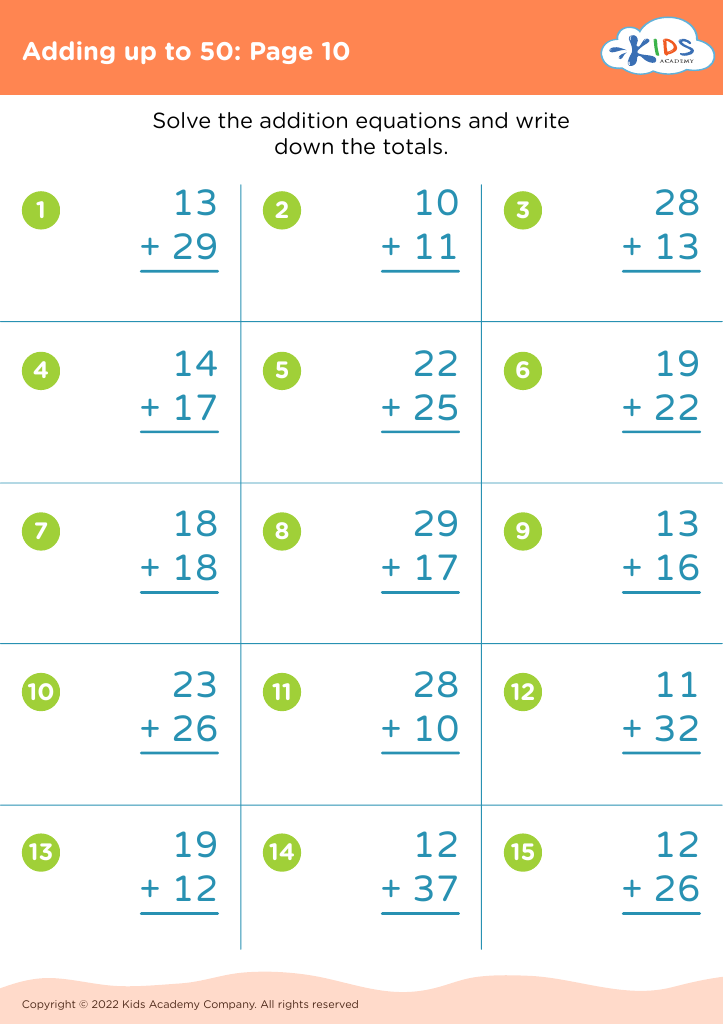
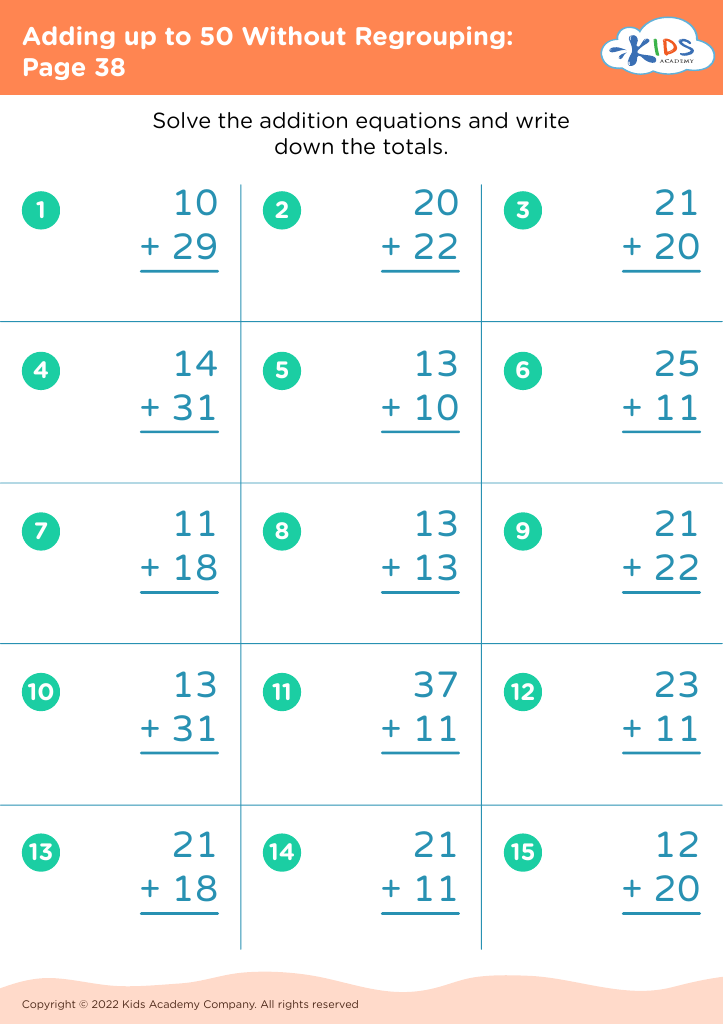
Enhance your child's reading skills with our engaging "Improve Reading Skills: Adding up to 50" worksheets, specially designed for ages 6-8. These innovative resources seamlessly integrate basic math concepts while fostering language development. Each worksheet features fun activities that help children practice reading comprehension, vocabulary, and sentence structure in the context of math. Your child will enjoy exploring various themes and challenges, building confidence and a love for learning. Perfect for homeschooling or supplementing classroom education, these 50 captivating worksheets will keep young learners motivated and eager to improve their reading and math skills simultaneously. Start your learning journey today!




Parents and teachers should prioritize improving reading skills for children aged 6-8 to lay a strong foundation for lifelong learning. At this developmental stage, children are transitioning from learning to read to reading to learn, meaning their reading abilities significantly influence other academic areas. Enhanced reading skills boost vocabulary, comprehension, and critical thinking, which are essential for subjects like math and science.
Moreover, proficient reading fosters a love for literature and can spark imagination and creativity in children. An environment rich in reading promotes curiosity and exploration, allowing children to engage with diverse topics and cultures. As they develop these skills, their self-confidence increases, resulting in greater participation in classroom discussions and activities.
In addition, strong reading skills are linked to better social-emotional development. Children who can comprehend and analyze texts are better equipped to understand different perspectives, fostering empathy and effective communication.
Investing in reading skills not only benefits academic achievement but also equips children with essential life skills that extend beyond the classroom, preparing them to navigate future challenges successfully. Consequently, parents and teachers play a crucial role in this process, as their support significantly impacts a child’s growth and development.








