Recognizing Patterns Adding up to 50 Worksheets for Ages 6-8
7 filtered results
-
From - To
Unlock the key to math success with our "Recognizing Patterns Adding up to 50 Worksheets" tailored for children ages 6-8! These engaging worksheets are designed to enhance critical thinking and numerical skills by helping young learners identify and analyze patterns in numbers. As they explore various activities, students will gain confidence in their ability to solve addition problems that total up to 50. Each worksheet is colorful and interactive, making learning fun and effective. Perfect for individual practice or classroom use, our worksheets foster a solid foundation in math while developing essential pattern recognition skills. Dive in and watch your child's math skills flourish!
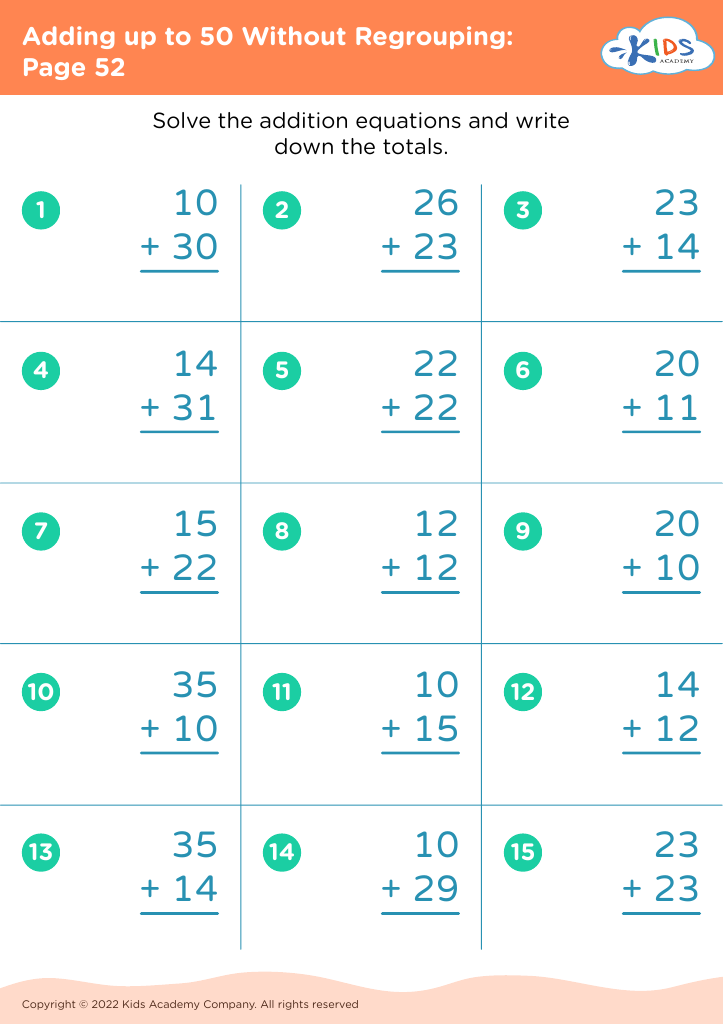
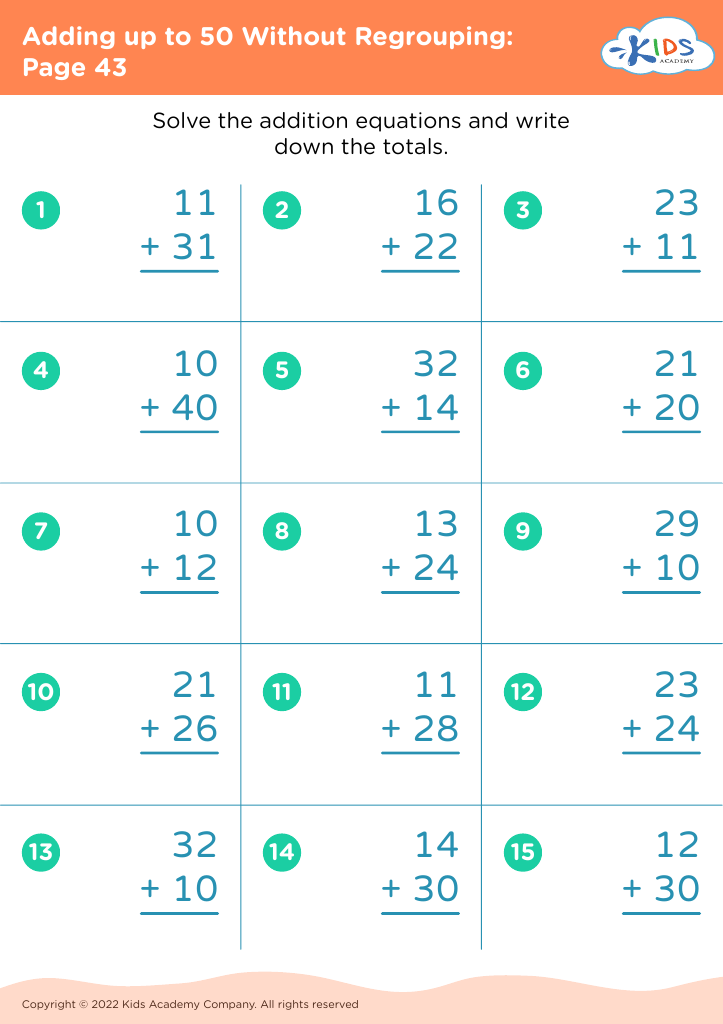
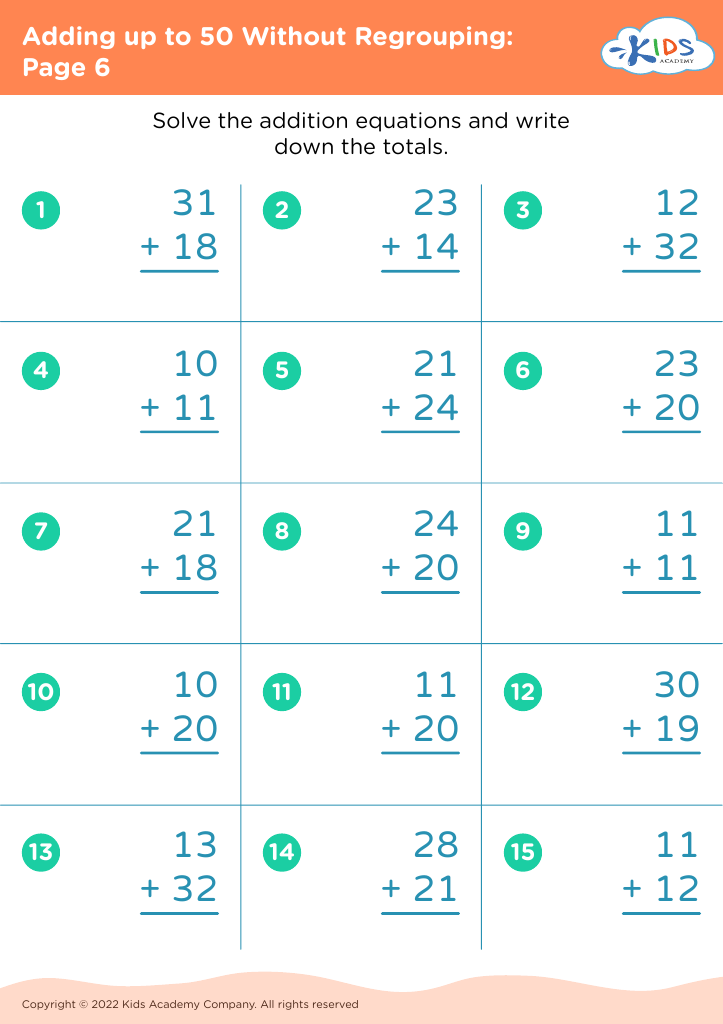
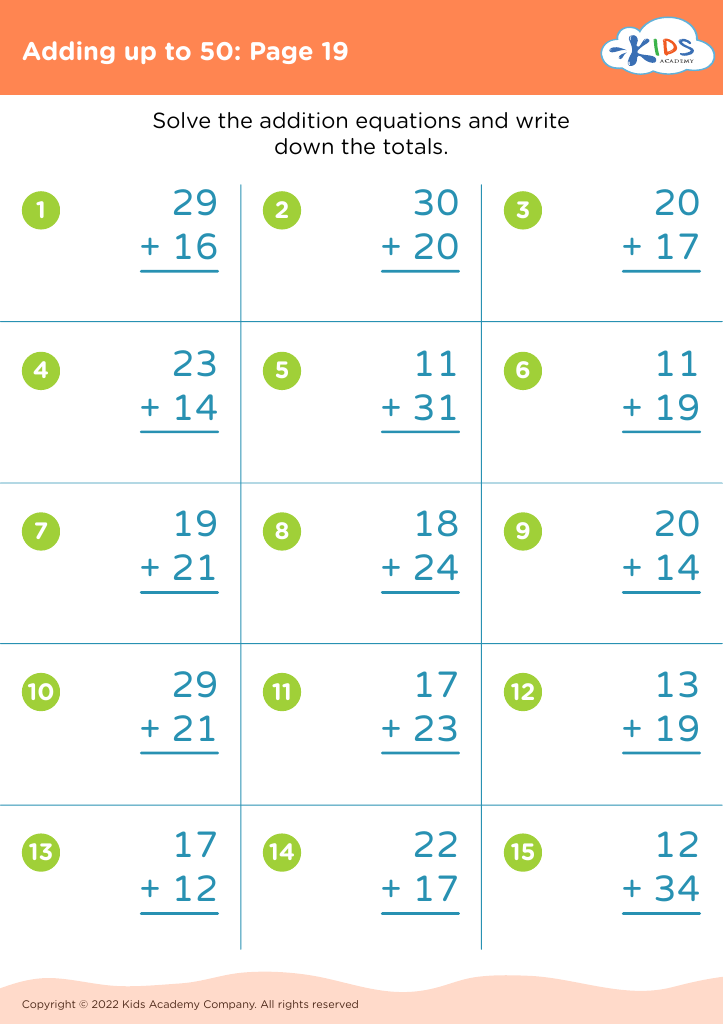
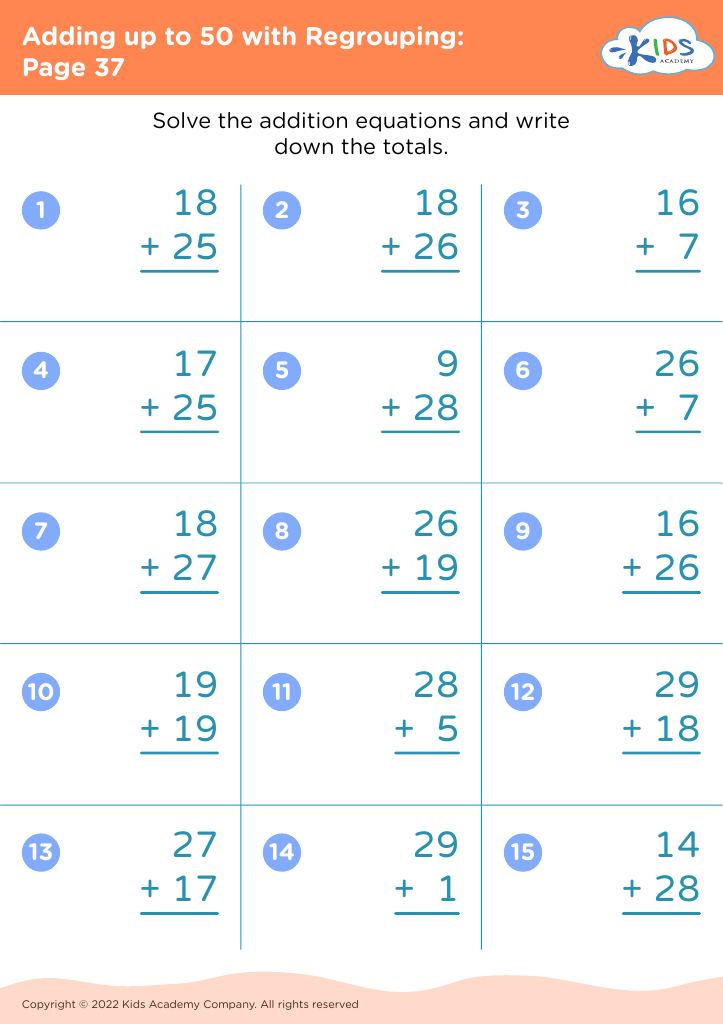
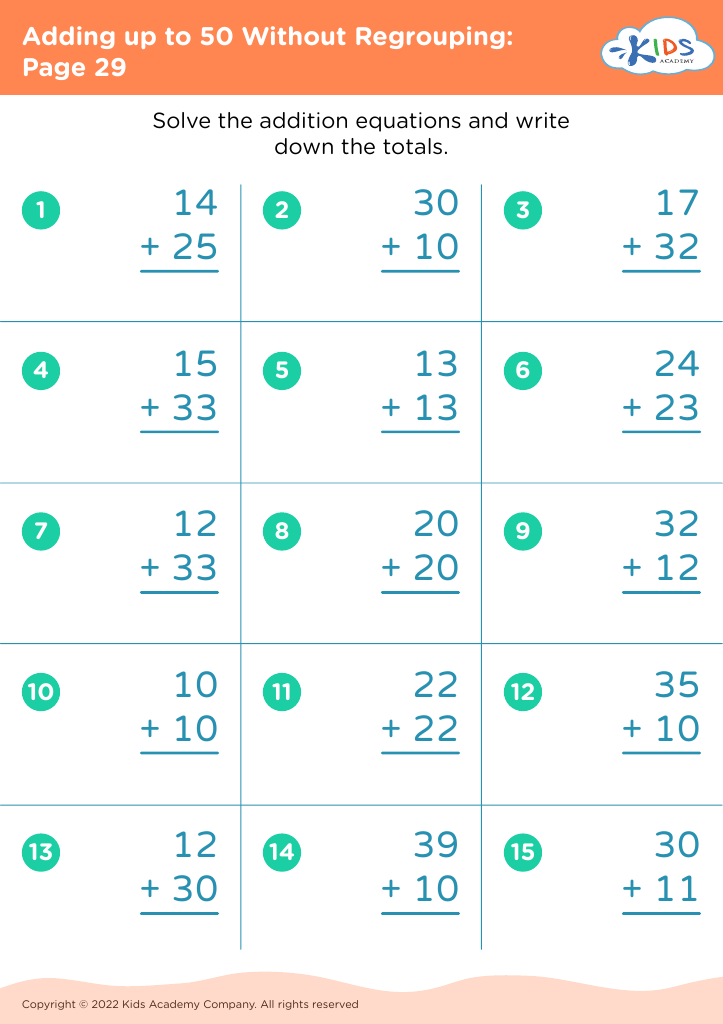
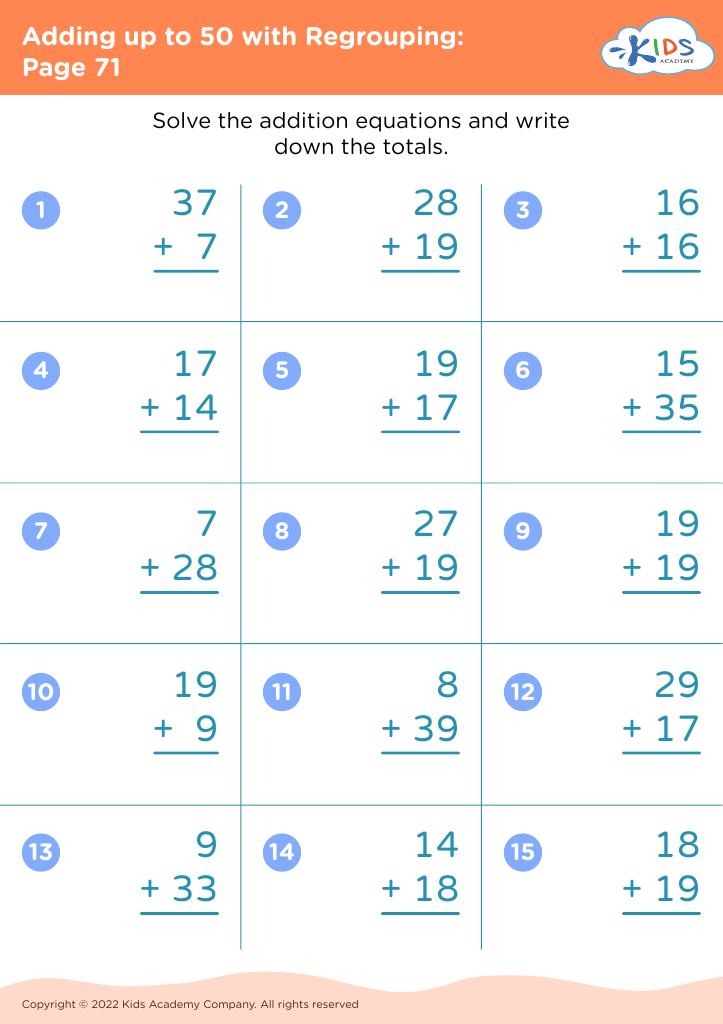




Recognizing patterns when adding up to 50 is vital for children ages 6-8, as it lays the foundation for critical mathematical skills. At this age, children are developing their number sense and beginning to understand addition, which is crucial for more advanced arithmetic. Identifying patterns in numbers not only makes addition more accessible but also increases a child’s confidence in their abilities.
When children recognize that numbers often follow specific patterns (like pairs that sum to 10 or sequences of 5), they can approach addition problems with a strategy rather than relying solely on memorization. This predictive ability helps them solve problems more efficiently and prepares them for more complex mathematical concepts, such as multiplication and division.
Moreover, understanding patterns bolsters analytical thinking and problem-solving skills, traits beneficial beyond mathematics. It encourages a growth mindset, fostering belief in their capabilities as learners. For teachers and parents, supporting children's understanding of these patterns cultivates an engaging learning environment, reinforcing the joy of discovery and exploration in math. Ultimately, Recognizing Patterns Adding up to 50 equips children with essential tools for their academic journey and instills a lifelong love for learning.








