Understanding fractions Adding up to 50 Worksheets for Ages 6-8 - Page 2
47 filtered results
-
From - To
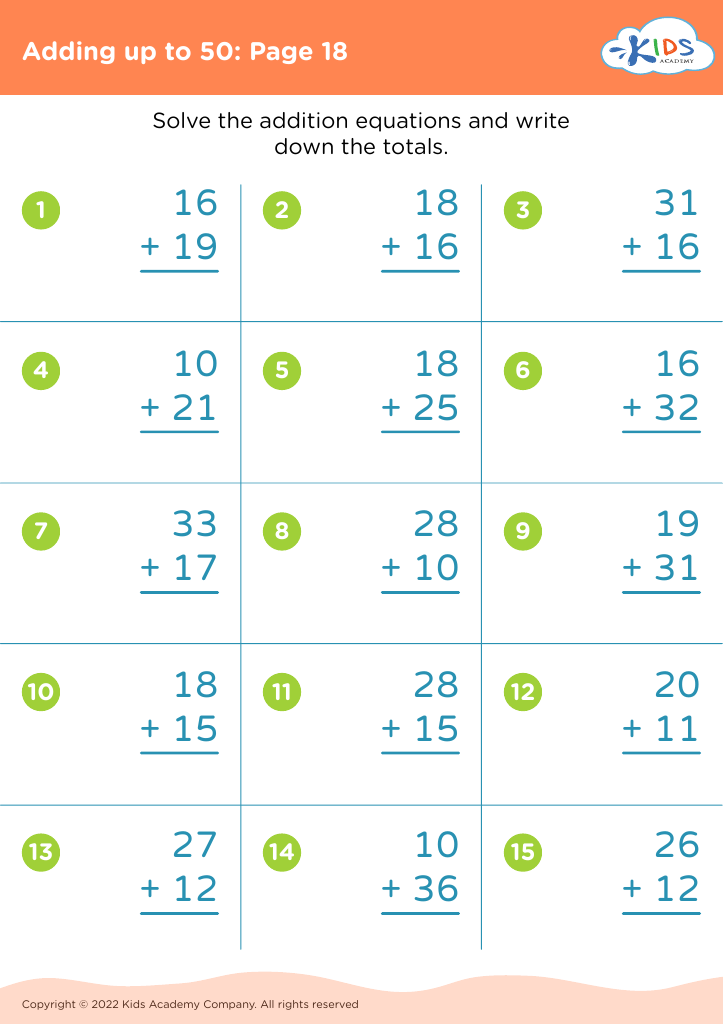
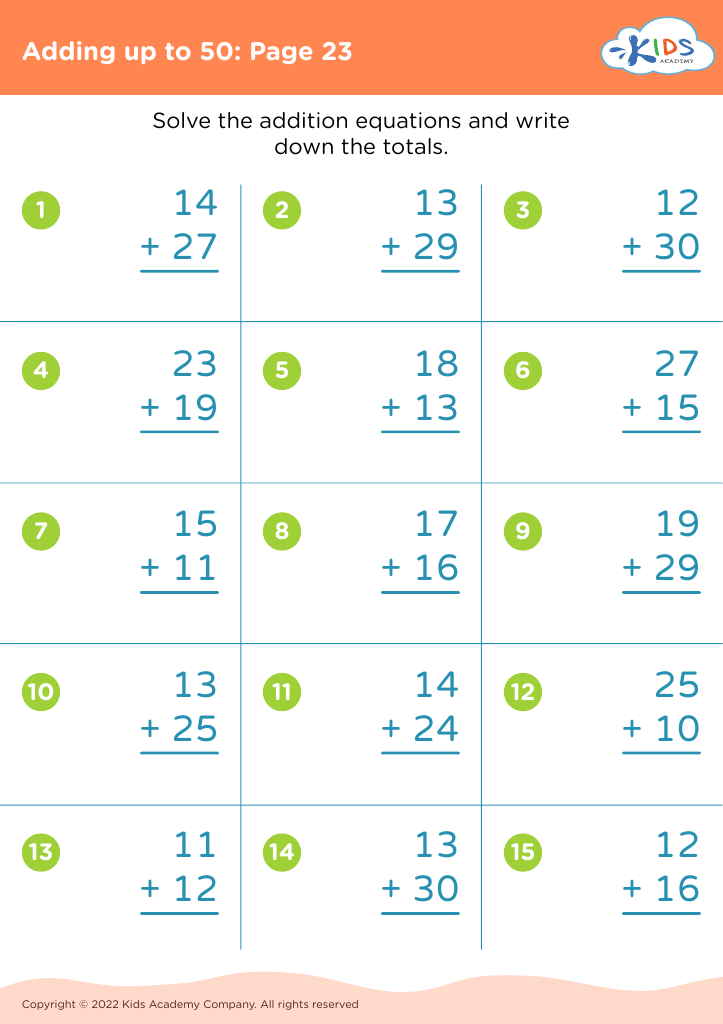
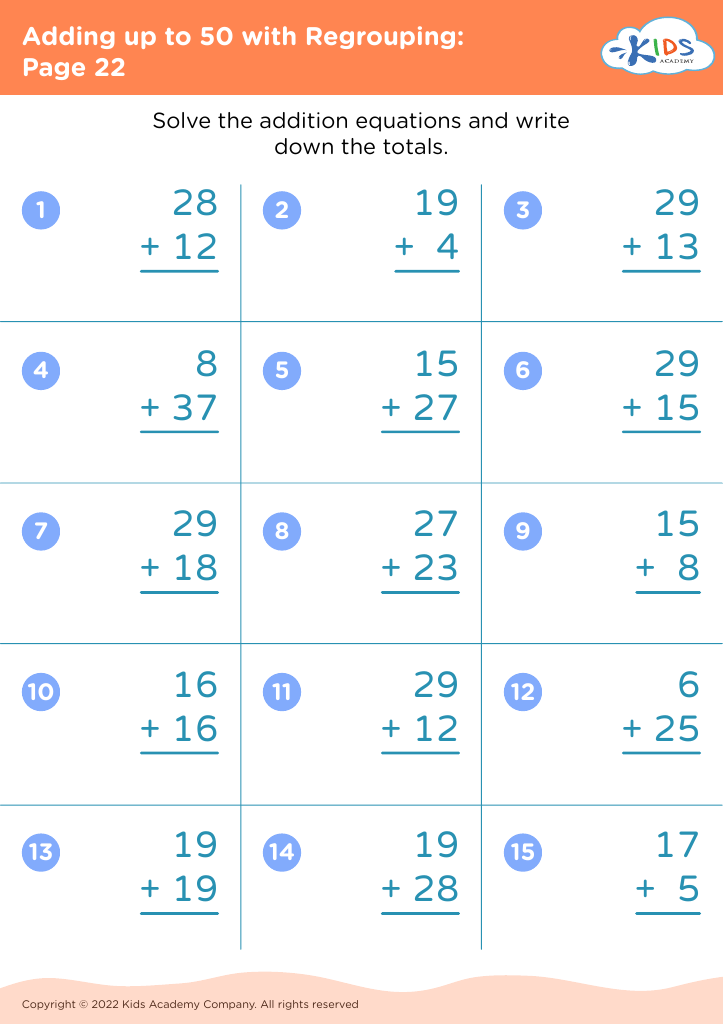
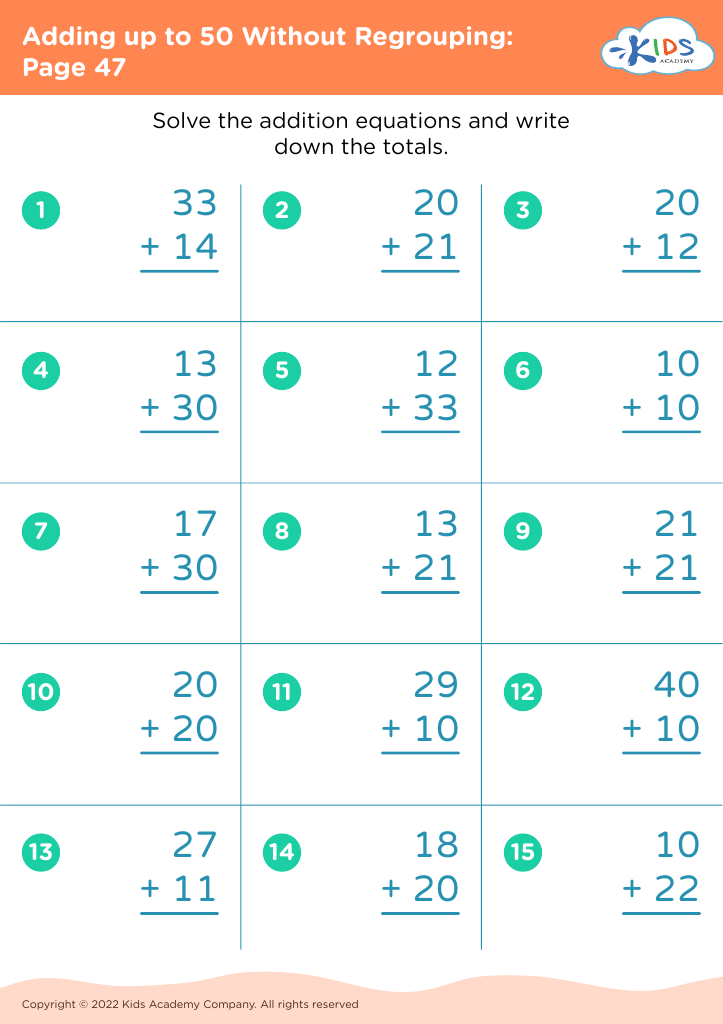
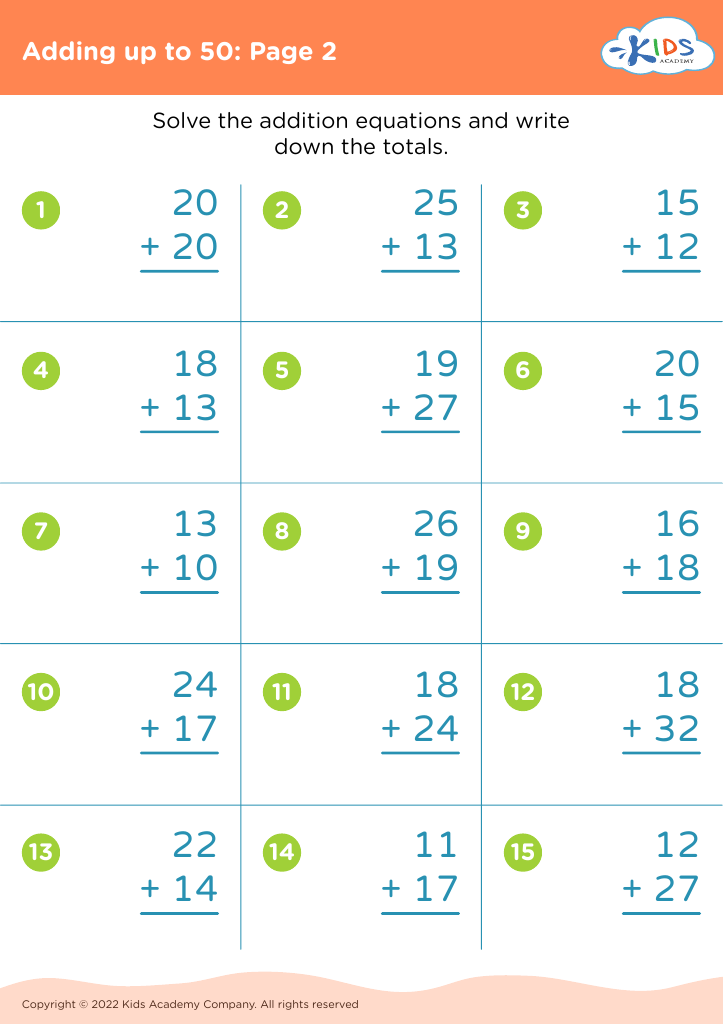
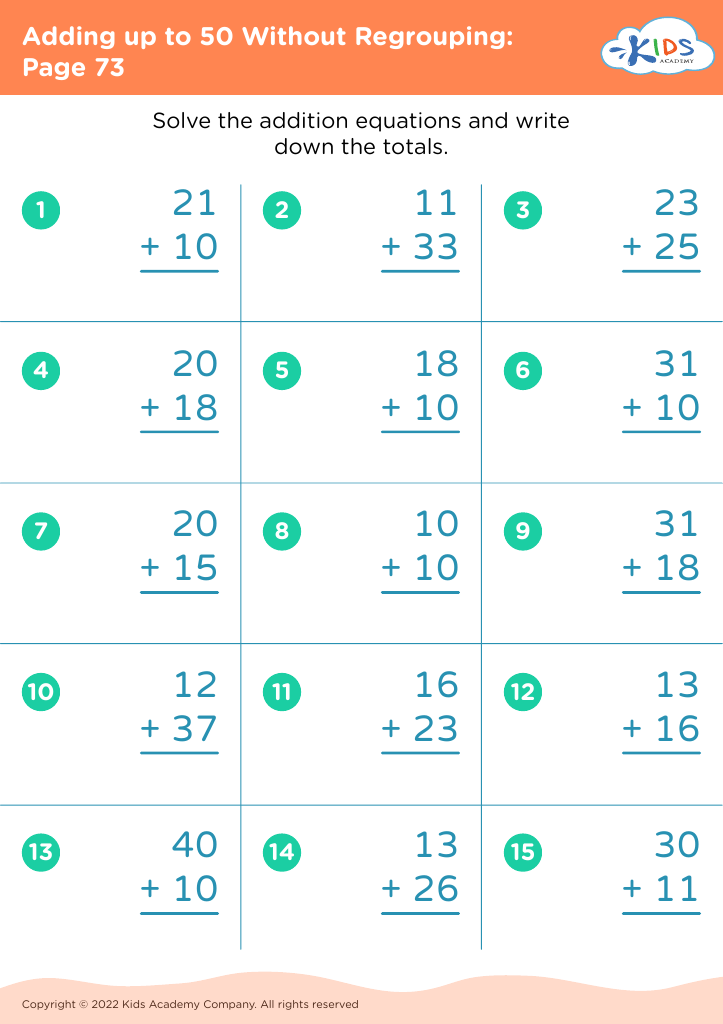
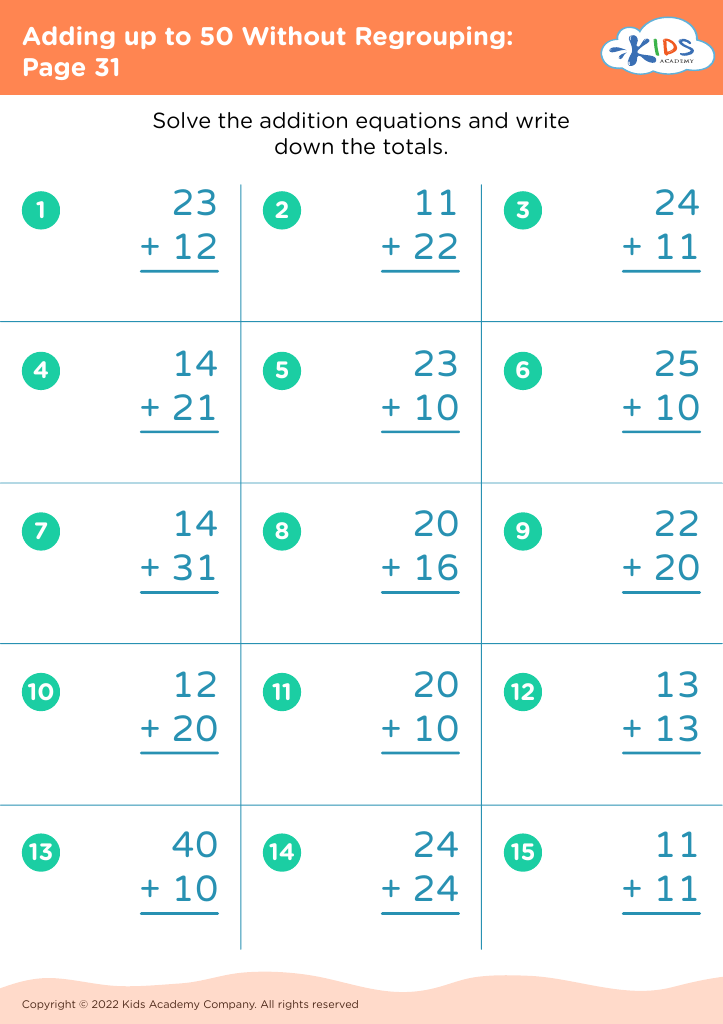
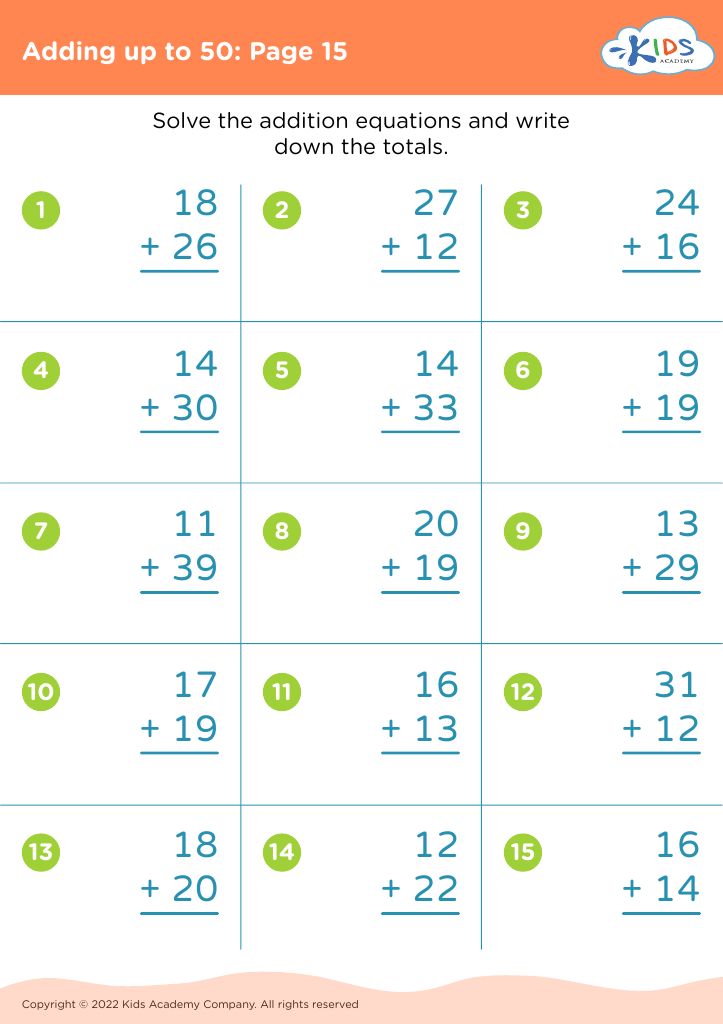
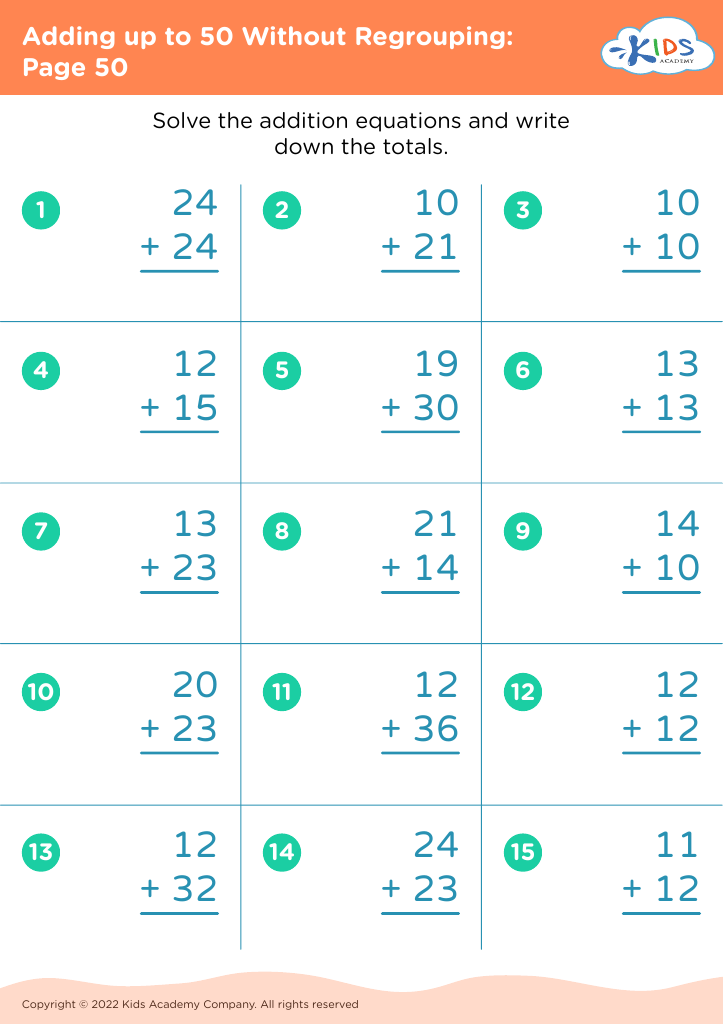
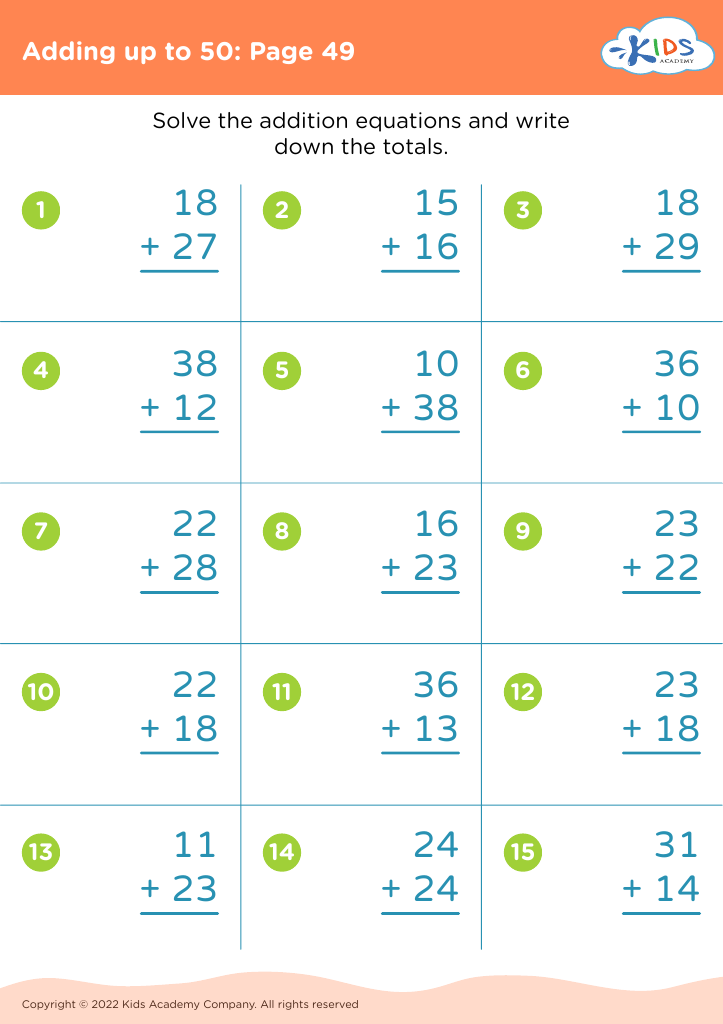
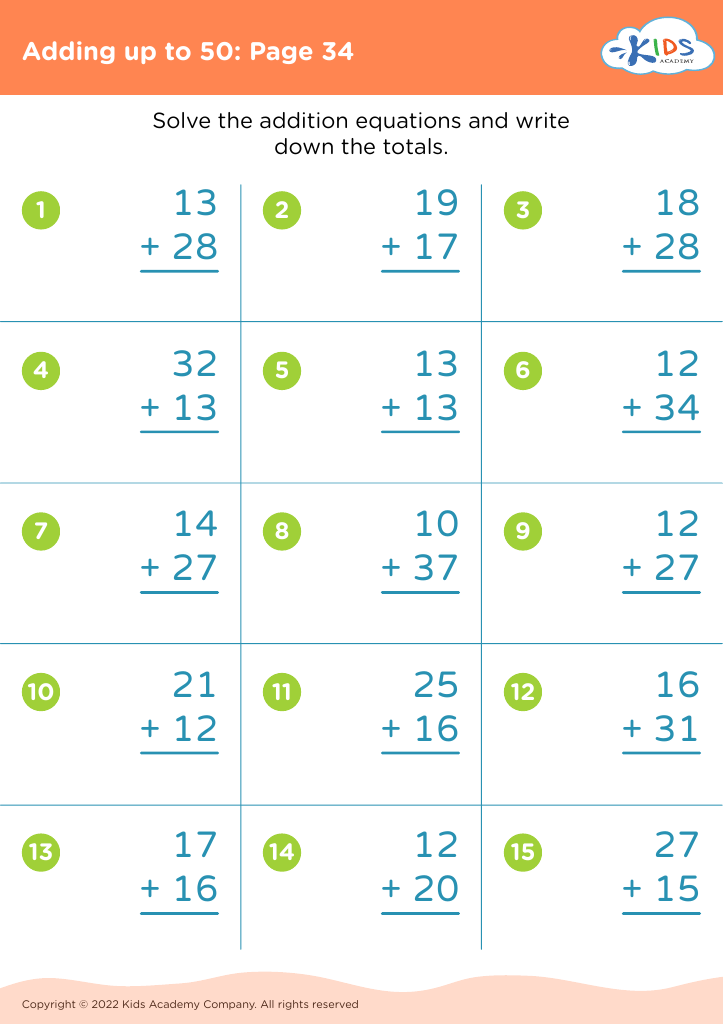




Understanding fractions and the concept of addition is crucial for children aged 6-8, as these foundational skills set the stage for later mathematical proficiency. At this developmental stage, children are beginning to grasp abstract concepts; fractions introduce them to the idea of parts of a whole, fostering critical thinking and problem-solving skills.
Teaching children to understand that fractions can add up to a whole, especially with a focus on the number 50, helps them make connections between fractions, whole numbers, and real-world scenarios. For instance, dividing a pizza into slices or sharing a cake for a party can make math relevant and exciting.
Moreover, understanding fractions encourages mathematical language development, as children learn to articulate their reasoning and strategies. Teachers and parents play a vital role in creating supportive environments where children can explore these concepts through manipulatives, drawings, and everyday situations.
By investing time in teaching fractions, caregivers empower children to build confidence, enhance their mathematical understanding, and foster a genuine interest in learning. This foundational knowledge not only supports academic success in future math topics but also cultivates essential life skills needed for critical reasoning and decision-making.








