Real-life application Addition and Subtraction Word Problems Worksheets for Ages 6-8
3 filtered results
-
From - To
Enhance your child's math skills with our "Real-life Application Addition and Subtraction Word Problems Worksheets for Ages 6-8"! These engaging worksheets are designed to help young learners understand and apply mathematical concepts to everyday situations. From calculating change at a store to tallying up scores in a game, your child will practice both addition and subtraction in practical contexts. Tailored to capture the interest of kids aged 6-8, our word problems develop critical thinking and problem-solving skills, ensuring a fun and educational experience. Ideal for classroom or home use, watch your child's confidence in math soar!
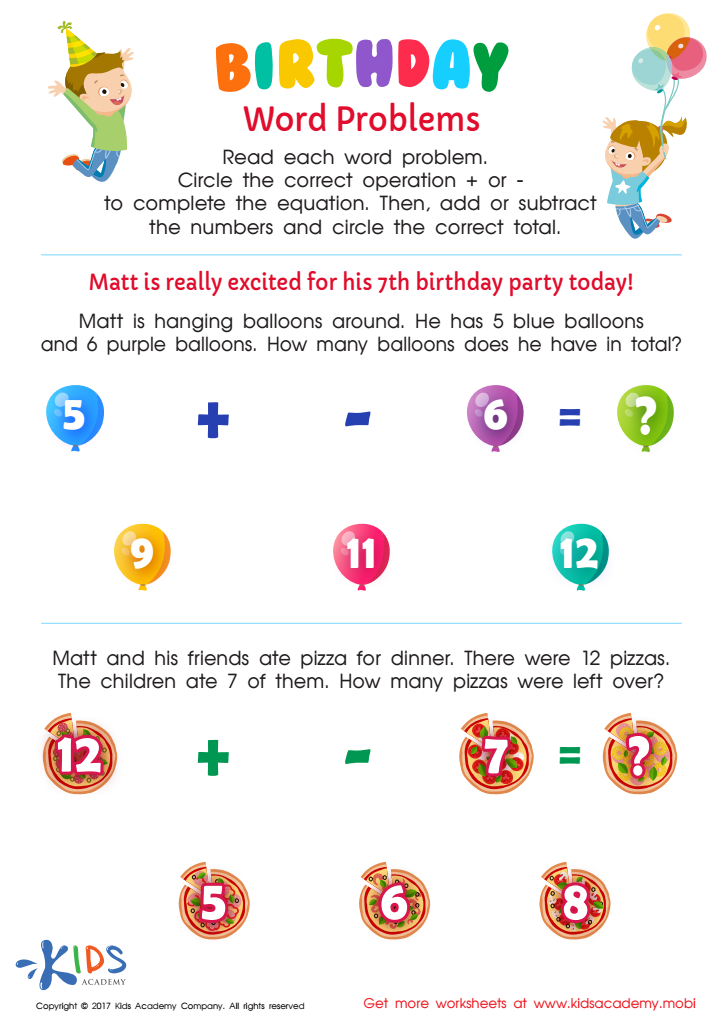
Birthday Word Problems Substraction Worksheet
 Assign to My Students
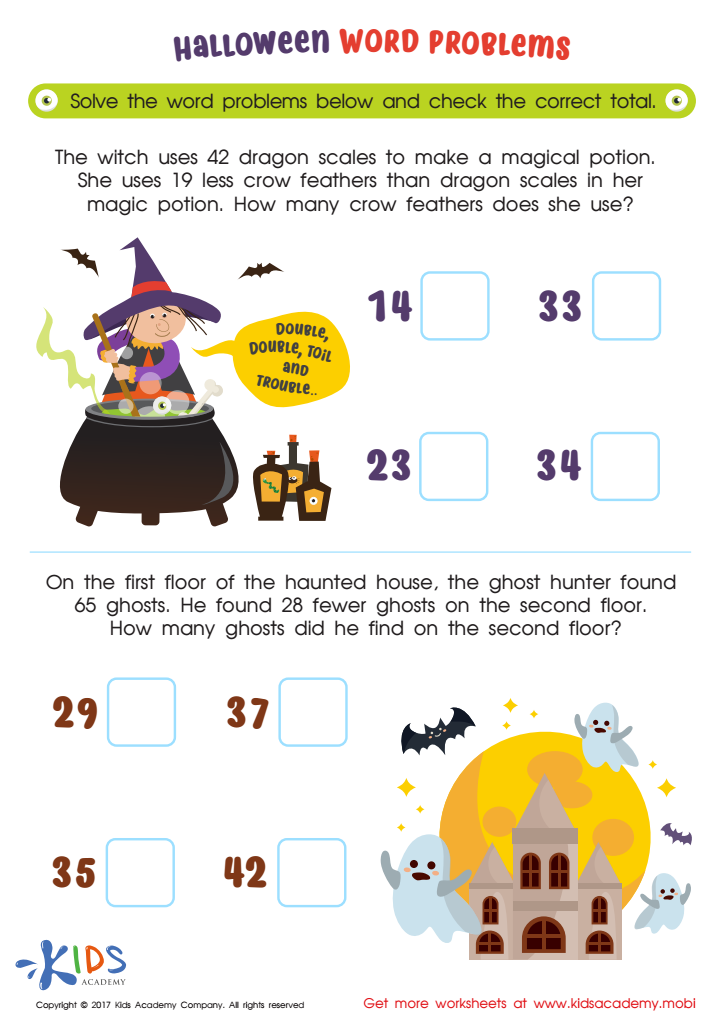
Halloween Word Problems Printable
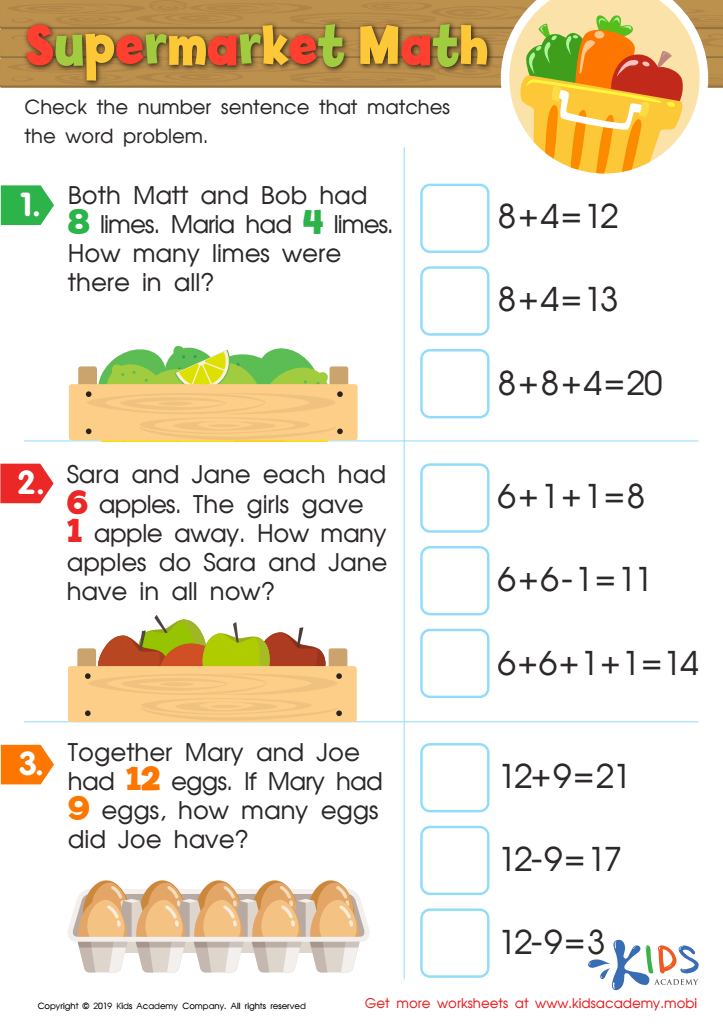
Supermarket Math Worksheet








Understanding addition and subtraction word problems is critical for children ages 6-8 because it bridges the gap between abstract math concepts and real-life situations. This early grasp of practical math enhances cognitive development and problem-solving skills, which are essential in everyday activities. When children practice real-life scenarios, such as calculating the total cost of items or sharing treats among friends, they see the value of math beyond the classroom.
For parents, engaging with their children in these activities at home can be a bonding experience that supports academic progress. It prepares children for future learning by building a strong foundational understanding. It also fosters important life skills of critical thinking and logical reasoning.
For teachers, incorporating real-life math problems into the curriculum helps maintain student engagement by showing them how mathematics is relevant to their lives. It also caters to diverse learning styles by presenting multiple ways to approach and solve problems. This practice aligns with educational standards that emphasize the importance of applying knowledge to real-world situations.
In essence, making math relatable ensures that children aren’t just memorizing rules but understanding the concepts, thus developing a robust numerical literacy. This practice ultimately shapes more confident and competent young learners ready to tackle more complex mathematical challenges ahead.