Fraction identification Addition & Subtraction Worksheets for Ages 6-8
5 filtered results
-
From - To
Explore our Fraction Identification Addition & Subtraction Worksheets, designed specifically for ages 6-8. These engaging, printable worksheets help young learners grasp basic fraction concepts while enhancing their addition and subtraction skills. Each activity offers a fun, interactive way to learn and practice identifying fractions, and solving fraction addition and subtraction problems. Perfect for both classroom and home use, these worksheets build a strong mathematical foundation, ensuring that your child or student develops confidence and proficiency in handling fractions. Start empowering their math journey today with our expertly crafted worksheets!
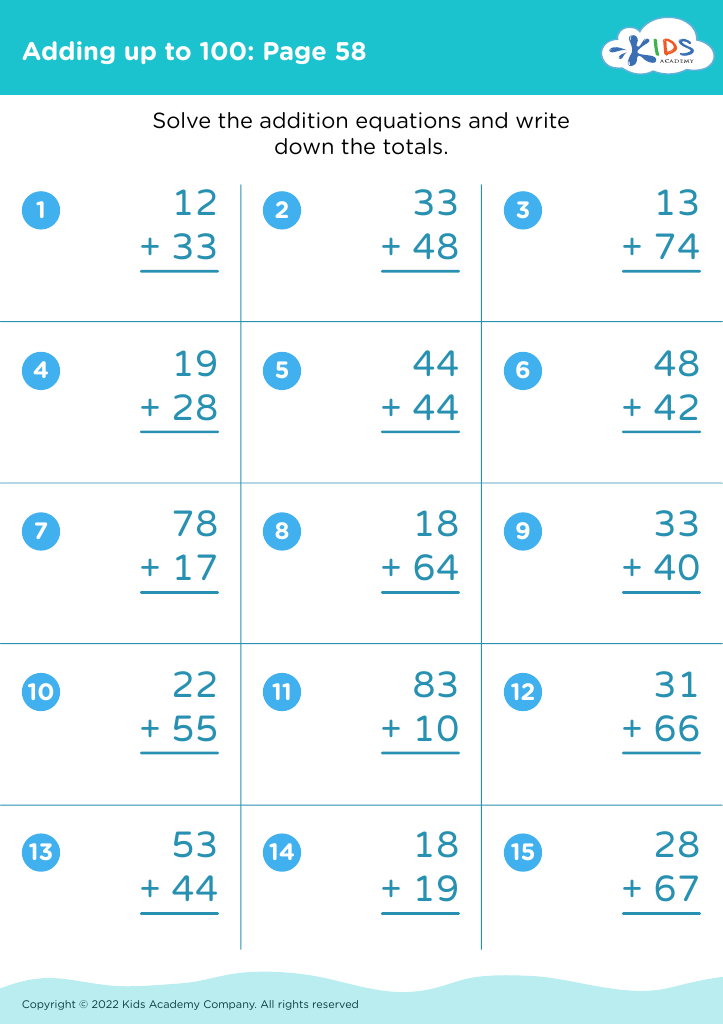








Understanding fractions, along with their addition and subtraction, is a fundamental mathematical skill that serves as a building block for more complex math concepts. When children aged 6-8 learn and master these skills, it significantly benefits their cognitive development, problem-solving abilities, and logical thinking.
Firstly, fraction identification helps kids grasp the idea of parts and wholes, laying the groundwork for advanced topics like decimals, percentages, and algebra. Fraction addition and subtraction reinforce these concepts, illustrating how parts can combine or separate into new quantities. These foundational math skills facilitate better performance in future academic endeavors, enhancing overall competence and confidence in math.
Moreover, experiencing success in grasping fractions fosters a positive mathematical mindset. When children notice their improvement, they are more likely to approach math problems with enthusiasm rather than anxiety.
Importantly, practical life skills rely on these concepts. Whether dividing a pizza, measuring ingredients for a recipe, or understanding time and money, real-world applications abound where proficiency in fractions is invaluable.
Thus, instilling a strong understanding of fraction identification, addition, and subtraction sets children on a path toward mathematical literacy, critical thinking, and everyday competency. For these compelling reasons, parents and teachers should prioritize these areas in early education.








