Practicing mental arithmetic Addition & Subtraction Worksheets for Ages 6-8
3 filtered results
-
From - To
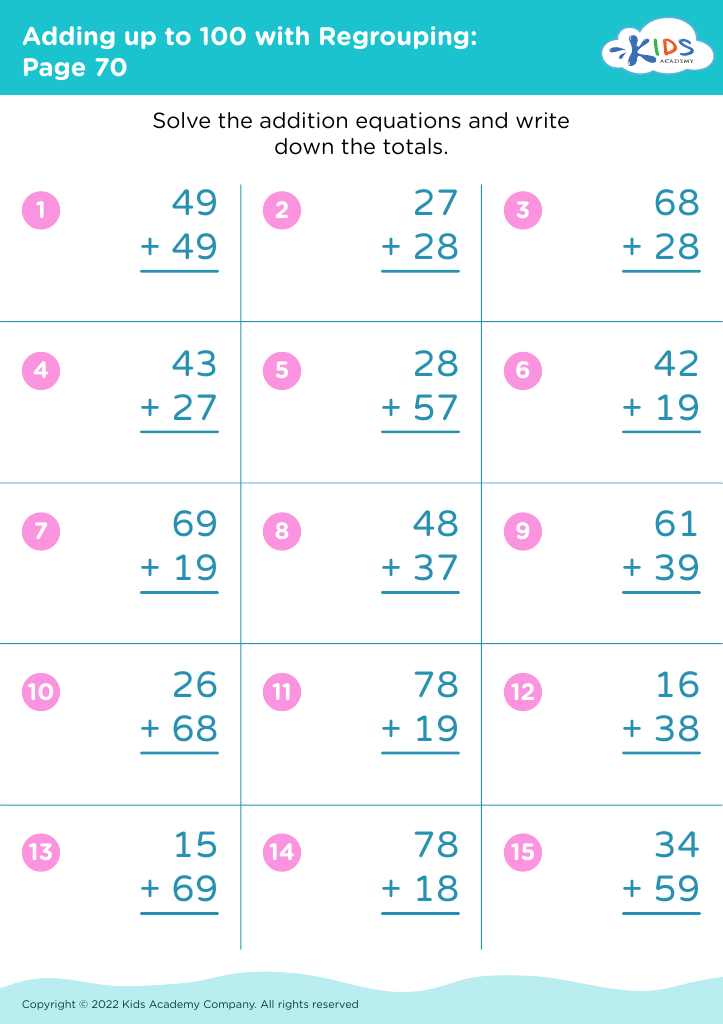
Enhance your child's math skills with our "Practicing Mental Arithmetic Addition & Subtraction Worksheets" designed for ages 6-8. These engaging worksheets make learning fun and effective by focusing on addition and subtraction problems to boost mental calculation abilities. Carefully crafted to suit young learners, our resources help kids develop confidence in their arithmetic skills through interactive and stimulating exercises. Whether used in the classroom or at home, these printable worksheets are the perfect tool to support your child’s journey towards mastering basic math operations. Visit our website to access a variety of worksheets and ignite a passion for math in your child today!
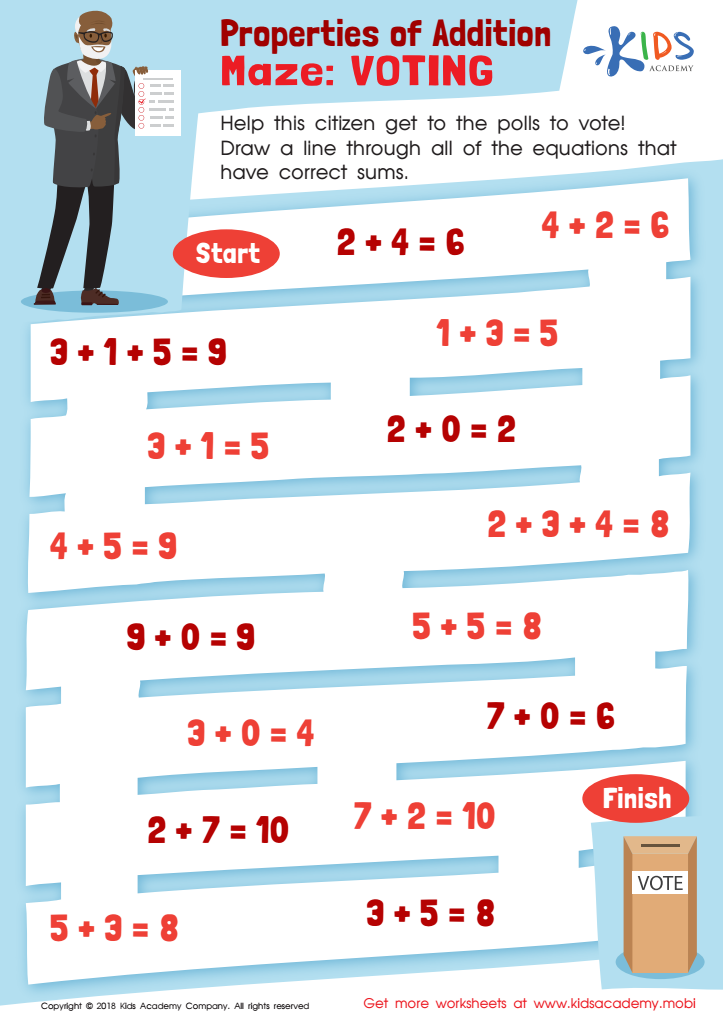
Properties of Addition Maze: Voting Worksheet
 Assign to My Students
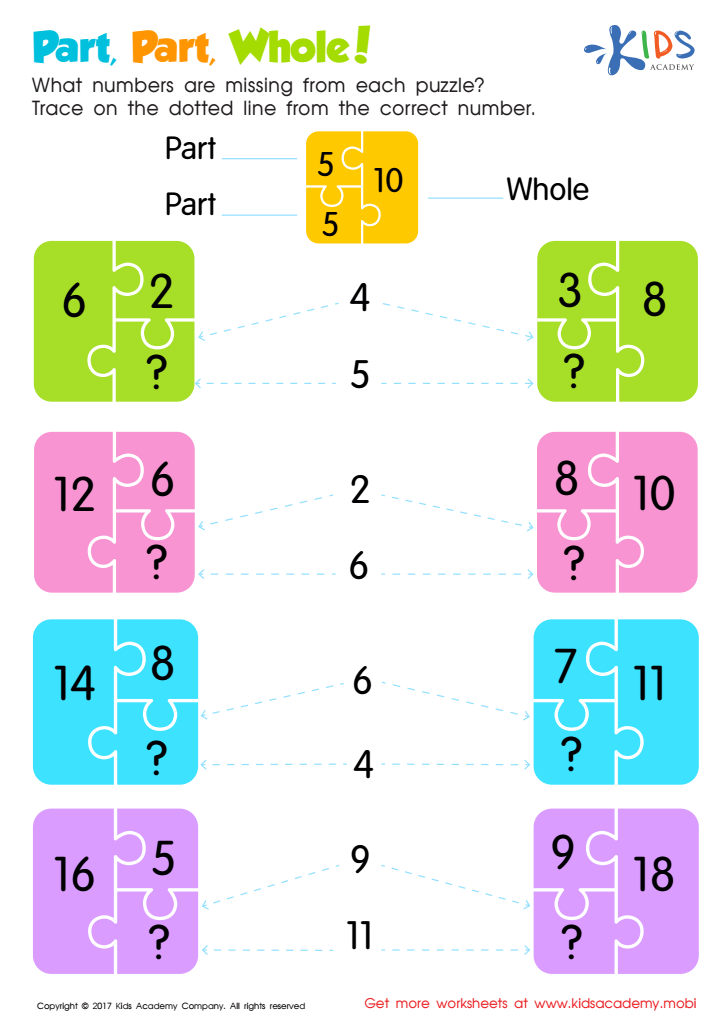
Part, Part, Whole Worksheet








Practicing mental arithmetic, specifically addition and subtraction, for children aged 6-8 is vital for multiple reasons. At this developmental stage, the brain is highly adaptable and able to absorb information quickly, making it the perfect time to introduce fundamental math skills. Mastering these basics lays the groundwork for more complex mathematical concepts they will encounter later in their education.
Mental arithmetic enhances cognitive abilities such as memory, attention, and problem-solving skills. By solving arithmetic problems in their minds, children boost their working memory—the ability to hold and manipulate information—which is beneficial across all subjects. It also fosters a sense of numerical understanding and the relationships between numbers, promoting logical thinking and reasoning.
Furthermore, frequent practice builds confidence. If children feel competent in performing mental calculations, they are more likely to tackle mathematical challenges positively and persistently. This confidence is not just crucial for mathematics but translates into a growth mindset, encouraging a resilient and proactive approach to learning and life.
For teachers and parents, integrating mental arithmetic exercises can be straightforward and fun, engaging children through games and activities. With consistent practice, youngsters can develop a robust mathematical foundation, setting them up for future academic success and everyday problem-solving capabilities.








