Recognizing equivalent fractions Addition & Subtraction Worksheets for Ages 6-8
5 filtered results
-
From - To
Explore our engaging "Recognizing Equivalent Fractions Addition & Subtraction Worksheets" designed for children aged 6-8! Our resources help young learners grasp the concept of equivalent fractions while practicing addition and subtraction. Each worksheet features colorful, interactive activities that not only make learning fun but also reinforce essential math skills. Kids will gain confidence in identifying and working with fractions through clear instructions and helpful visuals. Perfect for classroom use or at-home learning, these worksheets are ideal for enhancing your child's understanding of fractions. Help your child build a strong math foundation today with our tailored educational materials!
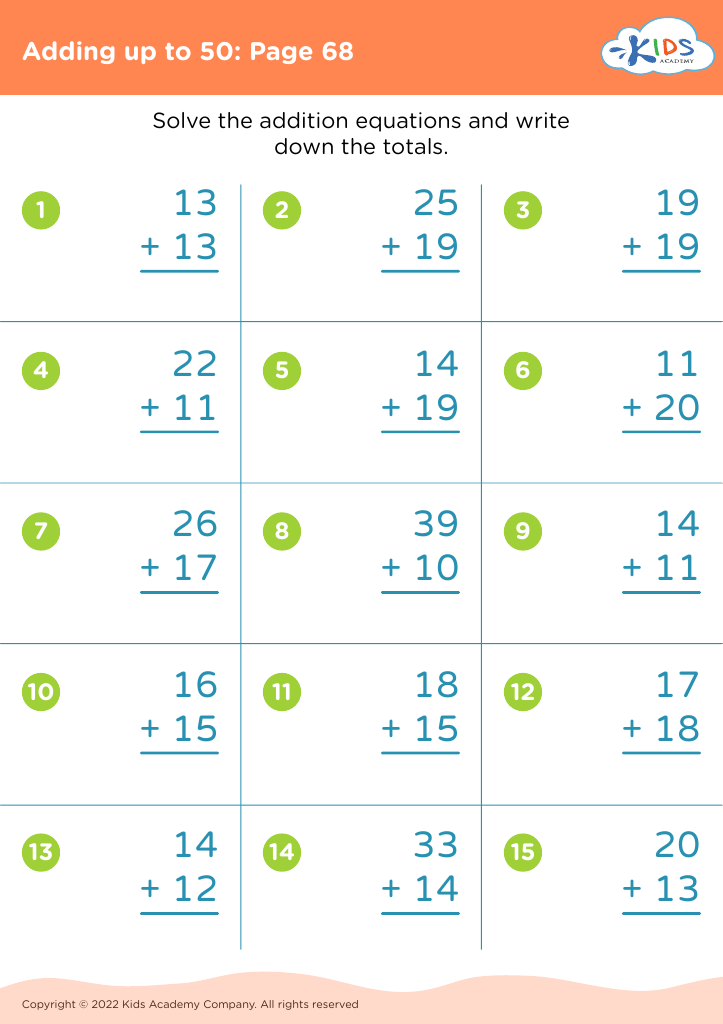
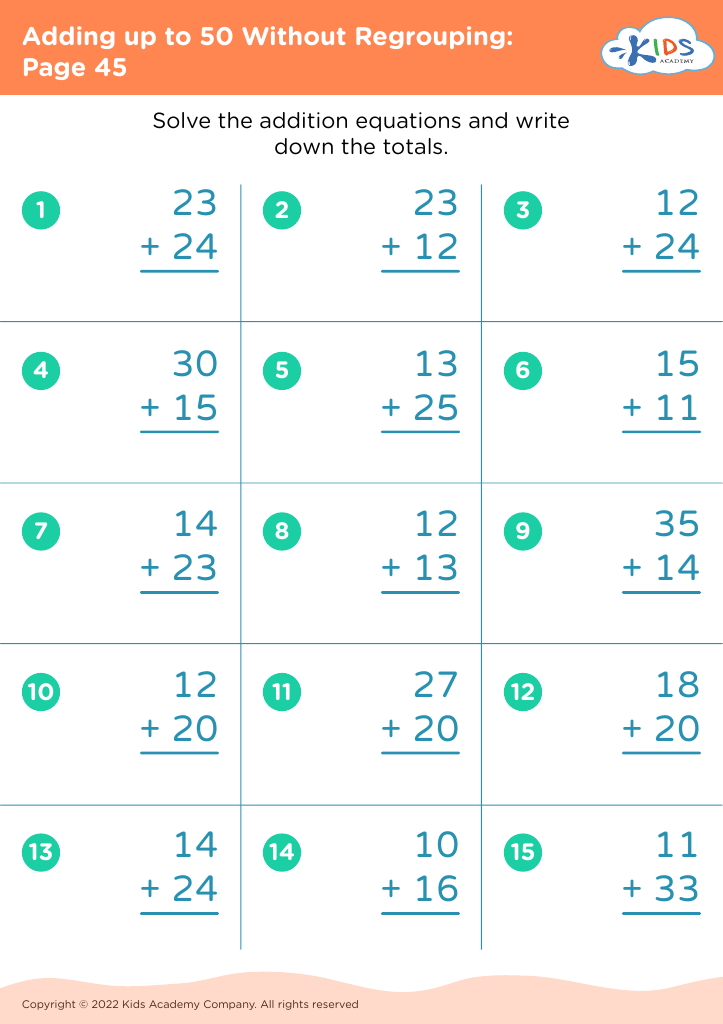
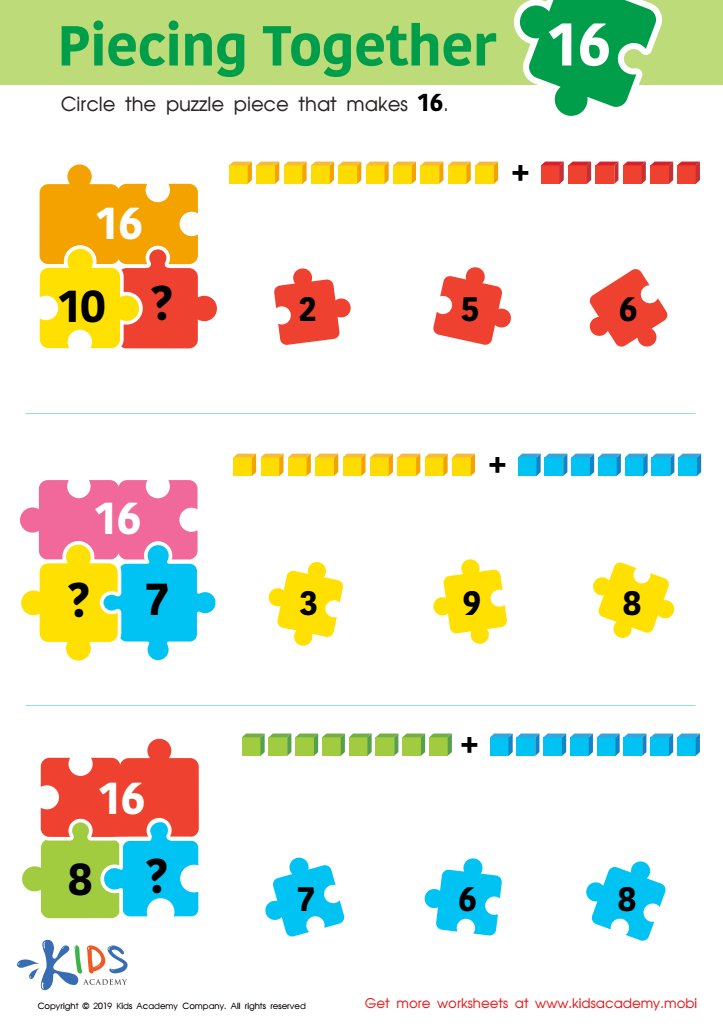
Piecing Together 16 Worksheet
 Assign to My Students








Recognizing equivalent fractions is a crucial skill for children aged 6-8, laying the foundational understanding necessary for more advanced mathematical concepts. For parents and teachers, fostering this skill is vital for several reasons.
First, equivalent fractions enhance number sense. When children recognize that 1/2 is the same as 2/4, they develop an understanding of how numbers and fractions relate, which is essential for later operations like addition and subtraction. By grasping this concept, children gain confidence in manipulating fractions, making future math challenges less daunting.
Second, recognizing equivalent fractions supports critical problem-solving skills. As they engage in adding or subtracting fractions with like denominators, they begin to use these equivalent relationships, making them more adept at discussions about value and quantity. This understanding not only aids in math but also fosters logical thinking and reasoning skills that are applicable in other subjects and real-life situations.
Lastly, early competency in these concepts encourages a positive attitude towards mathematics. When children feel proficient in recognizing fractions, they are more likely to develop a growth mindset, viewing challenges as opportunities to learn, thus creating a solid academic foundation for their future—and the joy of learning in everyday life.








