Understand number relationships Addition & Subtraction Worksheets for Ages 6-8
3 filtered results
-
From - To
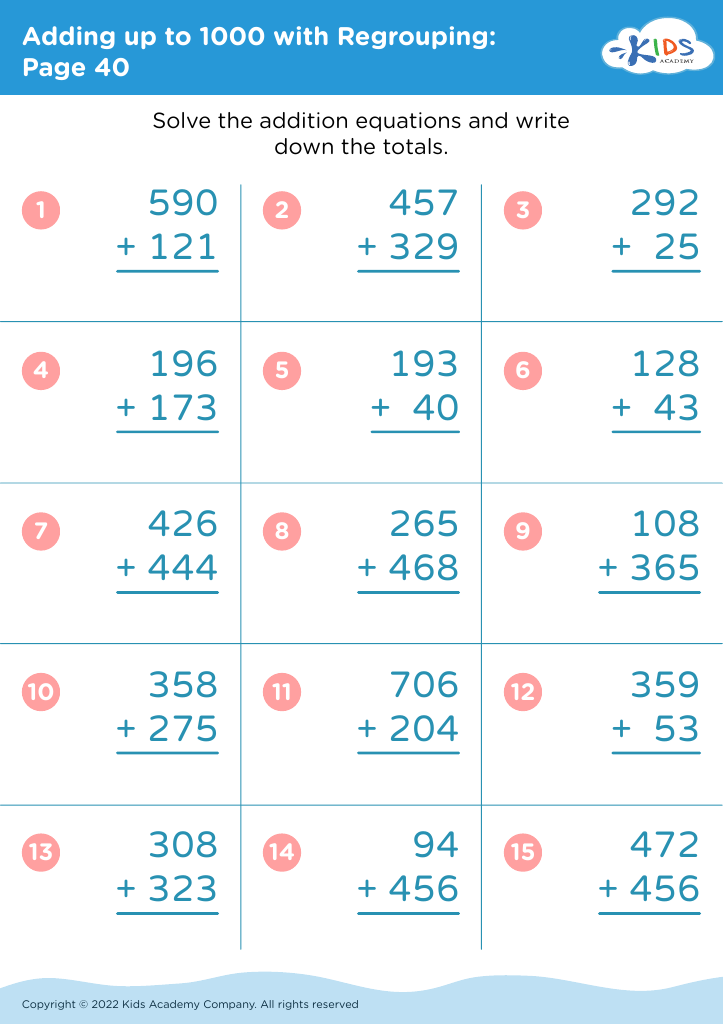
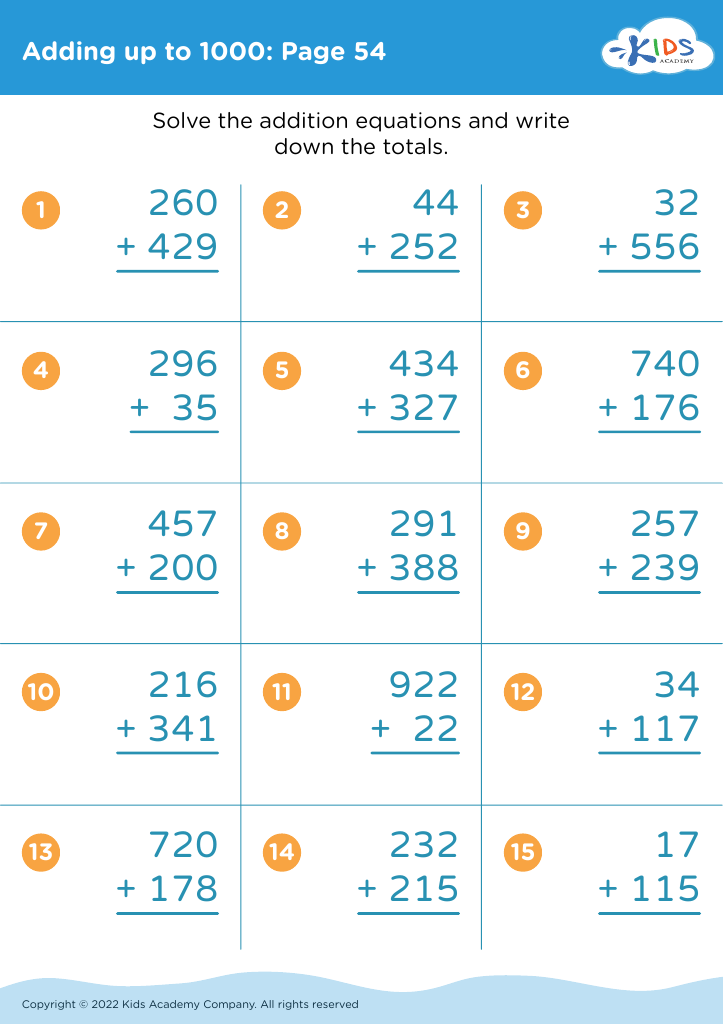
Discover our engaging "Understand Number Relationships: Addition & Subtraction Worksheets" tailored for children aged 6 to 8! These interactive worksheets are designed to help young learners grasp essential math concepts by exploring relationships between numbers through addition and subtraction. With fun exercises, kids will develop their problem-solving skills while gaining confidence in their abilities. Our resources foster critical thinking and promote a deeper understanding of basic mathematics. Perfect for home or classroom learning, these worksheets make math enjoyable and accessible, empowering students as they master number relationships in a playful and supportive environment. Get started today and watch their skills flourish!
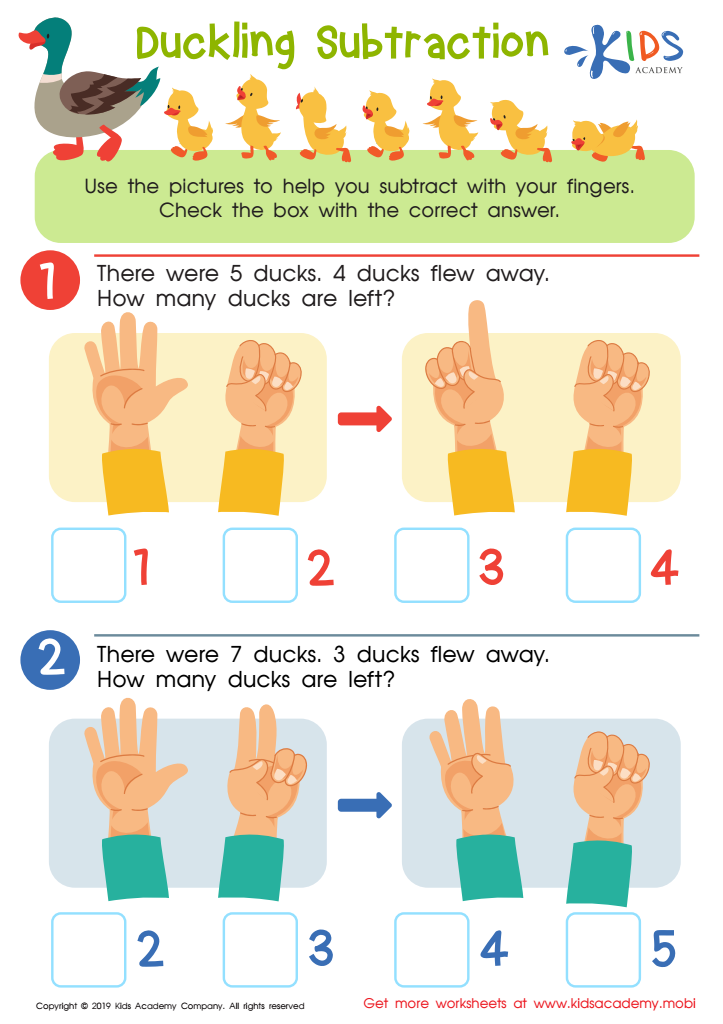
Duckling Subtraction Worksheet
 Assign to My Students








Understanding number relationships is foundational for children aged 6-8, as it shapes their mathematical competencies, which are crucial for academic success. When parents and teachers emphasize addition and subtraction within number relationships, they help children see how numbers connect and how operations relate to one another. This conceptual understanding goes beyond rote memorization, enabling kids to solve problems more effectively and apply math in real life.
Conceptualizing addition as combining groups and subtraction as taking from a whole allows children to grasp that numbers can represent different quantities and ideas. For example, recognizing that 8 is 4 plus 4 or that 9 is 12 minus 3 fosters a flexible understanding that can be applied in various contexts. This skill enhances critical thinking, promoting reasoning skills that are essential for tackling more complex mathematical concepts in the future.
Moreover, appreciating these relationships aids in developing number sense, an important predictor of later math achievement. By nurturing a positive attitude toward math during these formative years, parents and teachers can lay the groundwork for confident, competent learners who view math as an enjoyable and useful tool. Collaboration in this effort encourages a supportive learning environment, empowering children to embrace the challenge of mathematics.








