Understand sequences Addition & Subtraction Worksheets for Ages 6-8
5 filtered results
-
From - To
Unlock your child’s potential in math with our "Understand Sequences: Addition & Subtraction Worksheets" designed for ages 6-8! These expertly crafted worksheets simplify complex concepts, helping young learners recognize and create numerical sequences through engaging exercises. As kids work through fun challenges, they’ll master both addition and subtraction while boosting their logical thinking skills. Ideal for home practice or classroom enrichment, our worksheets are an excellent resource for making math exciting and enriching. Specially tailored to cater to different learning speeds, they ensure every child builds a solid foundation in essential math skills. Perfect for curious young minds eager to excel!
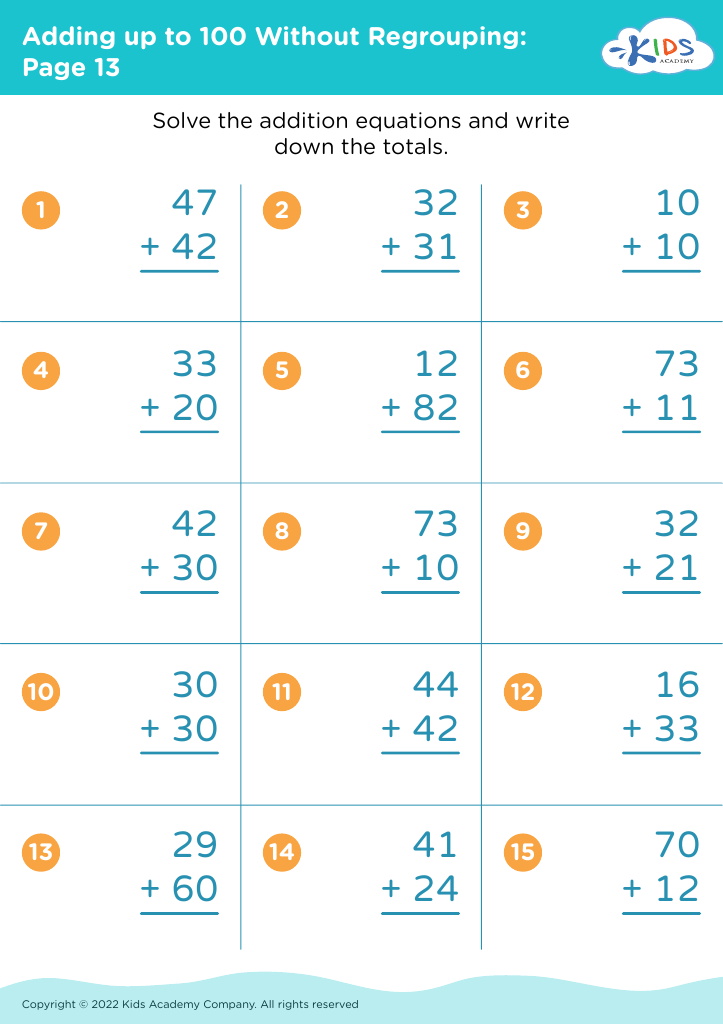
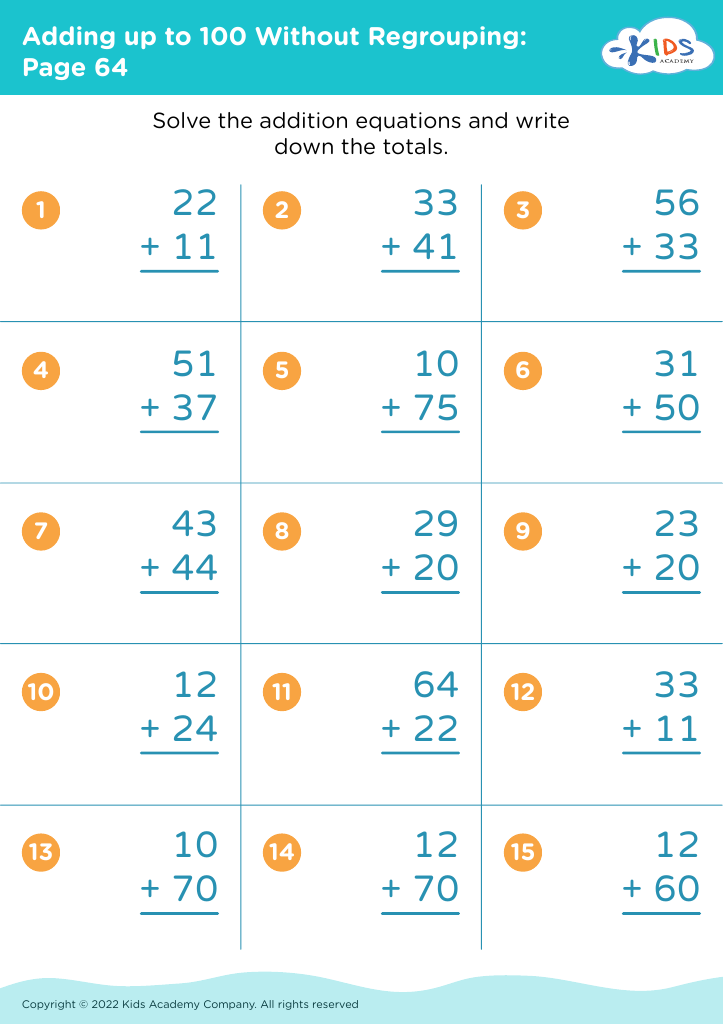
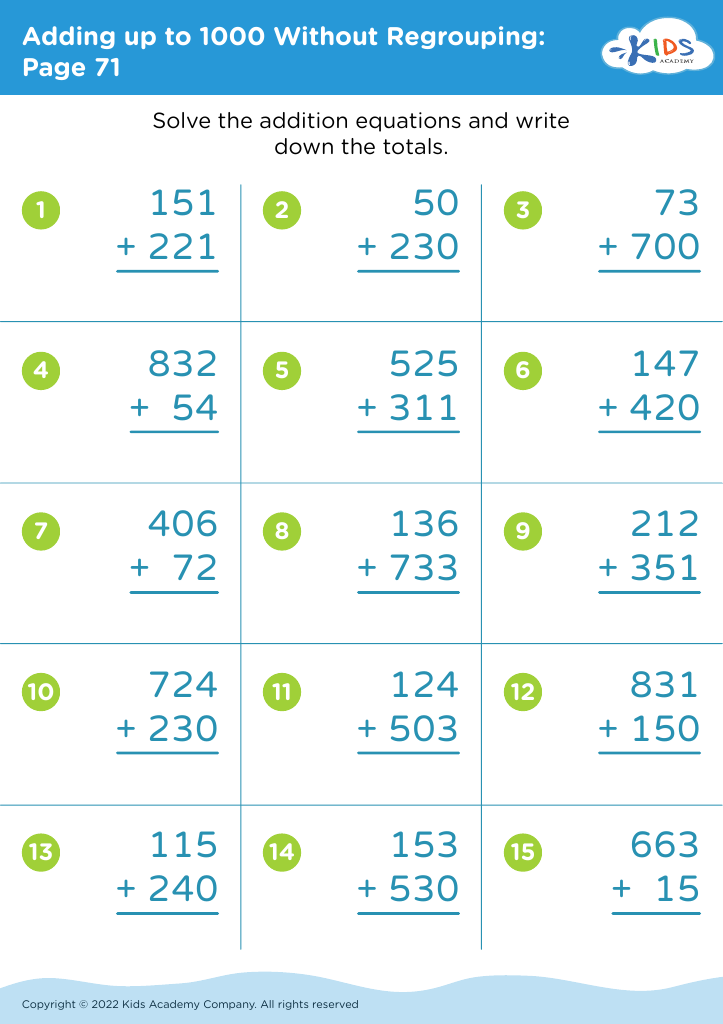
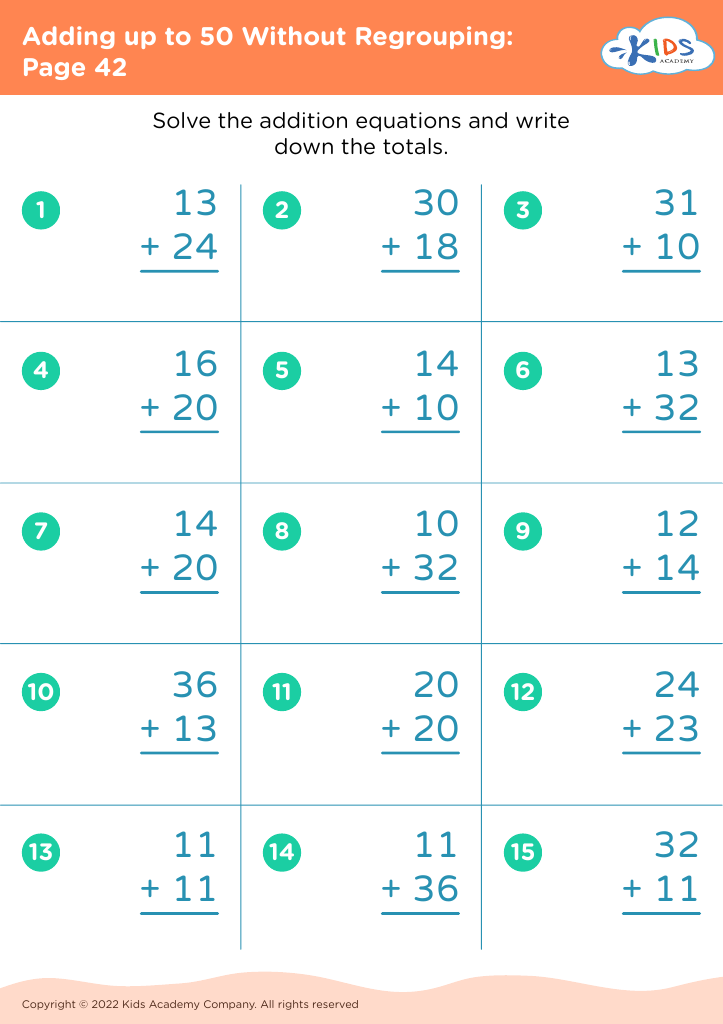
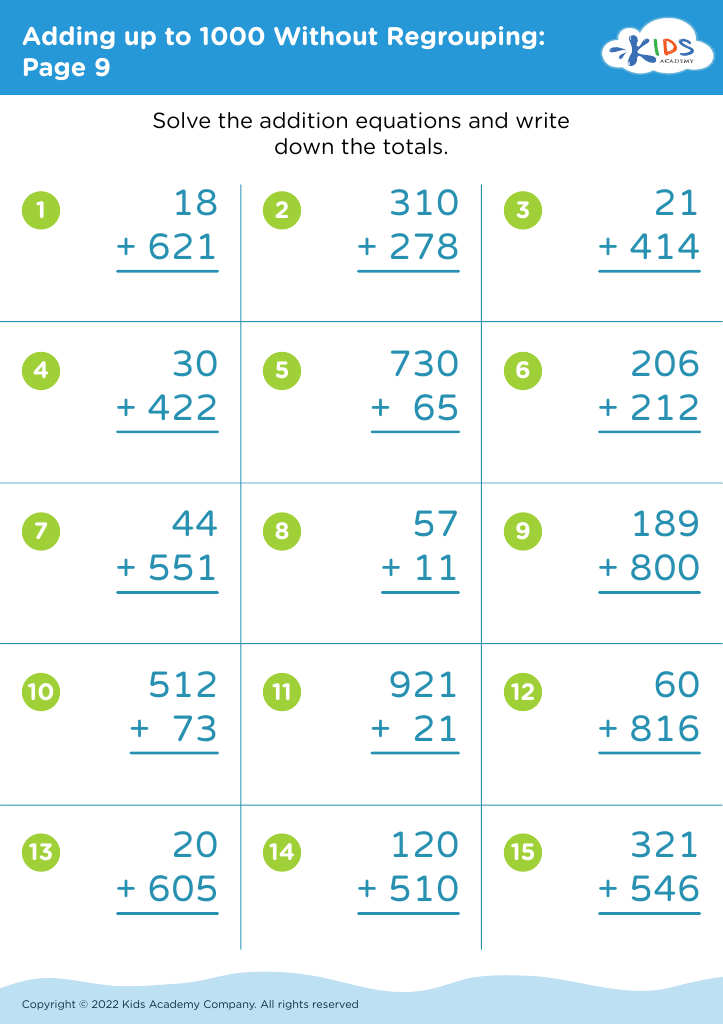








Understanding sequences in addition and subtraction is crucial for children ages 6-8 because it lays the foundation for more complex mathematical concepts while fostering essential cognitive skills. During these formative years, young learners are developing their number sense, which is the ability to understand, relate, and connect numbers. Sequences in addition and subtraction help children recognize patterns, which is fundamental for mental arithmetic and problem-solving.
Knowledge of sequences aids in building fluency with numerical operations, allowing children to approach mathematics with confidence. It also enhances their logical thinking and reasoning skills, because identifying and predicting patterns is intrinsic to mathematical thinking. Moreover, these skills transfer beyond math, aiding in the comprehension of more complex subjects like reading, where understanding sequences helps in following storylines and identifying cause-and-effect relationships.
Furthermore, when children grasp these concepts early, they are better prepared for future academic challenges, reducing anxiety around math. Early intervention by parents and teachers in emphasizing the importance of these sequences not only supports academic success but also fosters a positive attitude towards learning. This can instill a love for math and create lifelong learners who approach problems creatively and confidently. Therefore, investing time and effort in teaching sequences in addition and subtraction is profoundly beneficial for young learners.








