Understanding directions Addition & Subtraction Worksheets for Ages 6-8
3 filtered results
-
From - To
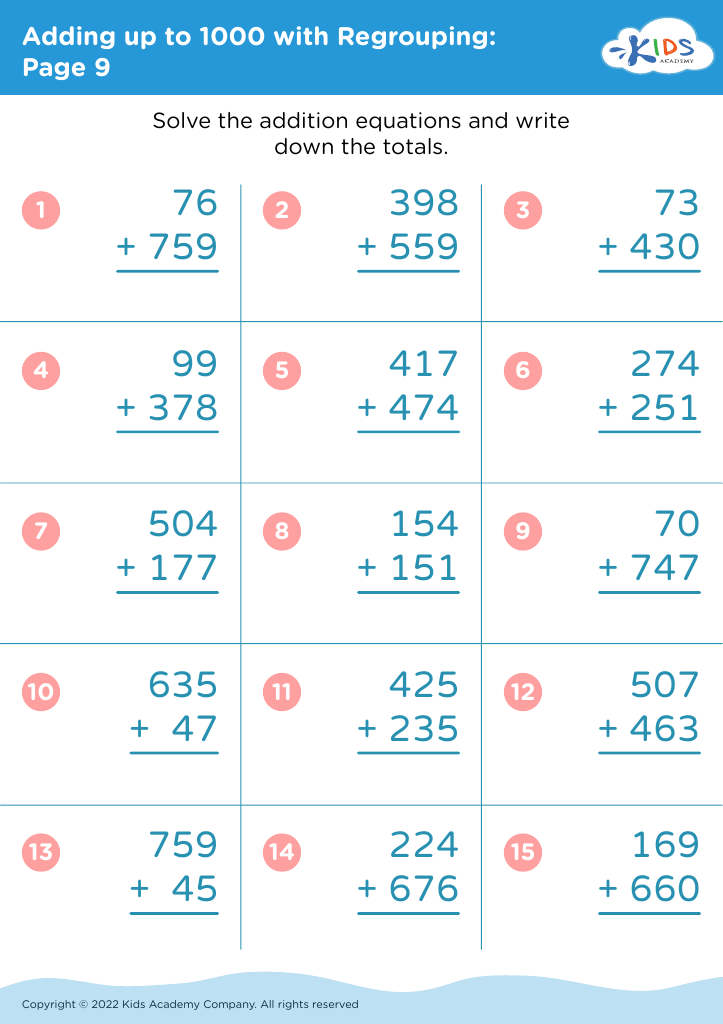
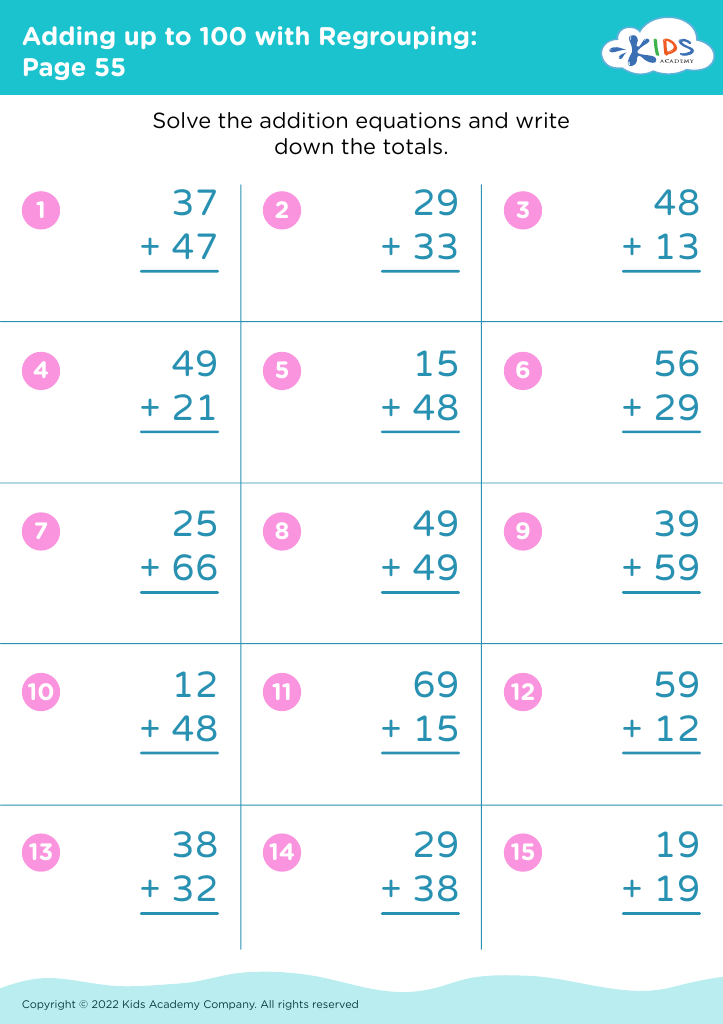
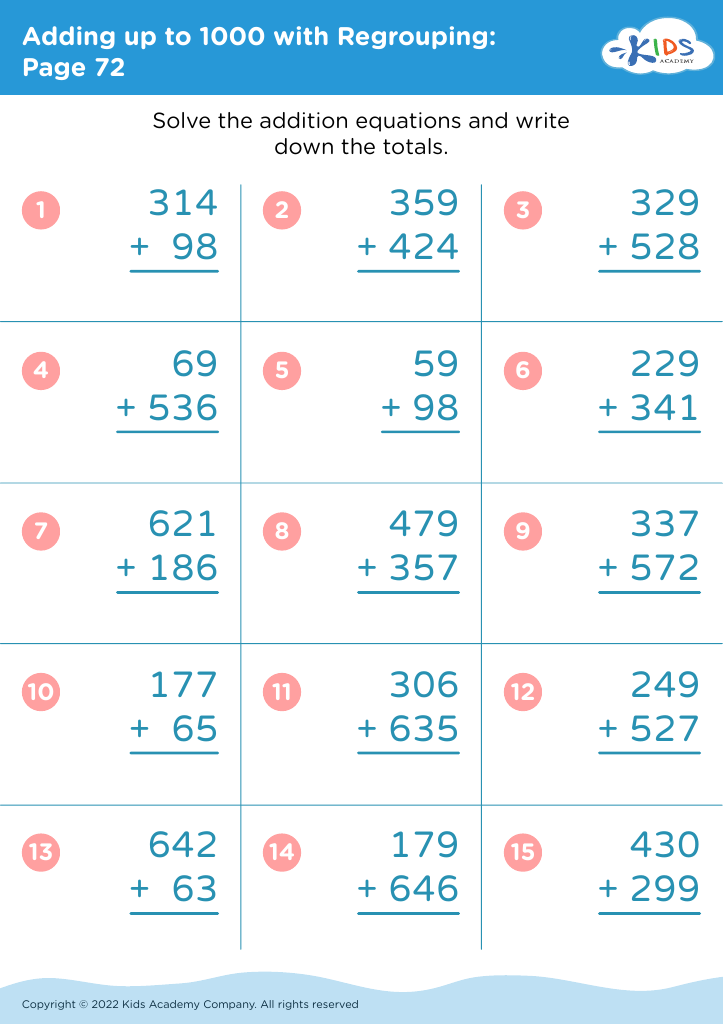
Our "Understanding Directions Addition & Subtraction Worksheets for Ages 6-8" are designed to enhance your child's math skills in a fun and engaging way. These worksheets help children develop a solid foundation in basic addition and subtraction, while also improving their ability to follow directions. Each worksheet presents various exercises that encourage kids to think critically and solve problems step-by-step. Perfectly tailored for young learners, these resources are ideal for both classroom and home practice. Boost your child's confidence and proficiency in math with our expertly crafted educational materials.








Understanding directions and mastering addition and subtraction are foundational skills that form the bedrock of a child's educational journey, particularly for children aged 6-8. During these formative years, children develop critical cognitive skills that are necessary for future academic success and everyday life. Parents and teachers should prioritize teaching these concepts for several compelling reasons.
Firstly, the ability to follow directions accurately is essential for classroom learning and social interactions. Clear comprehension of instructions enhances a child's ability to participate in class activities, complete tasks, and collaborate with peers effectively. It fosters independence and builds confidence in their problem-solving abilities.
Secondly, addition and subtraction are crucial components of early mathematics and are integral to continued math learning. They serve as the initial building blocks for more complex mathematical concepts such as multiplication, division, fractions, and algebra. Early proficiency in these basic operations helps instill a strong numerical foundation which is essential for advanced grade levels and various real-world applications like handling money, measuring ingredients, or planning travel.
Investing the time and effort to ensure that children aged 6-8 are adept at understanding directions and performing basic math operations equips them with necessary tools for academic achievement and practical skills for everyday problem-solving.








