Understanding number relationships Addition & Subtraction Worksheets for Ages 6-8
5 filtered results
-
From - To
Explore our "Understanding Number Relationships: Addition & Subtraction Worksheets" designed specifically for kids ages 6-8. These engaging worksheets help young learners grasp essential math concepts by connecting addition and subtraction in meaningful ways. With a variety of interactive exercises, your child will enhance their problem-solving skills, develop numerical fluency, and gain confidence in their mathematical abilities. Our resources emphasize the importance of number relationships, enabling children to see how addition and subtraction work together. Perfect for classroom use or at-home study, these worksheets make learning math fun and effective! Download now and support your child's math journey!
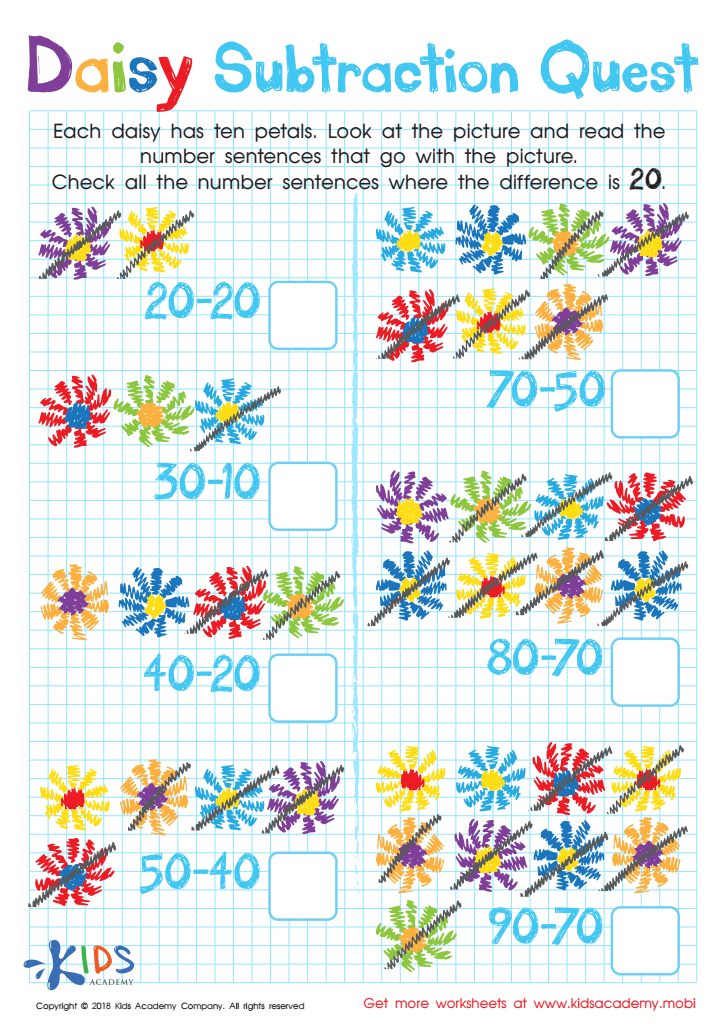
Daisy Subtraction Quest Worksheet
 Assign to My Students
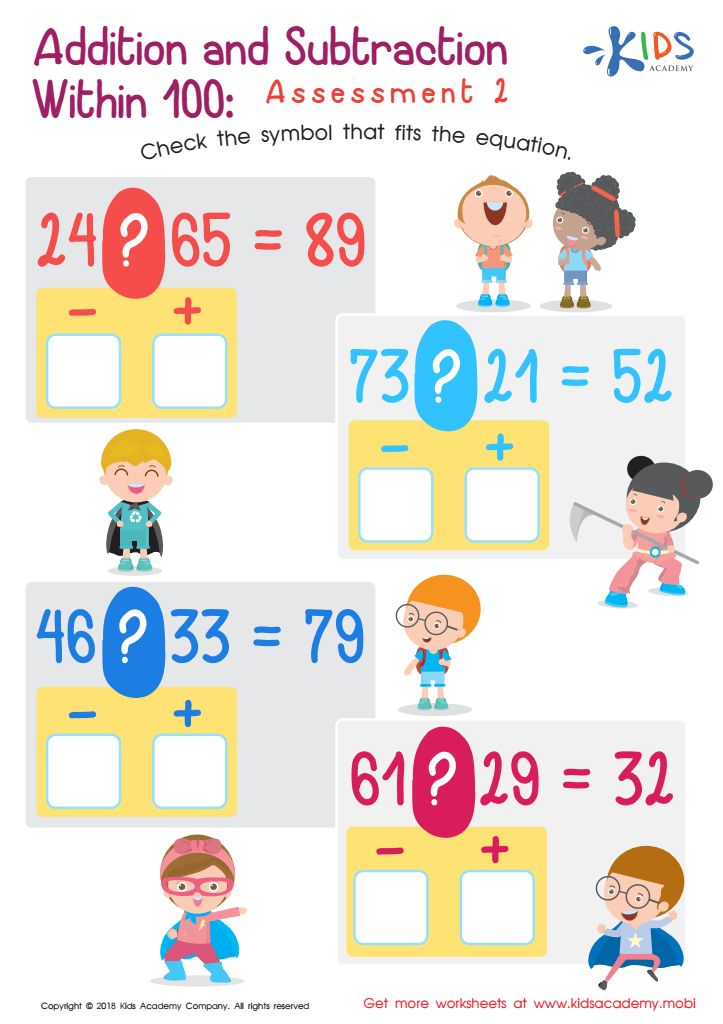
Addition and Subtraction Within 1: Assessment 2 Worksheet
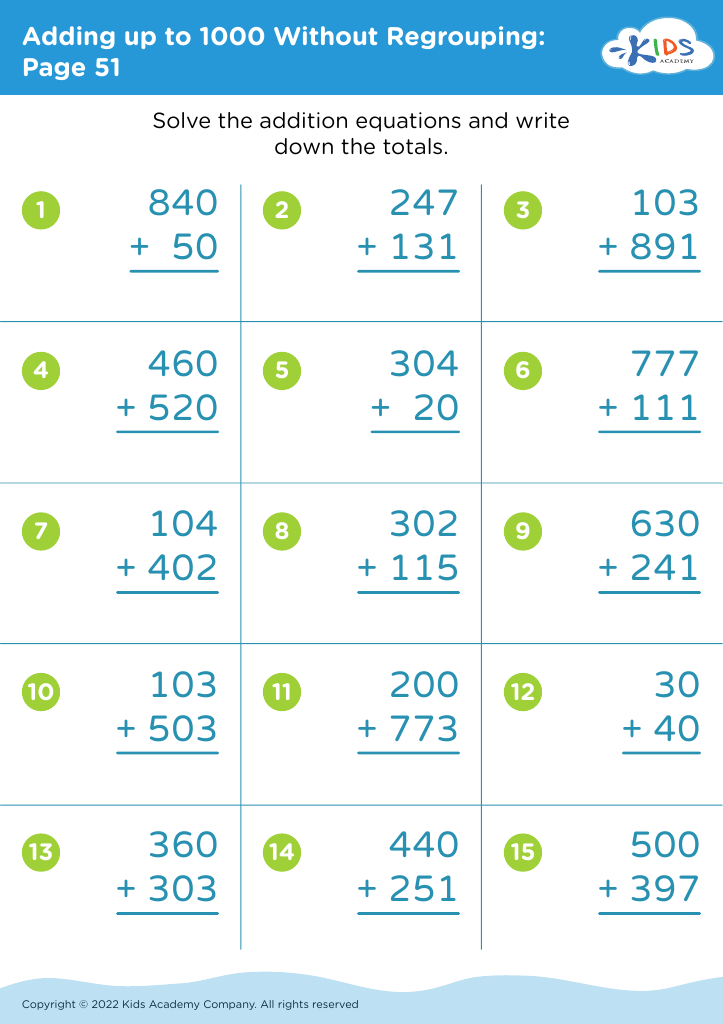
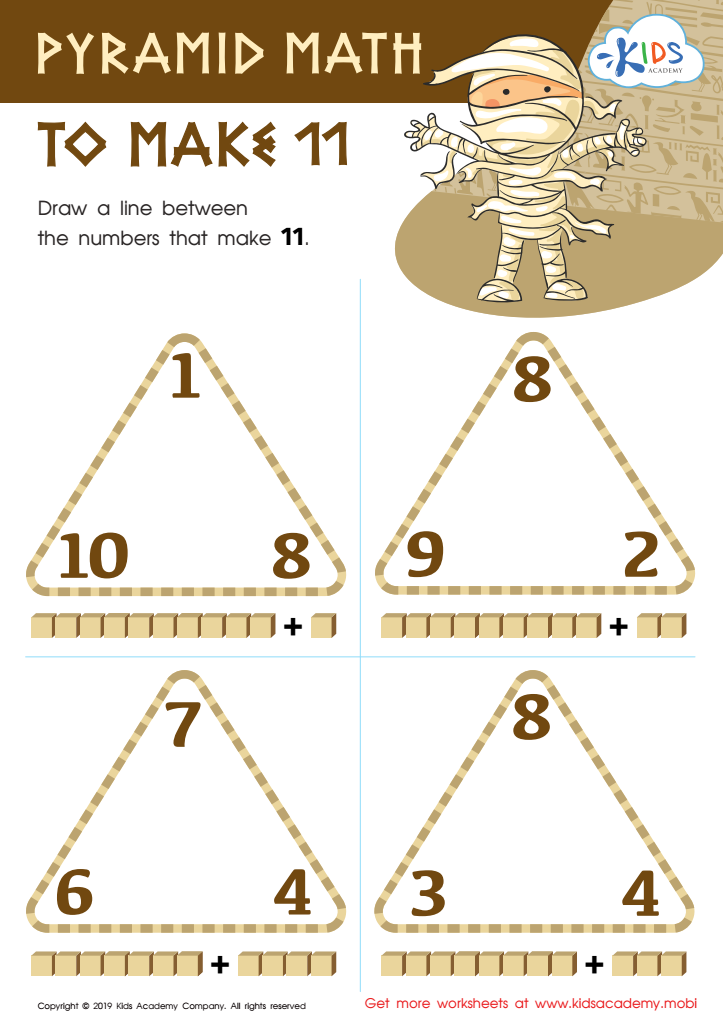
Pyramid Math to Make 11 Worksheet








Understanding number relationships, particularly through the concepts of addition and subtraction, is crucial for children aged 6 to 8. During these formative years, children build foundational skills that will last a lifetime, impacting their ability to tackle more complex mathematical concepts in later grades.
For parents and teachers, promoting a strong grasp of addition and subtraction emphasizes critical thinking and problem-solving skills. These operations are not just arithmetic; they underline the importance of relationships between numbers. For example, recognizing that addition is the reverse of subtraction helps children relate quantities and enhances their number sense.
Moreover, a solid understanding of these concepts can foster confidence and independence in young learners. When children can see how numbers interact, they are more likely to engage with mathematics, seeing it as a meaningful and enjoyable subject rather than a series of abstract rules.
The ability to relate numbers and perform basic calculations is vital not only for math class but for real-world applications, such as managing money or estimating quantities. Overall, an early focus on understanding number relationships prepares children for complex mathematical reasoning, ensuring they remain engaged and successful throughout their academic journey. Parents and teachers play a pivotal role in nurturing this fundamental understanding.








