Understanding Sequences Addition & Subtraction Worksheets for Ages 6-8
16 filtered results
-
From - To
Enhance your child’s math skills with our "Understanding Sequences Addition & Subtraction Worksheets" designed for ages 6-8. These engaging worksheets focus on helping young learners grasp essential concepts of sequences while practicing addition and subtraction. Each worksheet introduces a variety of problems that encourage critical thinking and pattern recognition, making math both fun and educational. By using vibrant visuals and interactive exercises, children will build confidence and improve their numerical fluency. Foster your child's love for learning with our user-friendly resources that cater specifically to early grade learners, ensuring a strong mathematical foundation for future success.
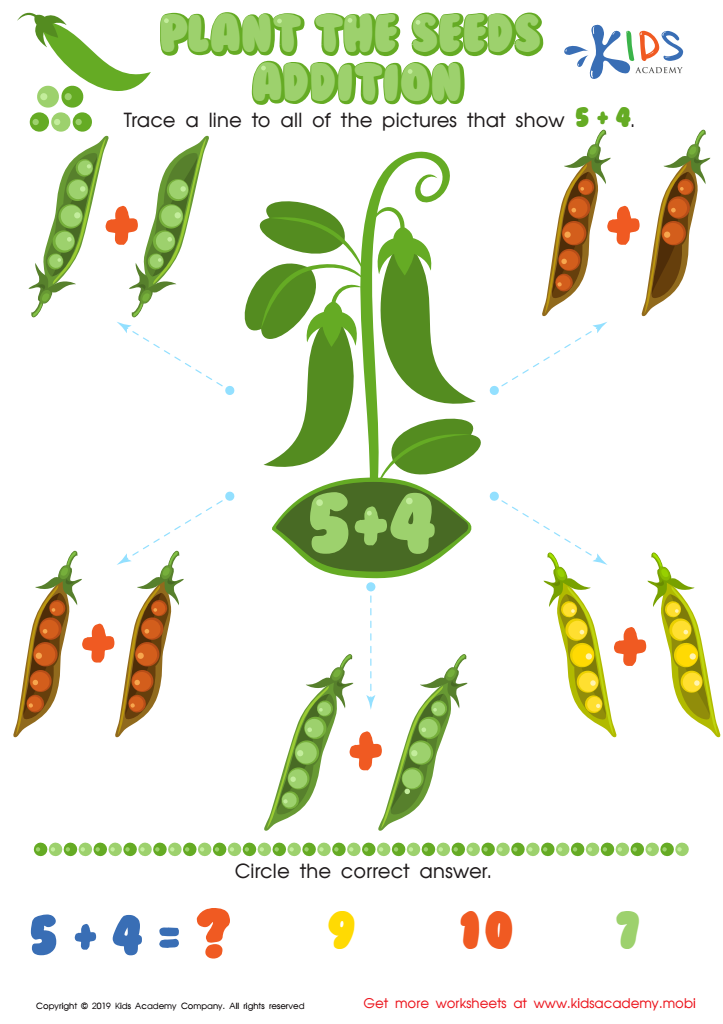
Plant the Seeds Addition Worksheet
 Assign to My Students
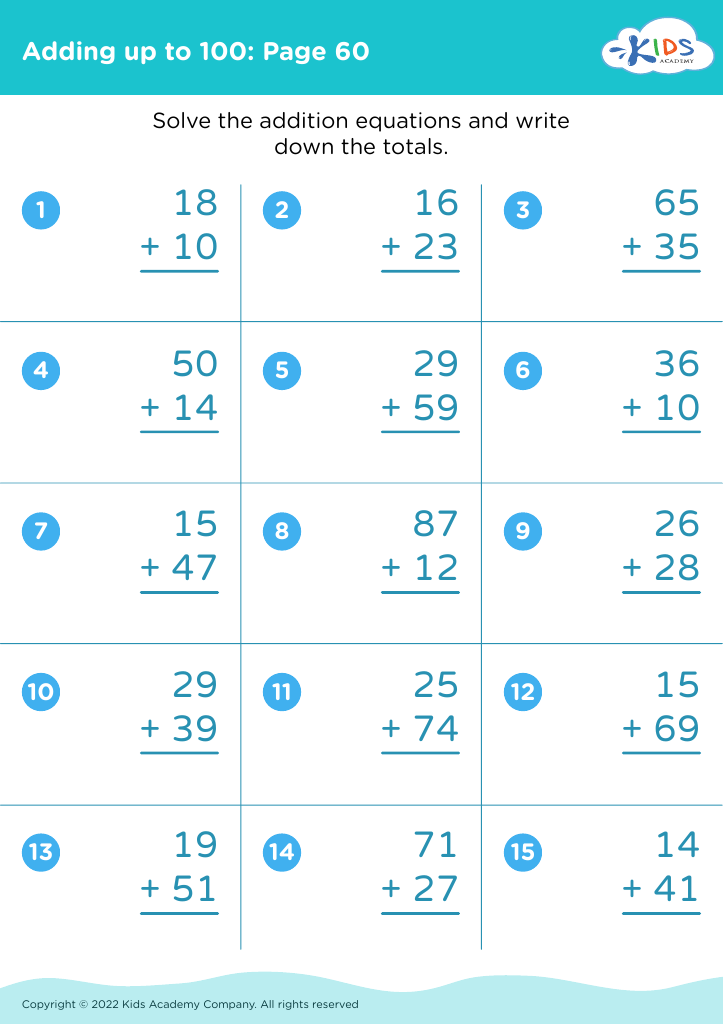
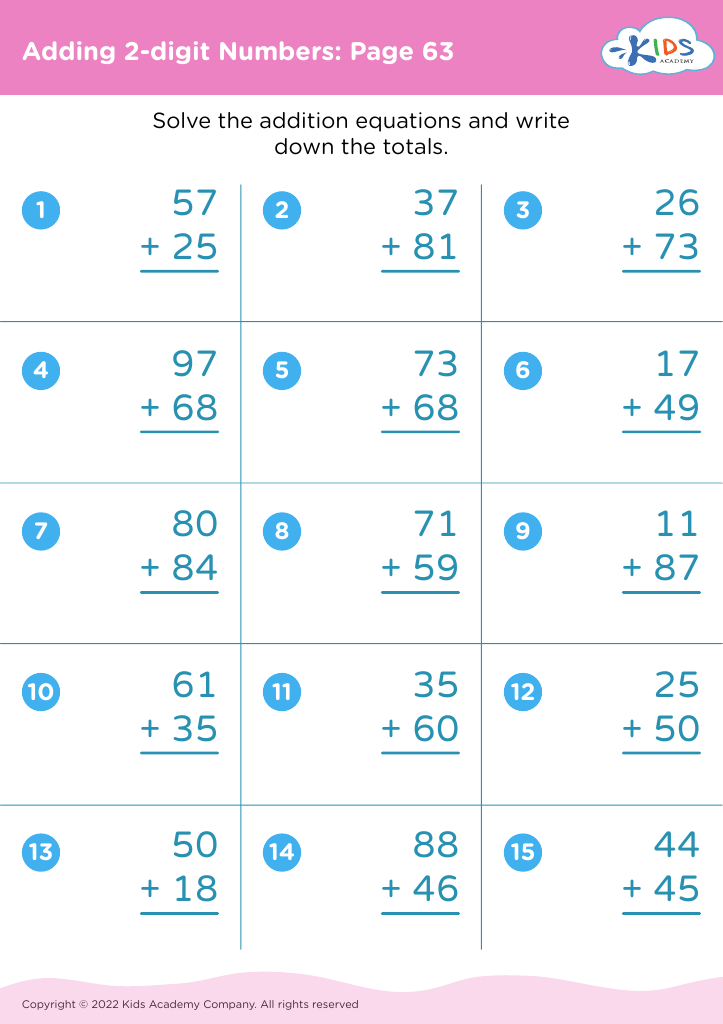
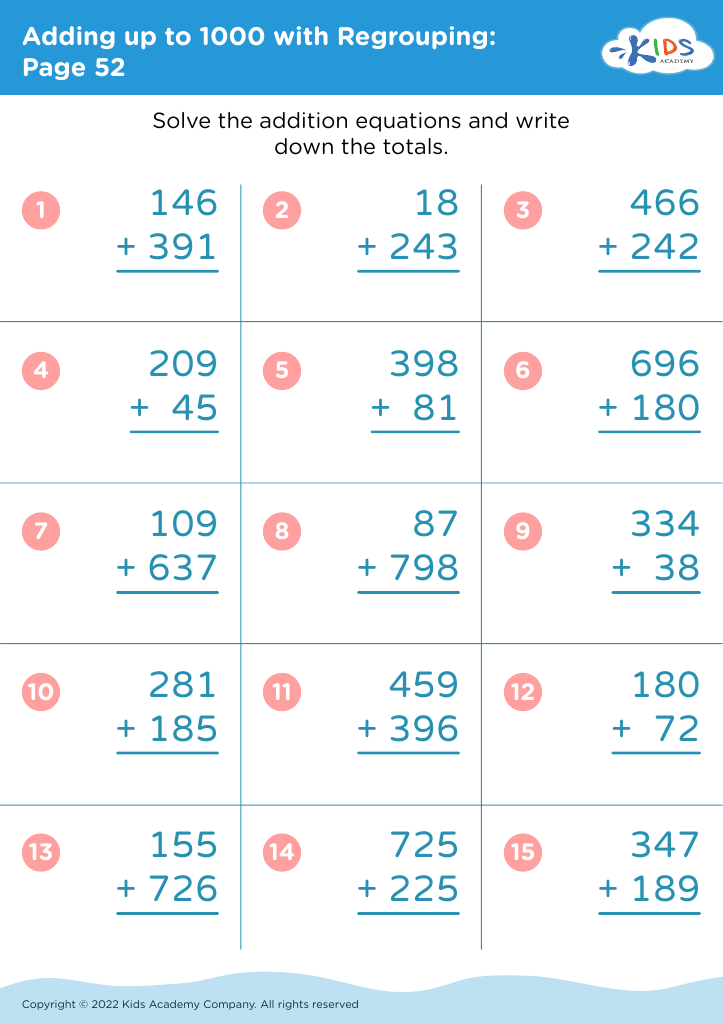
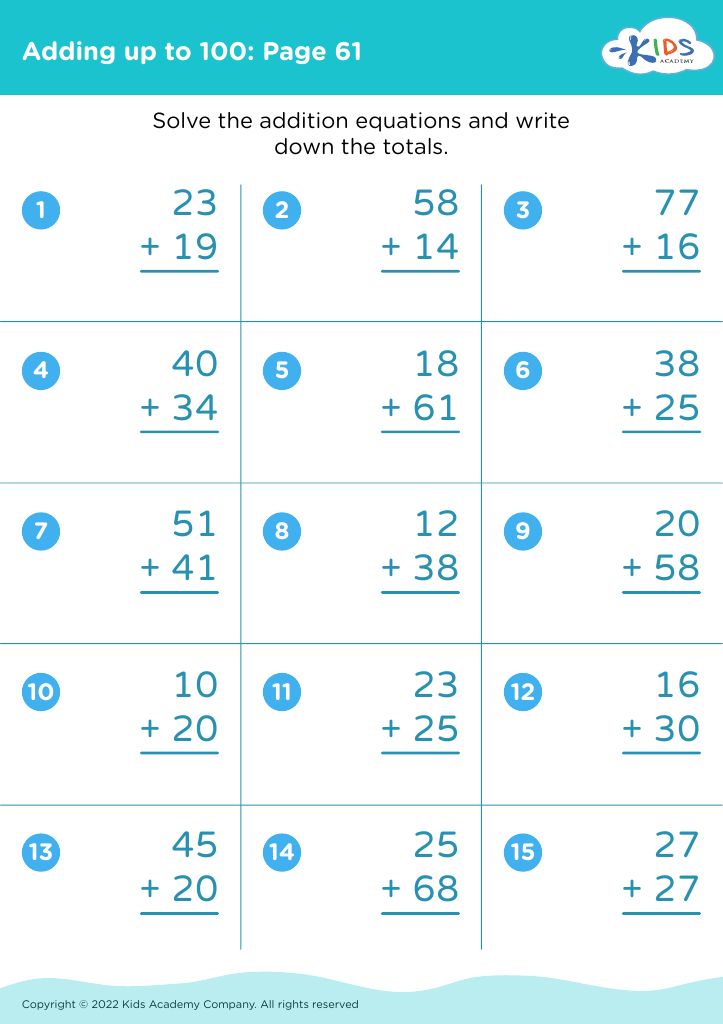
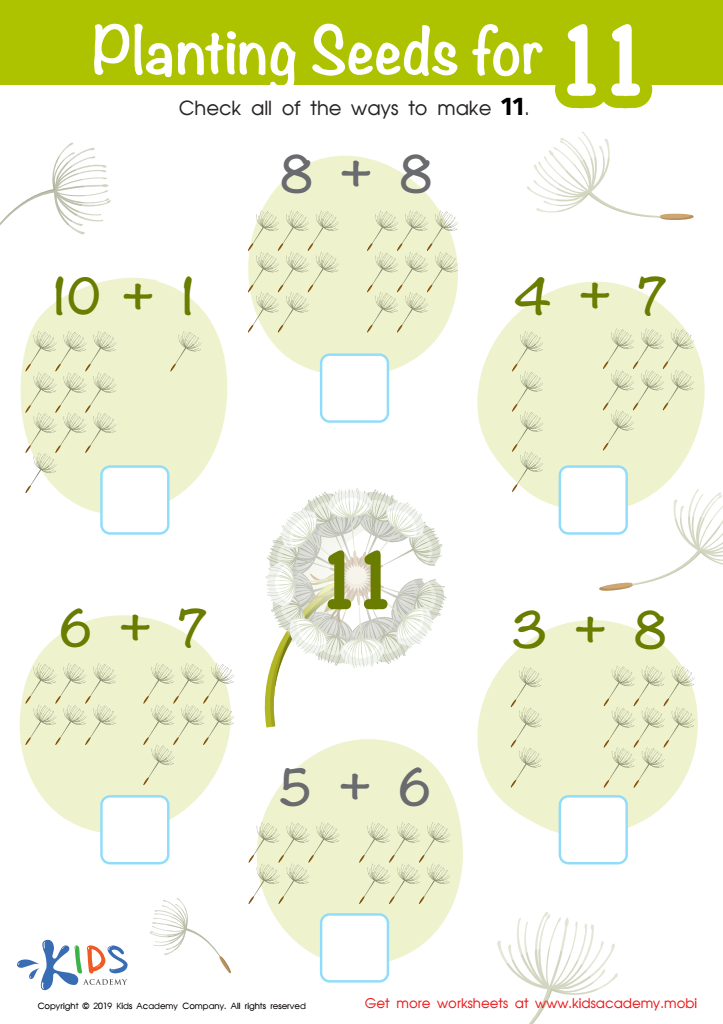
Planting Seeds for 11 Worksheet
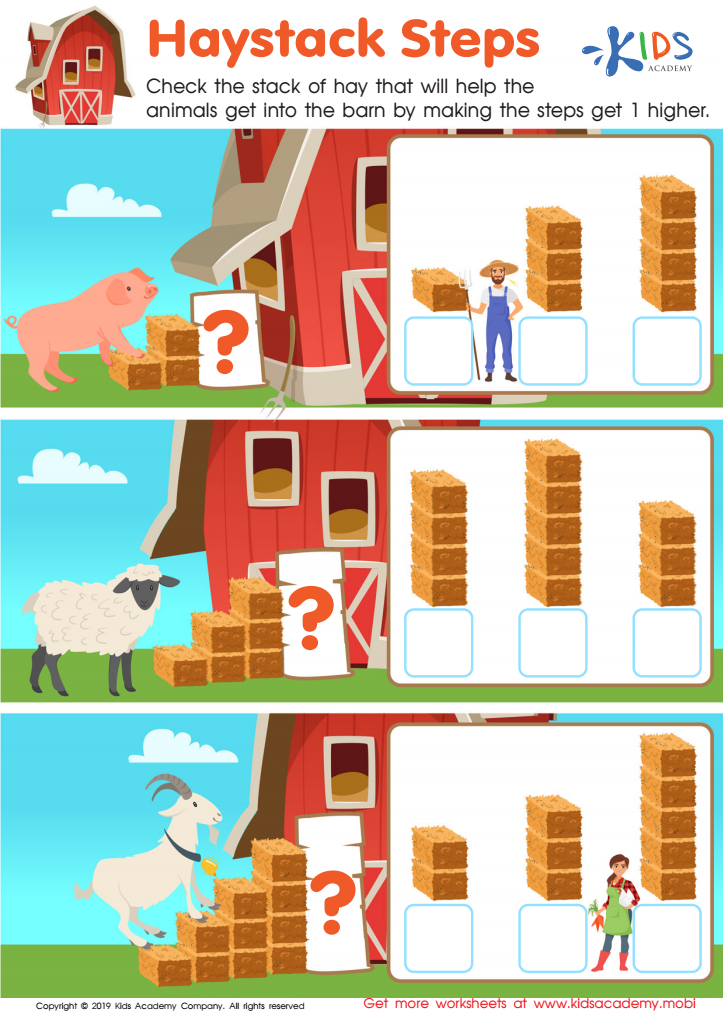
Haystack Steps Worksheet
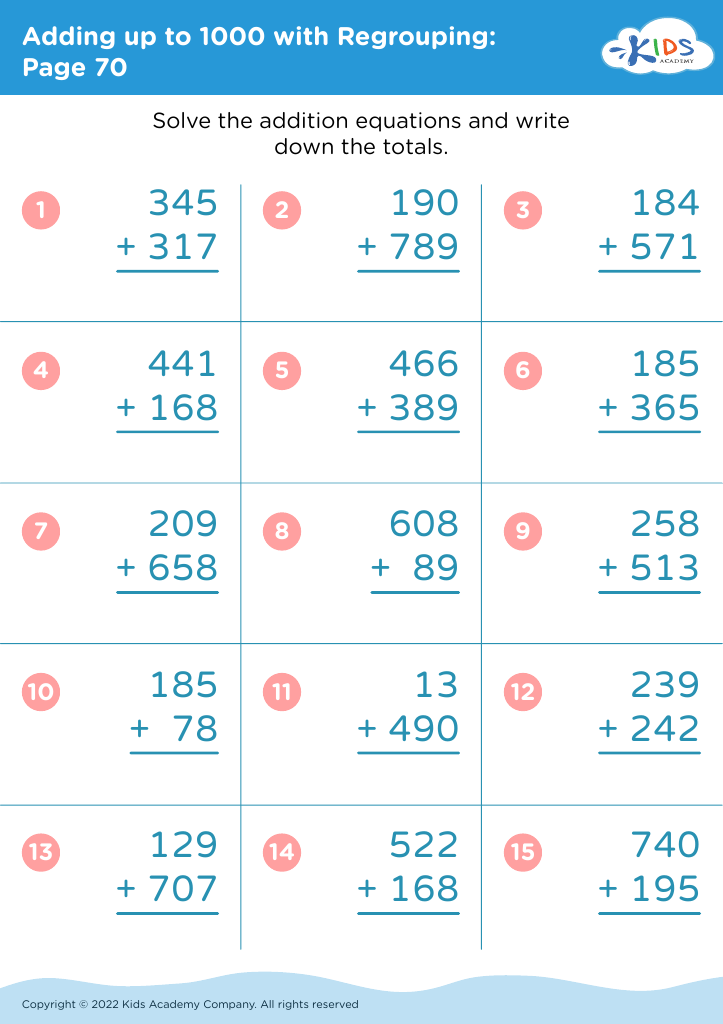
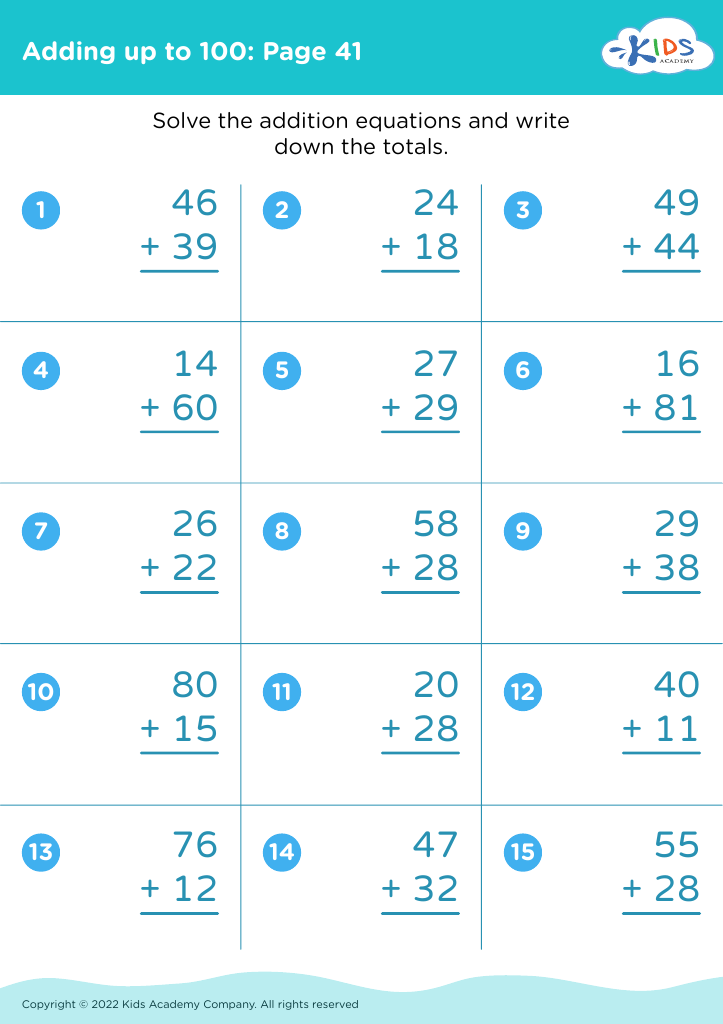
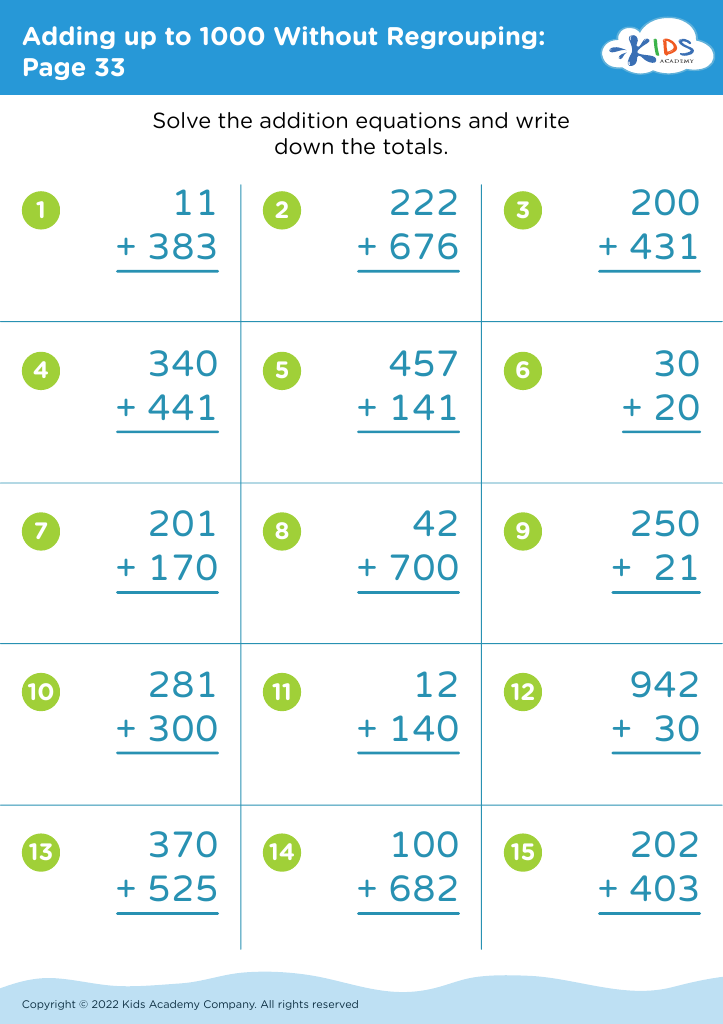








Understanding sequences in addition and subtraction is crucial for children ages 6-8, as it lays the foundation for their mathematical development. Mastering these concepts helps young learners recognize patterns and relationships between numbers, which is essential for problem-solving and critical thinking. When children can identify and work with sequences, they not only perform calculations more efficiently but also develop a strong grasp of how numbers interact.
Sequences improve mental math skills. For instance, when children add or subtract in a sequence (like counting by twos or fives), they learn shortcuts that make calculations faster and easier. This efficiency boosts their confidence in math, encouraging a positive attitude towards learning.
Furthermore, a strong understanding of sequences is essential for more advanced topics in mathematics, such as multiplication, division, and even algebra. Early mastery sets the stage for future studies in STEM (science, technology, engineering, and mathematics) fields, which are critical in today’s economy.
Lastly, teaching sequences encourages collaborative learning. Working in groups helps children share strategies, reinforcing their understanding through teaching and discussion. Ultimately, parents and teachers both play pivotal roles in fostering these critical skills, ensuring that children are well-equipped for future academic challenges.








