Understanding sequencing Addition & Subtraction Worksheets for Ages 6-8
7 filtered results
-
From - To
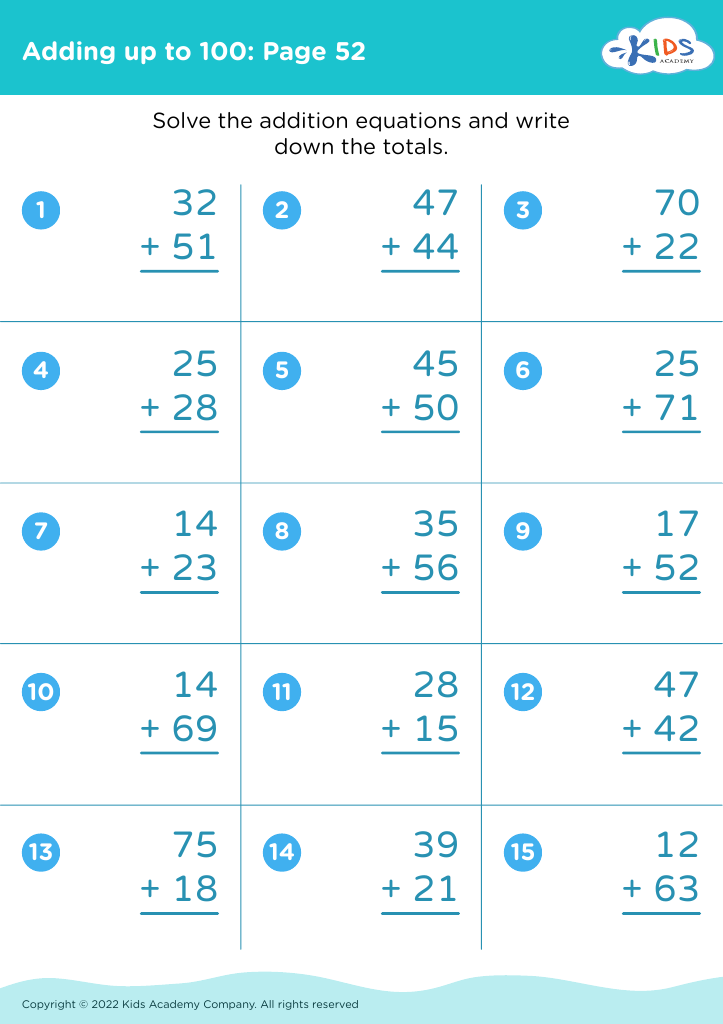
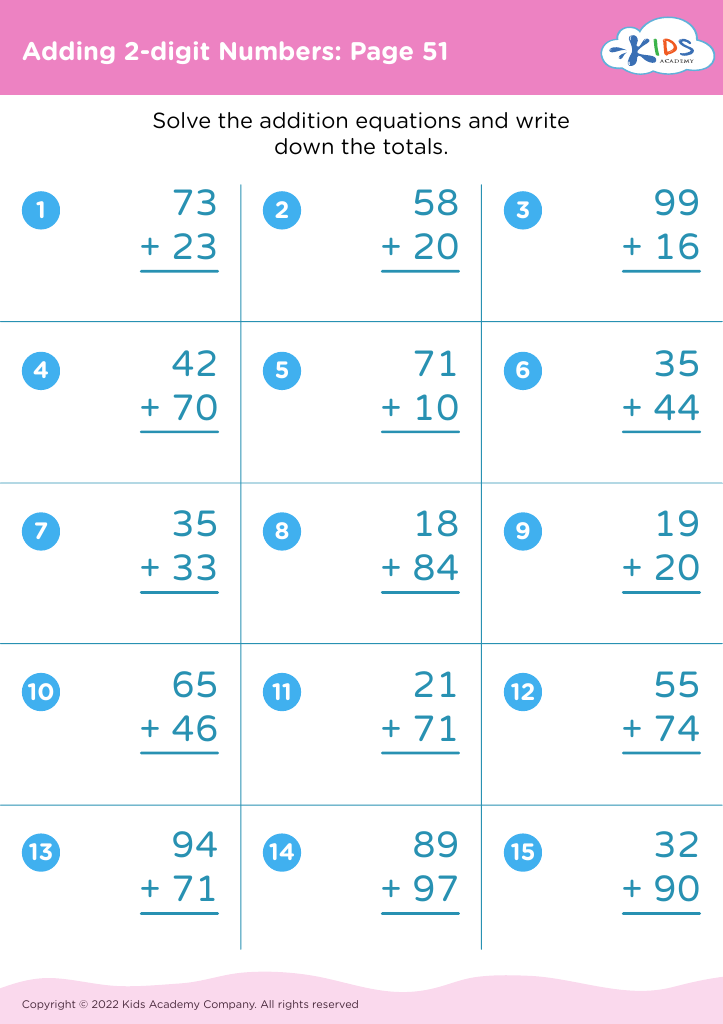
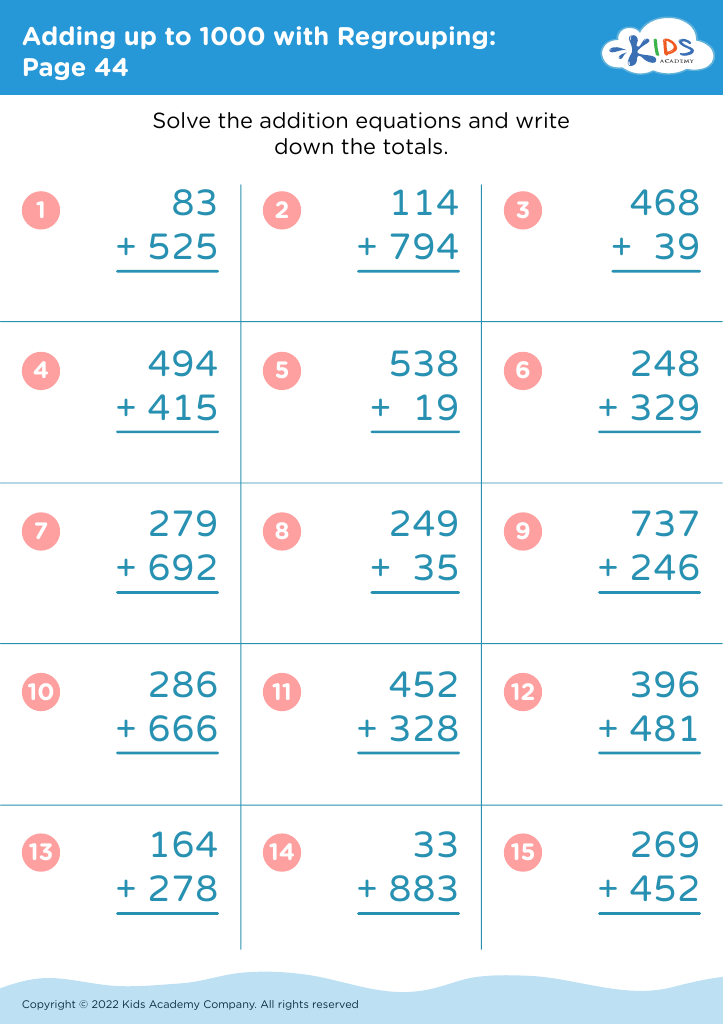
Discover our engaging "Understanding Sequencing Addition & Subtraction Worksheets" tailored specifically for children aged 6-8. These worksheets help young learners master the essential skills of sequencing numbers in addition and subtraction problems. By practicing with our child-friendly exercises, students will enhance their problem-solving abilities, improve their mathematical comprehension, and gain confidence in their skills. Each worksheet is designed to be fun and interactive, ensuring that children stay motivated as they learn. Perfect for classroom settings or homework, our resources support foundational math concepts while promoting logical thinking. Help your child excel in math by exploring our thoughtfully crafted worksheets today!








Understanding sequencing in addition and subtraction is vital for children aged 6-8, as it lays the foundation for their mathematical reasoning and problem-solving skills. During these formative years, children begin to grasp not just the concepts of addition and subtraction, but also the relationships between them. When teachers and parents prioritize sequencing, they enable children to see the logical progression of numbers and operations, making it easier for them to tackle more complex math problems and real-life scenarios.
In addition, sequencing enhances a child's ability to think critically. For example, when solving multi-step problems, recognizing the correct order of operations is crucial. This understanding builds confidence and fosters independence in learning. Furthermore, mastering these skills can help reduce anxiety around math, as students develop strategies to approach problems systematically.
Moreover, early mastery of sequencing can lead to better performance in upper grades, where sequencing becomes increasingly complex with algebra and higher-level mathematics. For parents and teachers, encouraging a robust grasp of sequencing in addition and subtraction cultivates a solid mathematical mindset in children, preparing them for lifelong success in both academic and everyday situations. Thus, investing time in these foundational skills is absolutely essential.








