Visual representation comprehension Addition & Subtraction Worksheets for Ages 6-8
5 filtered results
-
From - To
Unlock the power of visual learning with our Addition & Subtraction Worksheets tailored for children aged 6-8. These engaging worksheets utilize colorful visuals and creative diagrams to enhance comprehension of basic math concepts. Designed to foster a deep understanding of addition and subtraction, they help young learners visualize problems, making math both fun and intuitive. Each worksheet promotes critical thinking and problem-solving skills while building a solid foundation in mathematics. Perfect for classroom activities or home learning, our visually compelling resources support the development of essential math skills for early learners in an enjoyable way! Start exploring today!
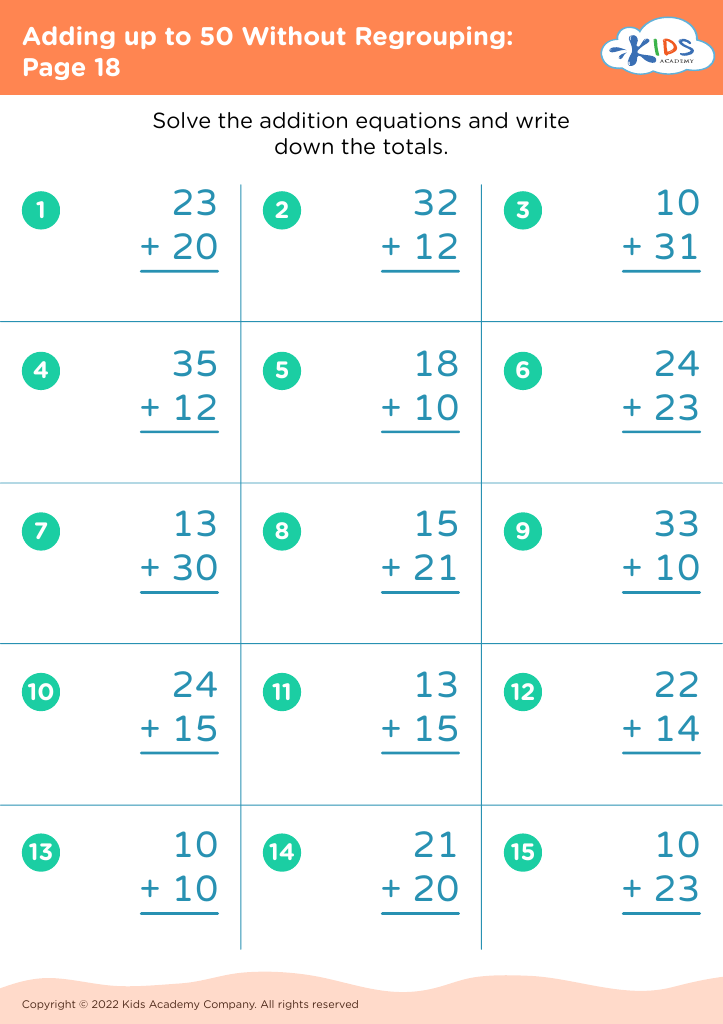
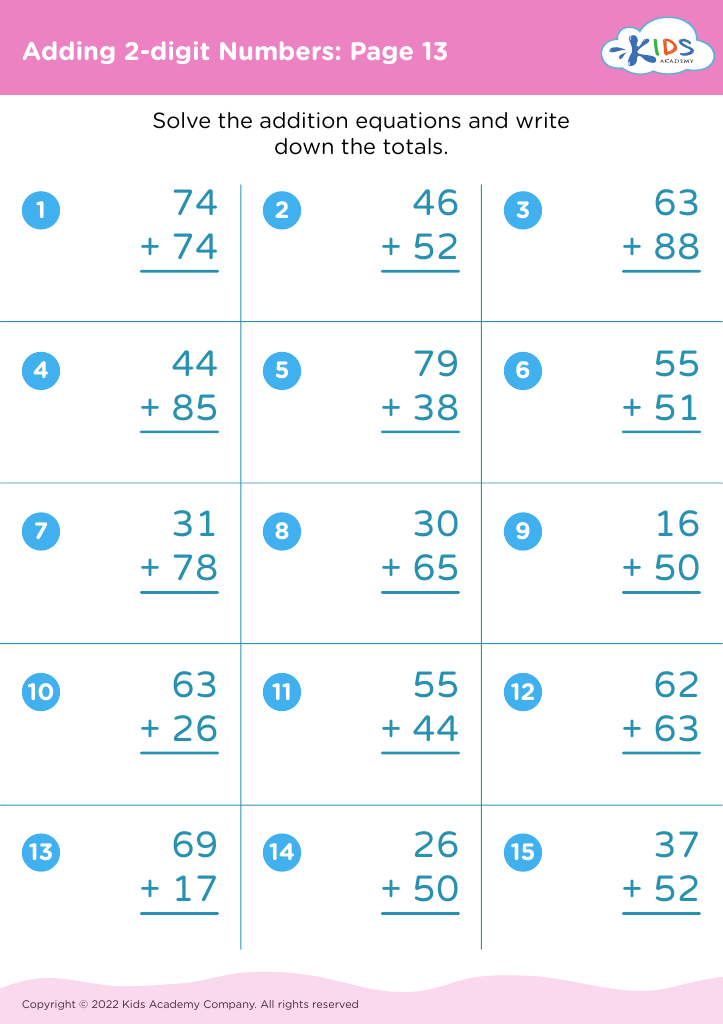
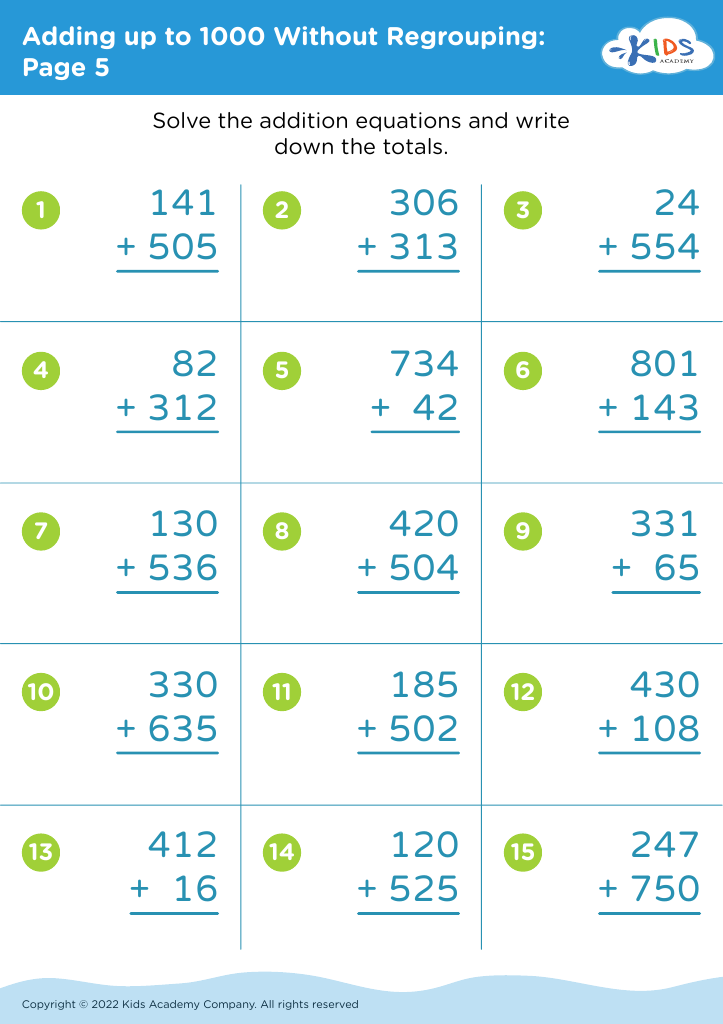
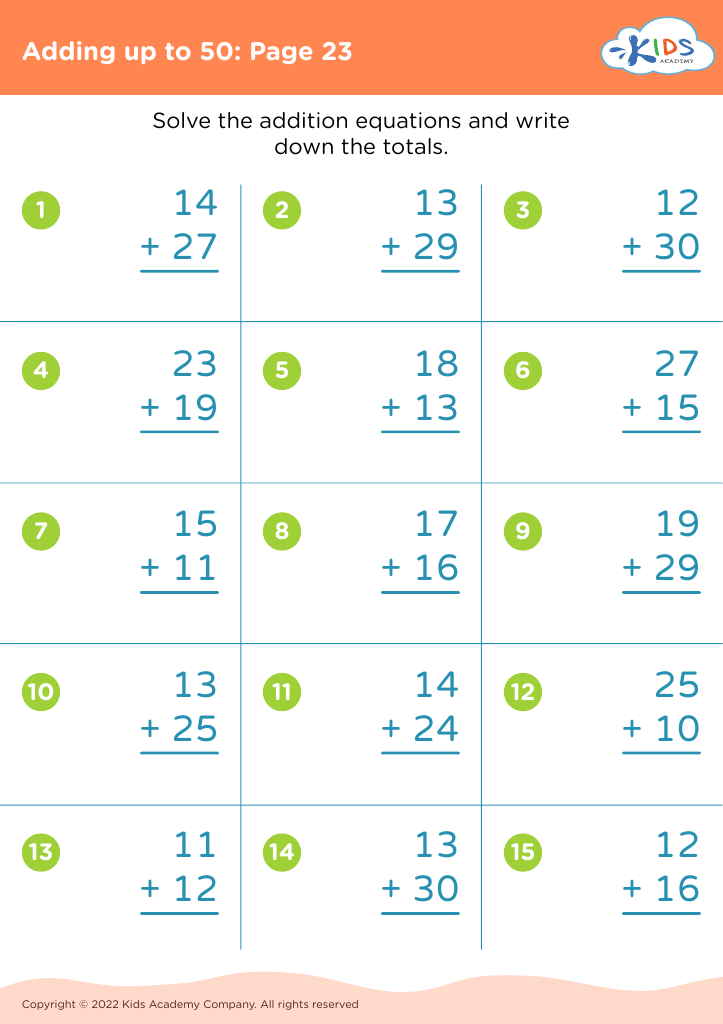
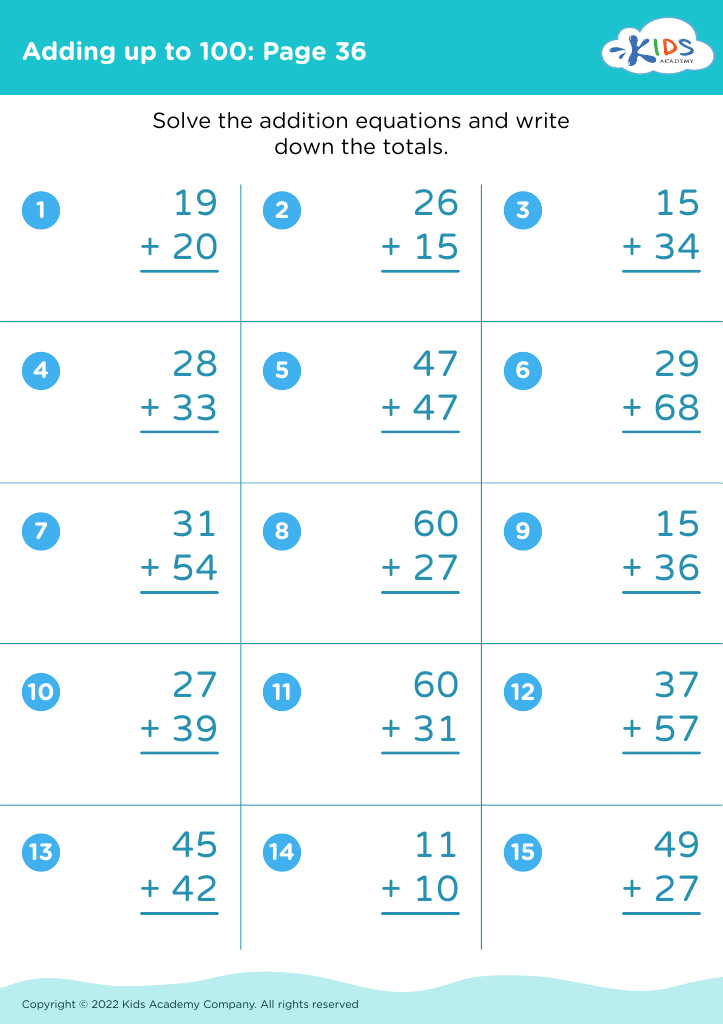








Visual representation comprehension in addition and subtraction is crucial for children ages 6-8, as it enhances their understanding of mathematical concepts. Young learners often grapple with abstract numbers and operations, making visual tools—such as number lines, counters, or pictorial representations—essential in bridging this gap.
When parents and teachers emphasize visual learning, they provide children with tangible ways to grasp mathematical relationships and processes. This method not only aids in better comprehension of addition and subtraction but also helps develop critical thinking and problem-solving skills. For instance, seeing how 3 apples combined with 2 apples results in 5 apples, fosters a clear understanding of the additive process.
Moreover, incorporating visual representations can boost children's confidence in their math abilities. When they can visualize and manipulate objects, they feel empowered to tackle more complex concepts. This lays a strong foundation, making future learning smoother as they progress through school.
Ultimately, prioritizing visual representation comprehension is not just about mastering basic math; it's about cultivating a lifelong ability to think critically, work with numbers, and develop a positive attitude towards mathematics. Parents and teachers play a pivotal role in nurturing these essential skills during these formative years.








