Addition of fractions Addition Worksheets for Ages 6-8
3 filtered results
-
From - To
Welcome to our Addition of Fractions Worksheets for Ages 6-8! Designed to make learning fun and engaging, these worksheets help young learners grasp the concept of adding fractions with ease. Our resources include colorful illustrations and interactive exercises tailored to different skill levels. Kids will enhance their problem-solving abilities while building a strong math foundation. Perfect for home practice or classroom use, these worksheets encourage independent learning and boost confidence. Explore a variety of challenges that nurture essential math skills while keeping your child entertained. Start the journey to fraction mastery today and watch your child's love for math grow!
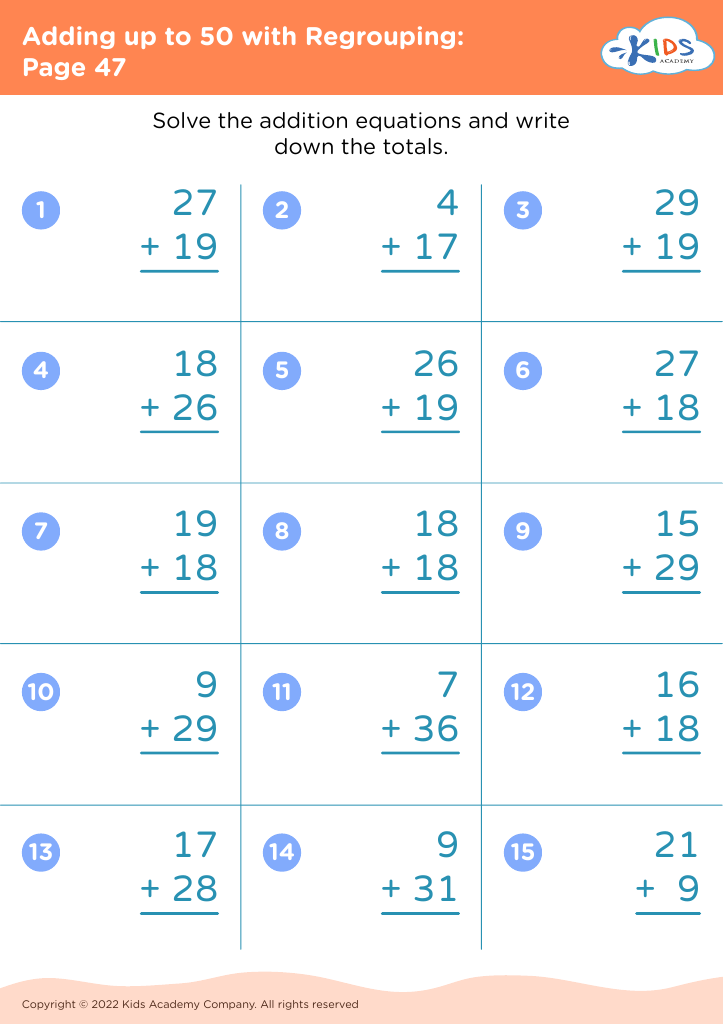
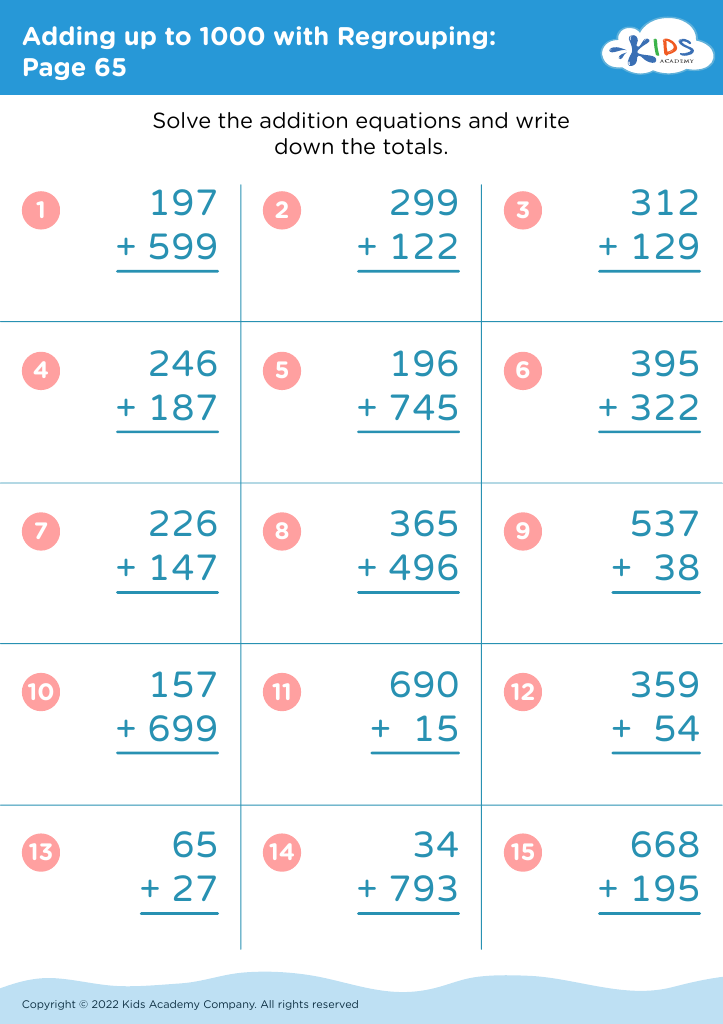
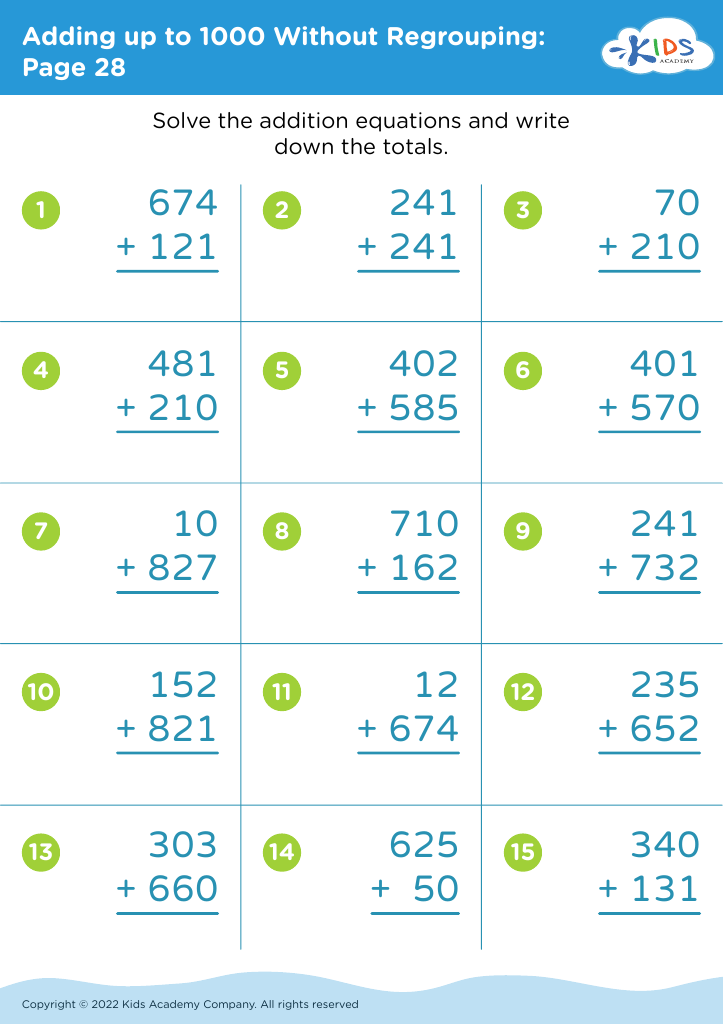




.jpg)



Understanding the addition of fractions is fundamental for children aged 6-8, as it lays the groundwork for their mathematical development. At this age, children are honing their problem-solving skills and beginning to grasp more complex concepts, including fractions. Learning to add fractions not only sharpens their numerical skills but also enhances their ability to visualize and interpret relationships between parts and wholes.
Incorporating fraction addition into their early education fosters critical thinking and promotes a sense of achievement in handling real-life situations, such as sharing food or combining different portions. These skills are crucial as they prepare students for more advanced mathematics in the future.
Moreover, mastery of addition of fractions builds confidence and a positive attitude toward math, counteracting common fears associated with the subject. Engaging parents in this learning process can create supportive environments where children receive guidance and encouragement. By valuing this fundamental skill, parents and teachers also set the stage for collaborative learning experiences—like cooking or arts and crafts—where fractions come into play, reinforcing those important concepts in fun and tangible ways. Ultimately, care for these early math skills directly impacts a child’s academic success and attitude toward learning throughout their educational journey.








