Attention to Detail Addition Worksheets for Ages 6-8
3 filtered results
-
From - To
Unlock the fun of learning with our "Attention to Detail Addition Worksheets" designed specifically for ages 6-8. These engaging worksheets encourage young learners to enhance their addition skills while emphasizing the importance of focus and precision. Through colorful illustrations and interactive exercises, kids will enjoy practicing their math abilities as they solve addition problems and complete fun activities. Each worksheet is crafted to promote critical thinking and attention to detail, key skills that are essential for academic success. Perfect for parents and teachers alike, these printable resources create an enriching learning experience that makes math enjoyable and effective!
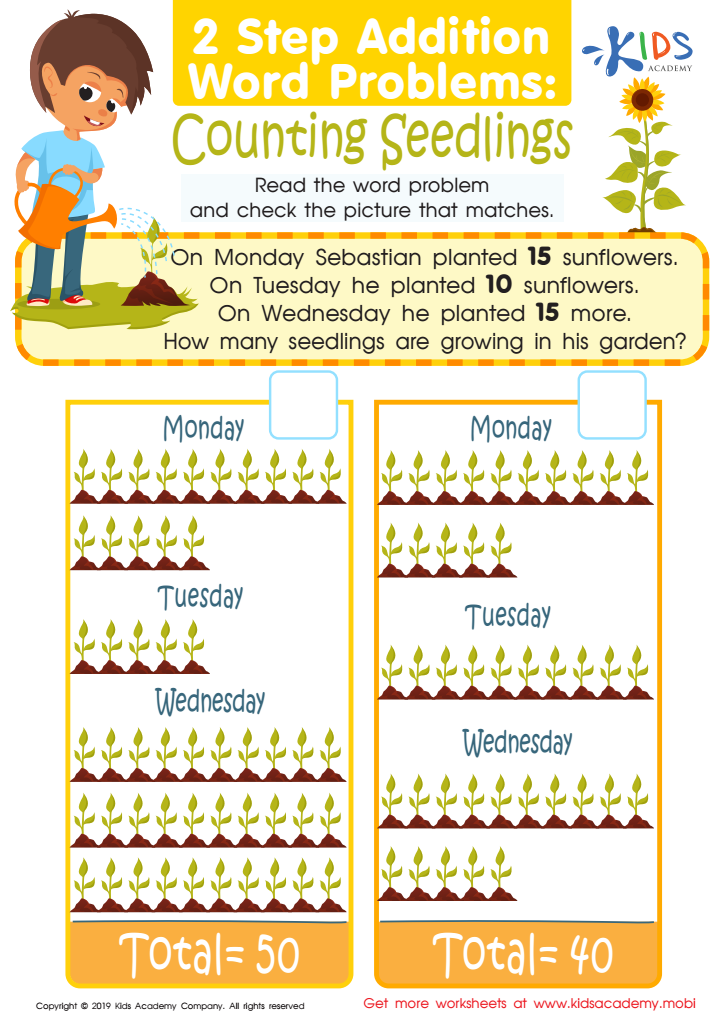
Counting Seedlings Worksheet
 Assign to My Students
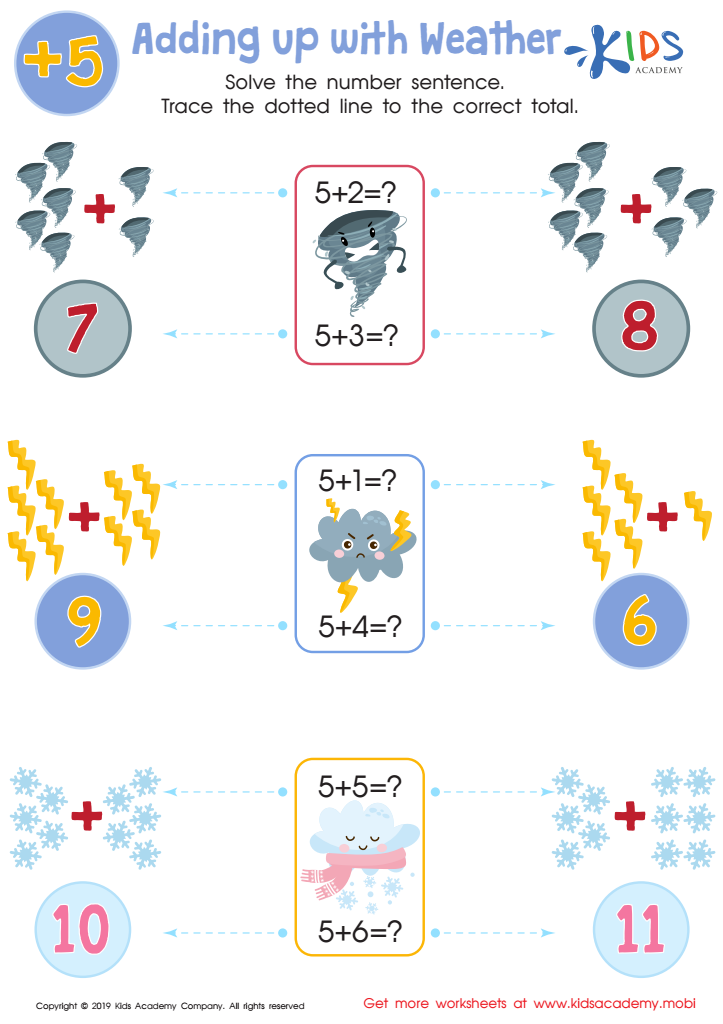
Adding up With Water Worksheet
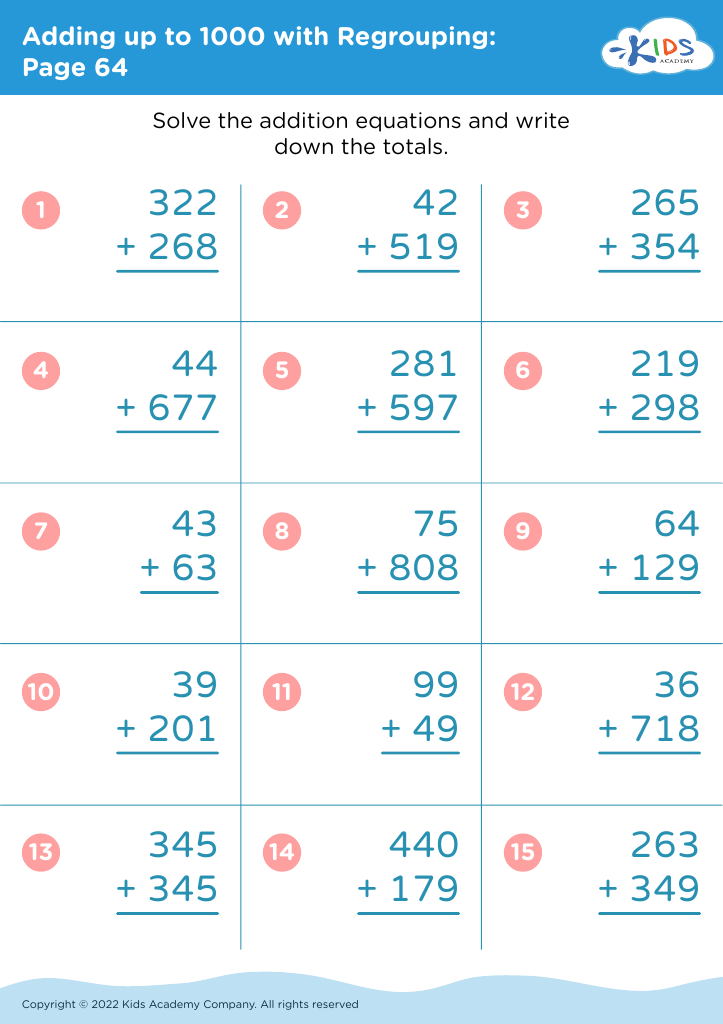








Attention to Detail Addition for ages 6-8 is crucial for several reasons. At this developmental stage, children are beginning to strengthen their mathematical foundations, and mastering addition is fundamental for their overall academic success. Fostering attention to detail during addition tasks helps children recognize and understand numerical relationships, promoting greater accuracy and confidence as they tackle more complex mathematical concepts later on.
Moreover, focusing on details enhances critical thinking and problem-solving skills. When students pay attention to each number or instruction, they learn to examine problems systematically, a skill that extends beyond mathematics into reading comprehension and scientific inquiry.
Teachers and parents should also be aware that children who develop this attention to detail often become more independent learners. By encouraging this skill, adults help children build persistence and resilience, key traits for lifelong learning.
Finally, incorporating attention to detail in playful, engaging activities makes learning enjoyable and can stimulate a child’s intrinsic motivation. In an era when basic math skills are frequently overlooked due to technology reliance, giving attention to detail in addition not only prepares children for immediate academic challenges but also lays the groundwork for future learning across disciplines. This early focus will create confident, capable learners ready for the complexities of education.








