Basic Math Skills Addition Worksheets for Ages 6-8 - Page 3
54 filtered results
-
From - To
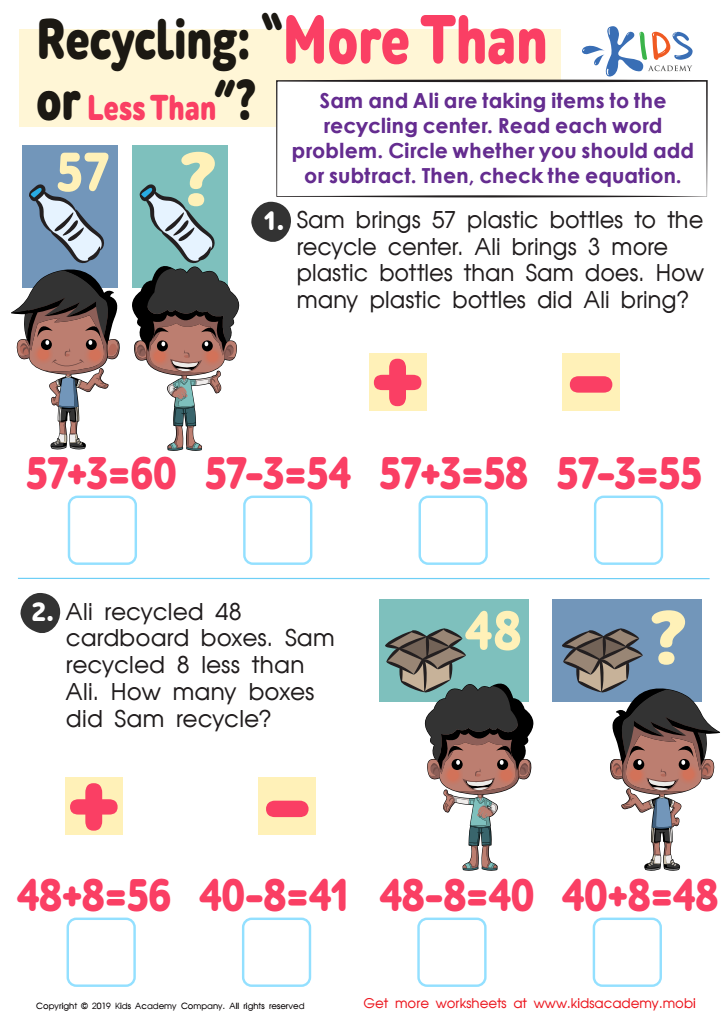
Recycling - More or Less Worksheet
 Assign to My Students
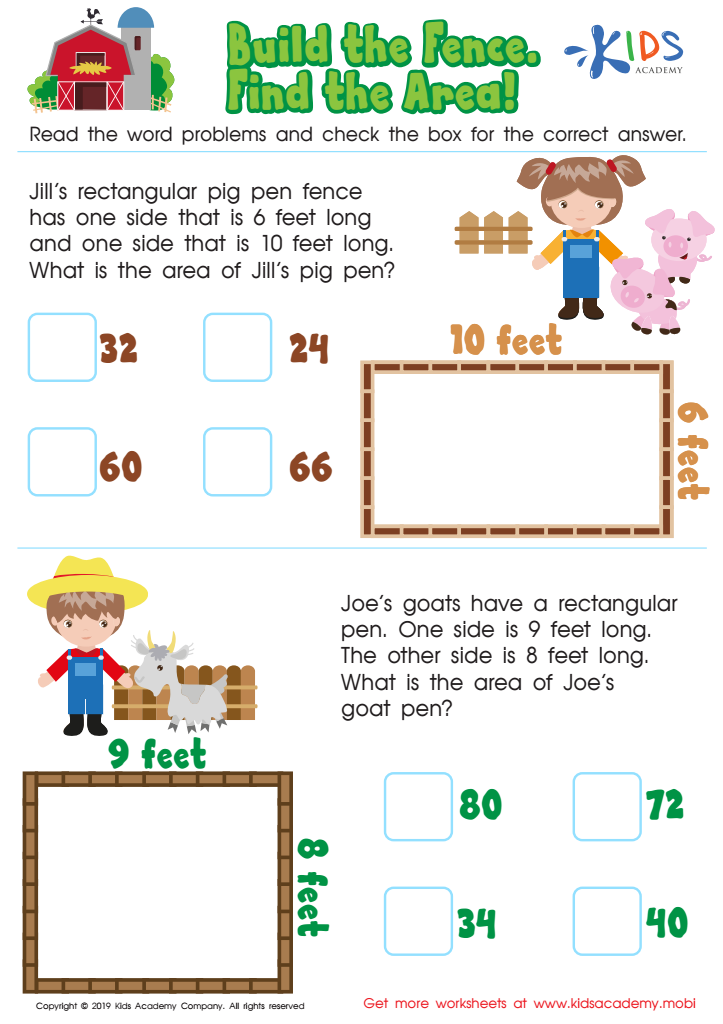
Build the Fence, Find the Area Worksheet







.jpg)
Basic math skills, particularly addition, are crucial for children aged 6-8, as they lay the foundation for future learning and overall academic success. During this developmental stage, children are not only building their arithmetic abilities but also enhancing critical cognitive skills such as problem-solving, logical thinking, and even memory. Addition is often one of the first mathematical concepts they encounter, impacting their confidence and willingness to engage with more complex topics later on, such as subtraction, multiplication, and division.
Parents and teachers play a pivotal role in fostering these skills. By nurturing a positive attitude towards math, they can motivate children to explore mathematical concepts in a supportive environment. Engaging activities—like games or real-life scenarios—can make learning addition enjoyable, encouraging curiosity and exploration.
Moreover, mastery of basic addition is pivotal for daily life skills. Understanding how to add not only aids in school performance but also prepares children for managing personal finances and even understanding time in the future. By focusing on basic math skills early on, parents and teachers equip children with essential tools necessary for their academic journey and daily interactions, setting the stage for lifelong learning and problem-solving capabilities.








