Categorization skills Addition Worksheets for Ages 6-8
3 filtered results
-
From - To
Enhance your child’s mathematical foundation with our "Categorization Skills Addition Worksheets for Ages 6-8" at Kids Academy. These engaging printable worksheets are expertly designed to sharpen categorization and addition skills, promoting logical thinking and problem-solving abilities. Perfect for young learners, each worksheet encourages children to classify and organize information while practicing fundamental addition concepts. Fun, interactive activities capture kids' interest, making math enjoyable and educational. Ideal for classroom settings or at-home learning, our worksheets help children build confidence and achieve academic success in a supportive, encouraging environment. Download now to boost your child’s math skills!
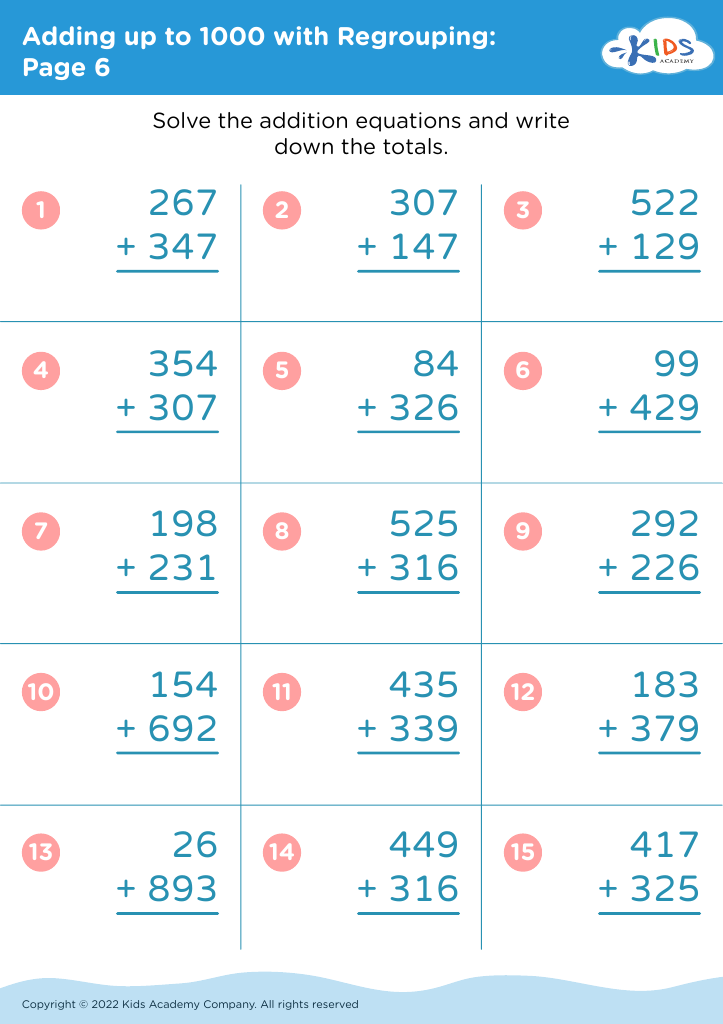
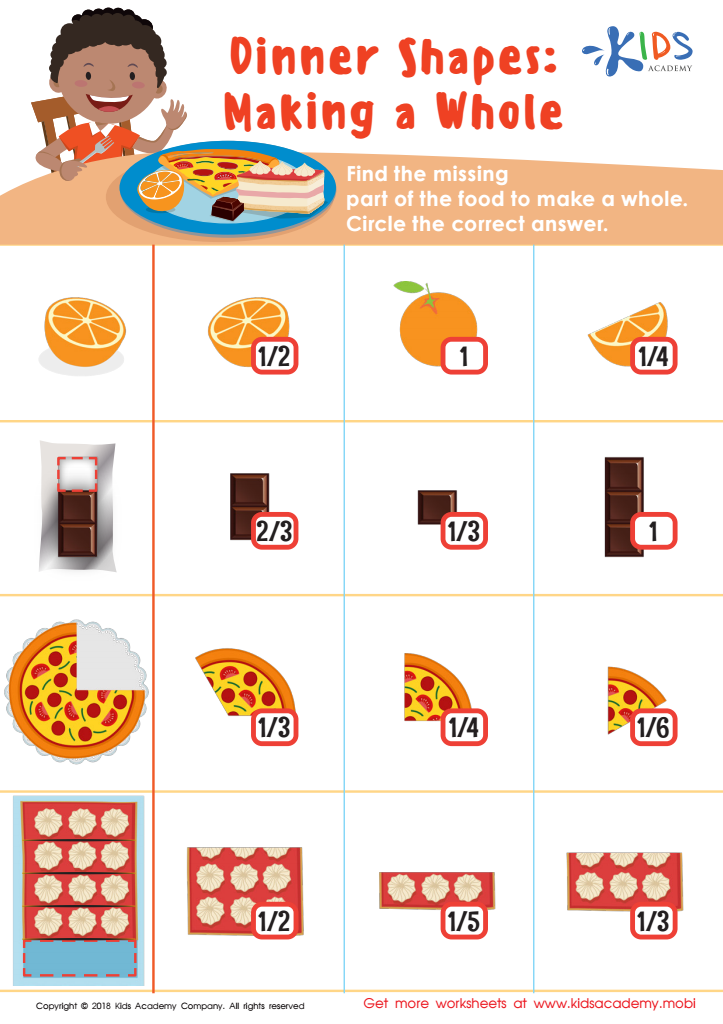
Dinner Shapes: Making a Whole Worksheet
 Assign to My Students
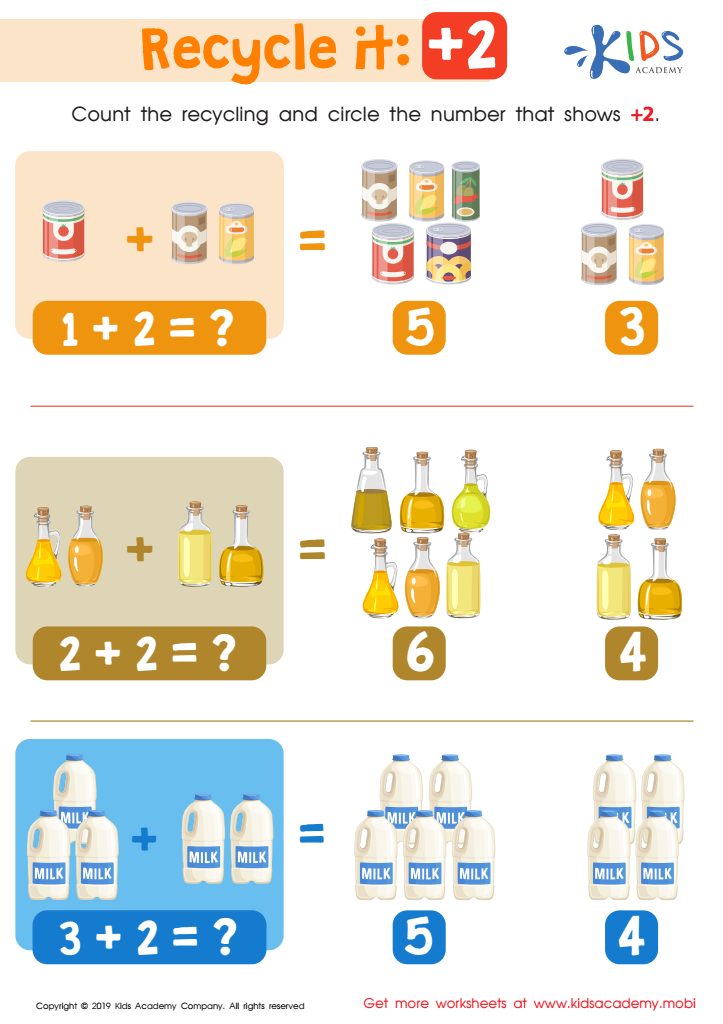
Recycle It: +2 Worksheet








Parents and teachers should care about fostering categorization skills and understanding addition for children aged 6-8 because these abilities are foundational to cognitive and mathematical development. Categorization skills involve grouping objects based on similar attributes, which not only helps in understanding the world but also in organizing knowledge systematically. This ability to sort and classify leads to better memory retention and sharper analytical thinking, crucial for academic success.
Understanding and applying addition is equally important at this stage. Addition is a basic arithmetic skill that serves as a building block for more complex mathematical concepts such as multiplication, division, and fractions. Proficiency in addition enhances problem-solving abilities and supports the development of logical thinking. Since math skills are cumulative, a strong grasp of addition sets the stage for future learning in STEM (Science, Technology, Engineering, and Mathematics) areas.
Moreover, these skills contribute to a child's confidence in their academic abilities, promoting a positive attitude towards learning. This confidence can extend beyond the classroom, helping children tackle challenges with a proactive mindset. Developing categorization skills and a solid understanding of addition during these formative years equips children with the cognitive tools they need for continuous learning and personal growth.








