Counting objects Addition Worksheets for Ages 6-8
8 filtered results
-
From - To
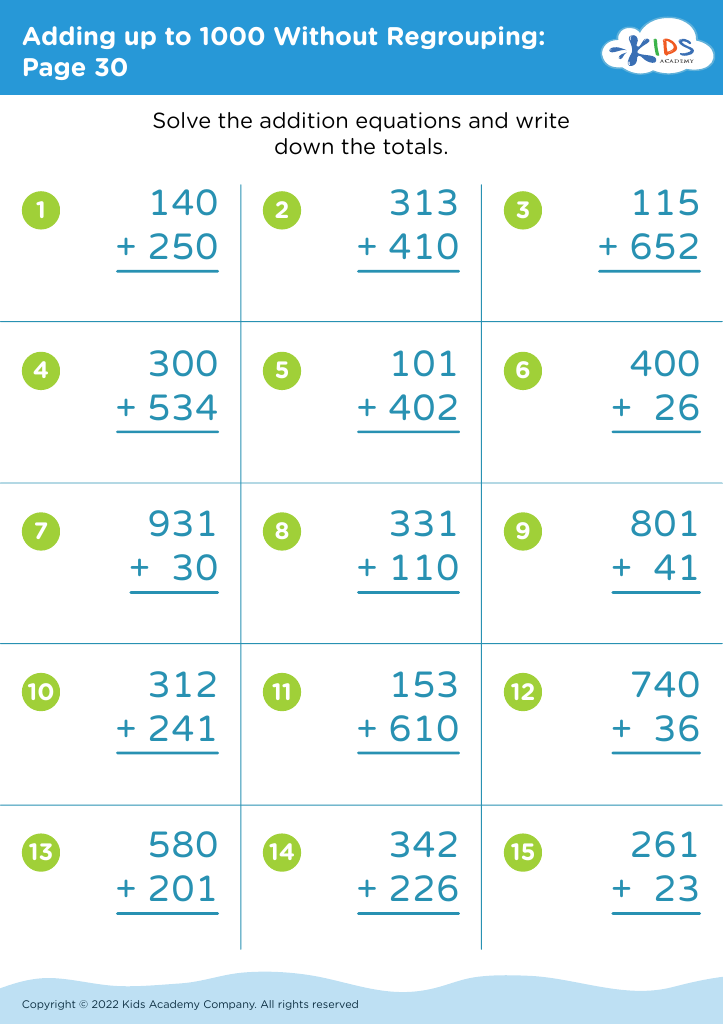
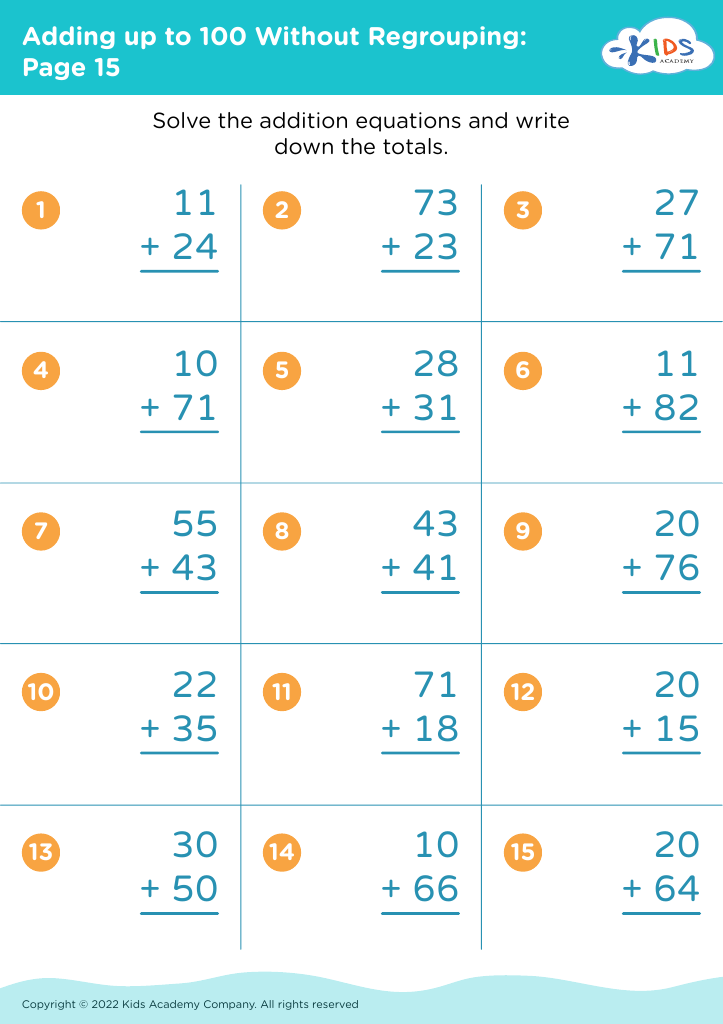
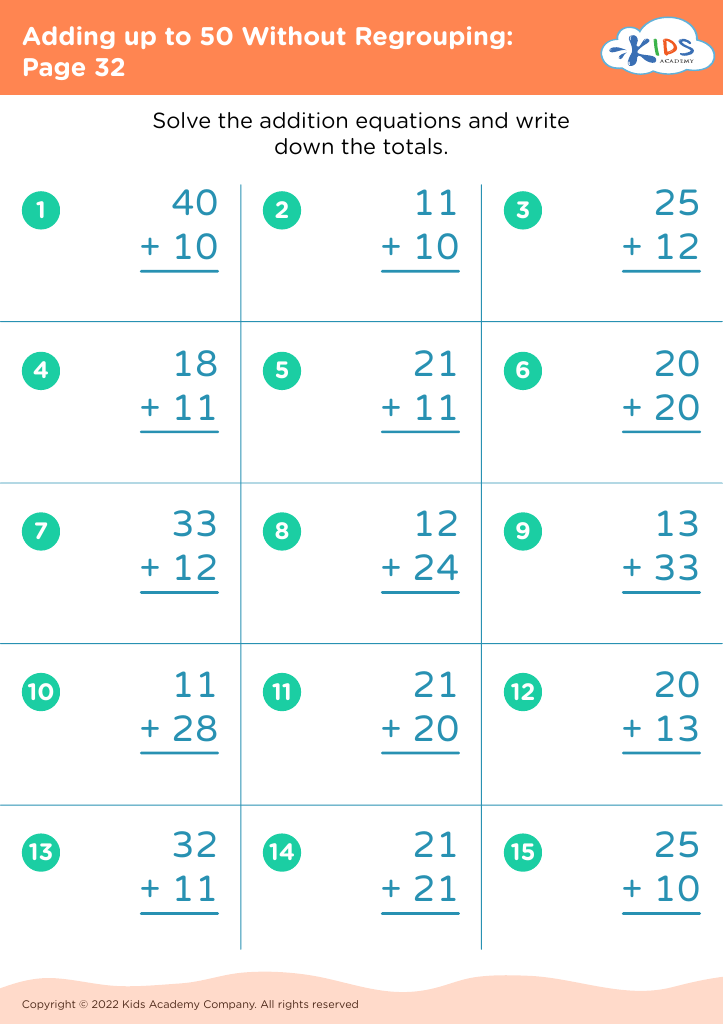
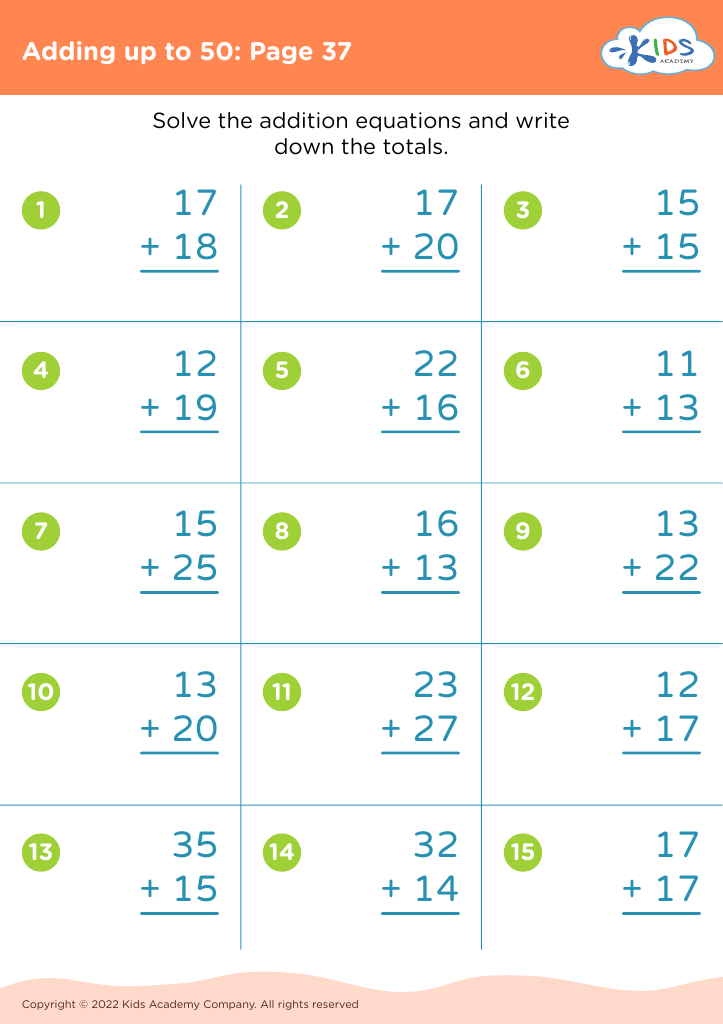
Introducing our Counting Objects Addition Worksheets for Ages 6-8, designed to enhance your child's fundamental math skills! These engaging and interactive worksheets encourage young learners to practice addition by counting various objects, fostering both number recognition and counting fluency. Each worksheet features vibrant illustrations and age-appropriate exercises that make learning fun and effective. Perfect for home or classroom use, our resources aim to build confidence and competence in mathematics for children. These worksheets not only strengthen addition skills but also promote critical thinking and problem-solving. Explore our collection and help your child master the art of addition today!
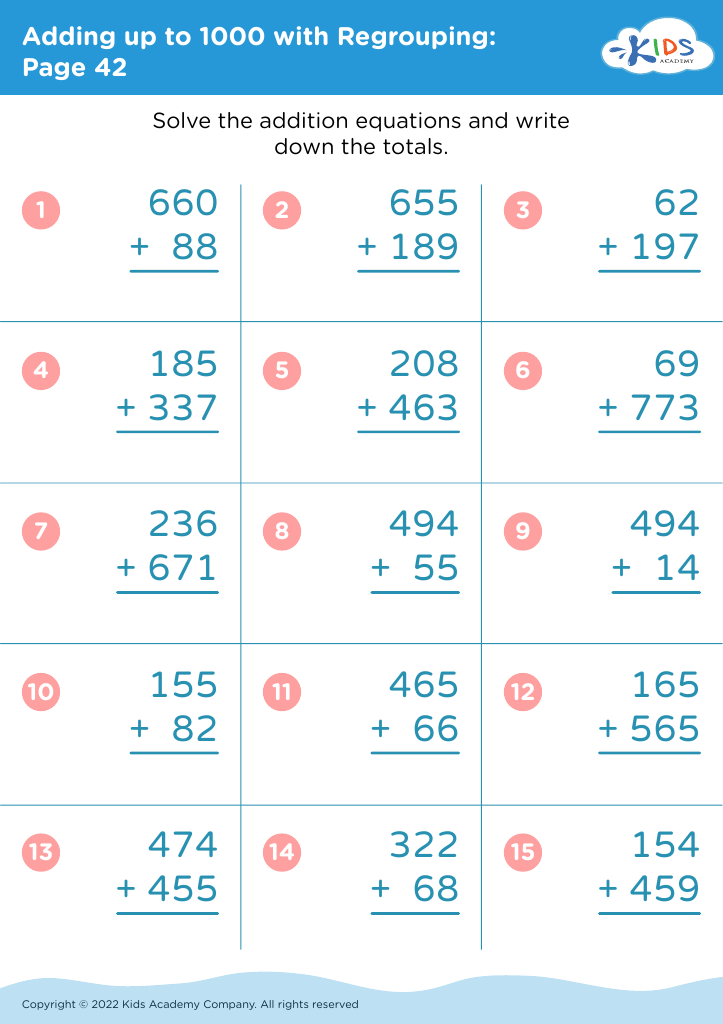
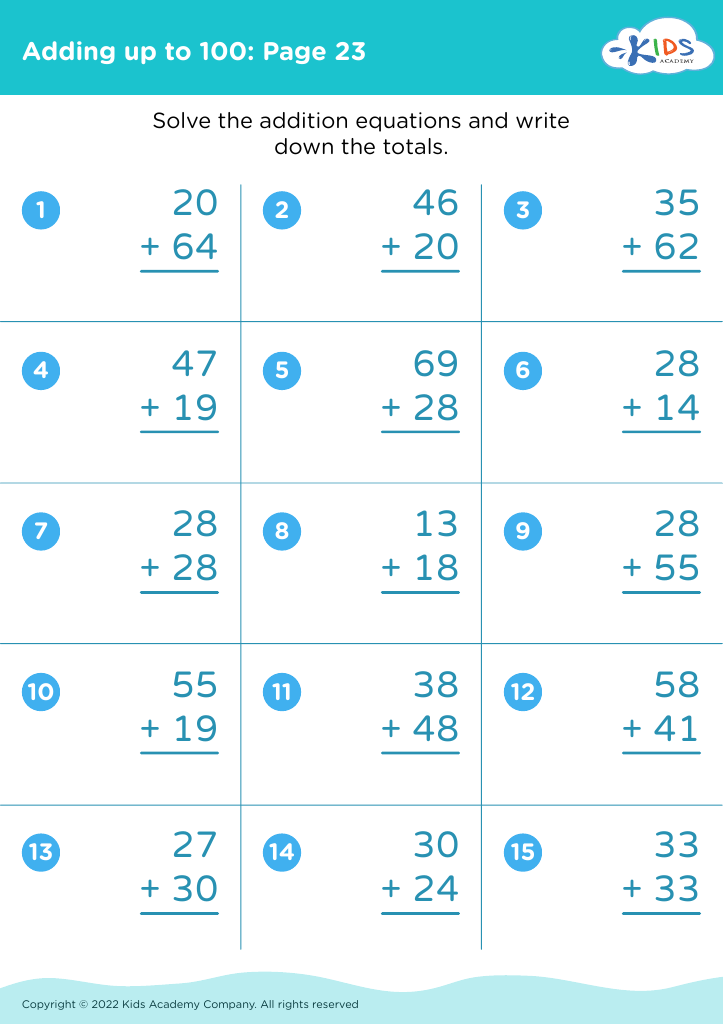
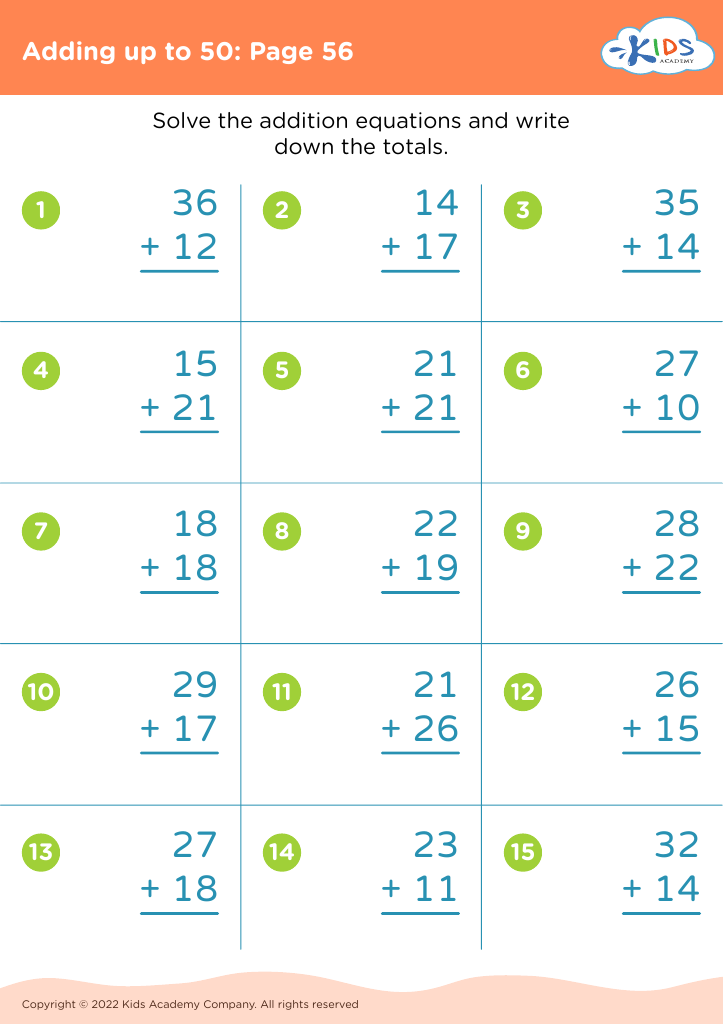
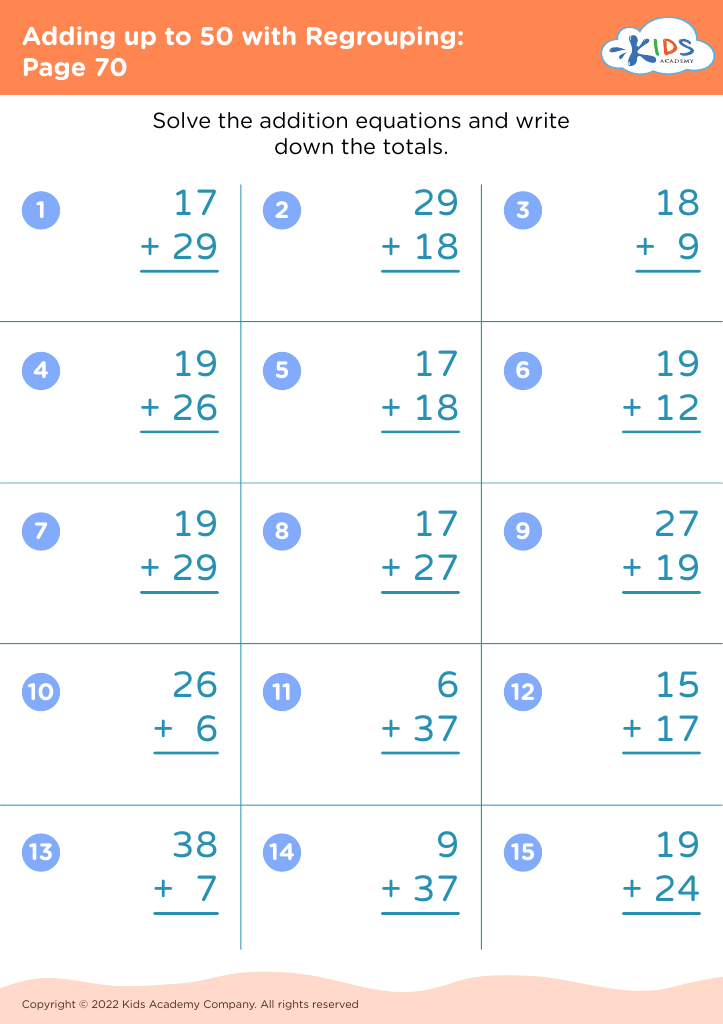








Counting objects and addition are foundational math concepts for children aged 6-8, and their importance cannot be overstated. At this age, children are developing critical thinking skills, and understanding these principles lays the groundwork for more advanced mathematical concepts.
First, counting objects helps children learn number recognition and one-to-one correspondence, vital for a strong grasp of the numerical system. Engaging in addition through counting tangible items—like toys or fruit—makes math tangible and relatable, enhancing comprehension. This hands-on approach encourages active learning and retention.
Moreover, mastering addition equips children with essential problem-solving skills that extend beyond math; they learn to approach challenges methodically and think critically. This foundation also fosters confidence, enabling children to engage more fully in class, enhancing both their academic performance and self-esteem.
Parents and teachers should care about these skills because they not only prepare children for future mathematical concepts but also promote overall cognitive development. In this digital age, fostering a love for math early on is crucial. By focusing on counting and addition, parents and teachers can help cultivate a positive outlook on math that children will carry throughout their education and beyond.








