
Critical thinking development Addition Worksheets for Ages 6-8
3 filtered results
Difficulty Level
Grade
Age
-
From - To
Subject
Activity
Standards
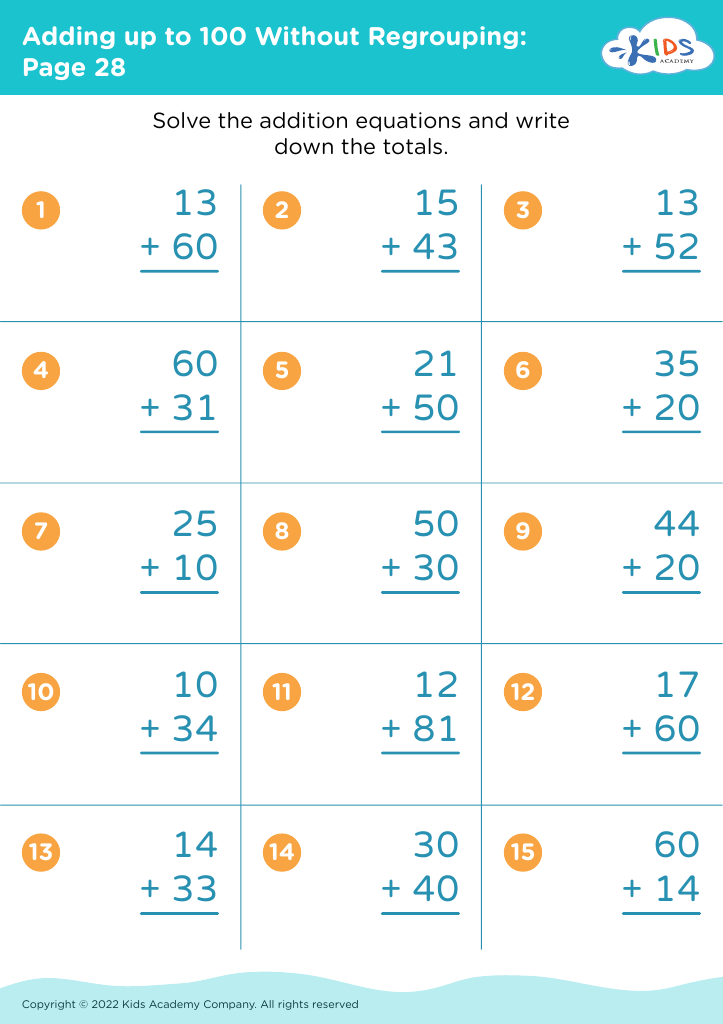
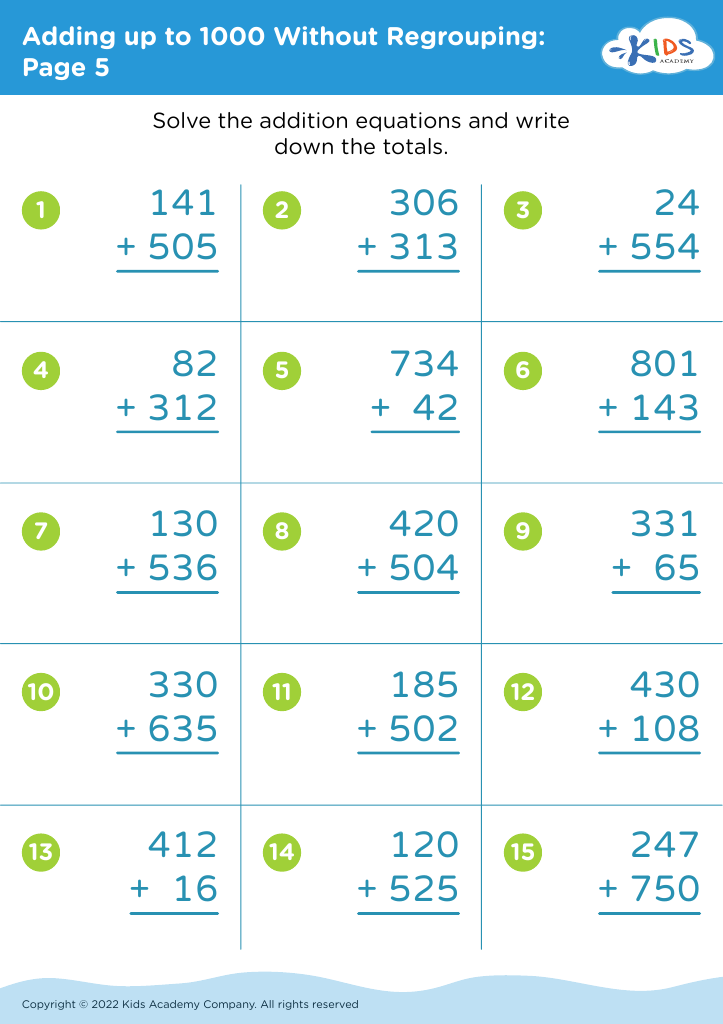
Unlock your child's potential with our Critical Thinking Development Addition Worksheets, tailored for ages 6-8. These engaging worksheets combine math and critical thinking, challenging young minds to think beyond simple addition. By solving intricate problems and puzzles, kids enhance their analytical skills, improve their focus, and cultivate a problem-solving mindset. Perfectly designed to stimulate growth, these worksheets make learning both effective and enjoyable, providing a strong foundation for future mathematical success. Ideal for classroom use or at home, our resources support your child's educational journey and foster a love for learning through interactive and thought-provoking activities.
Favorites
With answer key
Interactive

Join Kids Academy for Free
Who is primarily going to use this learning content?








Critical thinking development in children ages 6-8 is essential because it lays a foundational skill set that supports lifelong learning and problem-solving capabilities. At this early age, children's brains are incredibly receptive to new ideas and learning methodologies. Encouraging critical thinking helps them to not just memorize facts, but to understand and evaluate information, make connections, and think independently.
For parents and teachers, focusing on critical thinking means enabling children to intellectually engage with the world around them. This age group is naturally curious and often asks "why" questions, providing a perfect opportunity to teach reasoning and analytical skills. These skills go beyond academic learning, extending to real-life situations such as resolving conflicts, making ethical decisions, and understanding different perspectives.
Moreover, fostering critical thinking can improve academic performance in core subjects like math, science, and reading. Children who think critically can better understand complex concepts and apply their knowledge in various situations. Such skills are increasingly important in a world where information is abundant, and discernment is key.
Ultimately, helping children develop critical thinking equips them with the tools to succeed academically, socially, and emotionally. Parents and teachers who prioritize these skills provide children with a robust foundation for future challenges and opportunities.








