Critical thinking skills Addition Worksheets for Ages 6-8
7 filtered results
-
From - To
Enhance your child’s educational journey with our "Critical Thinking Skills Addition Worksheets" designed specifically for ages 6-8. These engaging worksheets help young learners develop essential problem-solving and analytical skills while mastering basic addition concepts. By solving diverse challenges and puzzles, kids refine their critical thinking abilities as they approach math in a fun and interactive way. Perfect for both classroom use and at-home learning, our resource aims to build confidence and fortify math understanding. Encourage your child's cognitive growth and watch them excel in their academic endeavors with these thoughtfully crafted worksheets that make learning addition an enjoyable experience!
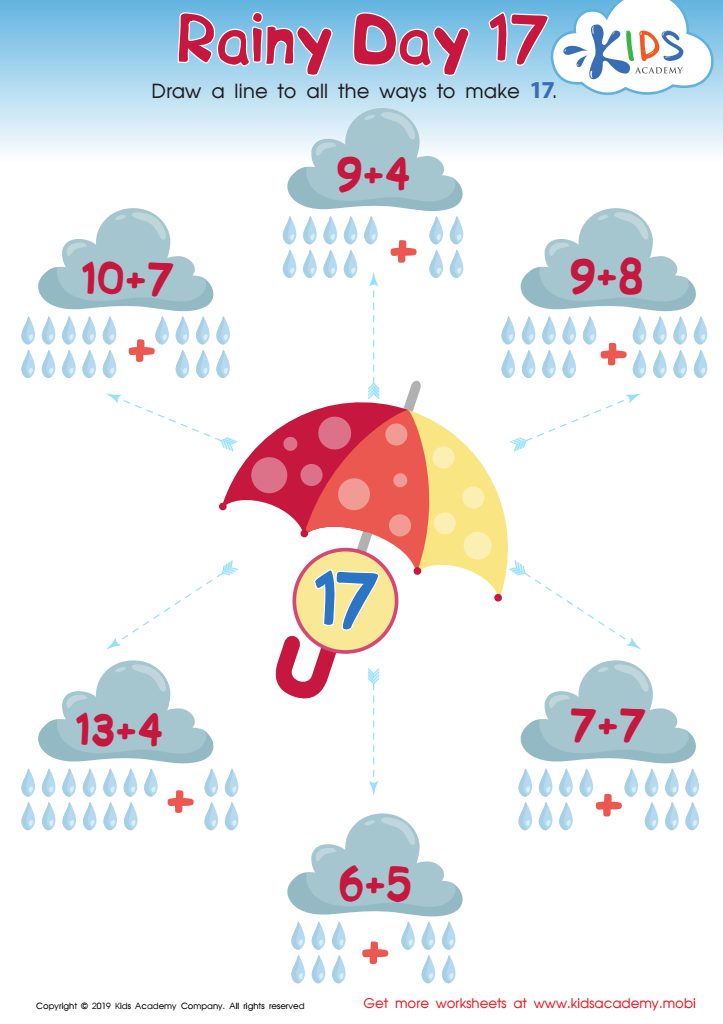
Rainy Day 17 Worksheet
 Assign to My Students
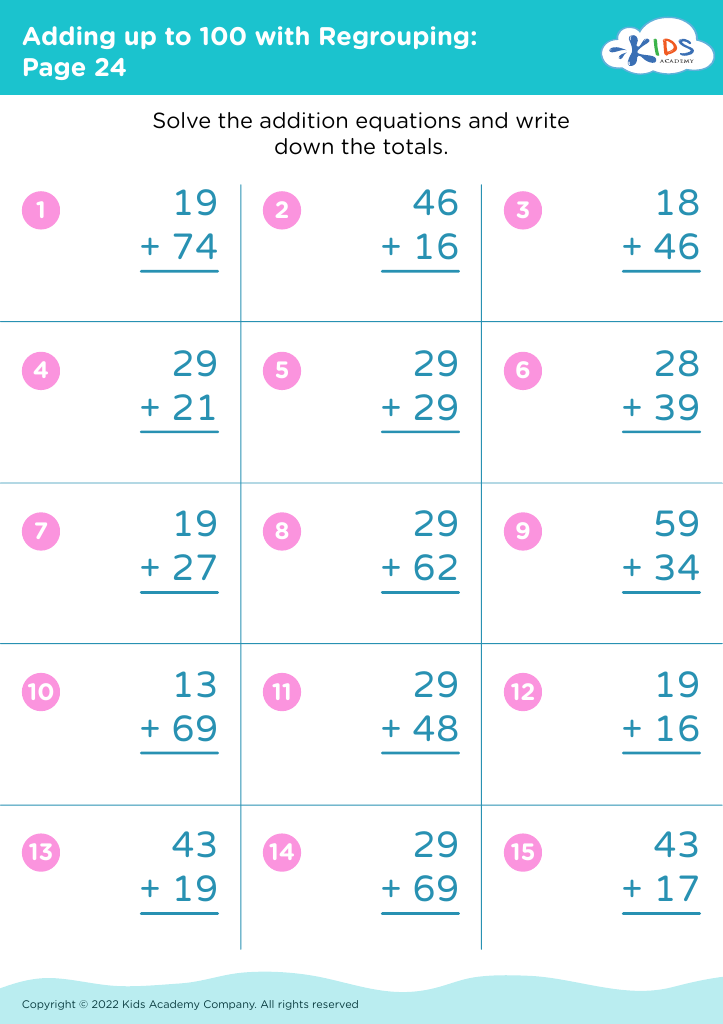
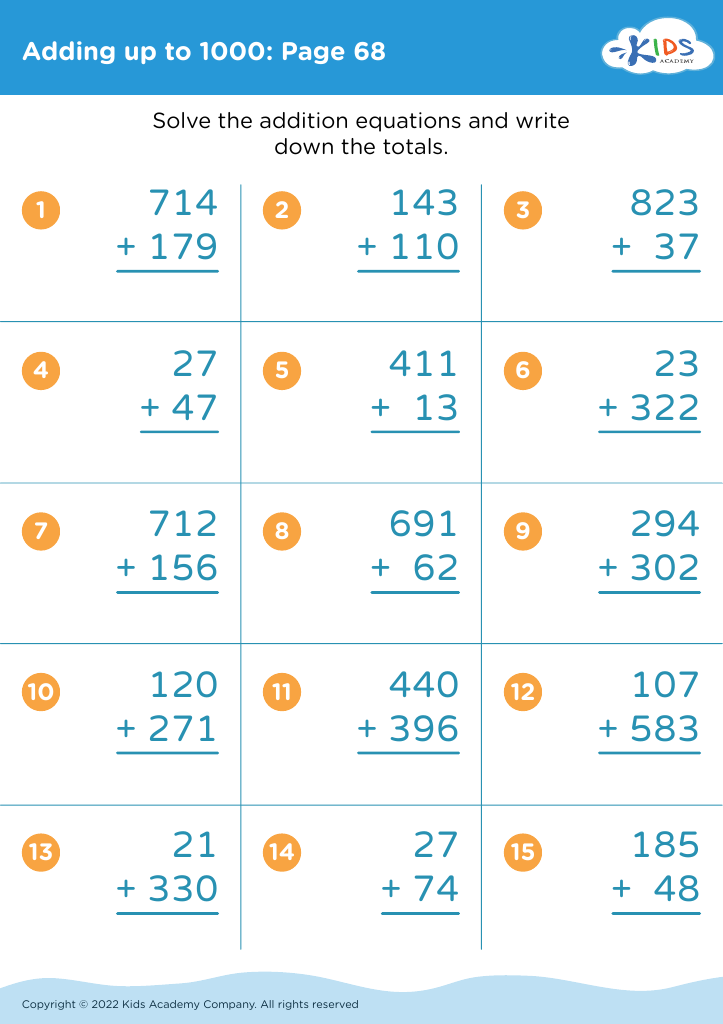
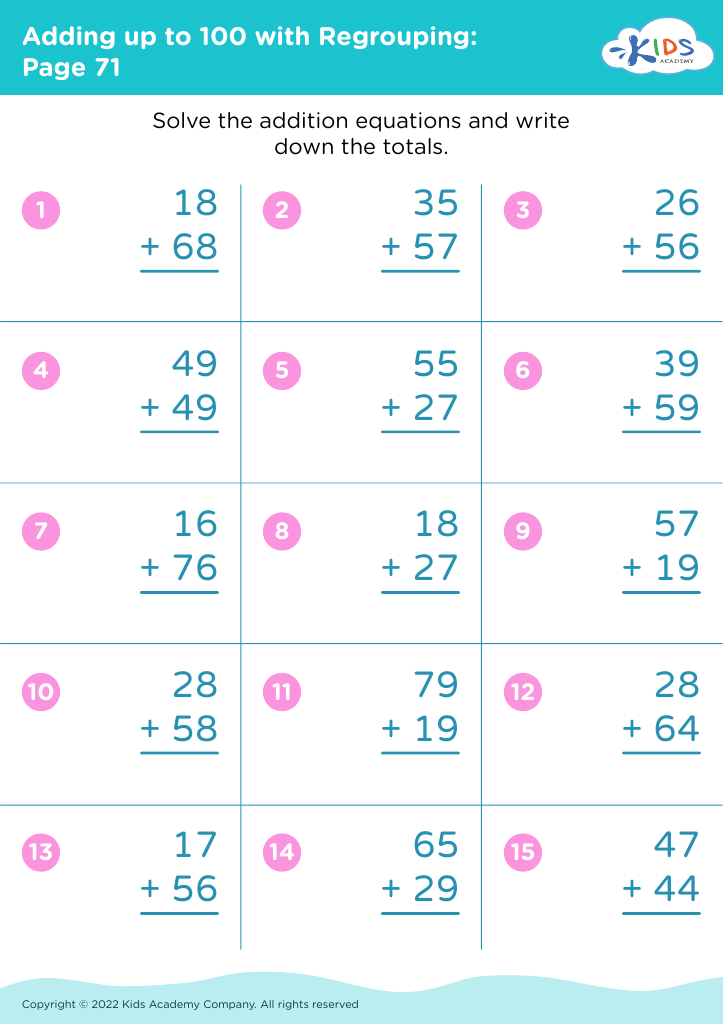
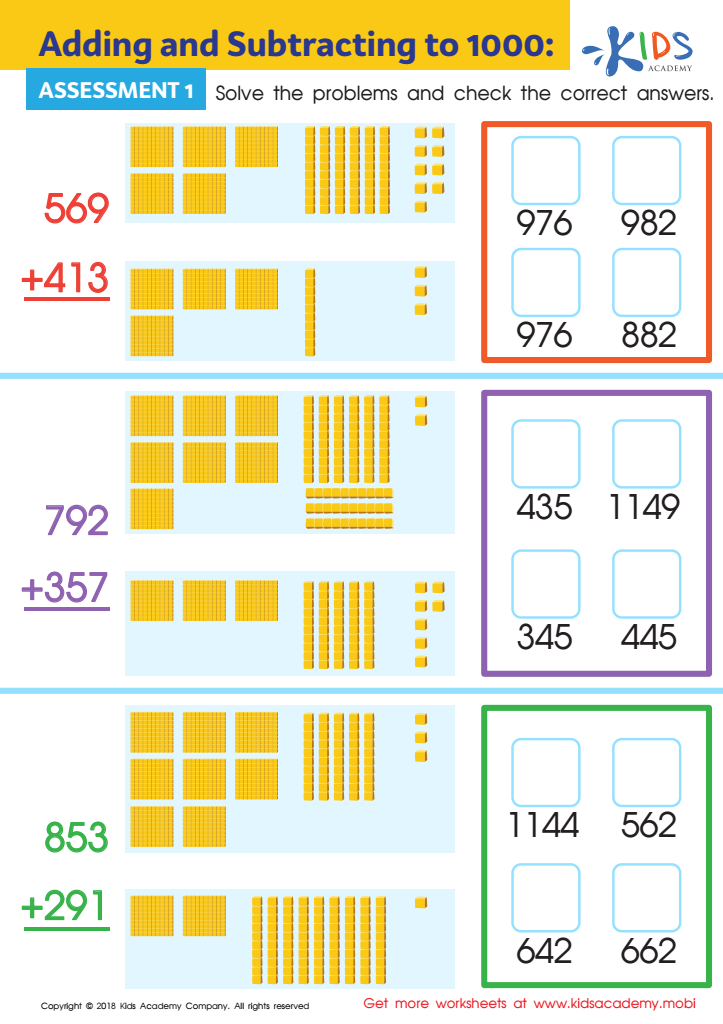
Adding and Subtracting to 1 Worksheet: Assessment 1
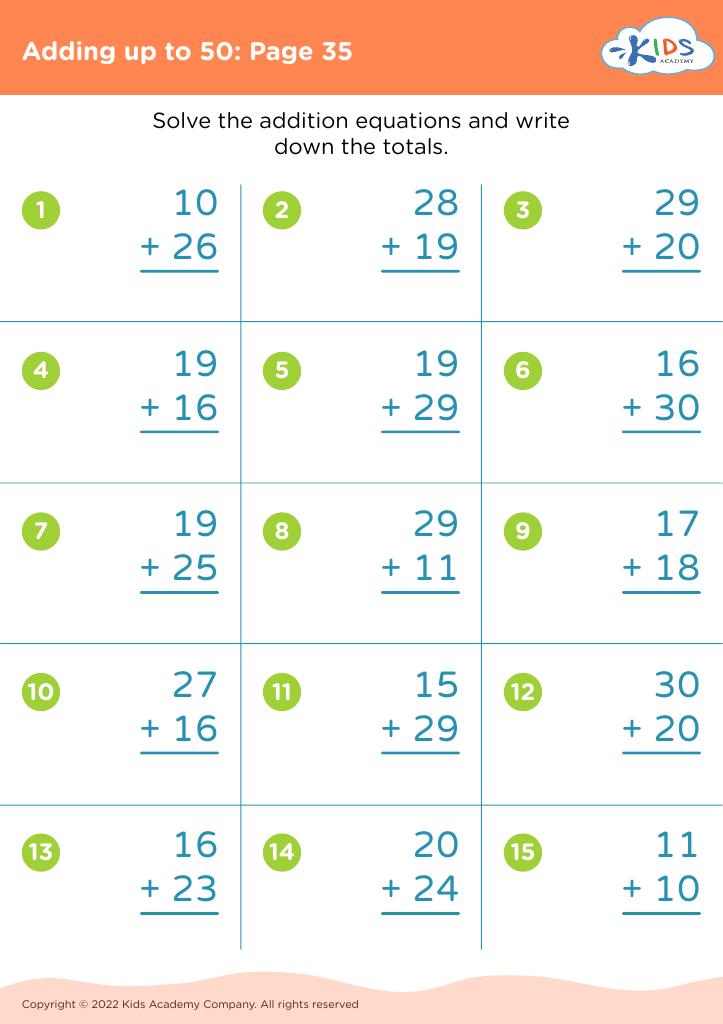
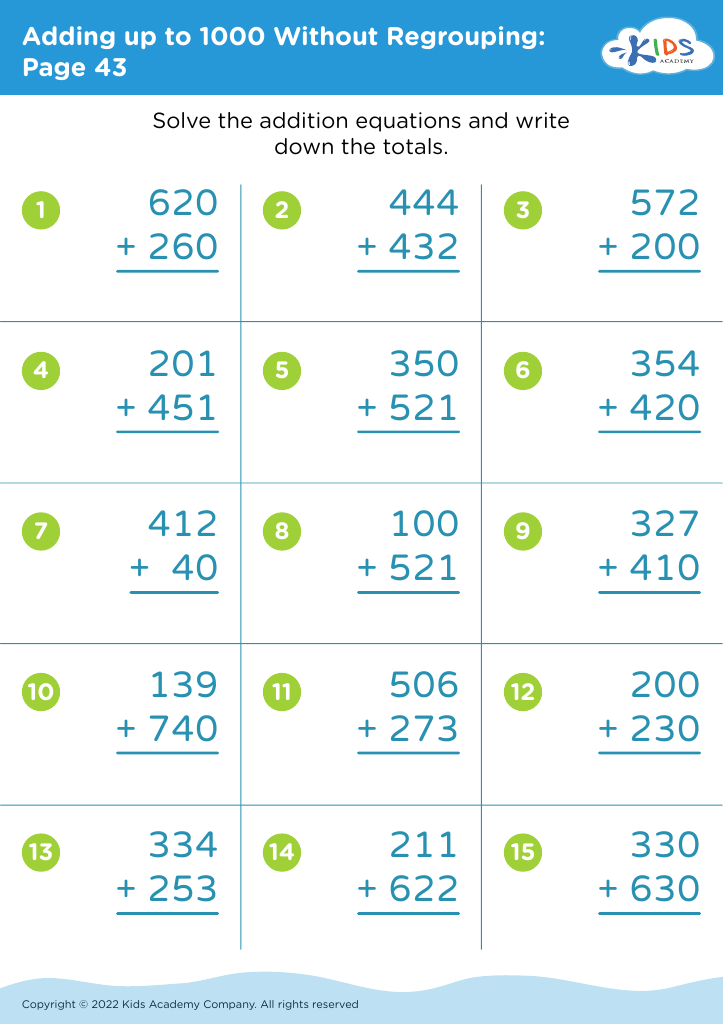








Critical thinking skills are essential for children aged 6-8, as they lay the foundation for effective problem-solving and decision-making in an increasingly complex world. At this developmental stage, children are naturally curious and eager to explore, making it the perfect time to nurture their critical thinking abilities. Parents and teachers play a vital role in guiding this process, as these skills empower children to analyze information, evaluate options, and draw sound conclusions.
By fostering critical thinking in young learners, adults can help them overcome challenges with confidence and creativity. For instance, children who can critically assess situations are better equipped to tackle math problems, comprehend reading materials, and engage in meaningful discussions. This educational approach not only enhances academic performance but also encourages independence and a love for learning that extends beyond the classroom.
Moreover, critical thinking skills promote emotional and social intelligence, enabling children to navigate relationships effectively. When parents and teachers prioritize these skills, they prepare children not just for immediate educational success, but also equip them with lifelong tools to thrive in varied aspects of life. Ultimately, the cultivation of critical thinking creates thoughtful, engaged citizens who can contribute positively to society.








