Develop analytical thinking Addition Worksheets for Ages 6-8
3 filtered results
-
From - To
Introducing our "Develop Analytical Thinking Addition Worksheets" designed specifically for children aged 6 to 8! These engaging worksheets aim to enhance critical thinking and problem-solving skills while reinforcing essential addition concepts. Young learners will tackle challenges that promote logical reasoning, helping them to not only understand basic mathematics but also cultivate a deeper analytical mindset. Each worksheet is crafted to provide a variety of engaging activities that keep students motivated and excited about learning. Perfect for in-class use or as at-home practice, our worksheets offer the support needed to build a strong foundation in math and analytical thinking. Empower young brains today!
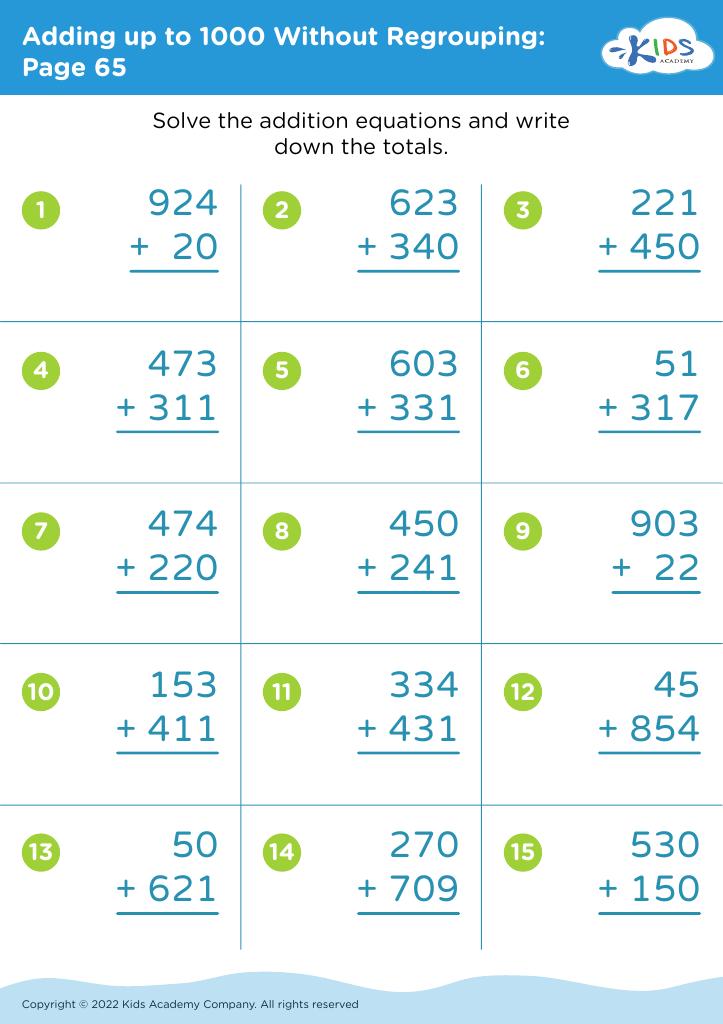
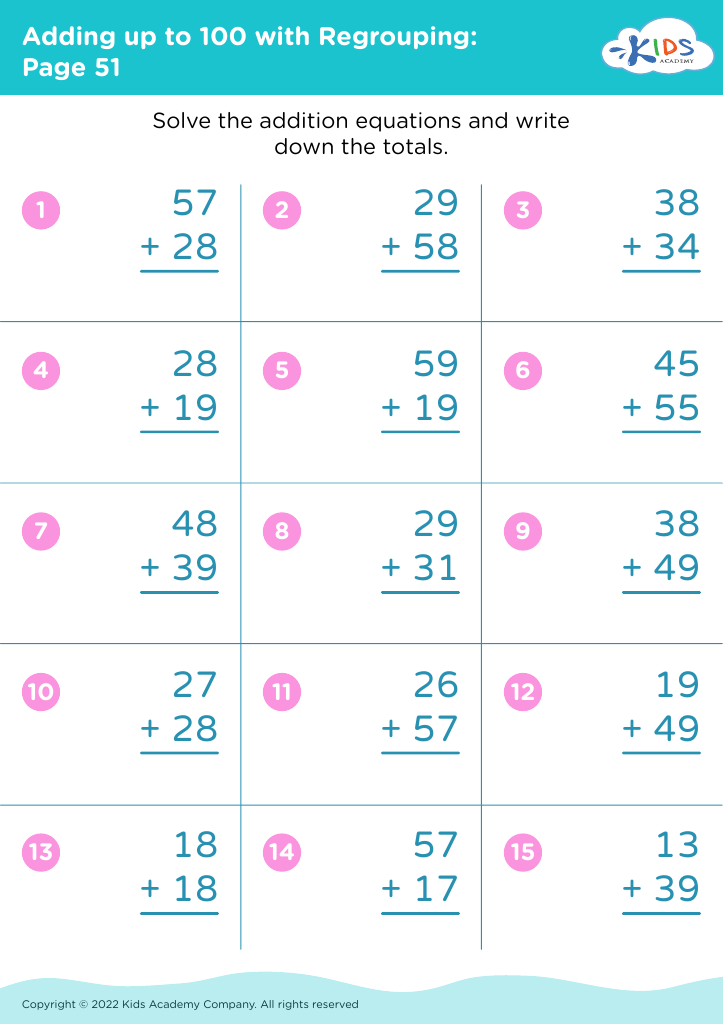
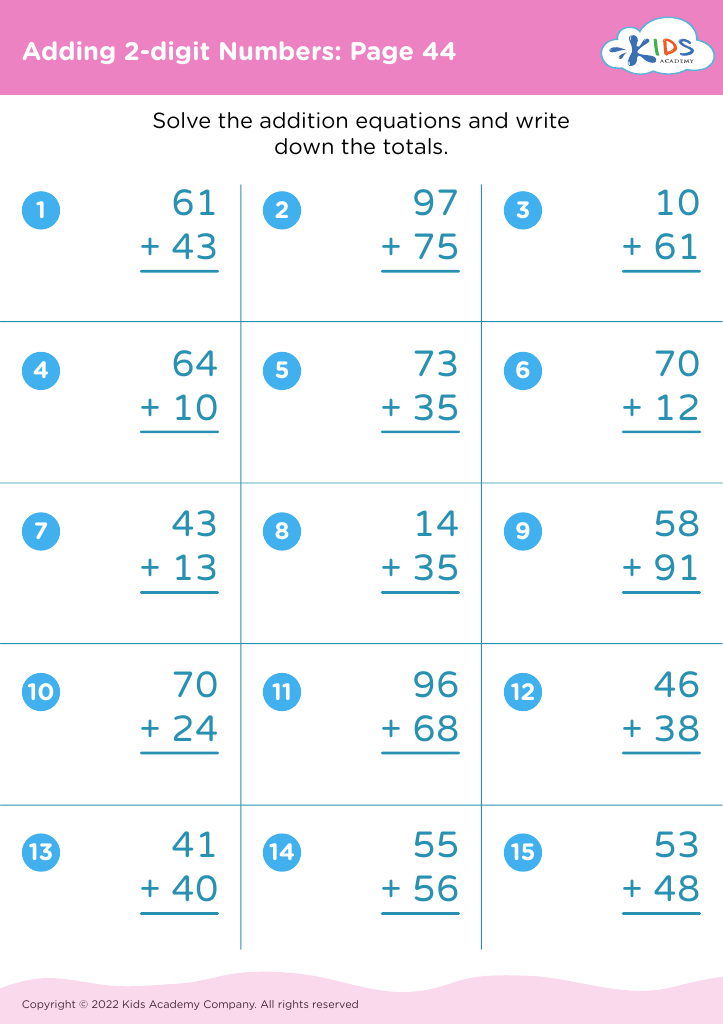








Developing analytical thinking skills in children aged 6-8, especially in addition, is crucial for several reasons. First, analytical thinking enables children to approach mathematical problems methodically, breaking them down into smaller, manageable parts. This foundational skill helps them understand not just how to add numbers, but why certain strategies work, promoting deeper comprehension of mathematical concepts.
Second, strong analytical thinkers are better equipped to tackle complex problems as they advance in their education. By fostering these skills early on, parents and teachers lay the groundwork for higher-level thinking required in advanced mathematics and other subjects. Children learn to evaluate solutions, recognize patterns, and develop reasoning abilities, which are essential not only in math but across the curriculum and in everyday life.
Moreover, analytical thinking encourages perseverance and resilience. When facing challenging problems, children learn to experiment with different strategies, reflect on their outcomes, and adjust their methods as needed. This positive mindset fosters independent learning and confidence.
Ultimately, emphasizing analytical thinking in addition helps cultivate a generation of critical thinkers, adept problem solvers, and lifelong learners, ready to navigate the complexities of an increasingly demanding world. Parents and teachers play a vital role in nurturing these essential skills during these formative years.








