Developing logical thinking Addition Worksheets for Ages 6-8
4 filtered results
-
From - To
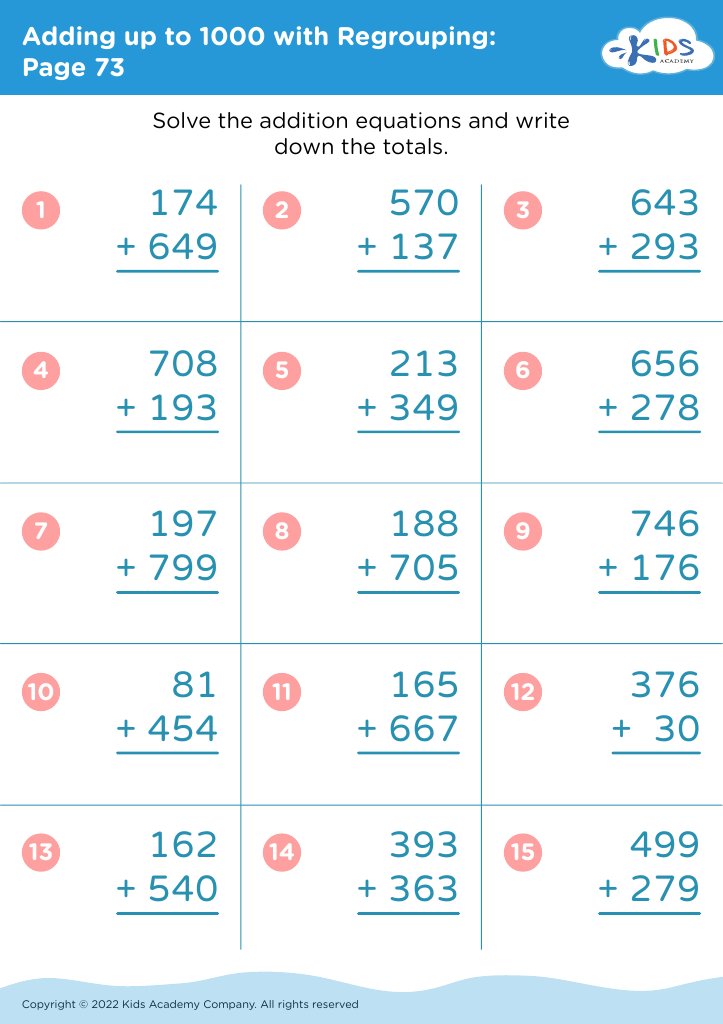
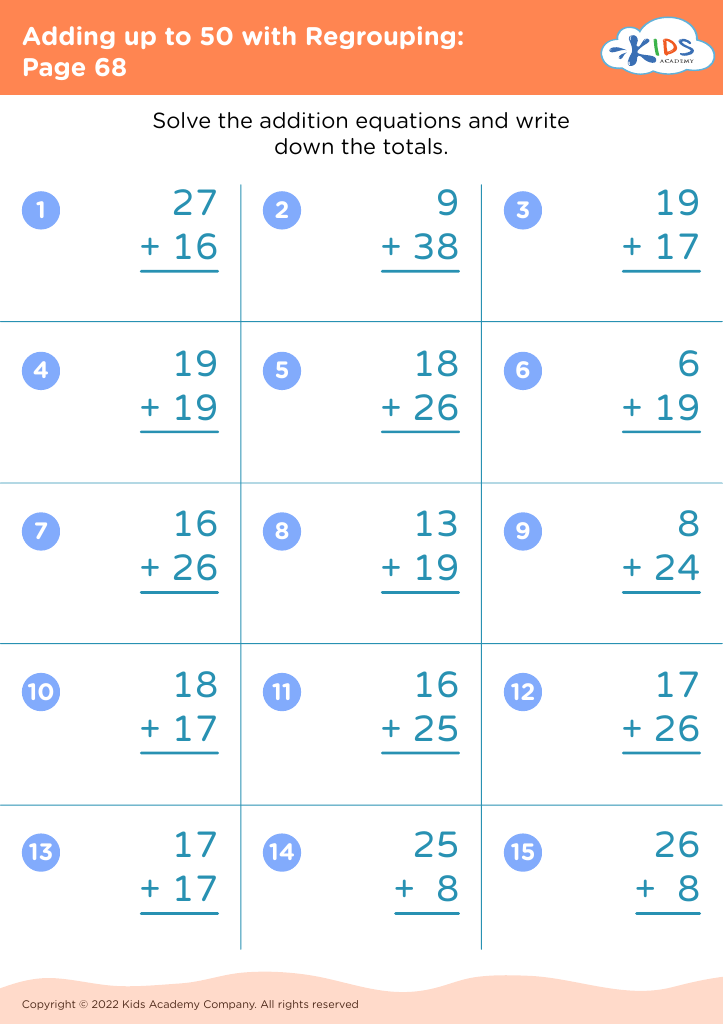
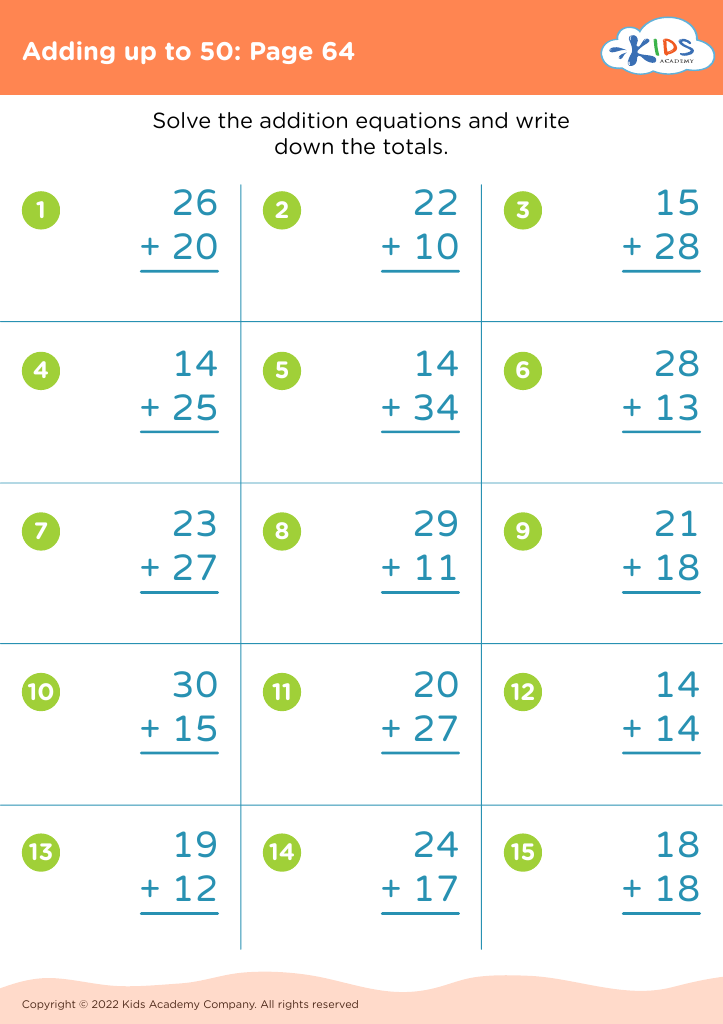
Unlock your child's potential with our Developing Logical Thinking Addition Worksheets for Ages 6-8! Carefully designed by educational experts, these engaging worksheets stimulate cognitive development and enhance logical reasoning through a series of fun addition activities. Kids will tackle age-appropriate math challenges that boost their analytical skills while mastering basic arithmetic. Each worksheet incorporates visual aids and diverse problem-solving tasks to keep young minds active and motivated. Perfect for both classroom and homeschool environments, our resource also supports teachers and parents in making math a delightful discovery process. Nurture a lifelong love for learning and logical thinking today!
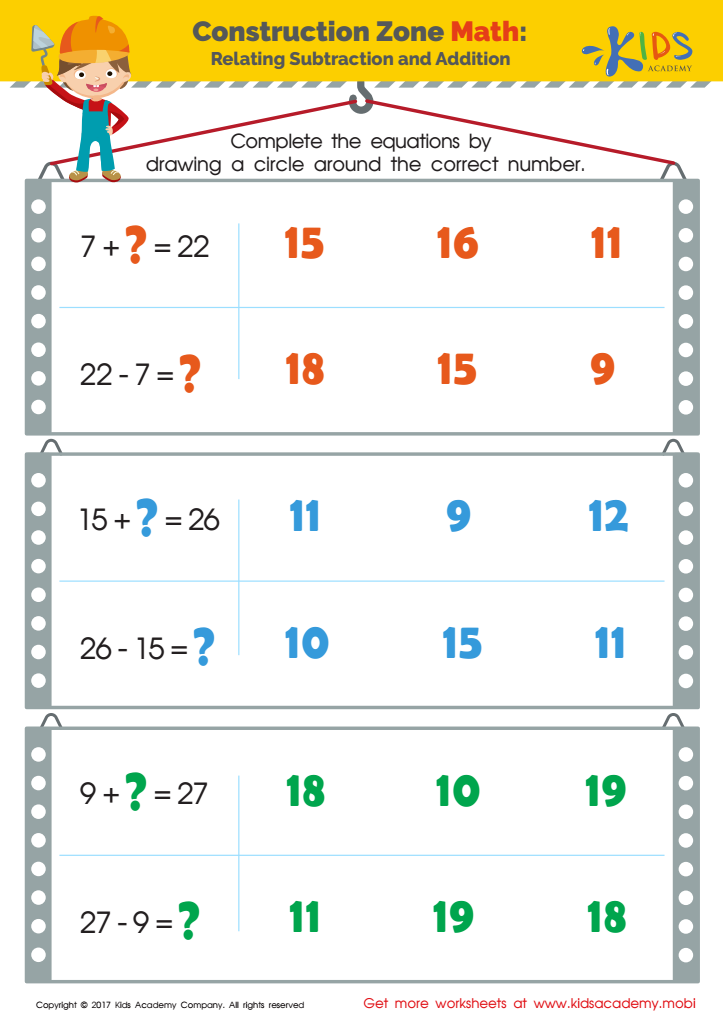
Related Addition and Subtraction Facts Worksheet
 Assign to My Students








Developing logical thinking and math skills, particularly addition, for children aged 6-8 is crucial for several reasons. At this formative stage, children are shaping their cognitive foundations, which will support future learning. Logical thinking encourages them to analyze problems, identify patterns, and develop solutions—skills that extend beyond math to other academic subjects and daily life.
Addition, as one of the fundamental math operations, plays a key role in a child's ability to understand more complex mathematical concepts. Proficiency in addition provides confidence and forms a building block for tackling subsequent topics, such as subtraction, multiplication, and division. Moreover, regular practice of addition enhances mental arithmetic skills, promoting quick thinking and problem-solving capabilities.
Logical thinking and math skills also support critical thinking. When children learn to add numbers, they are not merely memorizing facts but understanding relationships between numbers and quantities. This fosters a growth mindset, highlighting the importance of process and perseverance.
Parents and teachers should prioritize these skills to foster academic success and prepare children for future challenges. Encouraging a strong mathematical foundation, valuable problem-solving abilities, and analytical thinking is essential in nurturing well-rounded, competent learners ready to excel in various aspects of life.








