Enhancing problem-solving abilities Addition Worksheets for Ages 6-8
10 filtered results
-
From - To
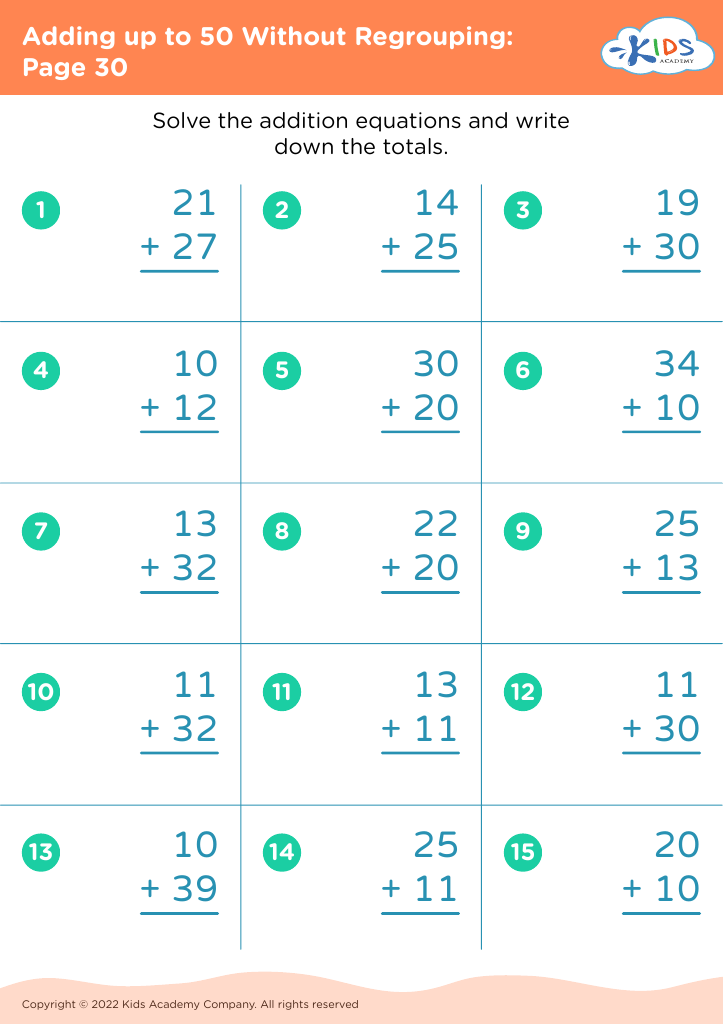
Boost your child's problem-solving skills with our engaging addition worksheets designed for kids ages 6-8. At Kids Academy, these worksheets help young learners practice essential addition techniques while developing critical thinking and cognitive abilities. Each worksheet features fun and interactive problems that encourage children to use logic and enhance their arithmetic skills. From simple sums to challenging word problems, our carefully curated resources aim to make math exciting and accessible for all. Unlock your child’s potential and build a strong mathematical foundation with Kids Academy's addition worksheets today!
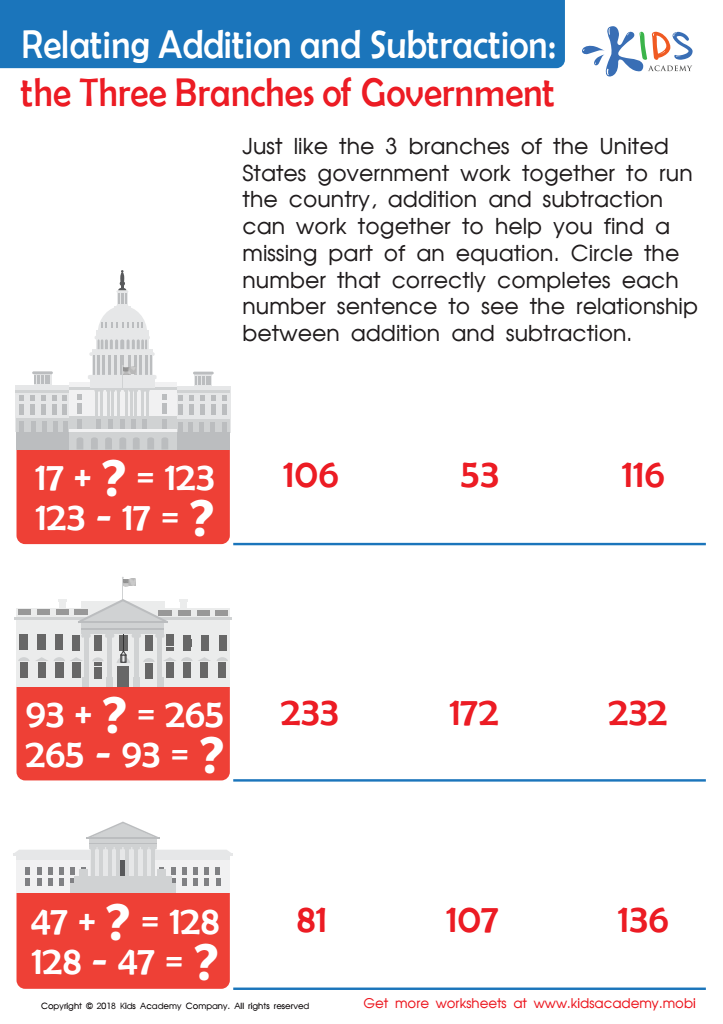
The Three Branches of Government Worksheet
 Assign to My Students
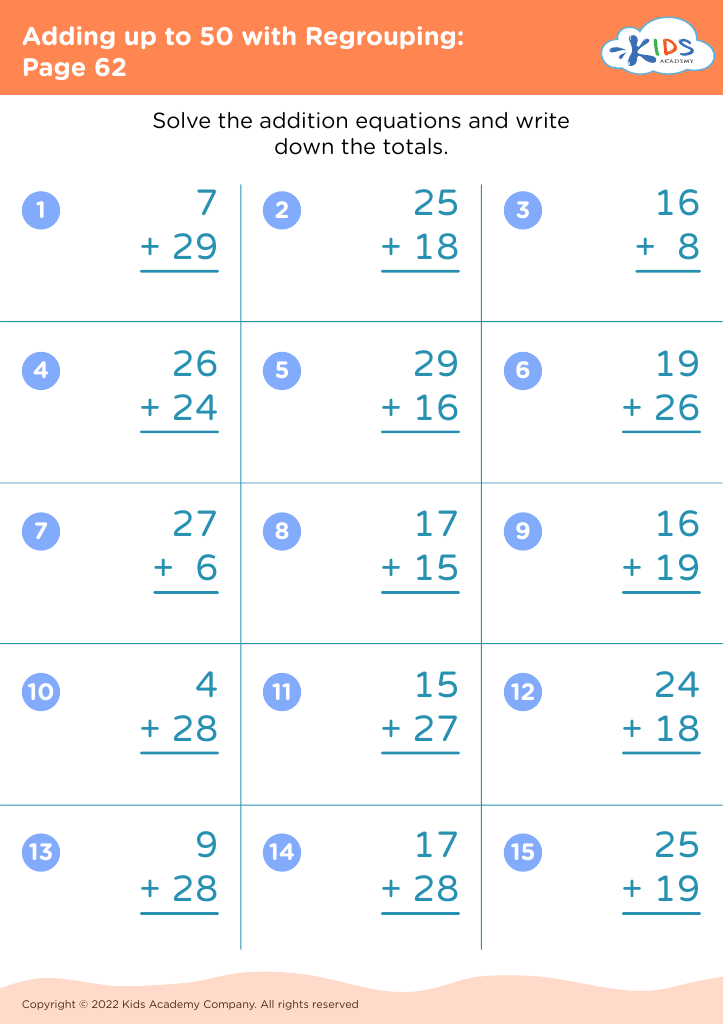
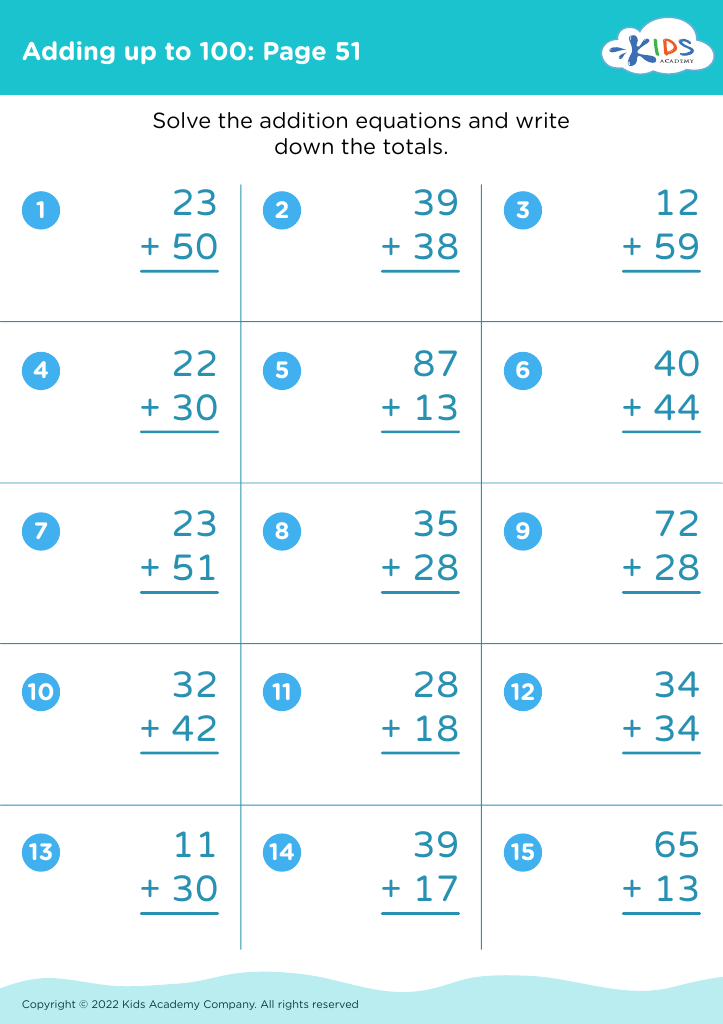
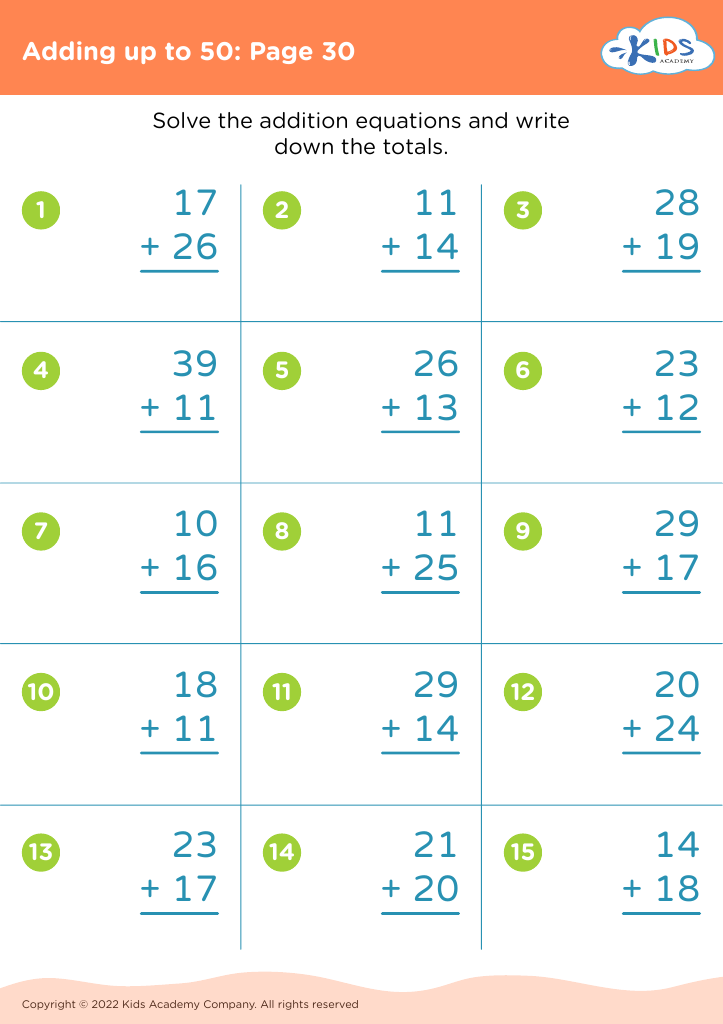
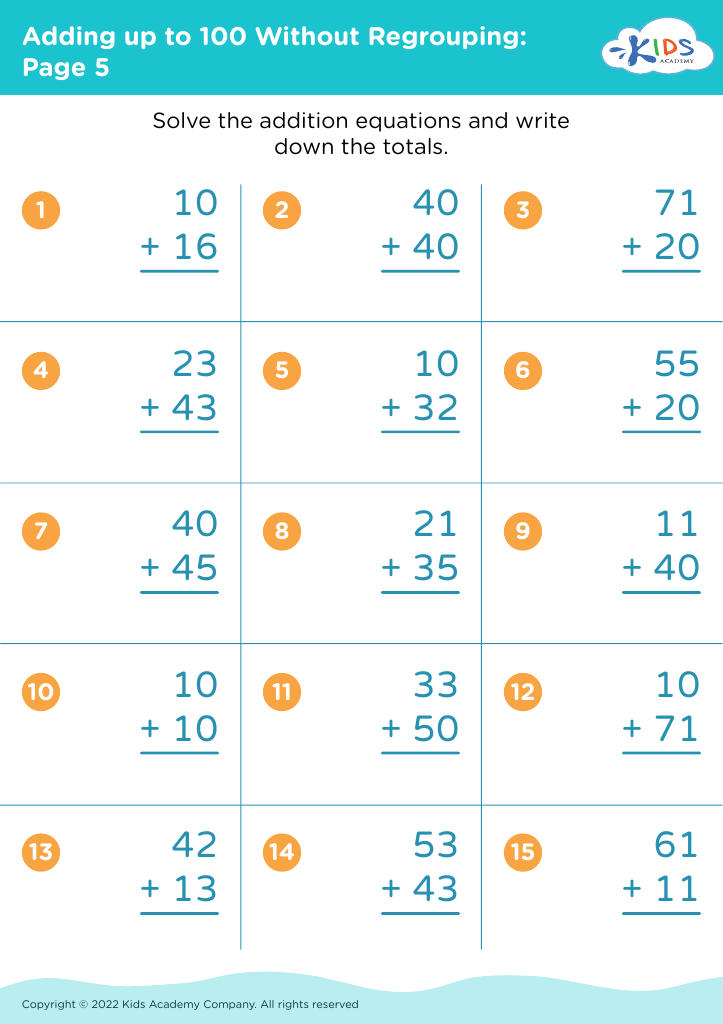
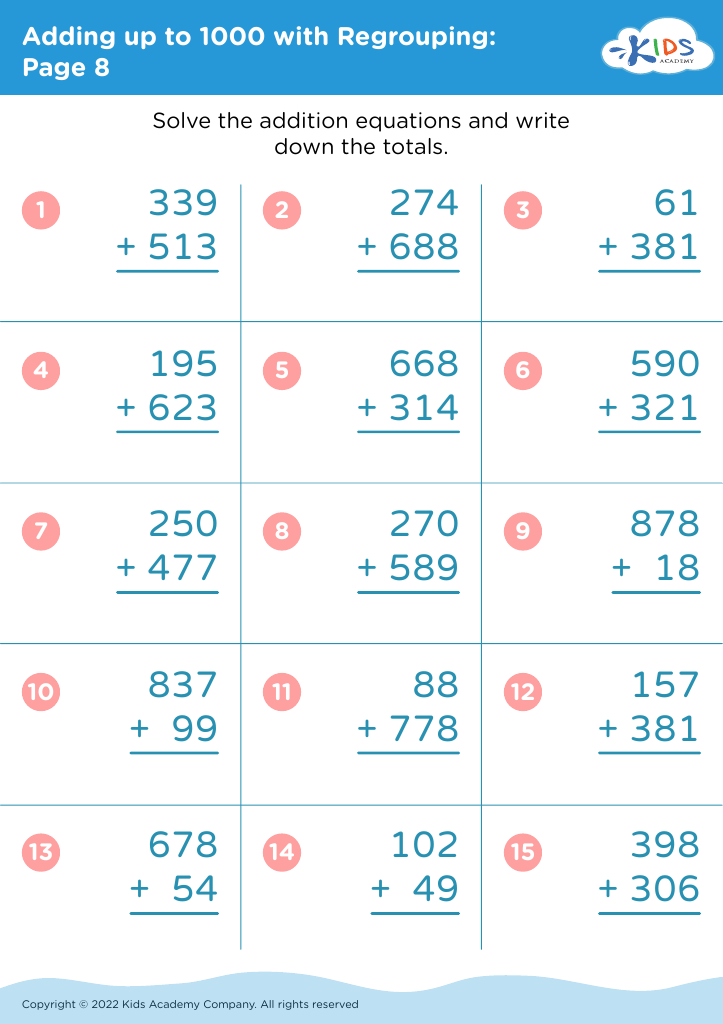
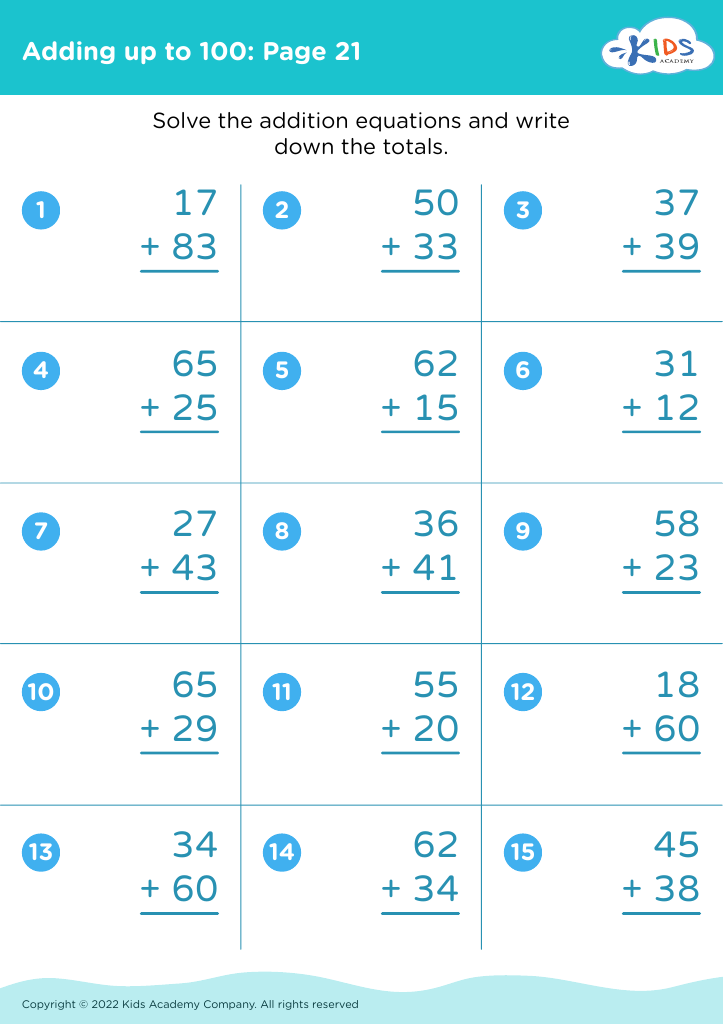
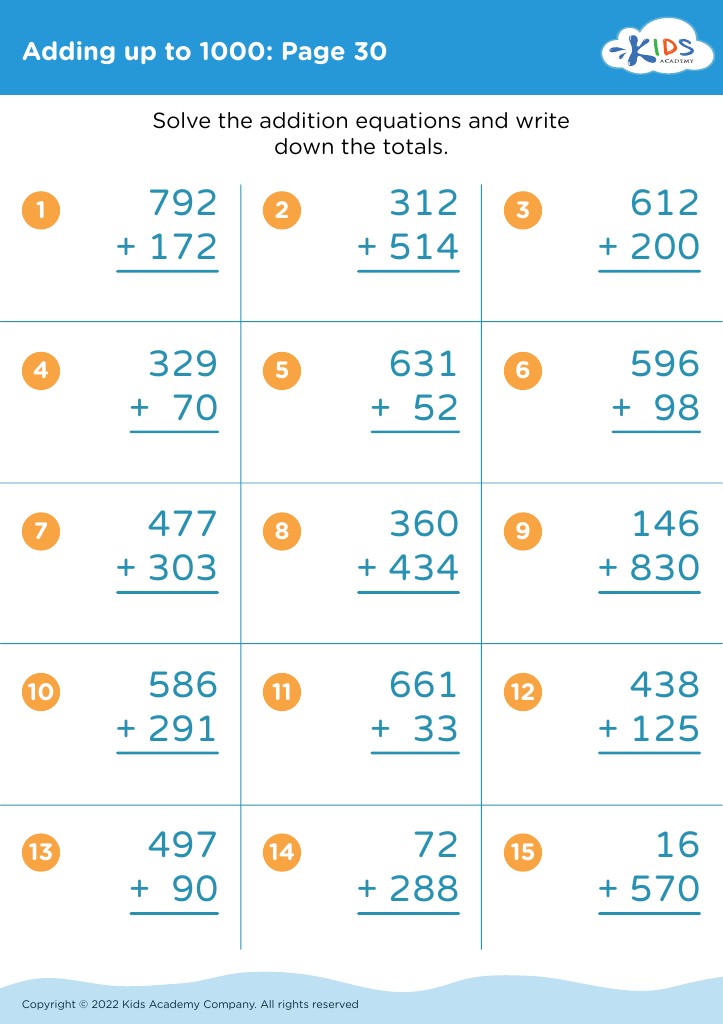
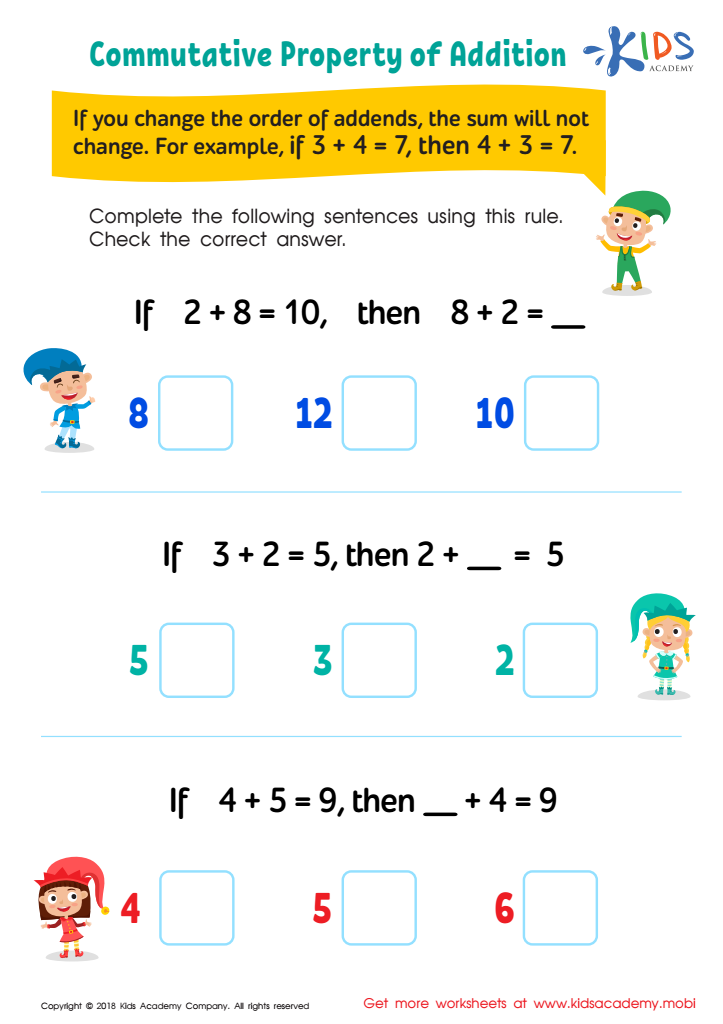
Commutative Property of Addition Worksheet








Enhancing problem-solving abilities in children aged 6-8 is crucial for laying a solid foundation for their cognitive and academic development. At this age, children's brains are exceptionally receptive and adaptable, making it an ideal window for acquiring critical thinking and problem-solving skills that will benefit them throughout their lives.
Firstly, problem-solving promotes logical reasoning and analytical thinking, which are essential components of early math and science education. By tackling various problems, children learn to approach situations systematically, enhancing their ability to break down complex tasks into manageable steps. This skill not only boosts their math and science performance but also positively influences other academic areas like reading comprehension, where analytical thinking is vital.
Additionally, problem-solving fosters creativity and independence. When children devise solutions to challenges, they learn to think outside the box and develop innovative ways to address problems. This cultivates a sense of autonomy and confidence, as they realize their potential to resolve issues independently.
Furthermore, group problem-solving activities encourage collaboration and communication skills. Sharing ideas, debating solutions, and working together with peers teach children how to articulate their thoughts and consider diverse perspectives, fostering social and emotional skills alongside cognitive growth.
In summary, enhancing problem-solving abilities for ages 6-8 supports comprehensive intellectual, social, and emotional development, ultimately setting the stage for lifelong learning and success.








