Enhancing problem-solving skills Addition Worksheets for Ages 6-8
5 filtered results
-
From - To
Boost your child's critical thinking and math prowess with our "Enhancing Problem-Solving Skills: Addition Worksheets for Ages 6-8." Designed by experts, these engaging worksheets focus on developing essential addition skills through fun and interactive exercises tailored to young learners. Our activities promote logical reasoning and strategy planning, turning math challenges into enjoyable learning experiences. Empower your child as they build their confidence and master addition, one step at a time. Help them unlock their full potential with our easy-to-follow, printable resources, the perfect blend of education and entertainment. Prepare them for academic success today!
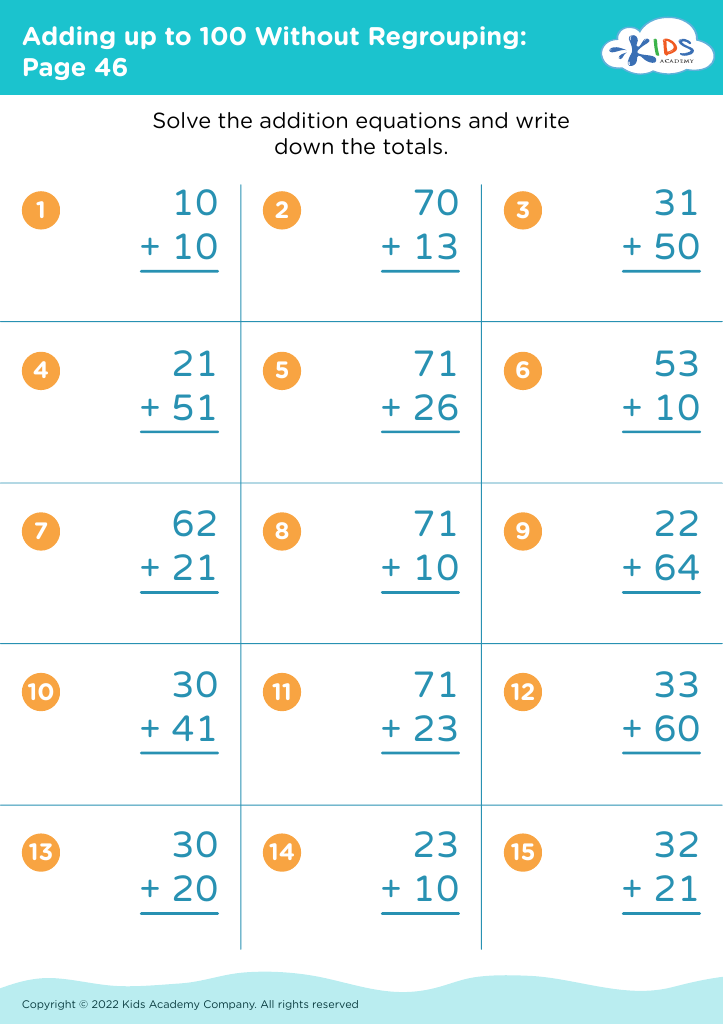
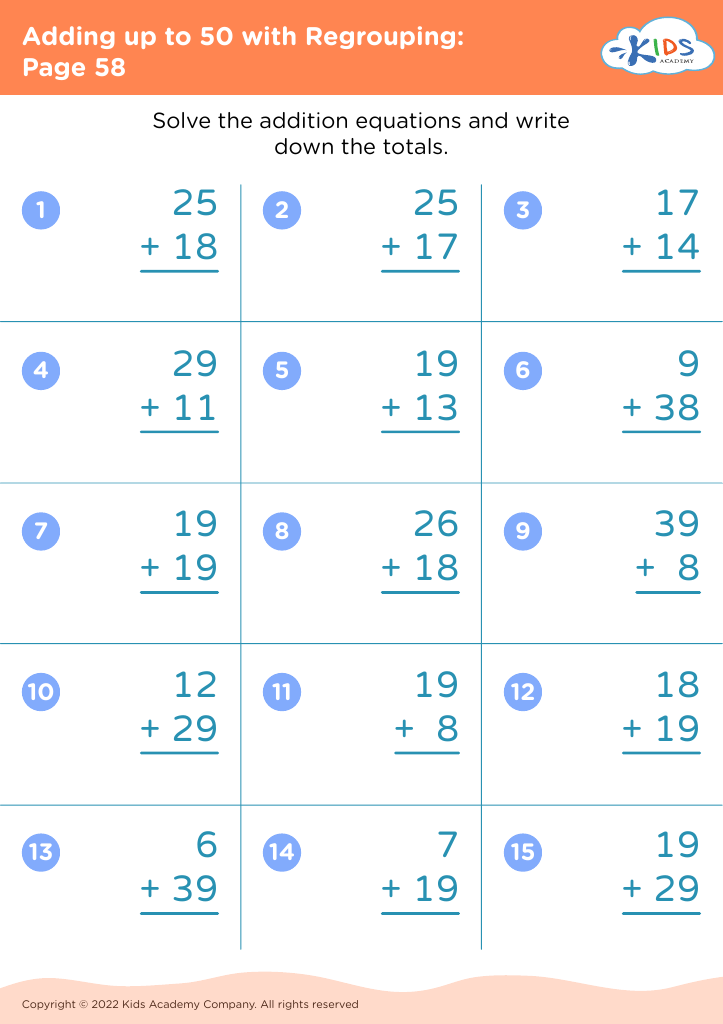
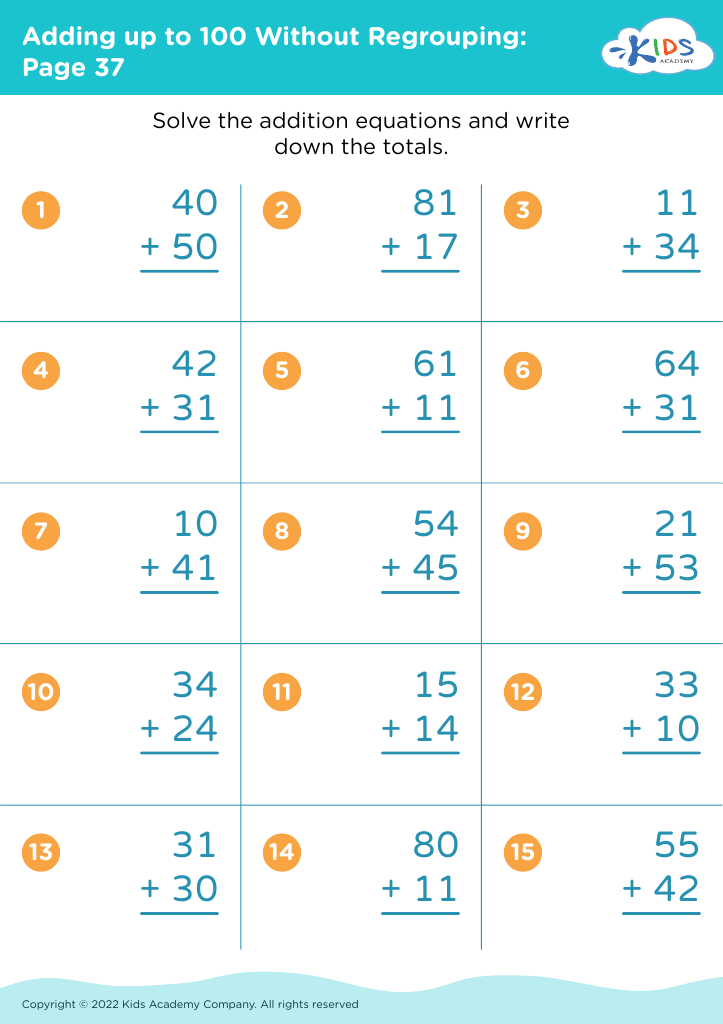
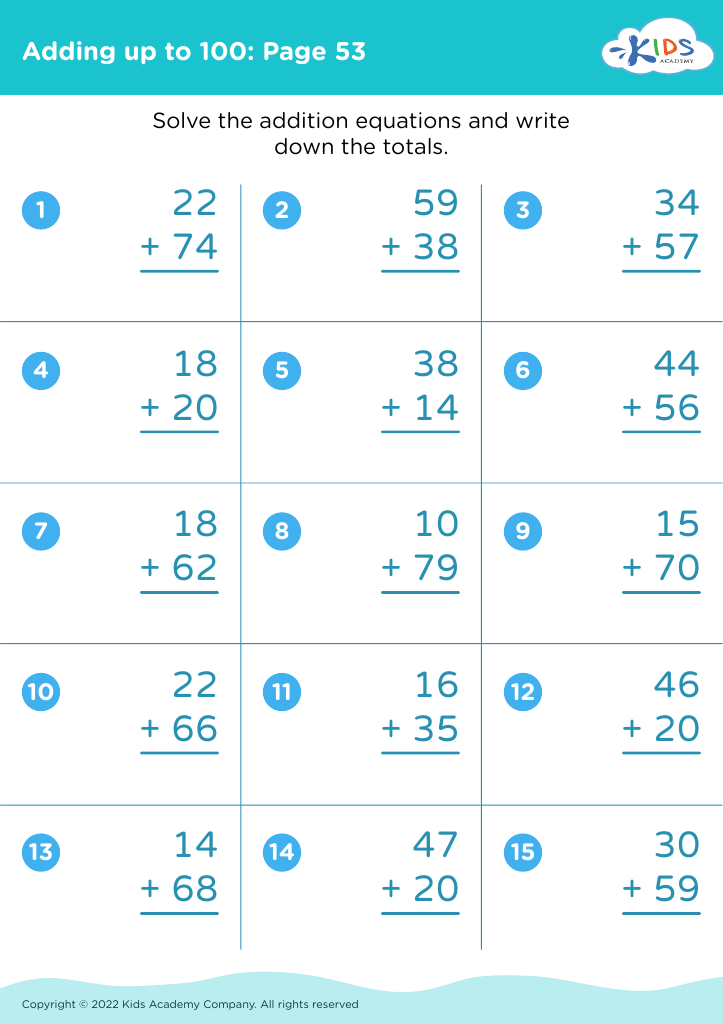
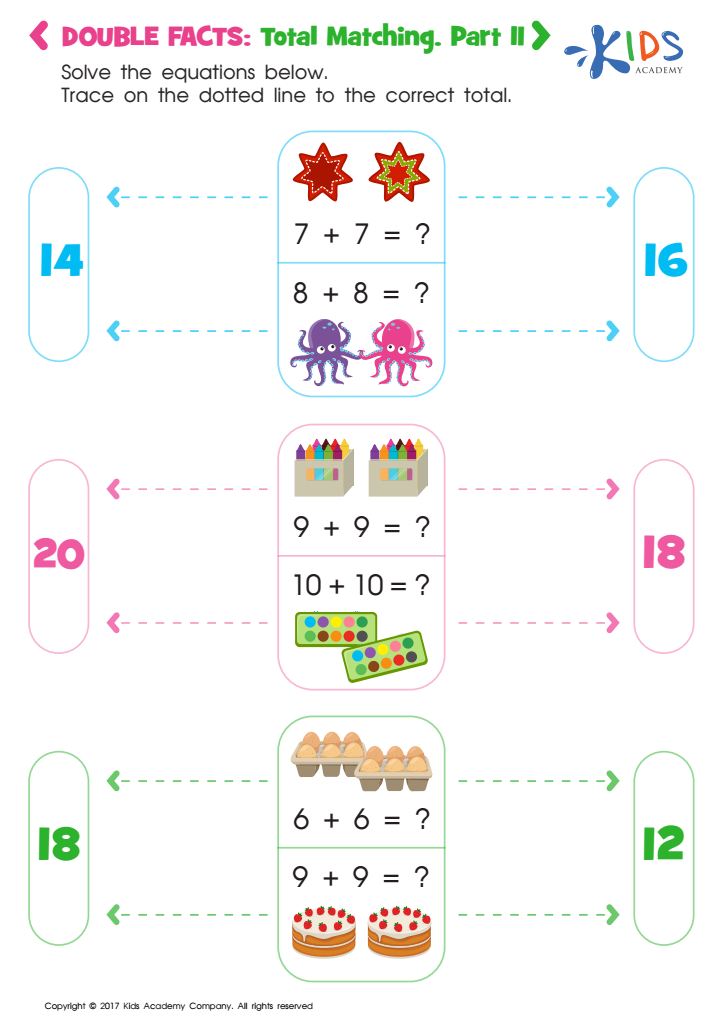
Double Facts: Total Matching 2 Worksheet
 Assign to My Students








Enhancing problem-solving skills, especially through addition, is crucial for children aged 6-8, as it lays the foundation for their future academic success and day-to-day decision-making. At this young and formative age, children are in the critical stage of cognitive development known as the "concrete operational stage," according to Piaget. This period is where they start to grasp logical reasoning and learn how to manage various tasks methodically.
Teaching fundamental mathematical concepts such as addition helps improve their numerical fluency, making them comfortable with more complex mathematical challenges as they progress in their education. Moreover, problem-solving skills are not limited to academics; they enhance critical thinking, decision-making, and even social skills, as children learn to analyze situations, seek solutions, and cooperate to find the best answer.
For teachers, integrating addition-based problem-solving activities can provide insight into each child's thought processes, enabling more tailored instructional methods. For parents, supporting their child's learning at home strengthens the parent-child bond and allows them to exercise patience and encouragement, reinforcing a positive attitude towards learning.
Ultimately, instilling strong problem-solving abilities through addition engages children's curiosity and fosters a lifelong love of learning, equipping them with essential tools to navigate life's complexities effectively and confidently.








