Improve number recognition Addition Worksheets for Ages 6-8
15 filtered results
-
From - To
Unlock the power of numbers with our "Improve Number Recognition Addition Worksheets" designed specifically for children aged 6-8. These engaging and educational worksheets are perfect for building strong numerical foundations, enhancing number sense, and mastering addition skills. Through fun, interactive exercises, your child will confidently identify and add numbers, boosting their math proficiency. Ideal for classroom and at-home learning, our expertly crafted worksheets support kids in developing crucial math skills while enjoying the learning process. Hurry and give your child the tools they need to succeed in math with Kids Academy today!
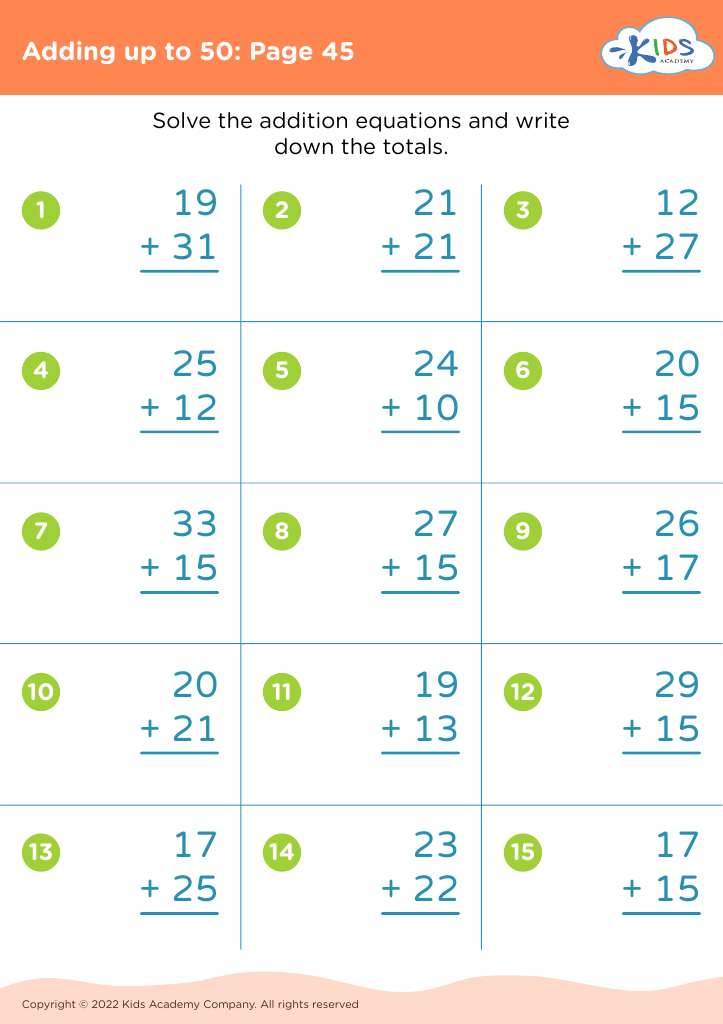
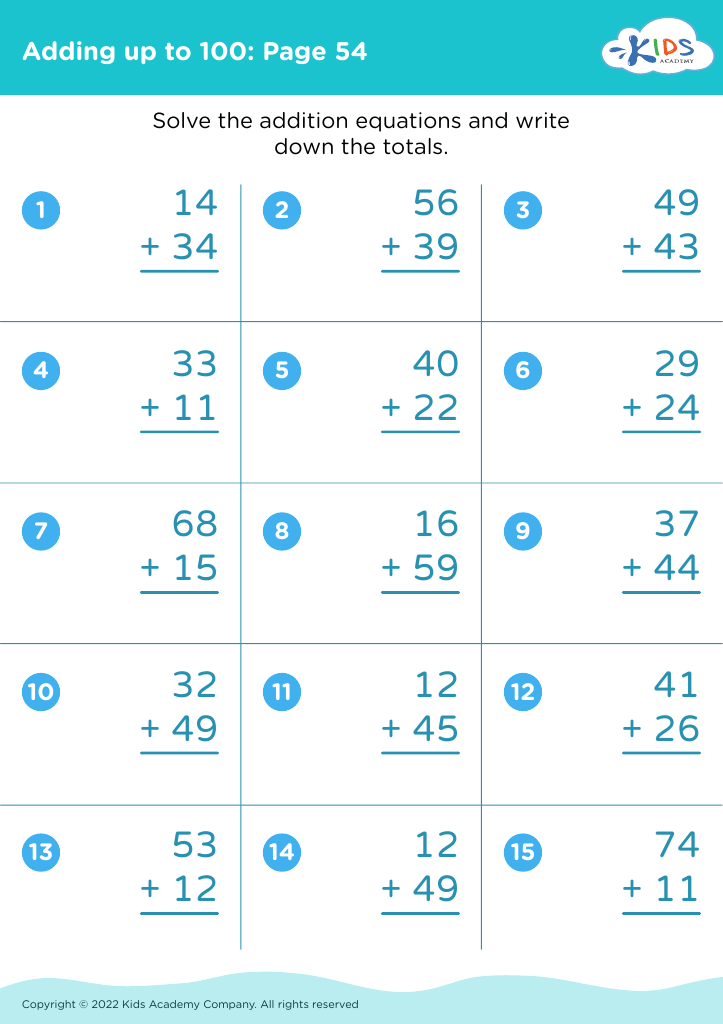
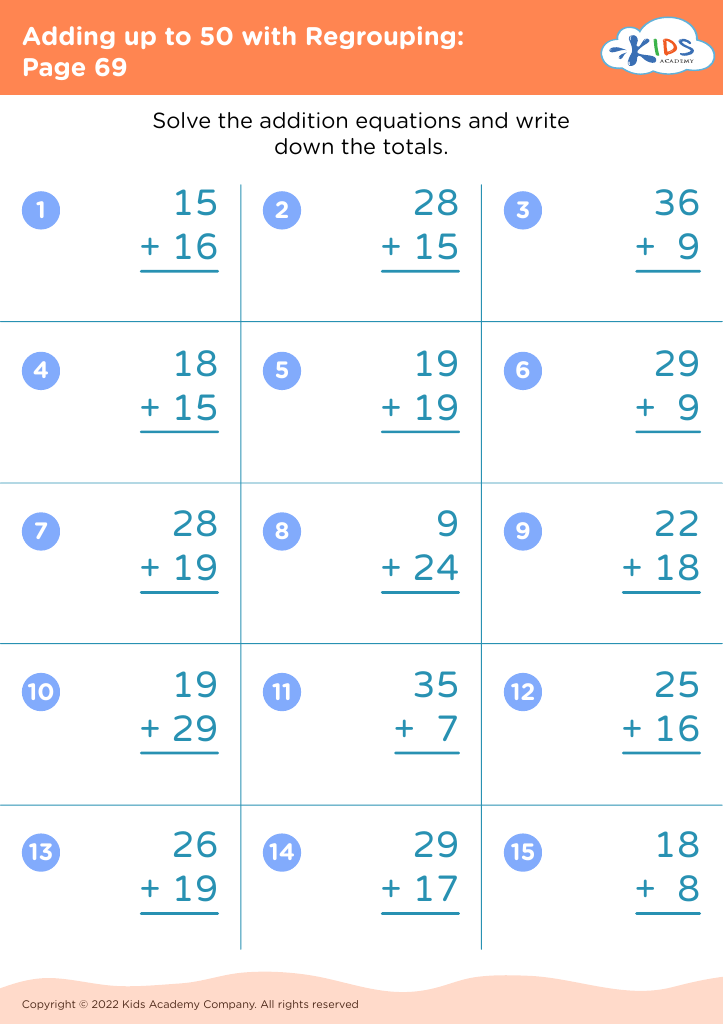
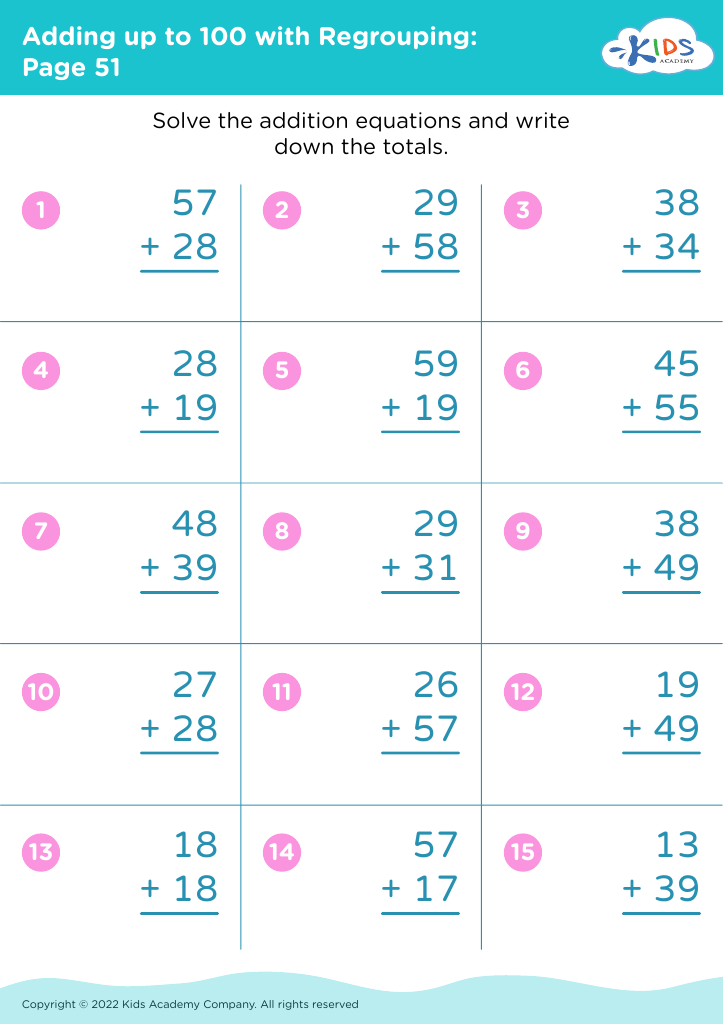
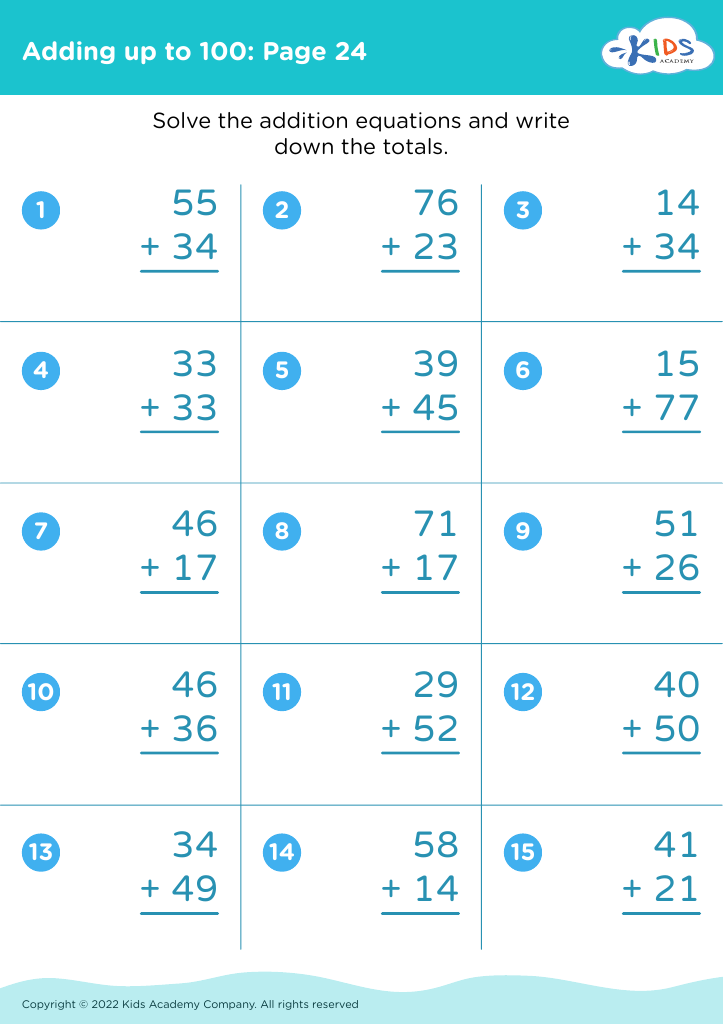
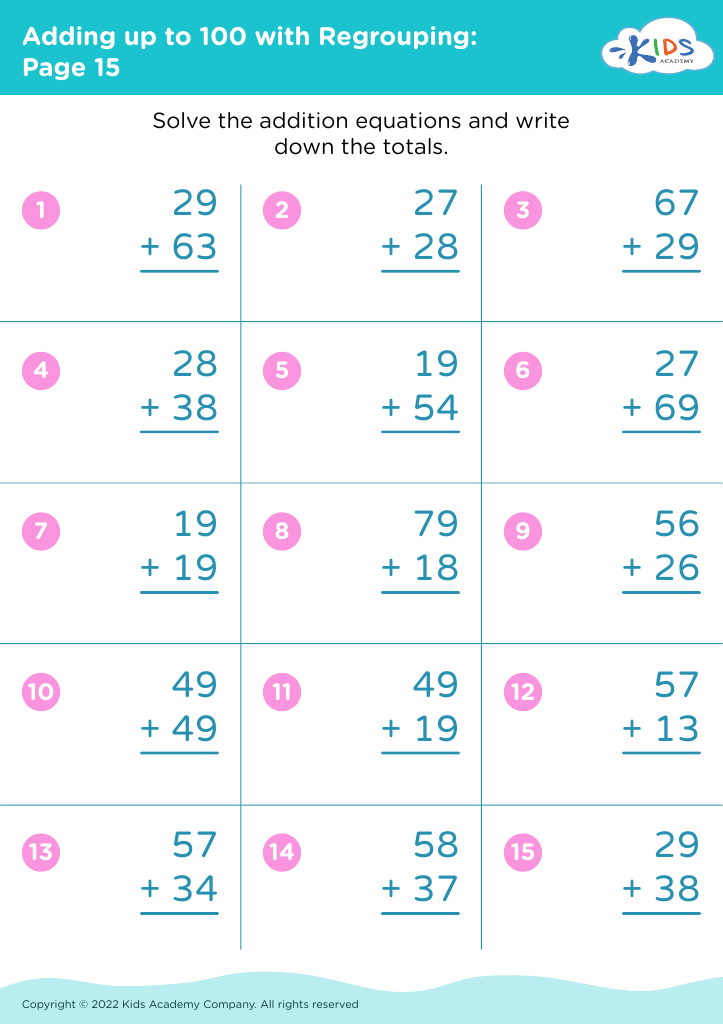
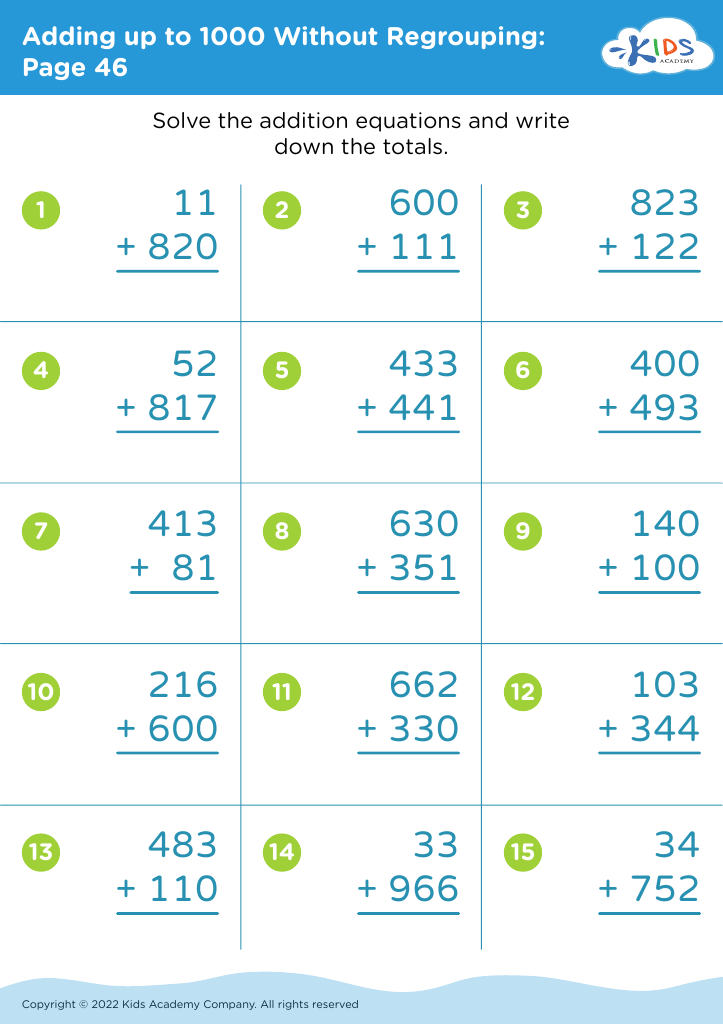
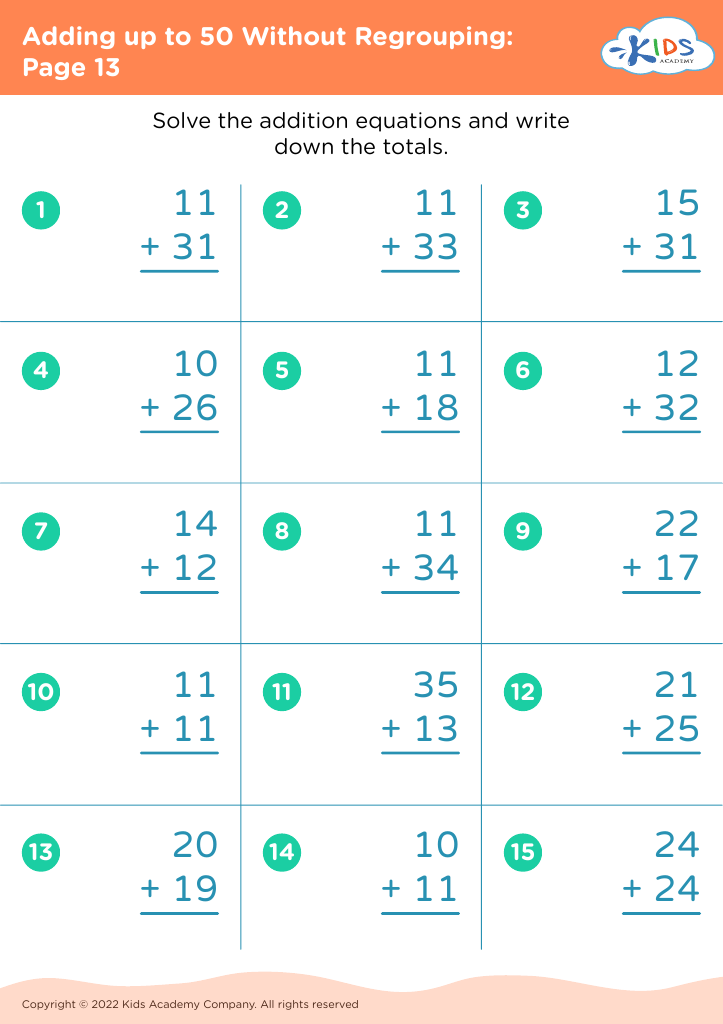
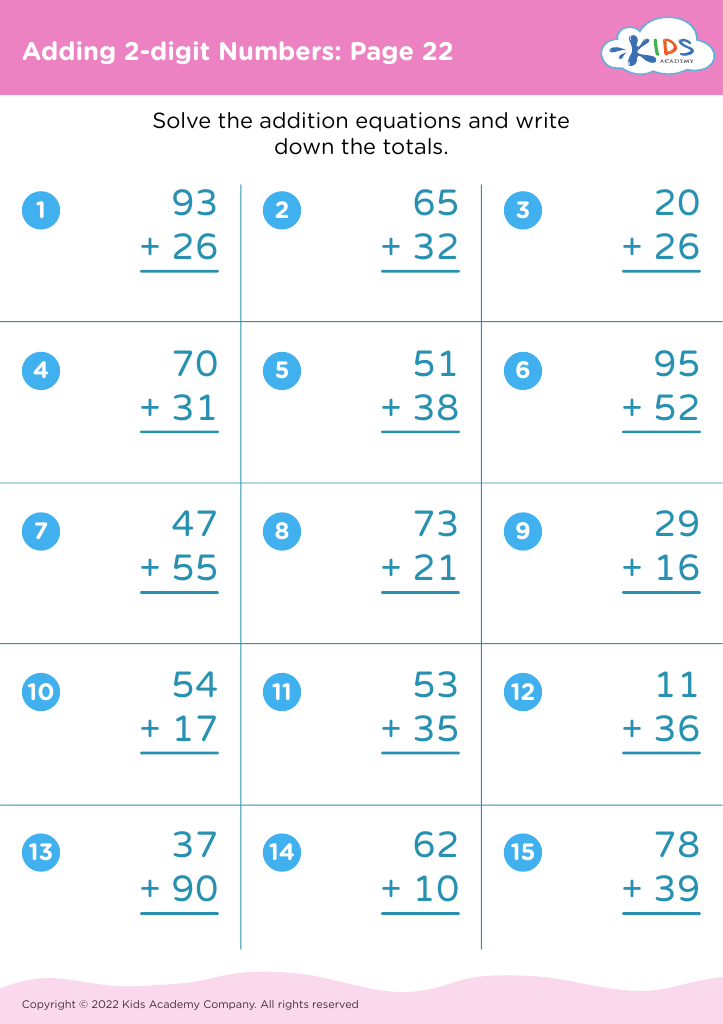
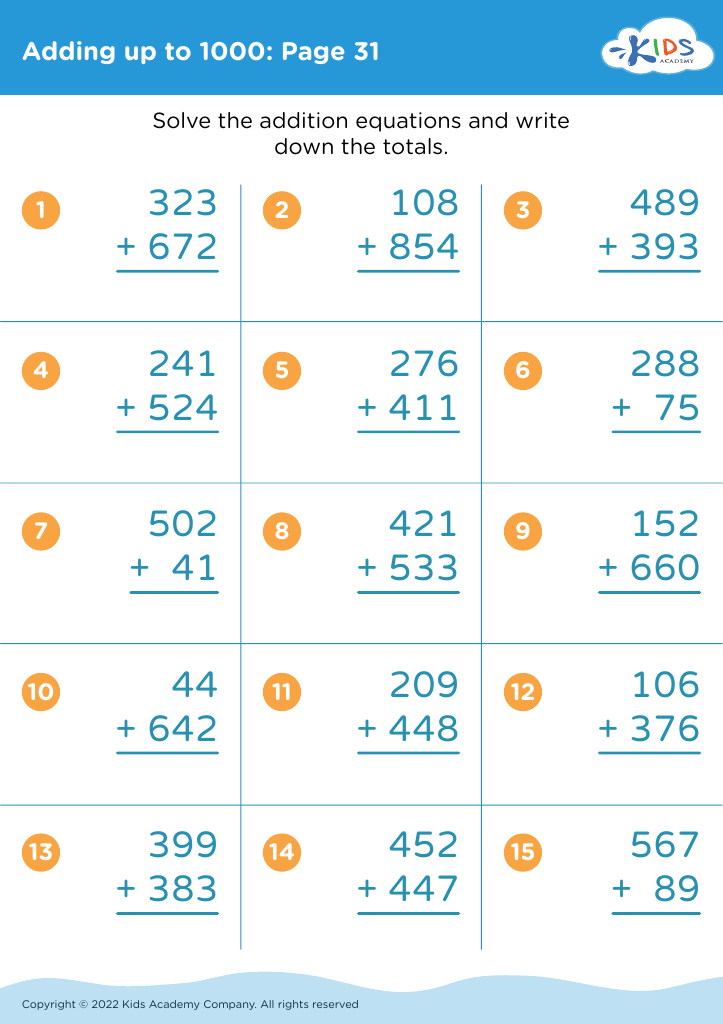
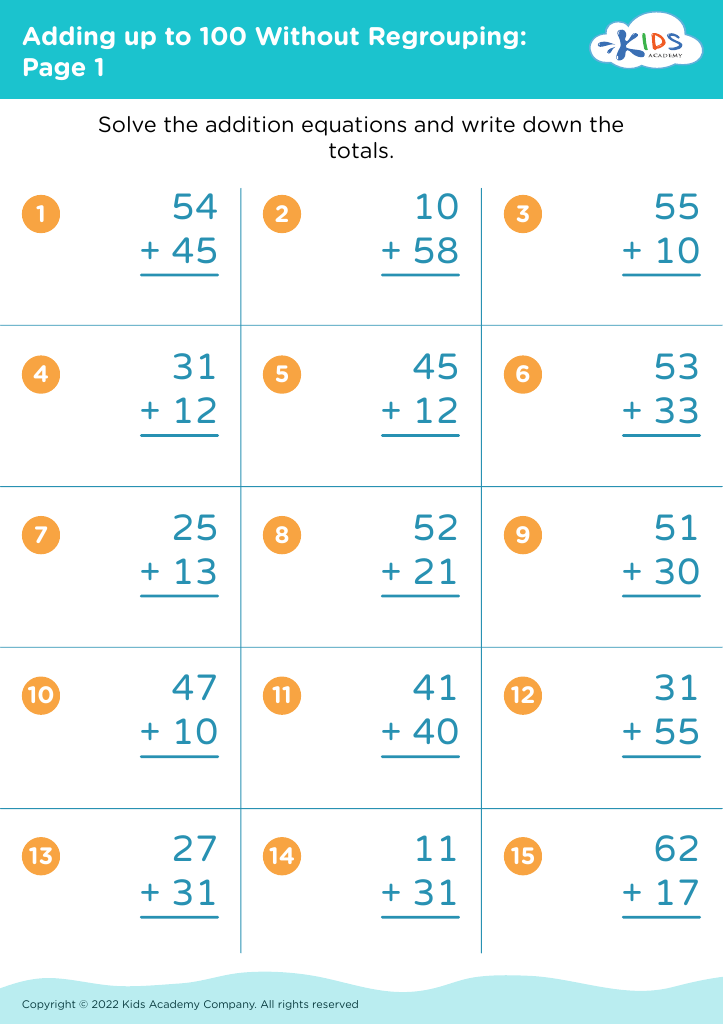
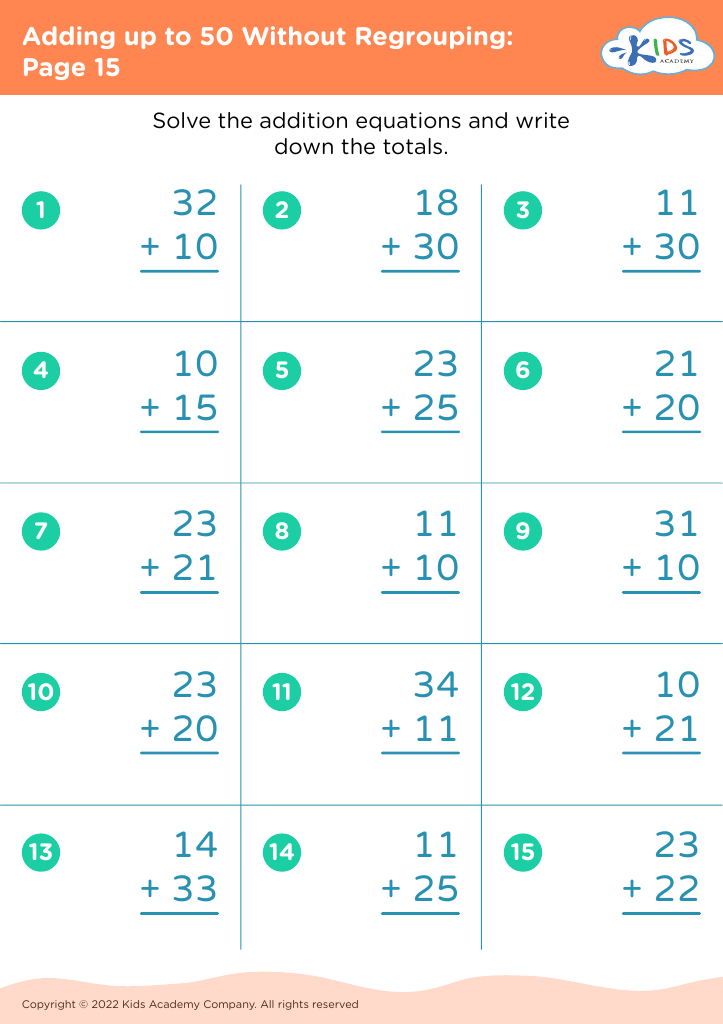
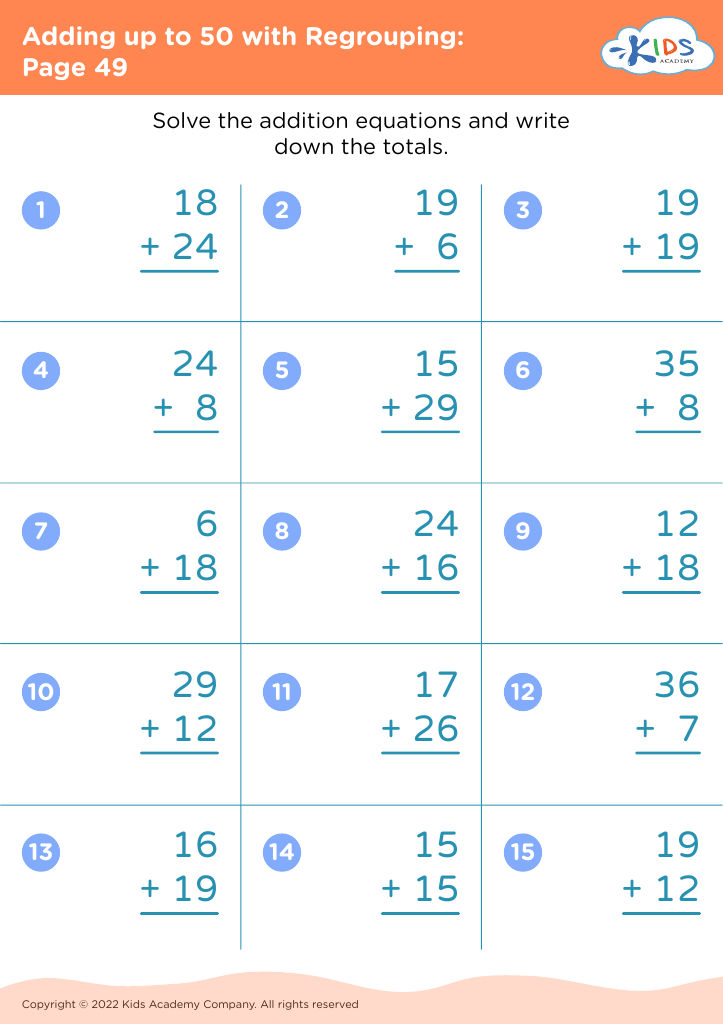
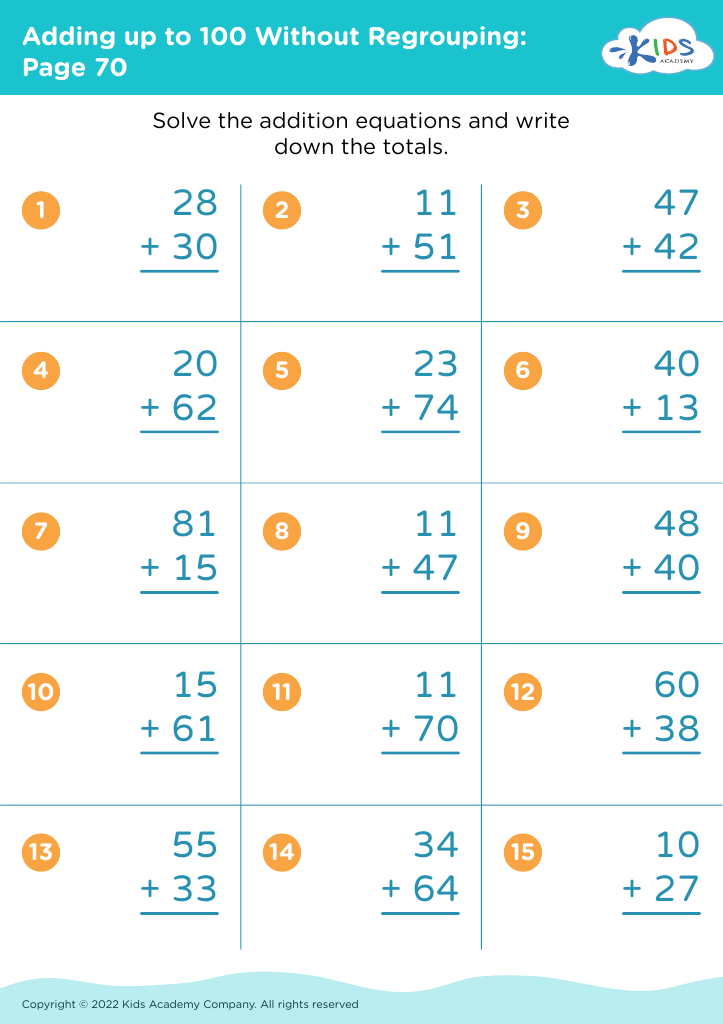
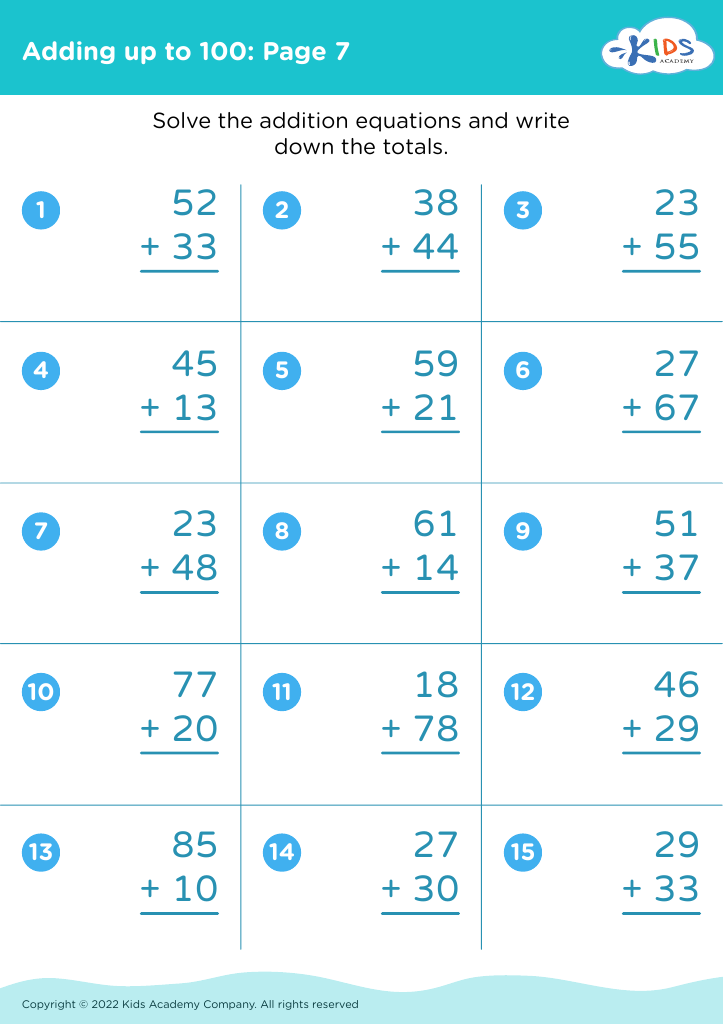








Number recognition and addition skills are foundational elements for a child's mathematical development, particularly between the ages of 6 and 8. This stage is crucial as children transition from simple number sense to more complex arithmetic operations.
For parents and teachers, focusing on improving number recognition ensures that children can accurately identify and understand numbers, laying the groundwork for all future mathematical learning. Recognizing numbers solidifies the ability to correlate numeric symbols with their respective quantities, an essential step for problem-solving and logical reasoning.
Addition, a fundamental arithmetic skill, demonstrates how numbers interact and form the basis for subsequent learning in mathematics. By mastering addition, children enhance their ability to think critically and develop strategies that can be applied to more complex math problems later.
Moreover, early success in number recognition and addition fosters confidence in young learners. This positive reinforcement encourages a sustained interest in math, reducing the likelihood of math anxiety as they progress academically.
Furthermore, mathematical proficiency in early grades is linked to better academic performance in various subjects. Thus, by prioritizing these skills, parents and teachers are not only building a strong mathematical foundation but are also promoting overall cognitive development and academic achievement.








