Learn addition Addition Worksheets for Ages 6-8
3 filtered results
-
From - To
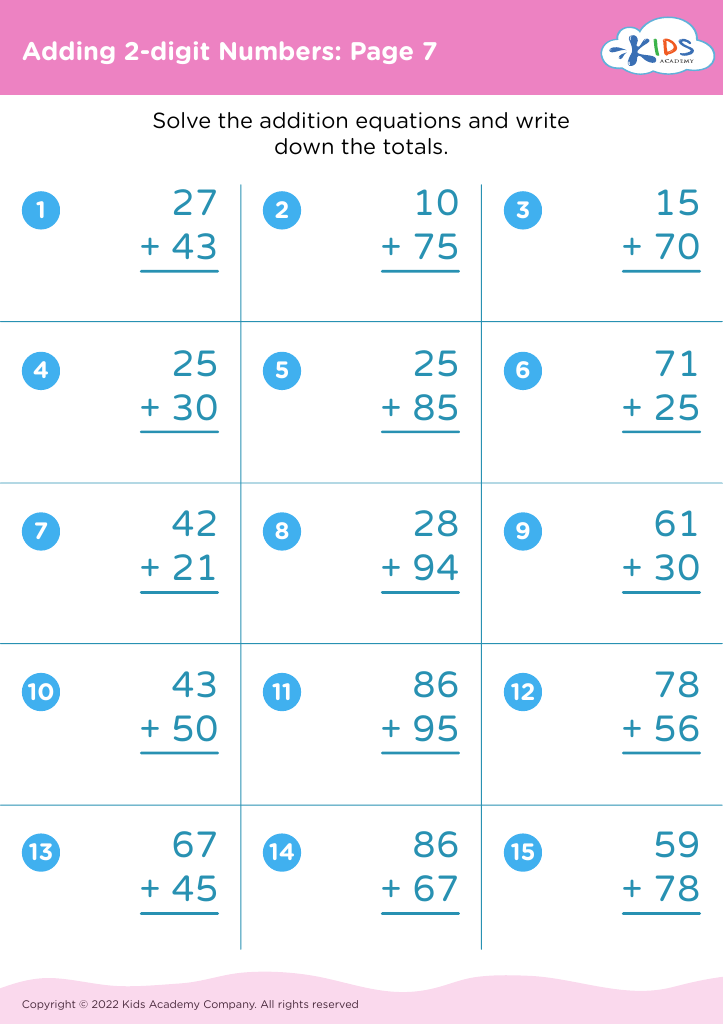
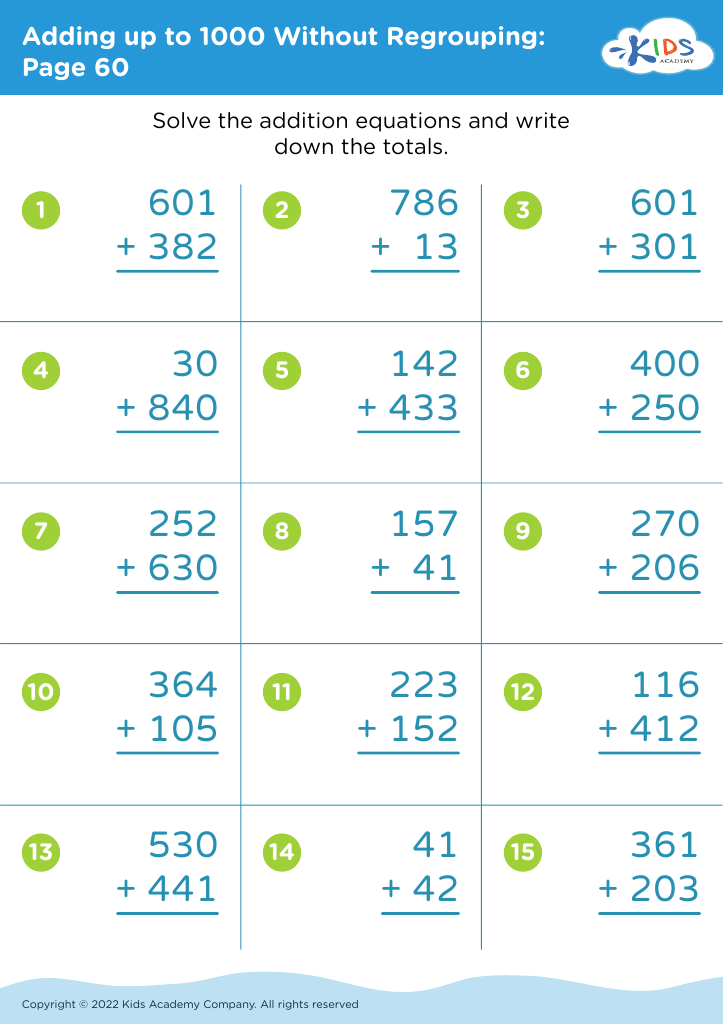
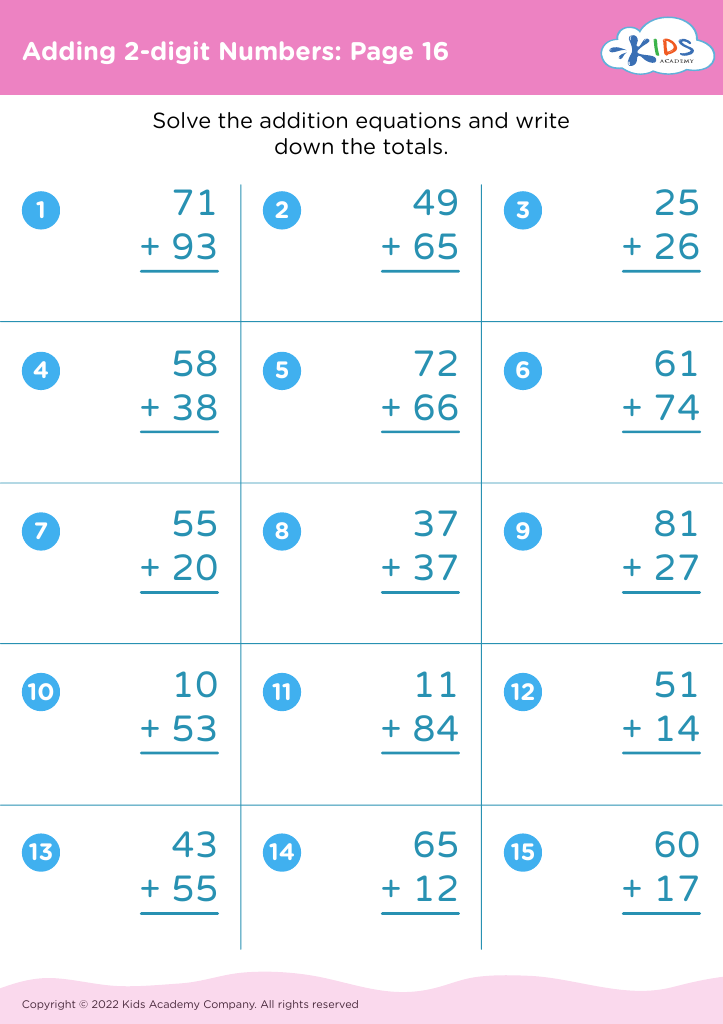
Discover engaging and fun addition worksheets specifically designed for children ages 6-8! Our comprehensive resources help young learners master basic addition skills through interactive exercises and colorful visuals. These worksheets introduce various concepts, including single and double-digit addition, making math enjoyable and accessible. Ideal for both classroom and home use, each printable activity encourages practice and reinforces essential skills while keeping children motivated. Watch them grow in confidence as they tackle addition challenges independently! Dive into our collection today and support your child's mathematical journey with these effective, age-appropriate addition worksheets that blend education and entertainment seamlessly.







.jpg)
Learning addition for children aged 6-8 is crucial for their cognitive development and overall academic success. At this age, children are beginning to grasp foundational mathematical concepts that will serve as the building blocks for more complex skills. Addition not only introduces them to math but also fosters critical thinking and problem-solving abilities.
Parents and teachers should care about teaching addition because it supports the development of essential life skills. Mastering addition enhances a child's confidence in handling numbers and builds a positive attitude toward learning. As children learn to solve problems using addition, they also improve their attention span and focus.
Furthermore, a strong understanding of addition is fundamental for success in future math-related topics, such as subtraction, multiplication, and even basic algebra. It prepares them for real-life situations involving money, time management, and resource allocation.
By investing time and effort into teaching addition during these formative years, parents and teachers lay a robust foundation for children's academic journeys. Engagement with math at an early age can spark a lifelong interest in the subject, empowering the next generation of thinkers, innovators, and leaders.








