Letter recognition Addition Worksheets for Ages 6-8
3 filtered results
-
From - To
Discover our engaging Letter Recognition Addition Worksheets, specifically designed for children aged 6-8! These worksheets seamlessly integrate letter recognition with addition skills, making learning fun and interactive. Each activity encourages kids to identify letters while solving addition problems, reinforcing their literacy and math abilities concurrently. With vibrant illustrations and a variety of exercises, young learners will enjoy practicing basic addition while boosting their alphabet knowledge. Perfect for at-home learning or classroom use, our worksheets cater to different skill levels to ensure every child thrives. Get started today and watch your child's confidence grow in both reading and math!
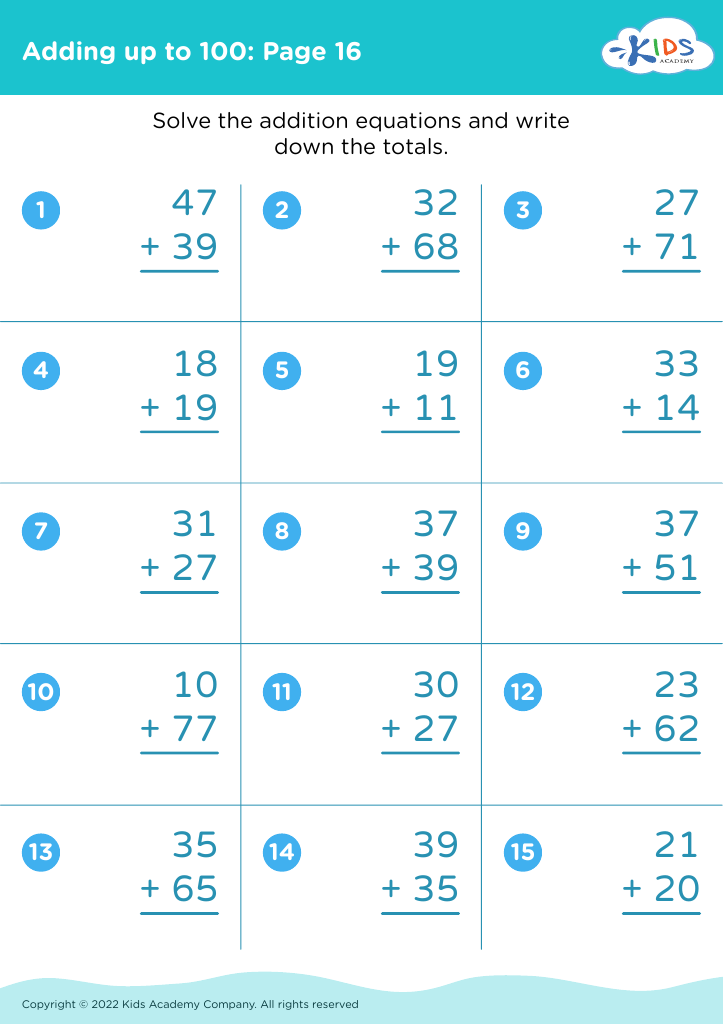
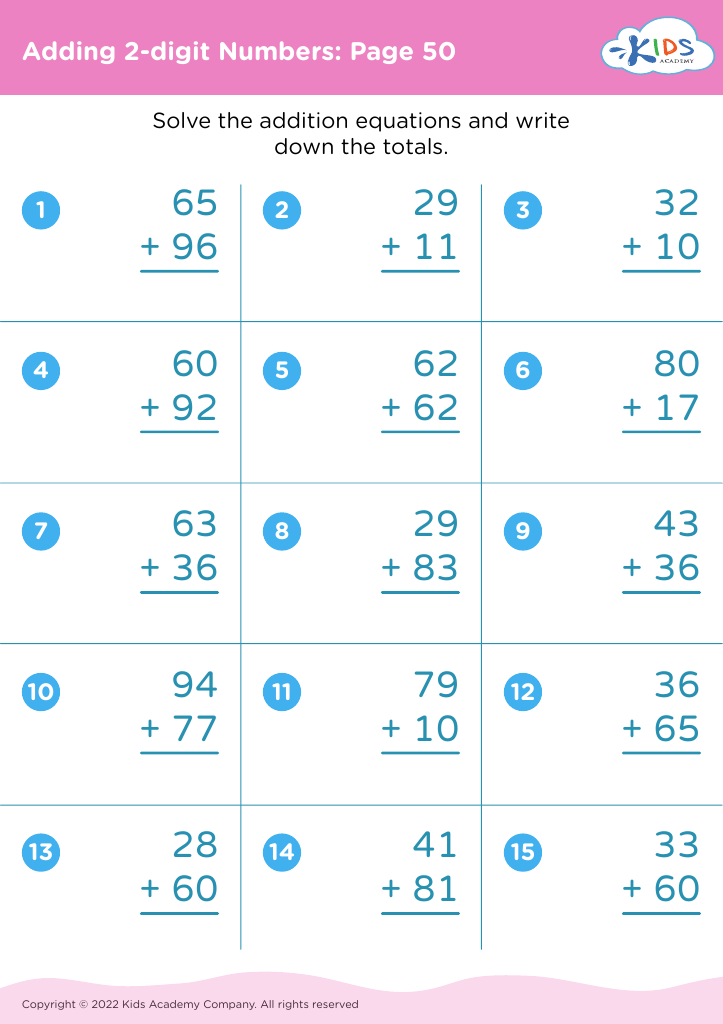
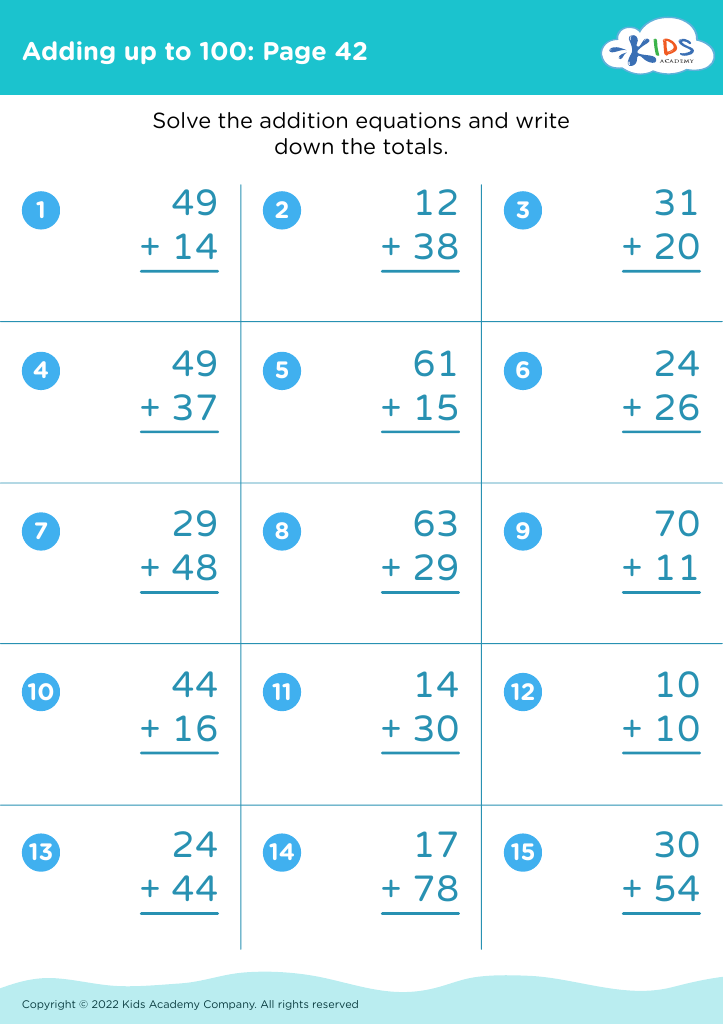








Letter recognition and addition are foundational skills for children ages 6-8 that lay the groundwork for future learning. First, mastering letter recognition helps children develop reading and writing abilities. It equips them to decode words, which is crucial for literacy development. In our increasingly text-rich world, the ability to recognize letters enhances communication skills and encourages a love for reading.
Similarly, understanding basic addition is vital for mathematical literacy. It fosters critical thinking and problem-solving abilities, which are essential for everyday life and future academic success. Introducing addition early helps children grasp concepts such as quantity, patterns, and relationships. These skills are not only applicable in math but also assist in other subjects, including science and economics.
Moreover, emphasizing these skills nurtures a child's confidence and curiosity. When children can read and solve math problems, they are more likely to engage in learning activities, participate in discussions, and express themselves creatively. Parents and teachers play a crucial role in providing supportive environments for practicing these abilities. By focusing on letter recognition and addition, educators and families help children build the cognitive tools needed for success in school and beyond. Cultivating these skills enhances academic performance and instills a lifelong love for learning.








