Number identification Addition Worksheets for Ages 6-8
4 filtered results
-
From - To
Discover exciting new Number Identification Addition Worksheets designed for kids aged 6-8 at Kids Academy! These engaging, printable worksheets blend fun and learning, helping children effortlessly master number recognition and addition skills. Each worksheet is created with vibrant visuals and interactive activities to keep young minds entertained while reinforcing essential math concepts. Ideal for both classroom and home use, our carefully crafted materials support your child's mathematical journey, building a strong foundation for future success. Let your child's confidence and abilities grow with our trusted, educational resources. Visit Kids Academy today!
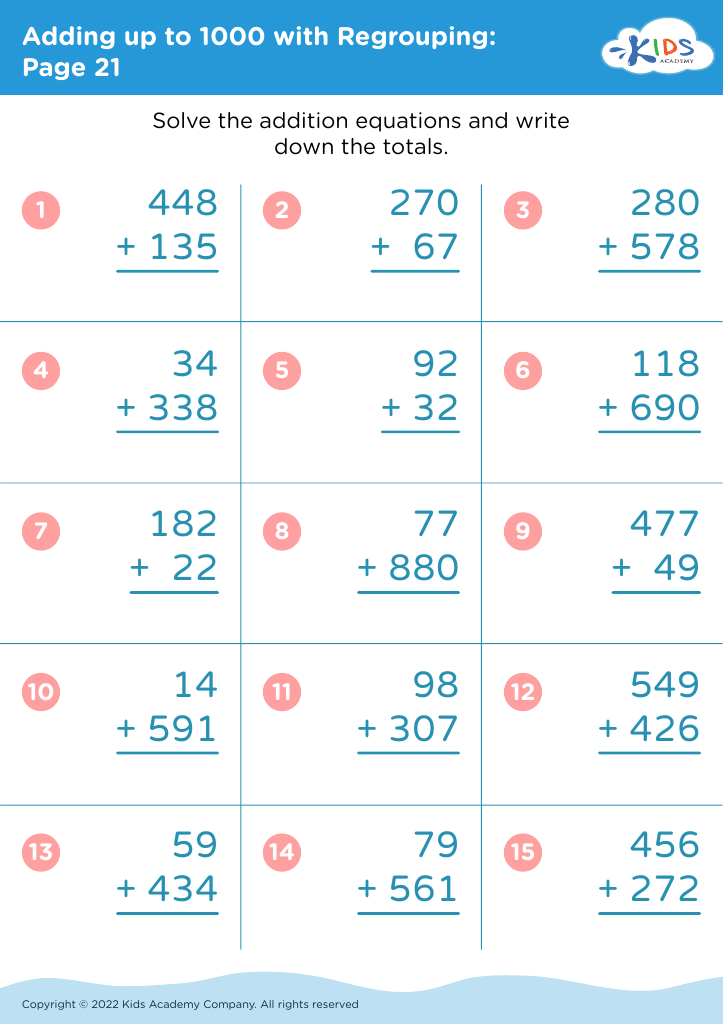
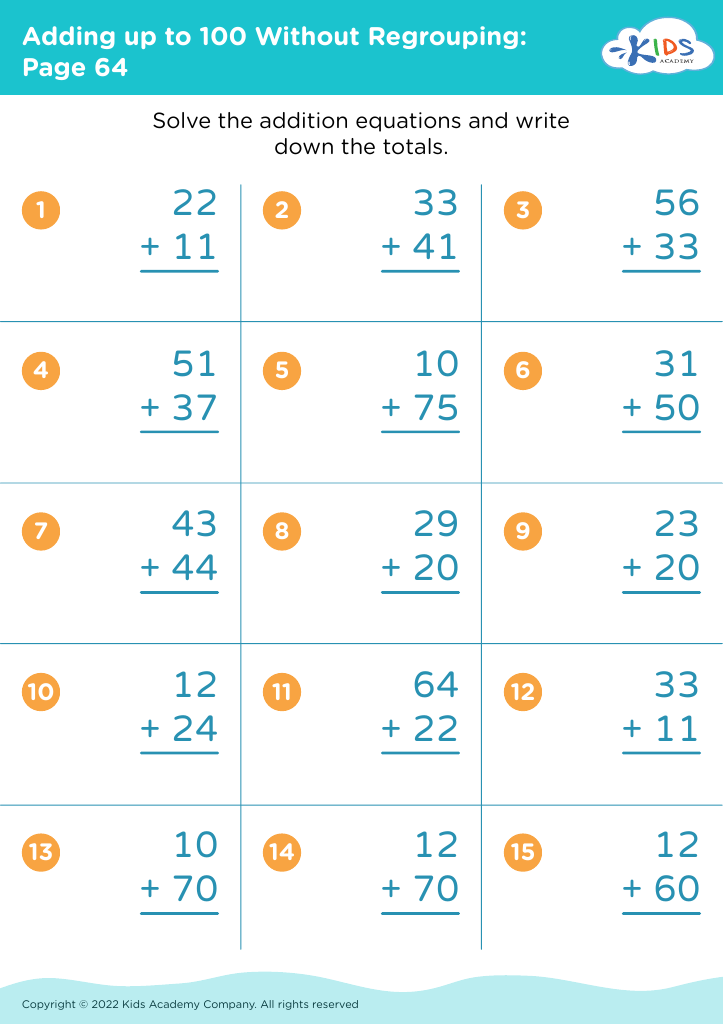
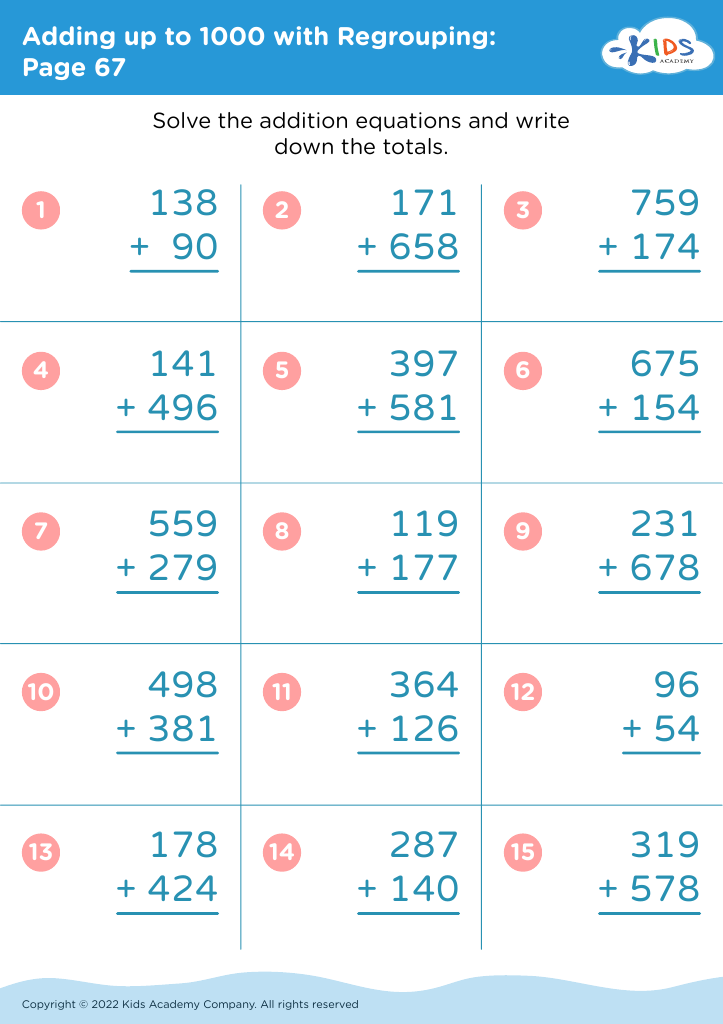
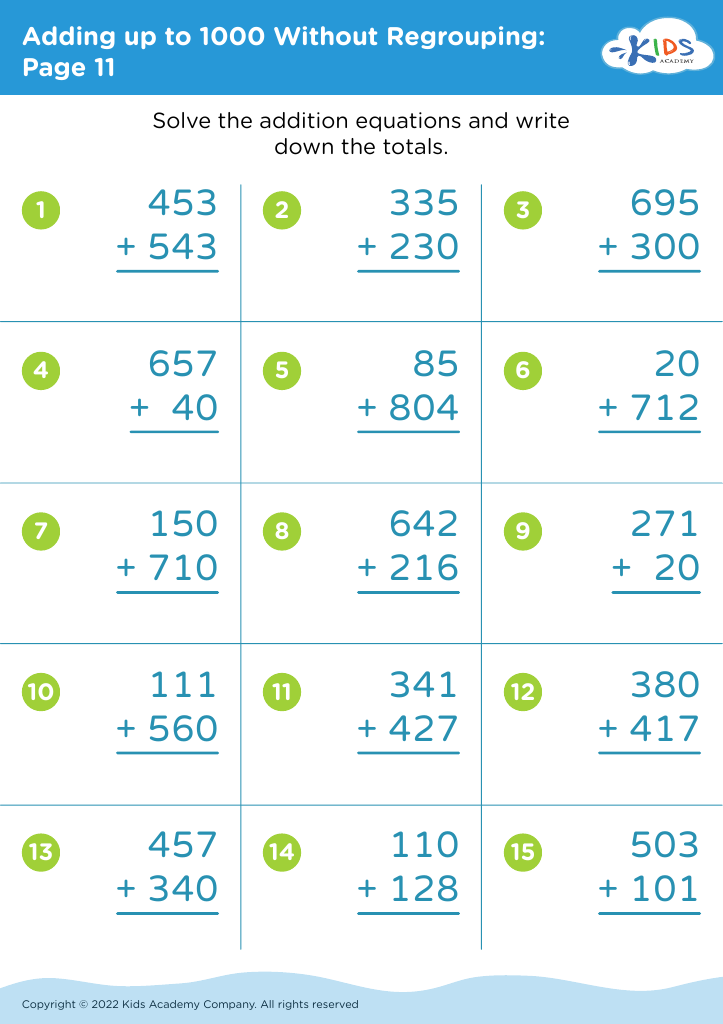








Number identification and addition are foundational skills for children ages 6-8, playing a crucial role in their overall cognitive development and academic success. At this age, children transition from recognizing numbers to understanding their values and relationships. Mastering number identification is the first step towards more complex mathematical concepts, such as addition.
Addition, in turn, is not just about memorizing facts; it’s a cognitive exercise that enhances logical thinking and problem-solving abilities. Understanding addition fosters a sense of number relationships and helps students comprehend the concept of 'part-whole', essential for more advanced topics like subtraction, multiplication, and division.
Early proficiency in number identification and addition builds confidence and reduces math anxiety. When children grasp these concepts early, they are more likely to enjoy and excel in mathematics. This foundation also improves essential life skills, like telling time, handling money, and measuring ingredients in recipes.
Moreover, strong early math skills are often linked to better performance across subjects, including science and technology, extending to future career opportunities. Thus, teachers and parents play a pivotal role in nurturing these skills through engaging activities, which ensure children develop a positive attitude towards learning and enable long-term academic and personal success.








