Numerical problem solving Addition Worksheets for Ages 6-8
3 filtered results
-
From - To
Explore our engaging Numerical Problem Solving Addition Worksheets tailored for kids aged 6-8! Designed to enhance critical thinking and arithmetic skills, these worksheets offer a variety of challenges that promote a deeper understanding of addition in real-world contexts. Through fun and interactive problems, young learners will develop their ability to solve addition equations and improve their mathematical literacy. Ideal for both classroom use and home practice, these resources support diverse learning styles while keeping students motivated. Boost your child’s confidence in math today with our comprehensive collection of addition worksheets that make learning exciting!
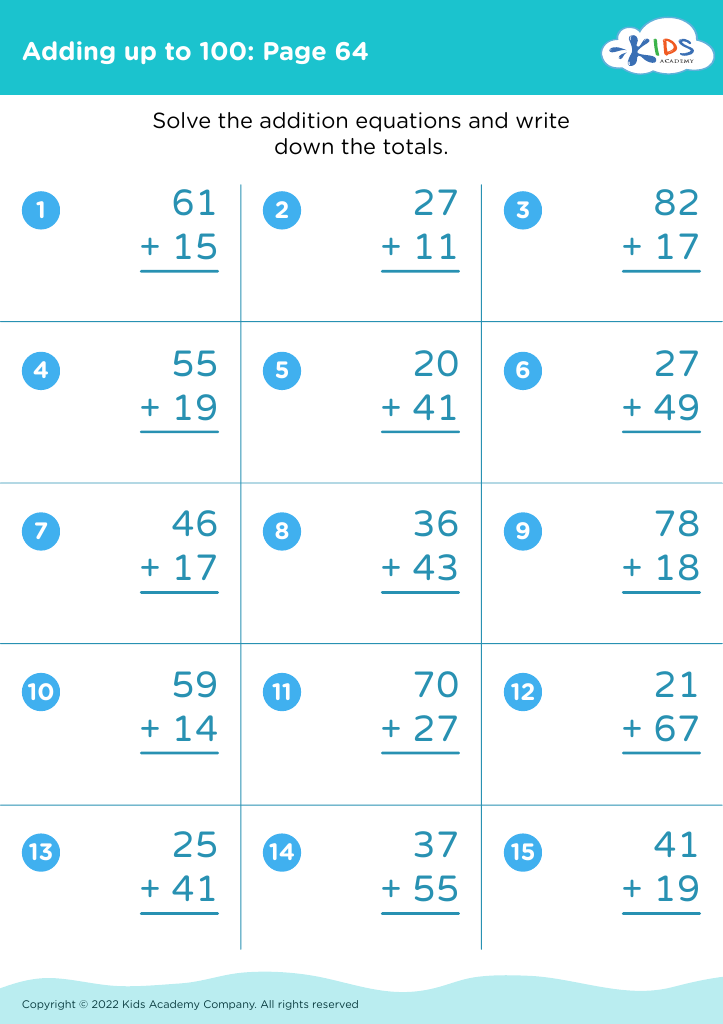
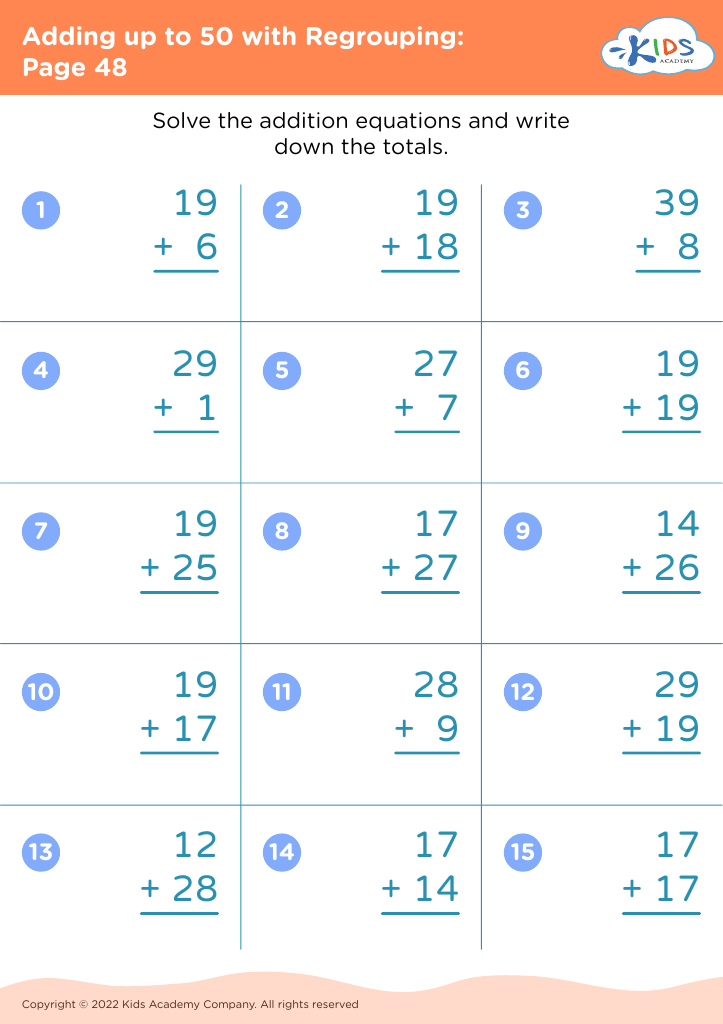
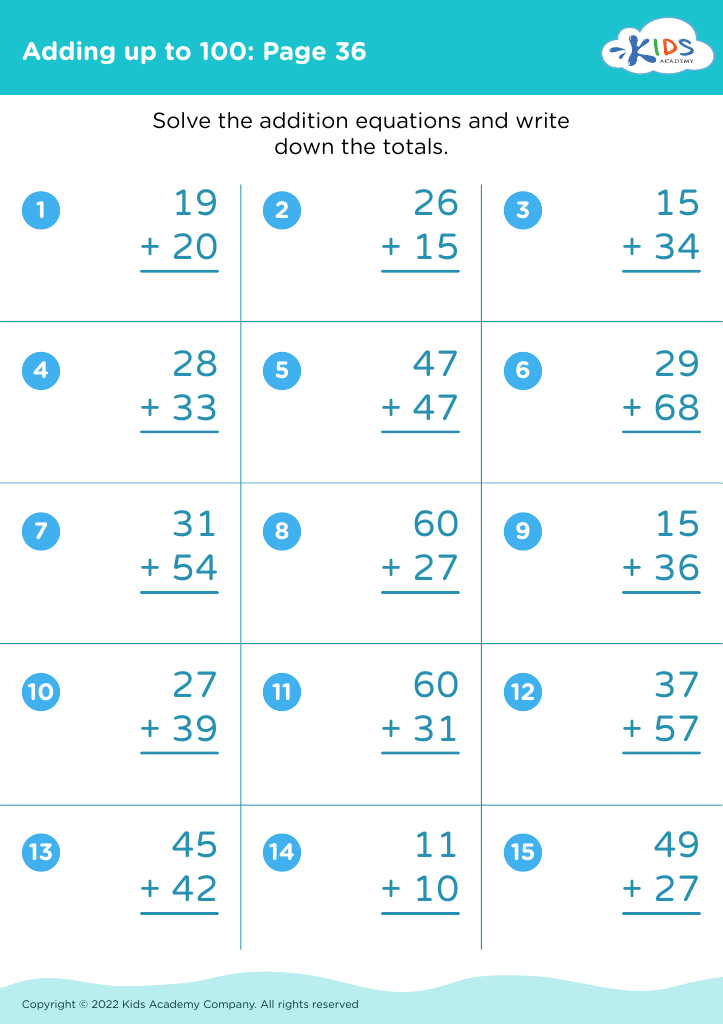








Parents and teachers should prioritize numerical problem-solving skills, particularly addition, for children aged 6-8, as this foundation is critical for overall mathematical development. During these formative years, children are transitioning from basic counting to more conceptual understanding of numbers. Proficiency in addition not only supports future learning in mathematics but also enhances cognitive skills such as logical reasoning and critical thinking.
Addition is one of the cornerstones of math and is frequently applied in everyday situations, from managing money to measuring ingredients in cooking. When children master addition, they gain confidence, which encourages them to tackle more complex problems as they progress in their education.
Moreover, effective addition problem-solving can help develop persistence and resilience, as children learn to approach challenges methodically. It also fosters a sense of accomplishment when they solve problems steadily—this builds a positive attitude towards math, countering common fears or anxieties associated with the subject.
By engaging children in diverse and enjoyable addition activities, parents and teachers can create a supportive learning environment that enhances not only mathematical understanding but also enthusiasm for learning as a whole. Hence, focusing on this critical skill helps set the stage for academic success.








