
Pattern identification Addition Worksheets for Ages 6-8
3 filtered results
Difficulty Level
Grade
Age
-
From - To
Subject
Activity
Standards
Explore our engaging Pattern Identification Addition Worksheets designed for children ages 6-8! These worksheets help young learners develop essential math skills by recognizing and continuing patterns while practicing addition. With colorful visuals and fun exercises, students will enhance their critical thinking and problem-solving abilities in a playful way. Our carefully crafted worksheets align with educational standards, ensuring that children gain a strong foundation in early math. Ideal for classrooms or at-home learning, these activities make addition and pattern recognition enjoyable. Download and print these worksheets today to inspire a love for math in your child!
Favorites
With answer key
Interactive
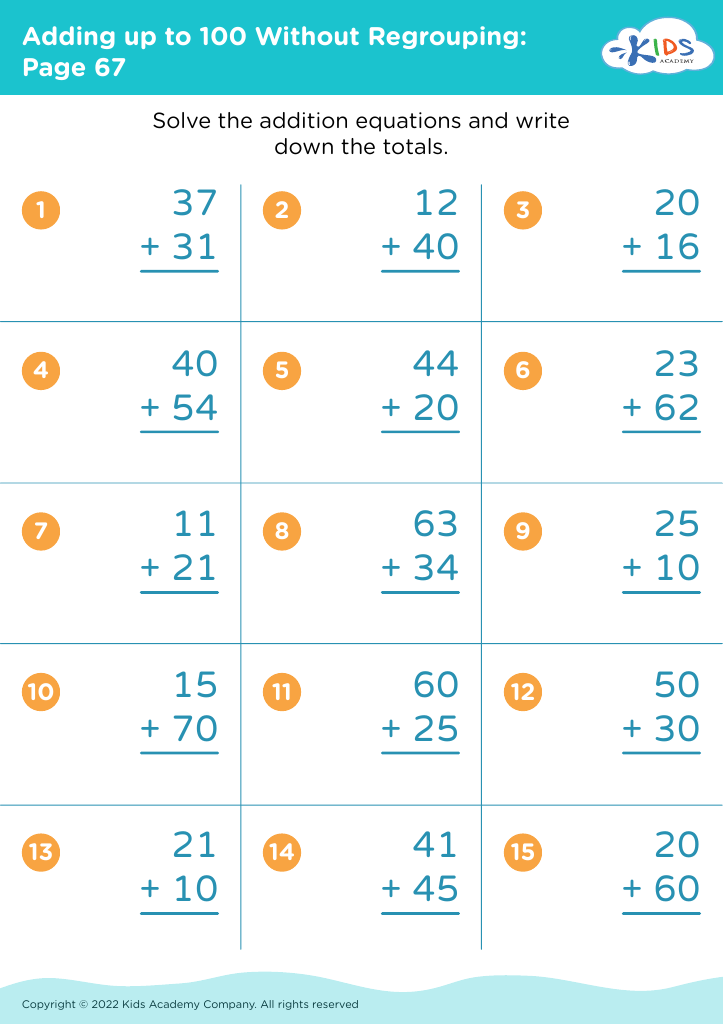
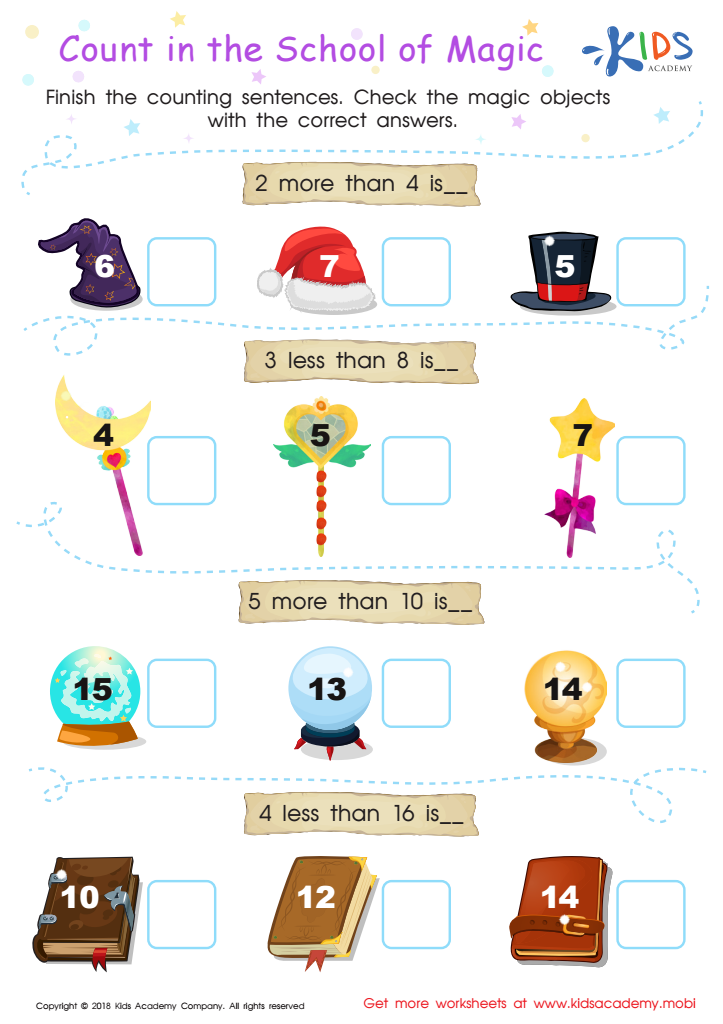
Count in the School of Magic Worksheet
Your math learners can explore the School of Magic with this worksheet. They'll read equations with addition and subtraction numbers under 20, count back and forth to find the answer, then complete the counting sentences. Fun pictures and easy accuracy make it an enjoyable and successful learning experience.
 Assign to My Students
Count in the School of Magic Worksheet
Worksheet
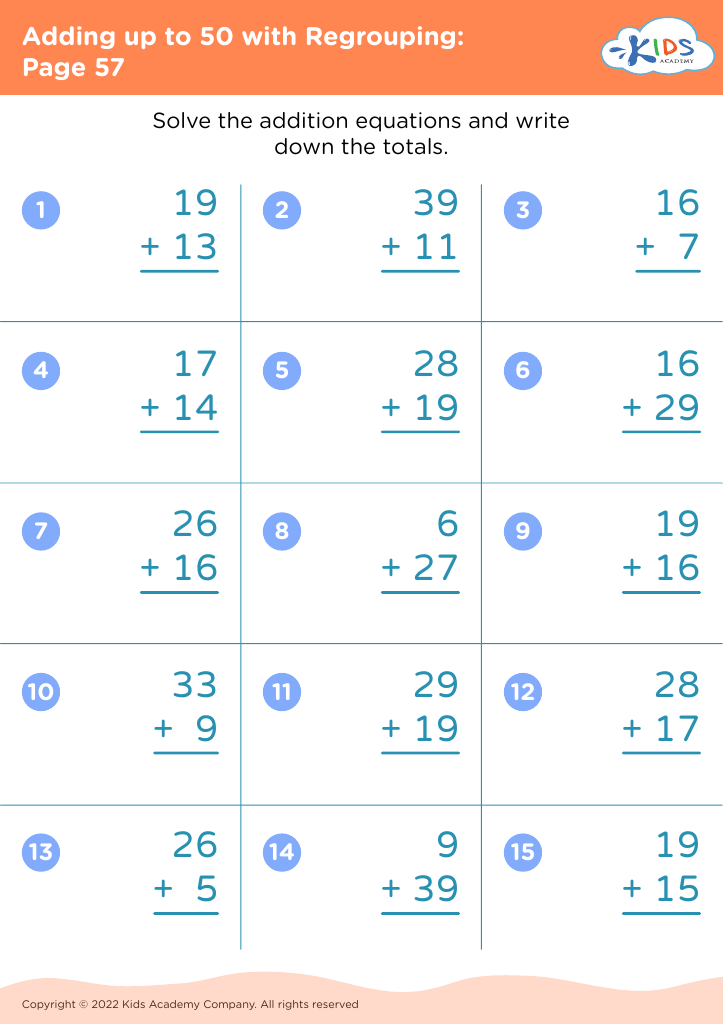
Join Kids Academy for Free
Who is primarily going to use this learning content?








Pattern identification in addition for ages 6-8 is crucial for several reasons, making it an essential focus for parents and teachers. At this developmental stage, children are developing foundational math skills, and recognizing patterns helps them understand numerical relationships more deeply. By effectively identifying patterns, students can find more efficient strategies for solving addition problems, enhancing their computational fluency and overall mathematical confidence.
Moreover, pattern recognition fosters critical thinking and problem-solving skills. When students can see patterns, they are more likely to approach math with curiosity and creativity, paving the way for future learning in complex math concepts. Patterns also help tie together different mathematical concepts, allowing kids to see the connections between addition and other areas such as subtraction, multiplication, and even geometry.
Additionally, this skill encourages perseverance. As children work through exercises to discover patterns in numbers, they learn to face challenges and experiment with various strategies. This resilience is not only beneficial in math but is also essential for lifelong learning.
Incorporating pattern identification into the early math curriculum leads to stronger foundational skills, sets the stage for advanced learning, and supports the development of a positive attitude towards math. Investing time in this area can have lasting benefits.








