
Practice division Addition Worksheets for Ages 6-8
3 filtered results
Difficulty Level
Grade
Age
-
From - To
Subject
Activity
Standards
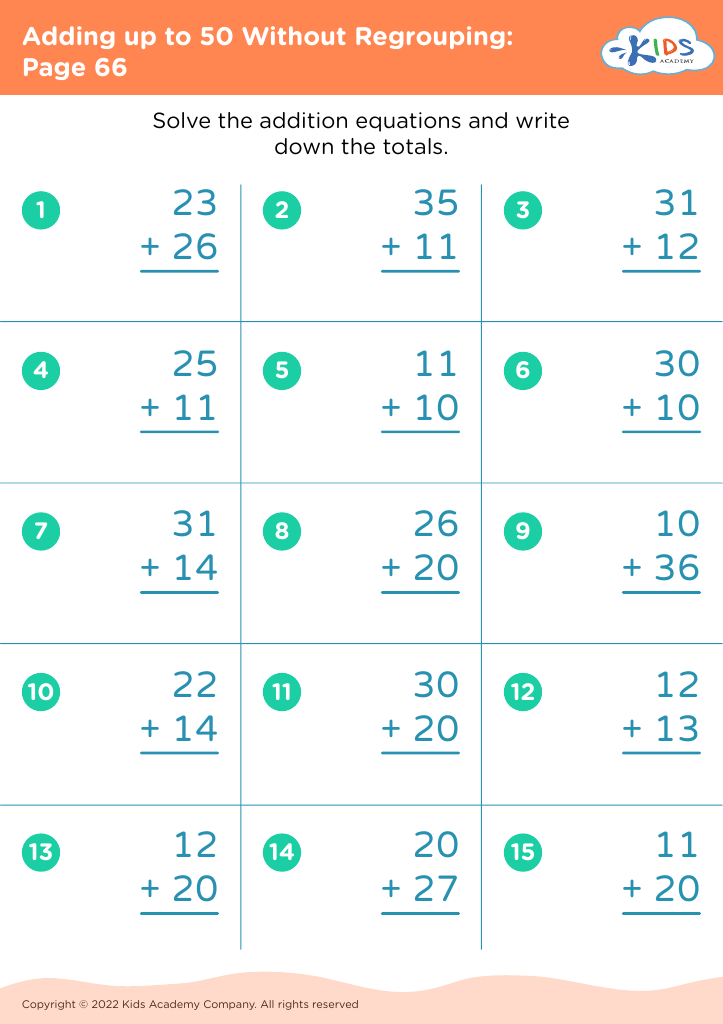
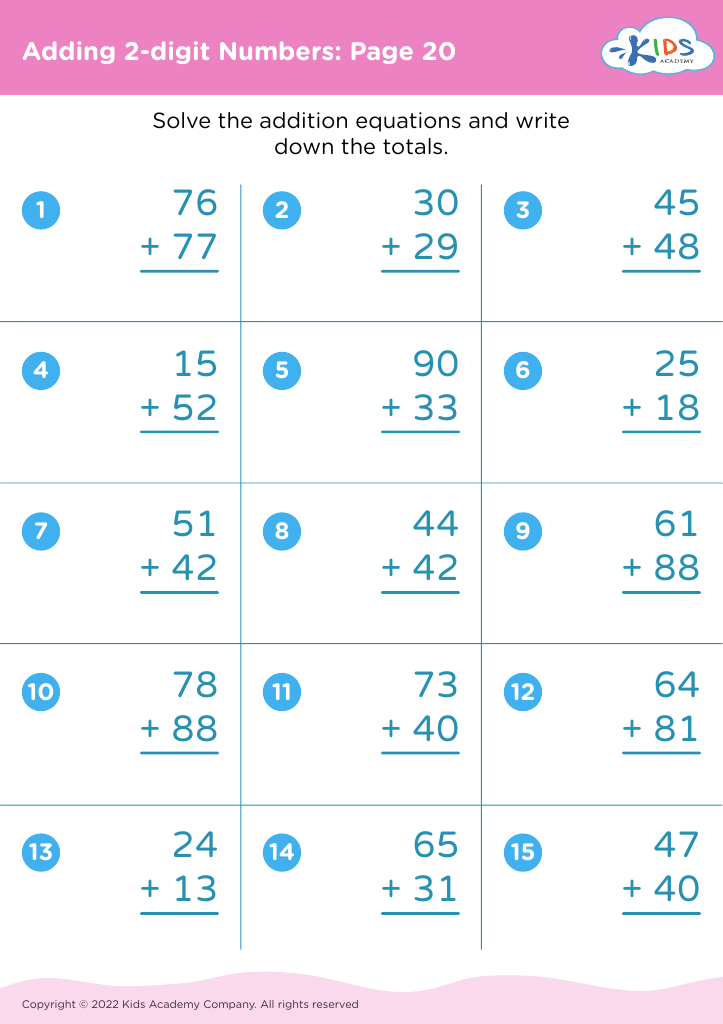
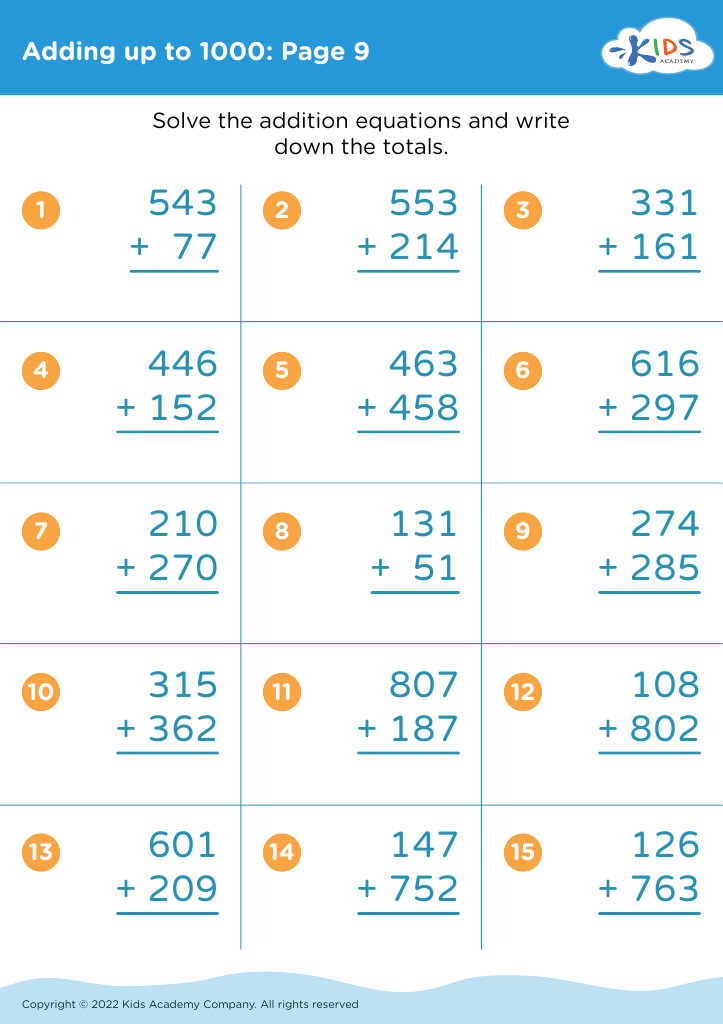
Discover our engaging Practice Division Addition Worksheets designed for ages 6-8! These printable worksheets cater to young learners, helping them build foundational math skills through practice and repetition. Each worksheet features fun, age-appropriate problems that focus on mastering the basics of addition and prepares kids for future division concepts. Perfect for classroom or at-home learning, our easy-to-follow worksheets boost confidence and improve numerical fluency. Download yours today and watch your child's math skills soar! Visit Kids Academy for more high-quality educational resources.
Favorites
With answer key
Interactive
Join Kids Academy for Free
Who is primarily going to use this learning content?







.jpg)
Practice with division and addition for ages 6-8 is pivotal for the foundational development of mathematical skills and cognitive growth in young children. At this age, kids are transitioning from concrete arithmetic operations to more abstract thinking. Ensuring they grasp the properties and concepts of addition and division lays the groundwork for advanced mathematical learning and problem-solving abilities.
Addition is one of the basic arithmetic operations that builds a child’s understanding of number relationships, sequencing, and value. It enhances their ability to perform calculations mentally and solve everyday problems involving numerical concepts. Confidently handling addition solidifies their understanding of more complex operations like multiplication and division in their later educational stages.
Division, introduced through simple problems, provides an early foundation for understanding how numbers can be broken apart and shared equally. It's essential in developing logical reasoning and fraction comprehension, which are crucial in more advanced mathematics. Proficiency in division enables children to approach mathematical challenges methodically and prepares them for real-life scenarios where fairness and distribution are involved.
Parents and teachers should prioritize these practices not just for academic progress but also for boosting self-confidence in math, sparking a long-term interest, and reducing anxieties toward challenging tasks. Consistent practice supports a child's strategic thinking and ability to tackle more complex concepts with ease.








