Reading clocks Addition Worksheets for Ages 6-8
3 filtered results
-
From - To
Unlock the world of time-telling and addition with our engaging Reading Clocks Addition Worksheets designed for ages 6-8! Each worksheet combines the essential skill of reading analog clocks with fun addition problems, perfect for young learners. Children will practice identifying hours and minutes while solving simple math equations, reinforcing their understanding of both concepts. Our carefully crafted activities are ideal for classroom use or at-home practice, ensuring students build a strong foundation in time management and arithmetic. Help your child master these important skills with our vibrant, easy-to-follow worksheets—making learning both enjoyable and educational!
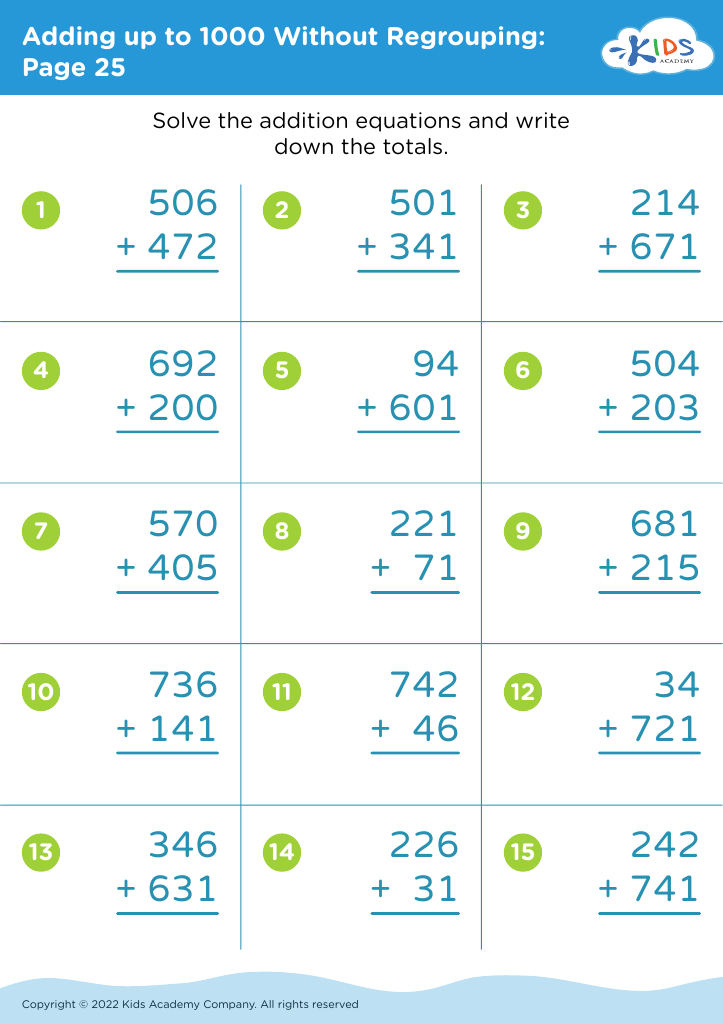
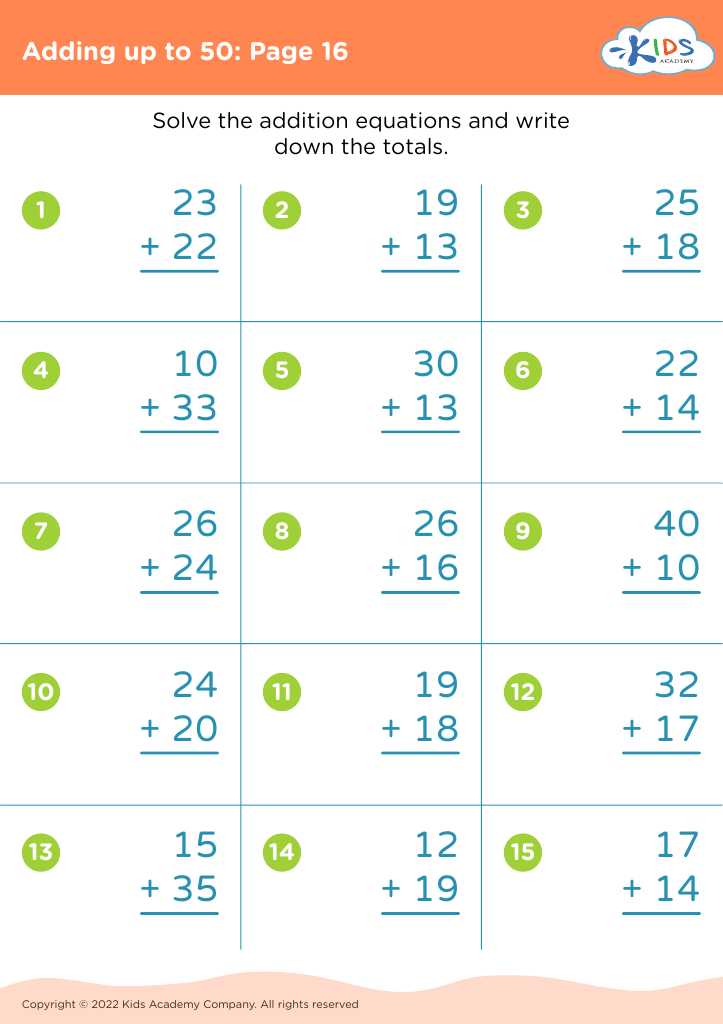
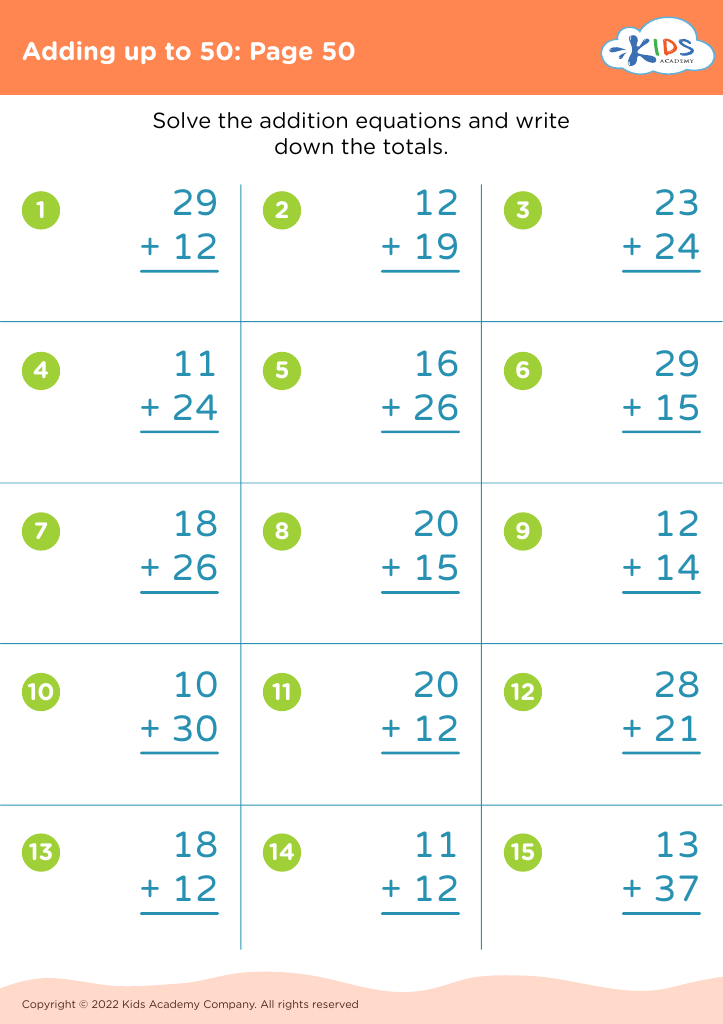








Reading clocks and understanding addition are foundational skills for children ages 6-8, and parents and teachers should care deeply about fostering these abilities. Time-telling is an essential daily life skill that helps children navigate their schedules, understand the concept of time management, and develop a sense of responsibility. Learning to read both analog and digital clocks enhances their cognitive skills and helps them understand the passage of time, which is crucial for structuring their day effectively.
Addition, on the other hand, is a fundamental mathematical operation and a building block for more complex mathematical concepts. Mastering addition boosts a child’s confidence, enhances their problem-solving skills, and provides a solid foundation for future learning in mathematics, such as multiplication and division. It also helps develop logical thinking and improves their ability to tackle everyday problems that involve arithmetic, like counting money, measuring ingredients in a recipe, or even playing certain games.
By integrating these skills into early education, parents and teachers can provide children with the tools they need to succeed academically and in their daily lives. Encouraging and supporting children in becoming proficient in these areas sets the stage for lifelong learning and achievement.








