
Sequencing Skills Addition Worksheets for Ages 6-8
3 filtered results
Difficulty Level
Grade
Age
-
From - To
Subject
Activity
Standards
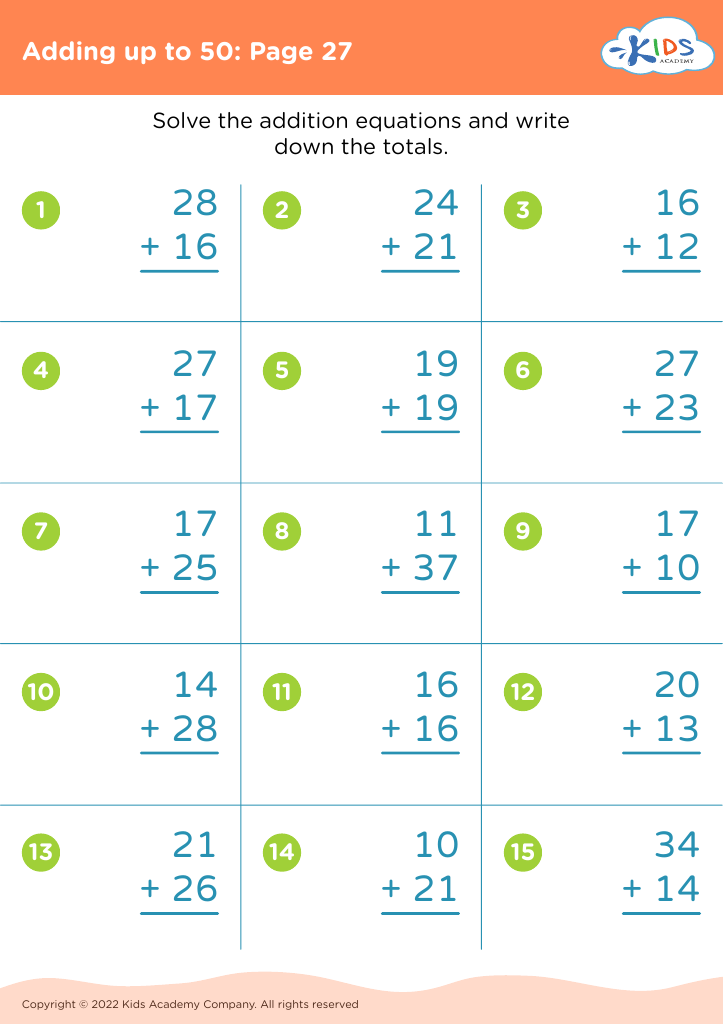
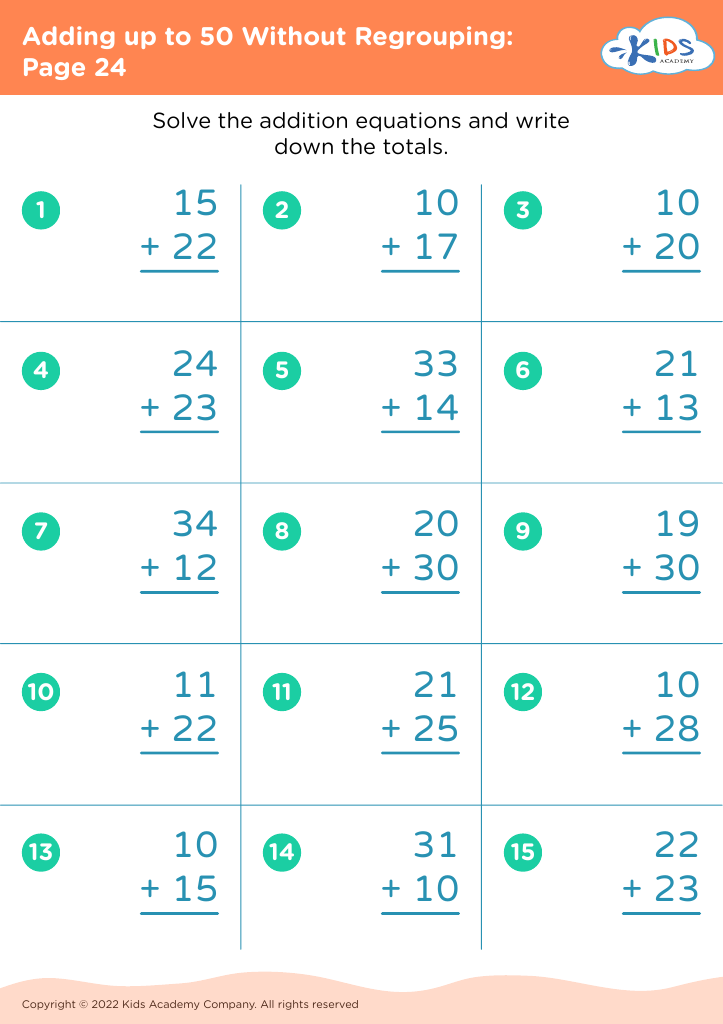
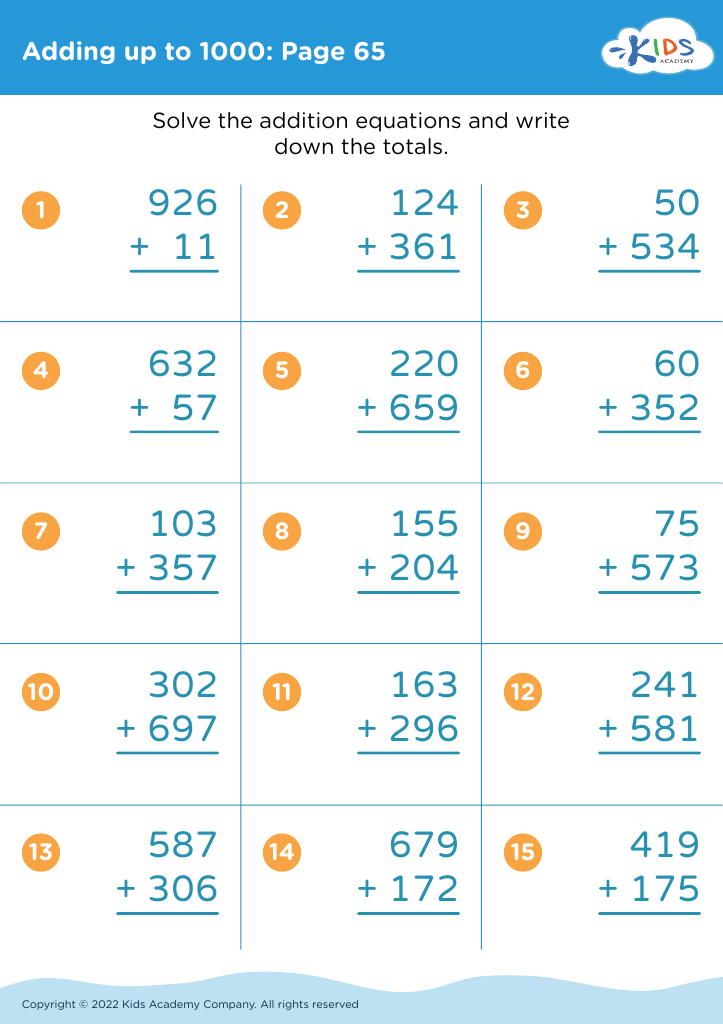
Enhance your child's mathematical foundation with our Sequencing Skills Addition Worksheets for ages 6-8! These engaging worksheets are designed to develop and strengthen critical sequencing skills through fun addition activities. Ideal for young learners, our resources provide various exercises that improve their ability to follow patterns, order operations, and tackle addition problems systematically. As children practice, they build confidence in their math skills, setting the stage for future success in more complex concepts. Explore our comprehensive collection of worksheets that cater to different learning styles while making math enjoyable. Perfect for classroom use or at-home learning, ignite your child's math journey today!
Favorites
With answer key
Interactive
Join Kids Academy for Free
Who is primarily going to use this learning content?








Sequencing skills are crucial for children aged 6-8 as they form the foundation of logical thinking and problem-solving abilities that are essential in all areas of learning, including mathematics, reading, and life skills. In particular, sequencing skills in addition help children understand the order of operations, making it easier for them to solve math problems accurately and efficiently.
For parents and teachers, fostering sequencing skills in addition means enabling children to grasp the concept of carrying over in addition, understanding the importance of place value, and solving multi-step problems. These skills also enrich reading comprehension, as children learn to follow sequences in stories, improving their narrative understanding and retention.
Moreover, promoting sequencing encourages organizational skills, which are vital for academic success and daily routines. It enhances children's ability to follow instructions and understand time-related concepts, such as before and after events. In nurturing these skills, adults empower children to become confident learners who can approach challenges systematically and creatively.
Ultimately, prioritizing sequencing skills in addition equips children with important cognitive tools that are beneficial not just in school, but throughout their lives as they encounter more complex tasks and situations.








