
Understand fractions Addition Worksheets for Ages 6-8
20 filtered results
Difficulty Level
Grade
Age
-
From - To
Subject
Activity
Standards
Explore our "Understand Fractions Addition Worksheets for Ages 6-8" by Kids Academy! Designed to make learning fractions enjoyable, these worksheets help young learners master the basics of adding fractions. Through engaging visuals and interactive exercises, children will grasp fundamental fraction concepts while developing their addition skills. Perfect for classroom or at-home practice, our worksheets align with educational standards and cater to varying learning paces. Enhance your child's confidence in math with activities that promote understanding, accuracy, and a love for learning. Start your child's journey toward mathematical proficiency today with our expertly crafted worksheets!
Favorites
With answer key
Interactive
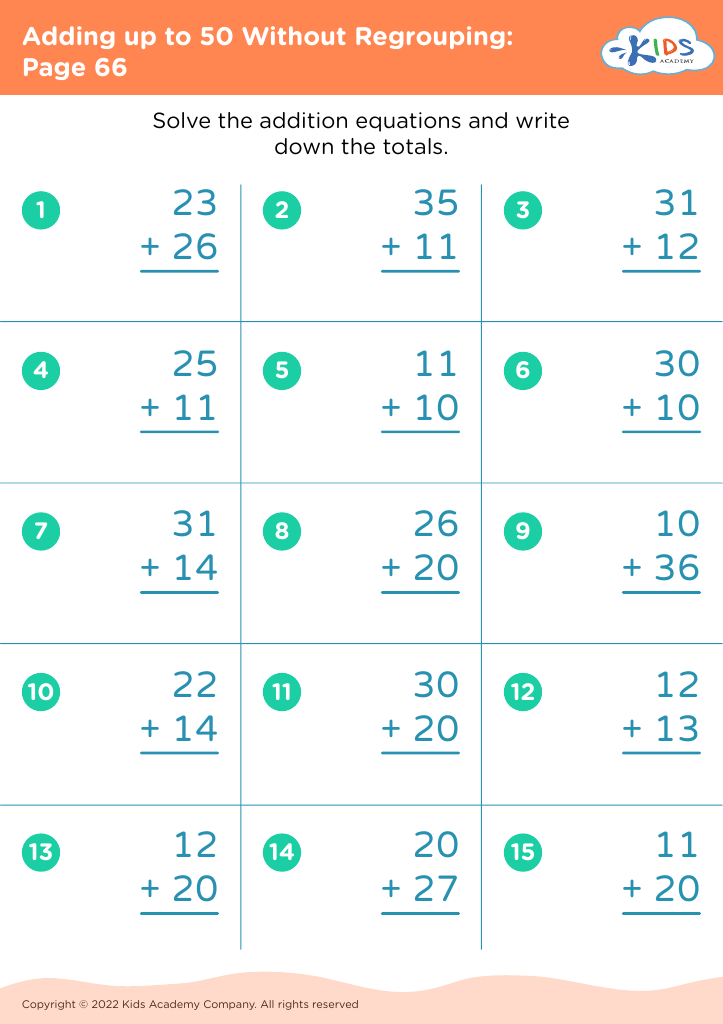
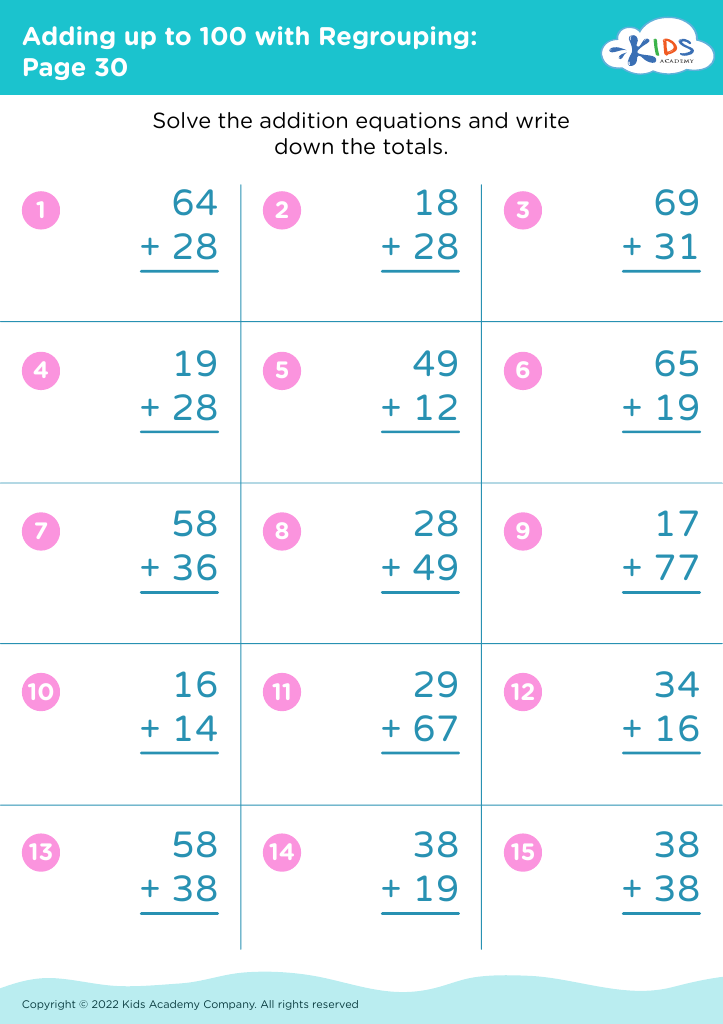
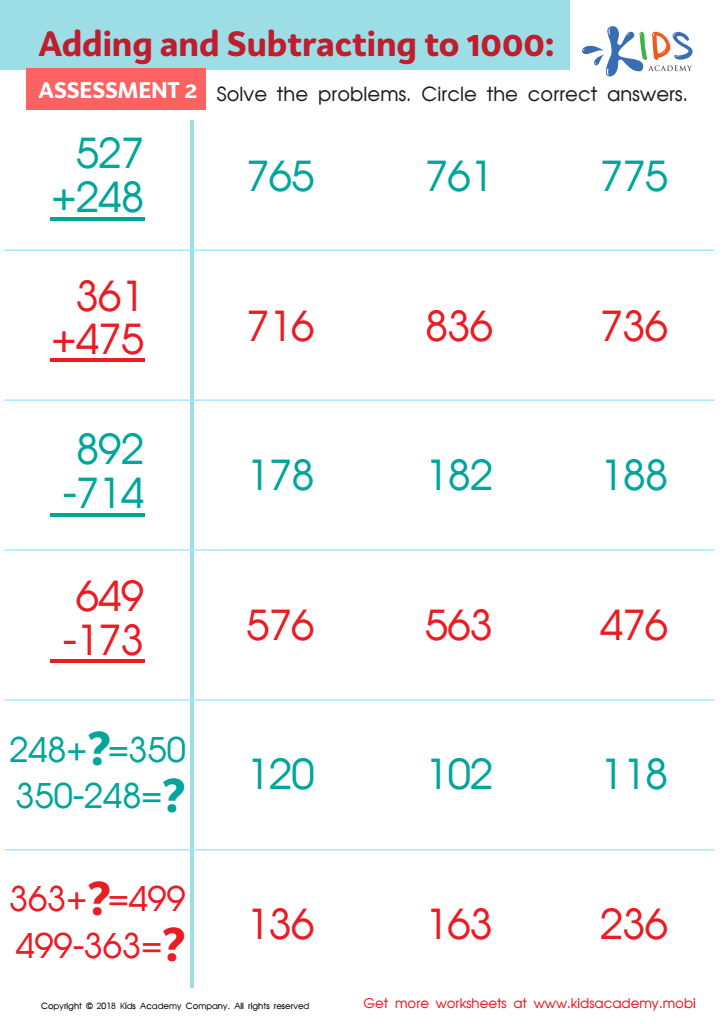
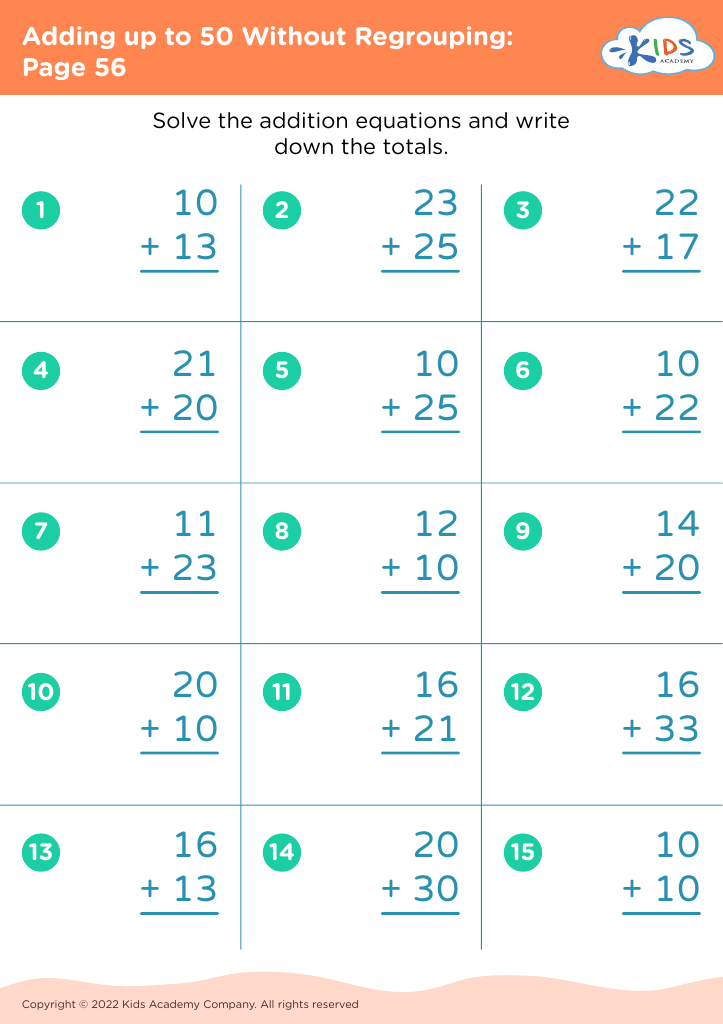
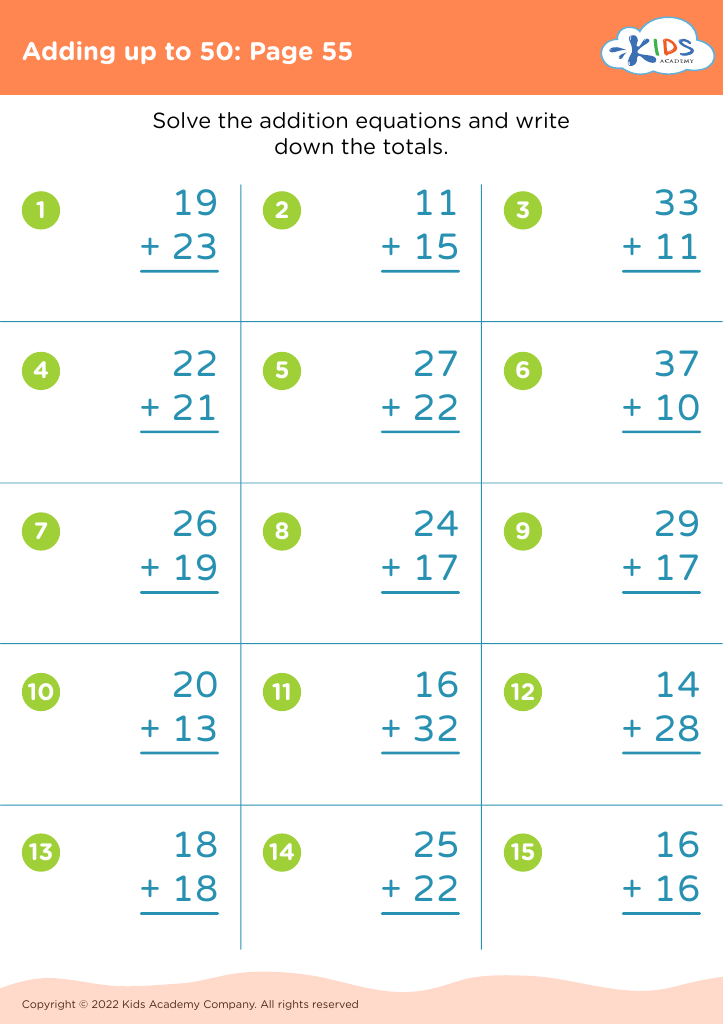
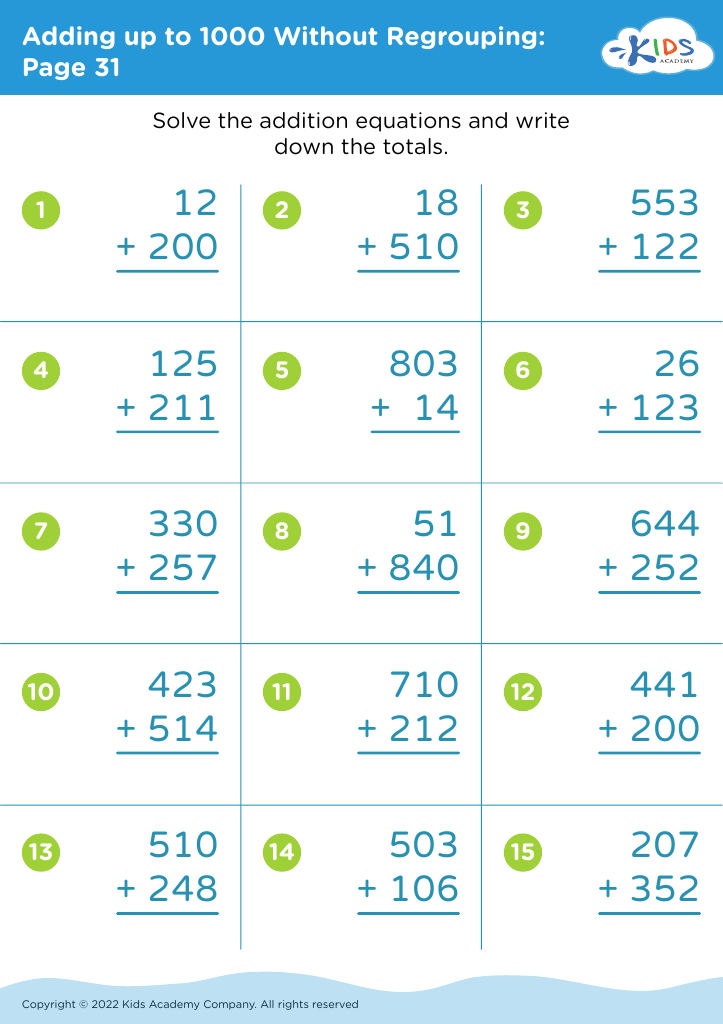
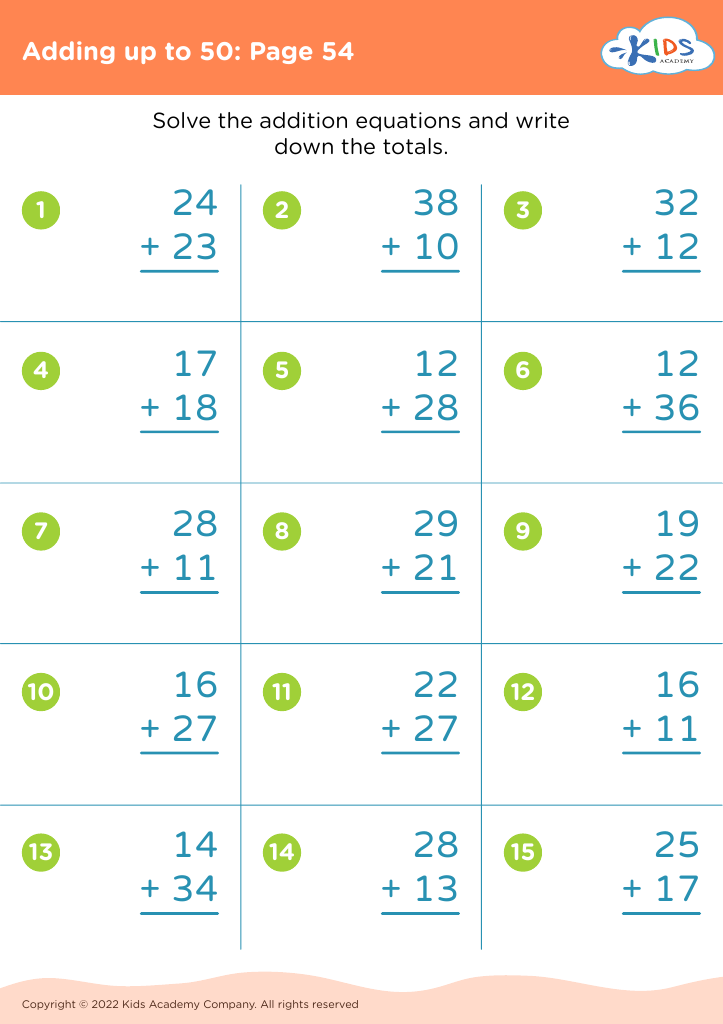
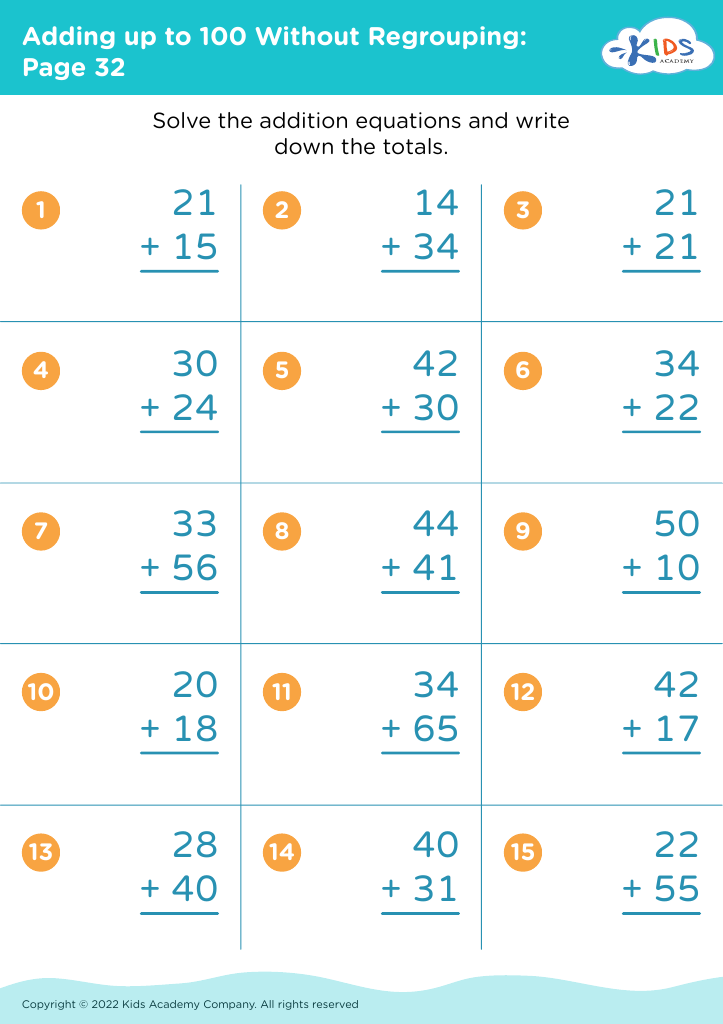
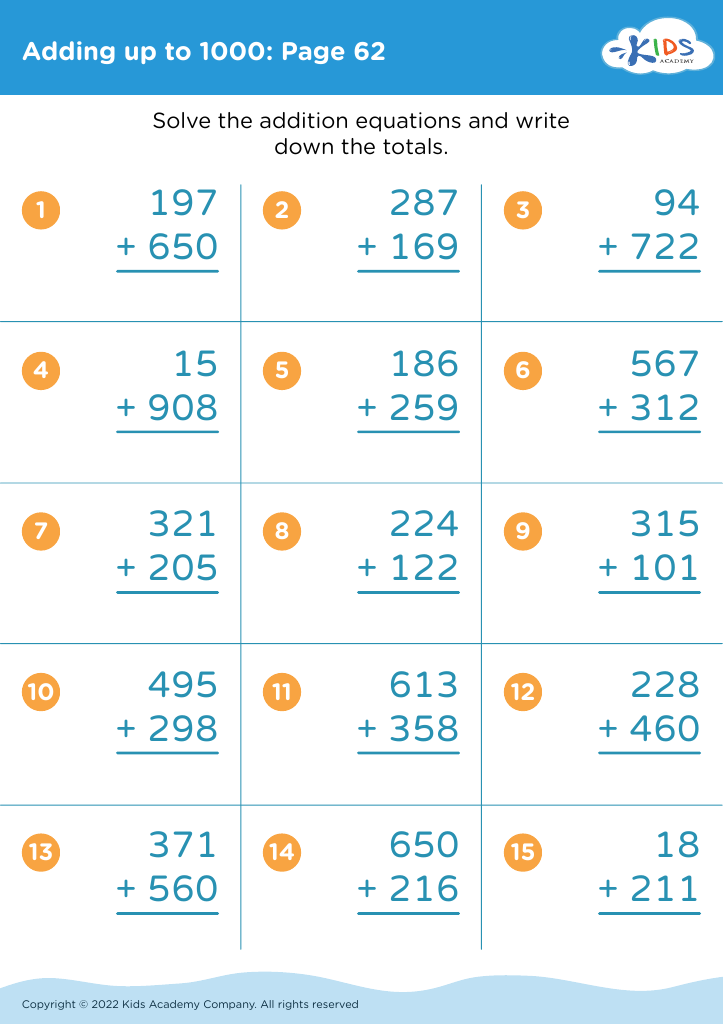
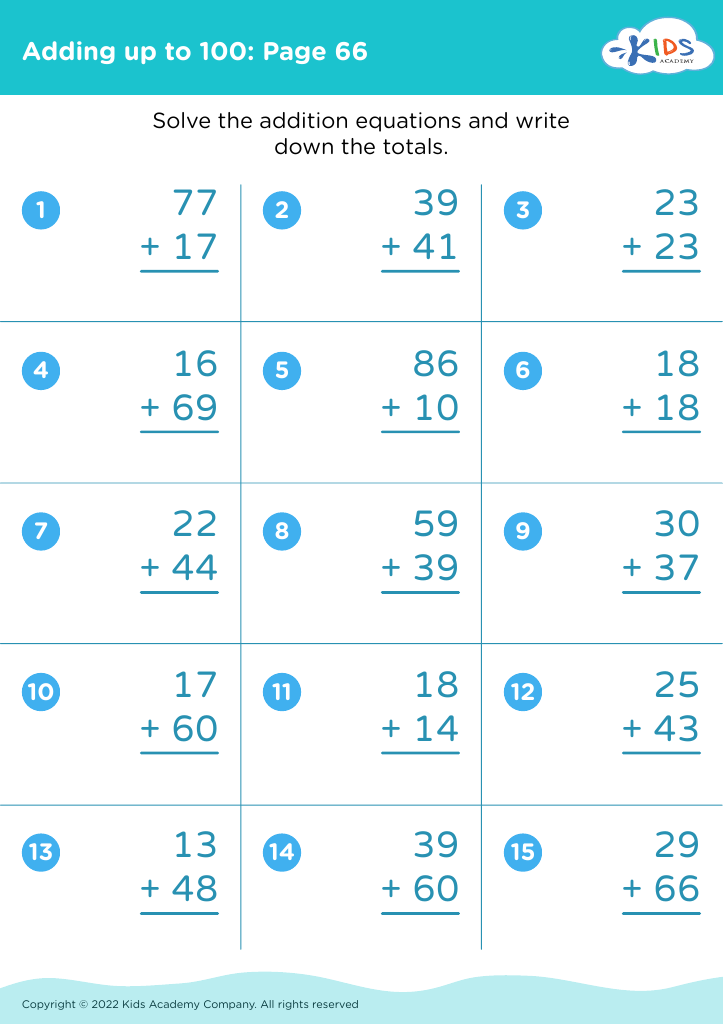
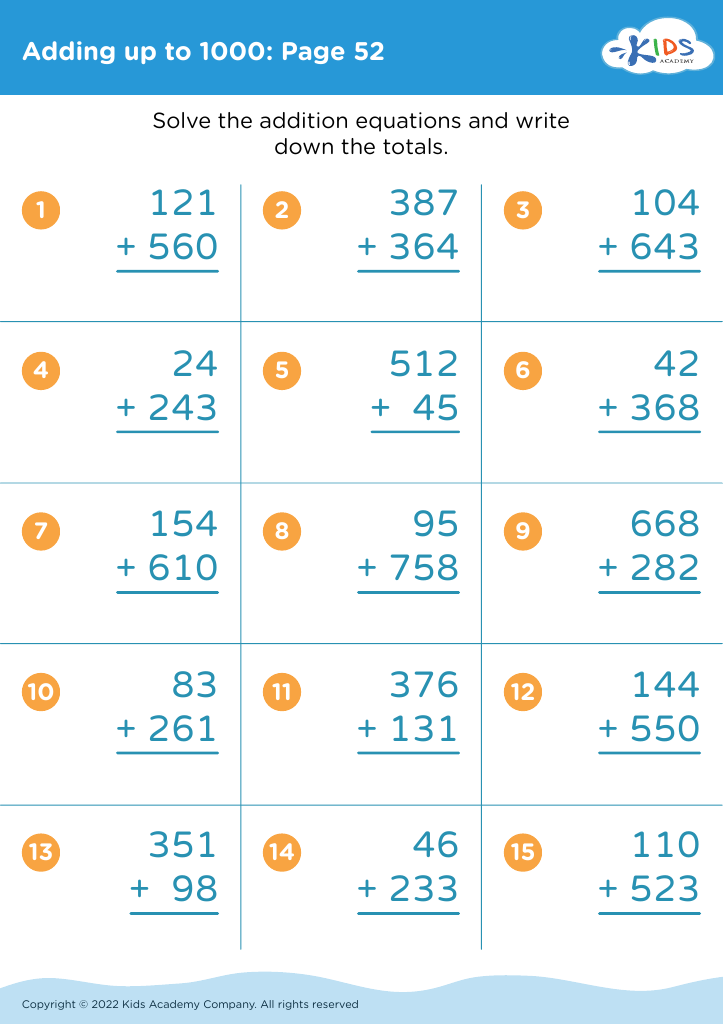
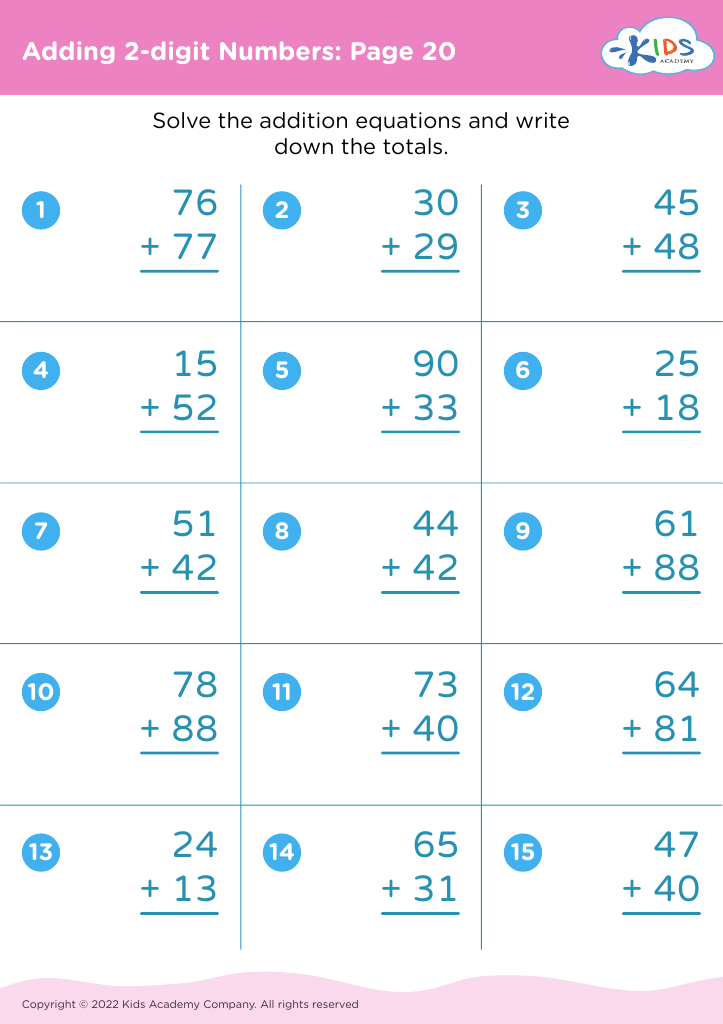
Adding and Subtracting to 1 Worksheet: Assessment 2
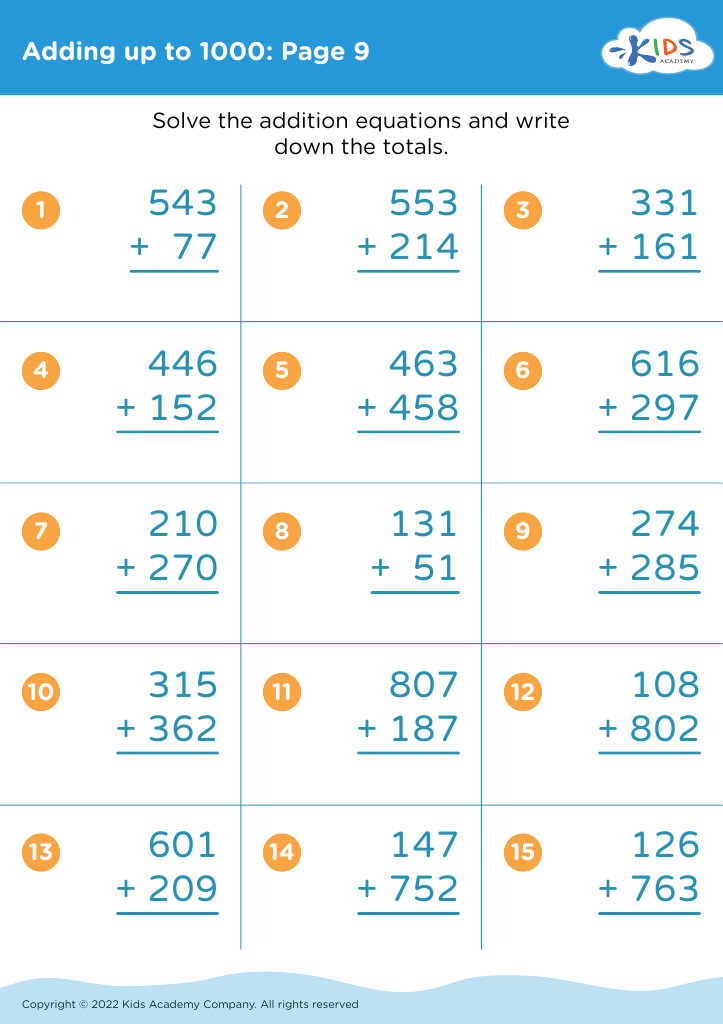
Test your child's addition and subtraction of 3-digit numbers with this assessment worksheet! They'll practice regrouping and pre-algebra skills to show their expertise. Have them work through the page and circle their answers, then see how many they got right to check their understanding and progress.
 Assign to My Students
Adding and Subtracting to 1 Worksheet: Assessment 2
Worksheet
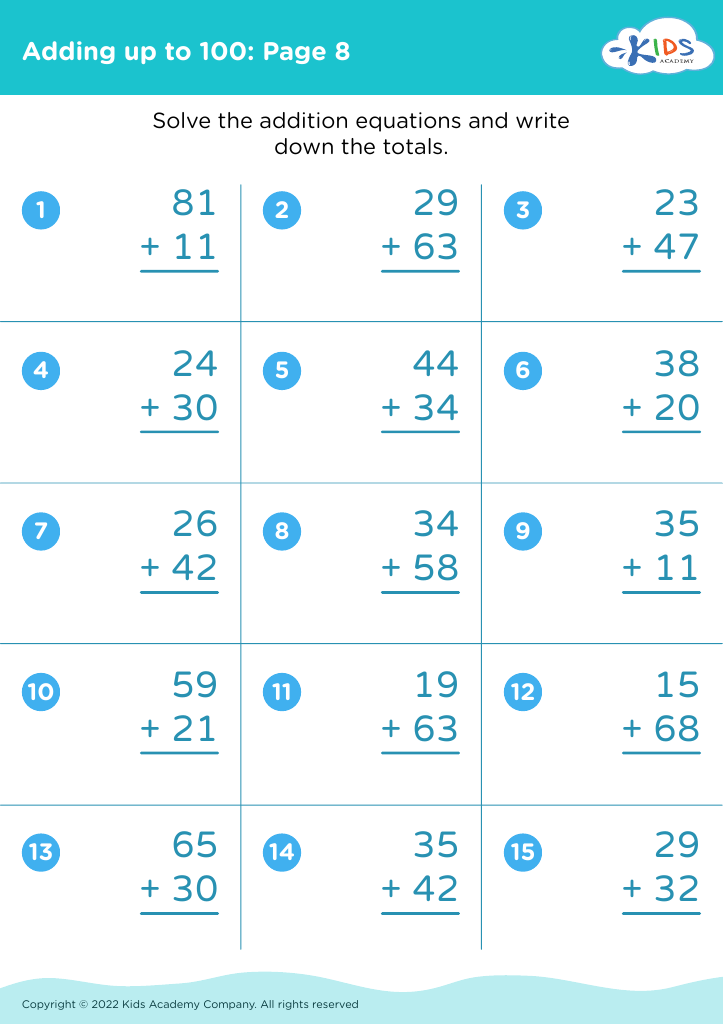
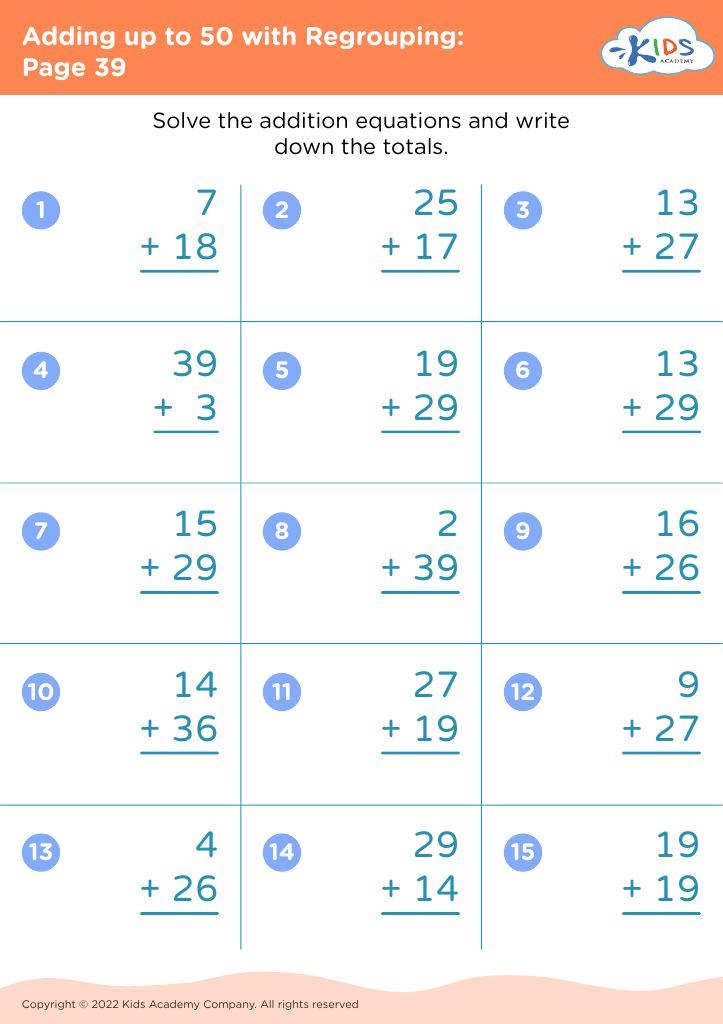
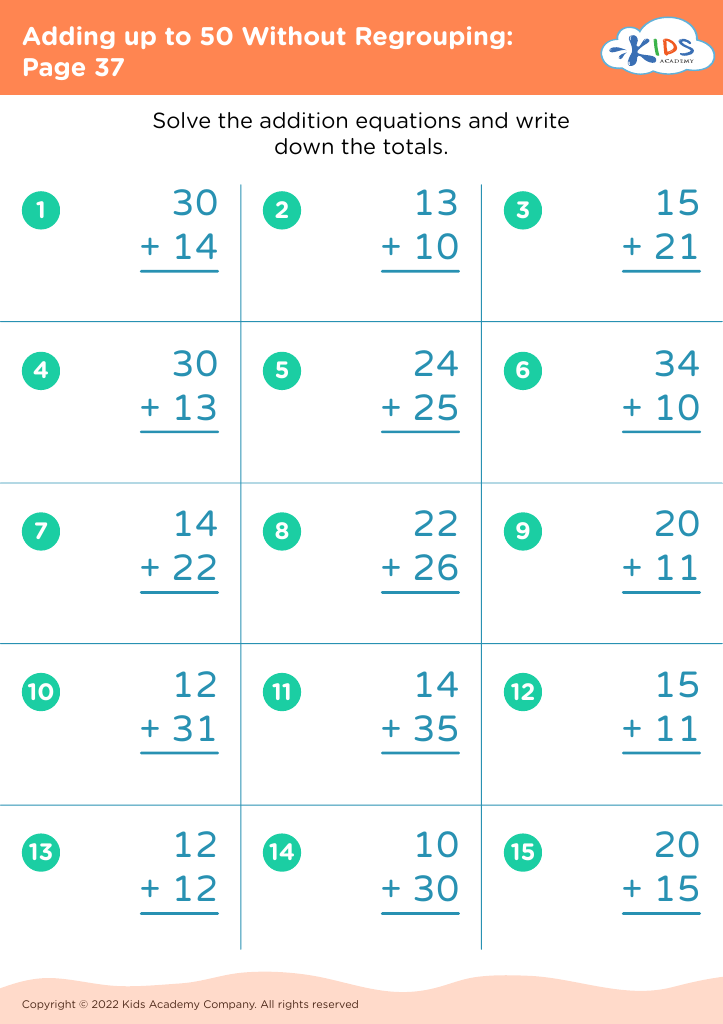
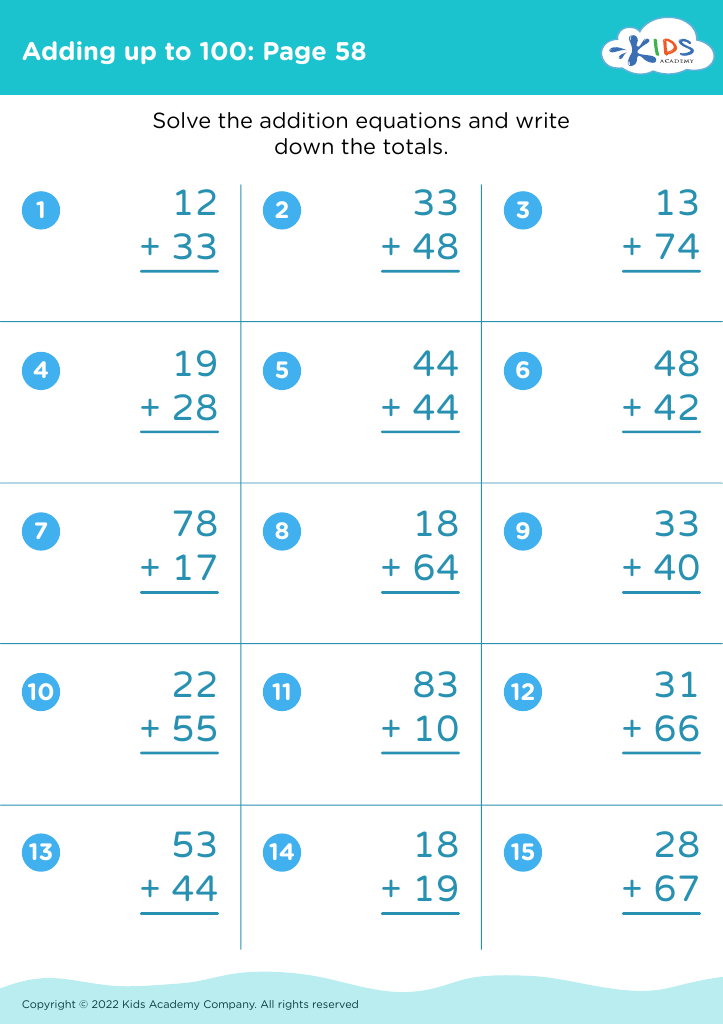
Join Kids Academy for Free
Who is primarily going to use this learning content?








Understanding fractions addition for children aged 6-8 lays a crucial foundation for their future mathematical learning and everyday problem-solving skills. At this age, kids are developing pivotal cognitive abilities and pedagogical guidance can magnify this growth. Introducing fractions and teaching them how to add fractions helps young learners grasp that numbers can represent parts of a whole, enhancing their comprehension of other fundamental math concepts and operations, like division and ratios.
Moreover, the ability to understand and add fractions pertains directly to real-life daily activities. Children will find themselves needing to manage parts of various wholes in situations like sharing equally amongst friends or when cooking and measuring ingredients in recipes. Therefore, becoming fluent in fractions fosters a child’s ability to think critically and apply their knowledge practically.
Enhancing their conceptual understanding of fractions also translates into improved problem-solving skills essential in other subjects — be it science through measurements and experiments or arts in understanding divisions of spaces. Parents and teachers should nurture this skill early to build confidence and proficiency in mathematics, laying down a path of academic success and practical readiness. Solid comprehension in such fundamental areas enriches a child's educational journey and prepares them for future, more complex mathematical challenges.








